


Table of Contents
Quick Summary
- Looks at why logo design trends matter for architecture, interior design, construction and home improvement businesses.
- Explains how minimalist logos can create a clean and recognisable brand identity.
- Covers flexible logo systems designed for websites, social media, signage and print.
- Discusses the role of typography, colour and geometric shapes in creating brand character.
- Explores why logos should also consider motion and digital applications.
- Highlights the importance of balancing current trends with practical, long-term branding needs.
Courtesy - Magnific
A logo is often the first visual element people associate with a brand. For businesses in the home and design industry, that first impression can be particularly important. Whether it belongs to an architecture firm, interior designer, contractor, furniture company, or home improvement business, a well-designed logo can communicate a company’s style and professionalism at a glance.
As digital platforms continue to evolve, so do expectations around branding. Home-related businesses now need logos that work just as well on a website or social media profile as they do on signage, business cards, product packaging, or project materials. While individual trends come and go, several design approaches remain useful because they balance visual appeal with practical application.
Here are some logo design trends that continue to influence branding across the architecture, home, and design industries.
1. Minimalism Remains Popular
Simple logos continue to be a strong choice for home and design brands.
Architecture firms, interior designers, contractors, and home improvement businesses often favor clean typography, balanced spacing, and simple shapes over highly detailed designs. Minimalist logos are easy to recognize and can be adapted to everything from a website header and social media profile to a construction sign or company vehicle.
For designers exploring different approaches, reviewing existing logo examples can also be a useful way to understand how typography, spacing, symbols, and layouts work together. For example, designers can use free logo templates as a starting point for exploring different layouts, typography, and visual elements before developing a logo that suits a home or design business.
The goal is not simply to make a logo look simple, but to remove unnecessary elements so that the most important visual features remain clear and memorable.
2. Flexible Logos Work Across Different Formats
Courtesy - Magnific
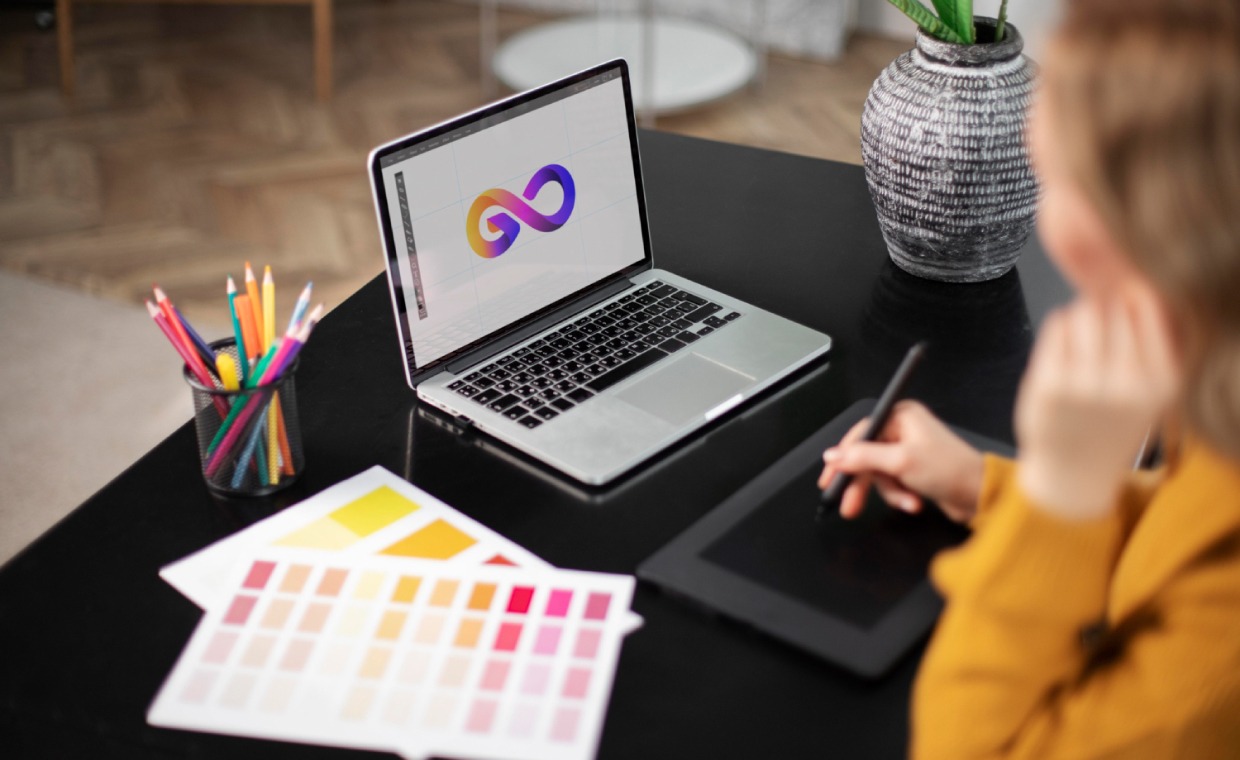
A home and design business rarely uses its logo in just one place. The same identity may appear on a website, social media account, business card, project sign, vehicle, clothing, or printed brochure.
For this reason, many businesses are moving toward flexible logo systems that include a primary logo alongside simplified versions, icons, or wordmarks. A detailed logo may work well on a website or proposal, while a smaller icon may be more suitable for a social media profile or mobile screen.
This is particularly relevant to businesses that rely on visual portfolios. Architecture firms and interior designers, for example, often need their branding to complement photographs, floor plans, renderings, and completed projects rather than compete with them.
Designing with different applications in mind from the beginning can make a visual identity more practical and consistent over time.
3. Custom Typography Creates Character
Courtesy - Magnific
Typography can be one of the most recognizable parts of a logo.
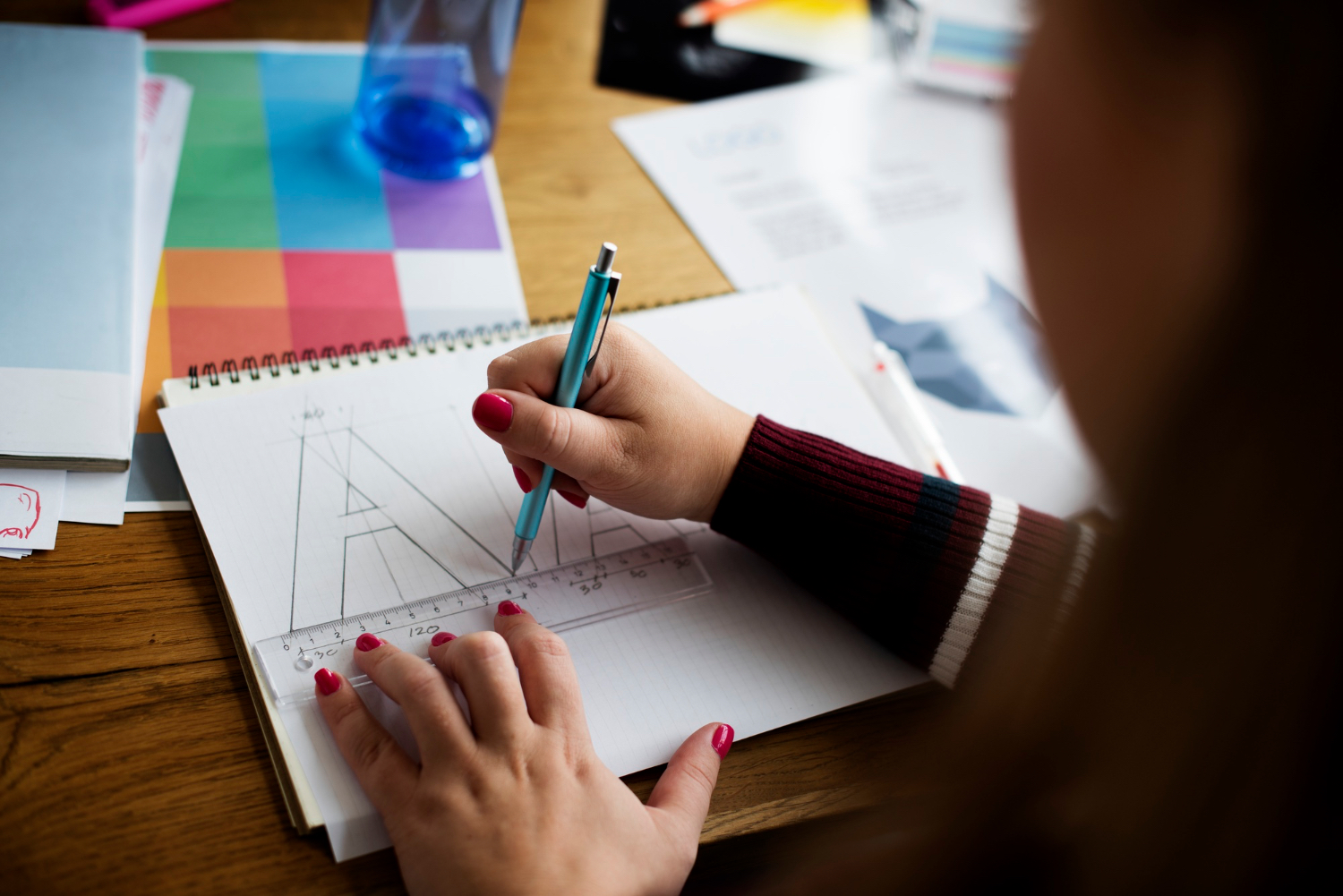
Architecture firms, interior designers, furniture brands, and construction companies often use carefully selected typefaces to establish a particular character. Clean sans-serif lettering may suggest a contemporary approach, while serif typography can create a more traditional or established impression.
Custom lettering can take this a step further. Small changes to letter spacing, proportions, line thickness, or individual characters can give a logo a distinctive appearance without requiring a complex symbol.
For businesses operating in competitive home improvement and design markets, thoughtful typography can help establish a visual identity that feels specific to the company rather than resembling a generic industry template.
4. Color Is Used with Purpose
Color plays an important role in how a home and design brand is perceived.
Many architecture and interior design businesses use neutral palettes such as black, white, beige, gray, and earthy tones. These colors can work well with a variety of interiors and architectural styles and are less likely to distract from project photography.
Other businesses may choose a stronger accent color to create contrast and improve recognition. A construction company might use a bold color to create visibility on equipment and signage, while a furniture or interior design brand may choose a more restrained palette to complement its products.
Rather than following a particular color trend, businesses should consider how their chosen palette will work across their most common applications. A good color system should remain practical on digital screens, printed materials, signage, and other branded surfaces.
5. Geometric Shapes Reflect Structure and Form
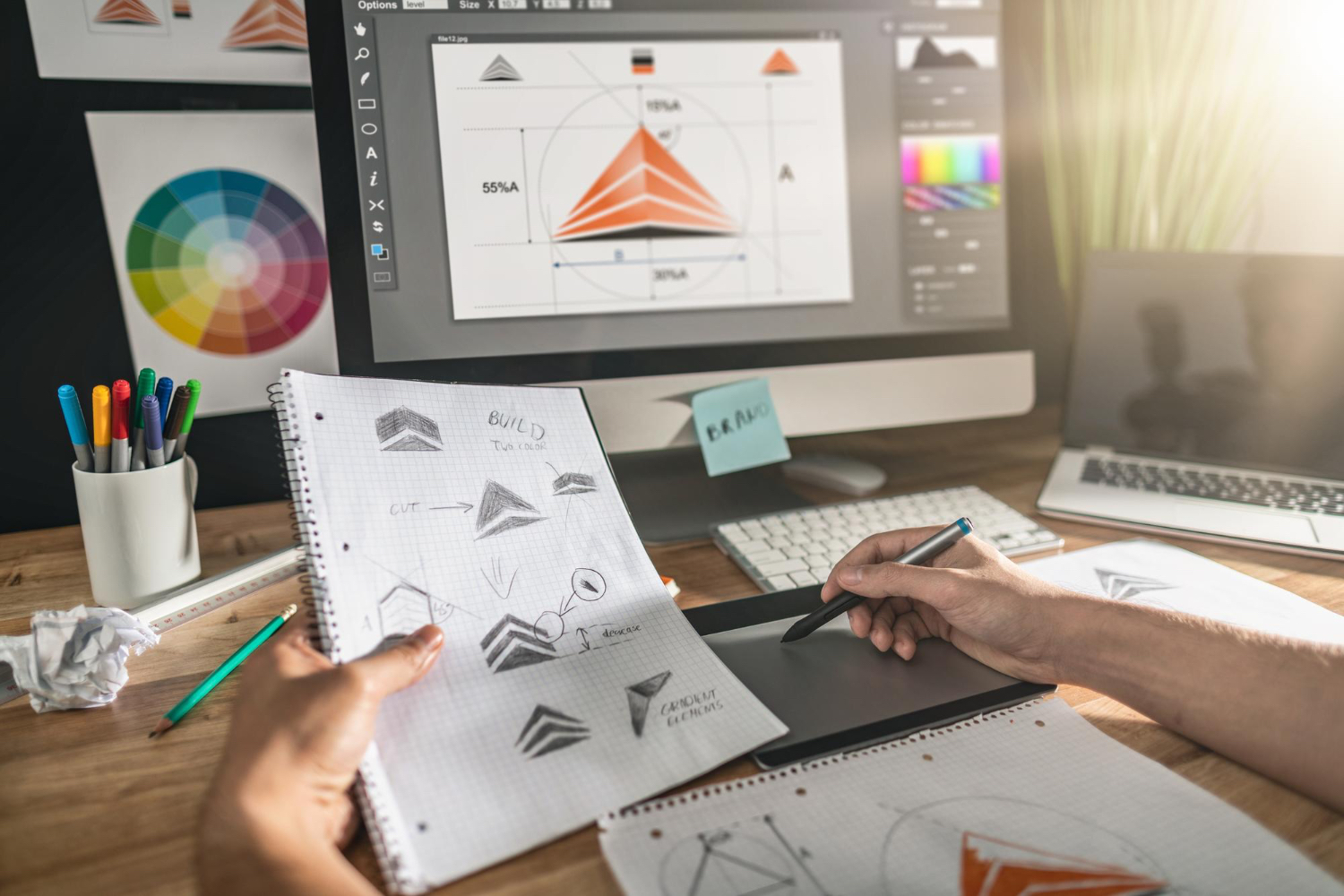
Courtesy - Magnific
Geometric shapes continue to appear frequently in logos for architecture, construction, and home design businesses.
Circles, squares, lines, grids, and other structured elements can naturally suggest ideas such as balance, proportion, construction, and spatial organization. These associations make geometric forms particularly suitable for architects, builders, interior designers, and businesses working with physical spaces.
They also tend to reproduce well at different sizes. A simple geometric symbol can remain recognizable when printed on a large construction sign or reduced to a small social media icon.
The most effective designs typically use these elements selectively. Combining a simple geometric form with appropriate typography can create a distinctive identity without making the logo unnecessarily complicated.
6. Logos Are Being Designed with Motion in Mind
Digital content has introduced another consideration for modern branding: movement.
Home and design businesses increasingly use video tours, renovation updates, project walkthroughs, social media videos, and virtual presentations to showcase their work. A logo that can be animated without losing its core characteristics can therefore be useful in digital marketing.
For example, individual elements might appear one at a time at the beginning of a project video, or a full logo could transition into a simplified symbol during a social media animation. These effects do not need to be elaborate. Even subtle movement can make a brand identity feel more suited to digital content.
For businesses that regularly produce video, considering motion during the initial logo design process can make it easier to adapt the identity later.
Good Logo Design Balances Creativity and Practicality
Logo trends will continue to evolve, but effective branding for home and design businesses still depends on a few basic principles. A logo should be recognizable, appropriate for the industry, adaptable to different formats, and capable of supporting the company’s visual identity over time.
The best approach will vary depending on the business. An architecture practice may prioritize precision and structure, an interior designer may focus more heavily on typography and visual refinement, while a contractor may need a logo that remains highly visible across vehicles, uniforms, and construction signage.
Rather than following every new trend, businesses can benefit from choosing design elements that reflect their own work and audience. A thoughtful logo should complement the spaces, products, and projects a company creates while remaining practical enough to work across the many places where its brand appears.
In that sense, good logo design is not simply about creating an attractive graphic. It is about building a visual identity that people can recognize and associate with a particular business long after their first interaction with it.
Also Read: Why Choose Ergonomic Home Theater Seating for Your Media Room
Frequently Asked Questions – Logo Design Trends
1. What are the most popular logo design trends for home brands?
Minimalism, flexible logo systems, custom typography, purposeful colour palettes and geometric shapes are among the approaches commonly used by home and design businesses.
2. Why is minimalism effective for architecture and interior design logos?
Minimalist logos are generally easy to recognise and reproduce across different sizes and formats. They can also complement project photography without competing for attention.
3. Should a home improvement business have different logo versions?
Yes. A primary logo, simplified mark and icon version can make the brand easier to use across websites, social media, vehicles, uniforms, signage and printed materials.
4. What colours work well for home and design logos?
Neutral colours such as black, white, beige, grey and earthy tones can work well for design-focused businesses. However, the best choice depends on the company’s positioning and where the logo will be used.
5. Should a logo be designed for digital use?
Yes. Modern logos often appear on websites, social media, videos and mobile screens, so designing a logo that remains clear at different sizes and can work with simple animation can be beneficial.
Courtesy - Featured Image(Magnific)
Author & Expert Review
Written By:  Gaurav Mishra | Civil Engineer & Content Writer

| Credentials: B.E. (Mahavir Swami College, Surat), Registered with Bhagwan Mahavir University (BMU). Experience: Civil Engineer with 5+ years of content writing experience, currently writing impactful articles for Gharpedia, part of SDCPL. Expertise: Specializes in writing well-researched content on residential construction, construction materials, design planning, on-site practices, and safety, blending technical accuracy with everyday clarity. Find him on: LinkedIn |
Verified By Expert: Farhan Shaikh – Senior Manager – Architect, SDCPL | Associate Member – IIA

This article has been reviewed for architectural and interior design accuracy by Farhan Shaikh, Senior Manager – Architect at Sthapati Designers & Consultants Pvt. Ltd. As the lead for all architectural and interior projects at SDCPL and an Associate Member of the Indian Institute of Architects (IIA), he brings hands-on experience in architectural planning, interior design, project coordination, and sustainable strategies. His review ensures the content reflects practical design considerations, industry best practices, and real-world applicability across both architecture and interior spaces.
Find him on : LinkedIn