




Table of Contents
Quick Summary
- Factory-assembled modules are glued and squared at the manufacturing plant, whereas on-site (flat-pack) modules arrive as flat panels and are fitted directly at your home.
- Flat-pack cabinets are easy to transport through narrow staircases or lifts, while factory-built units require clear access but protect your home from dusty assembly work.
- Deciding between a Factory-Assembled vs On-Site Assembled Modular Kitchen comes down to balancing transportation logistics against installation speed and finish consistency.
- Both types rely on quality moisture-resistant boards (such as BWR or Marine Plywood under IS 303 / IS 710 standards) and durable hardware fittings for long-term use.
- Regardless of the assembly choice, finalizing your plumbing, electrical points, and chimney placement before installation prevents costly alignment errors later.
Courtesy - Magnific
Modular kitchens have become a common choice in Indian homes, especially in apartments where layouts are standardised and timelines are tight. Instead of a carpenter building every cabinet on site, the kitchen is made from factory-produced units that are fitted together.
What many homeowners do not realise is that modular kitchens arrive in two quite different ways. Some are delivered as flat panels and assembled at the flat or house. Others are assembled in the factory and arrive as complete cabinets ready to fix in place.
Two Ways a Modular Kitchen Arrives
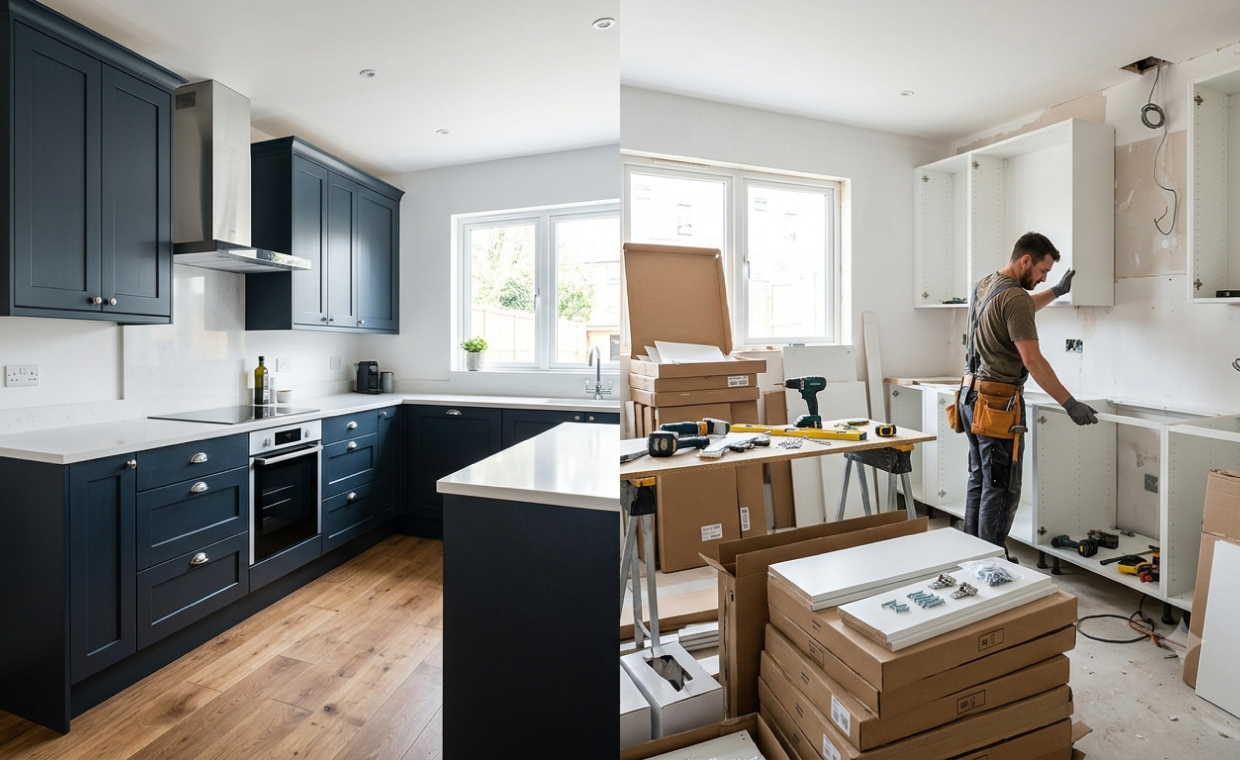
Knock-down or flat-pack modules are cut and edged in a factory, then packed flat. A fitter assembles each cabinet at the site before installation. This keeps transport simple and suits buildings where access is tight.
Factory-assembled modules are glued, squared and fitted with hardware before they leave the factory. They take more space in transport, but installation is faster, and the quality of each box depends less on conditions at the site.
The same choice exists in other countries. In New Zealand, for example, suppliers such as Cabjaks deliver kitchen cabinets fully assembled, and the homeowner’s builder or installer fixes them in place. The trade-off is the same one Indian homeowners face: more cost and bulk in transport against less work and less risk on site.
Which Suits Your Home
Neither option is right for every project. A few factors usually decide it:
- Access. Factory-assembled tall units may not fit in older lifts or narrow staircases, while flat-packed panels can go almost anywhere.
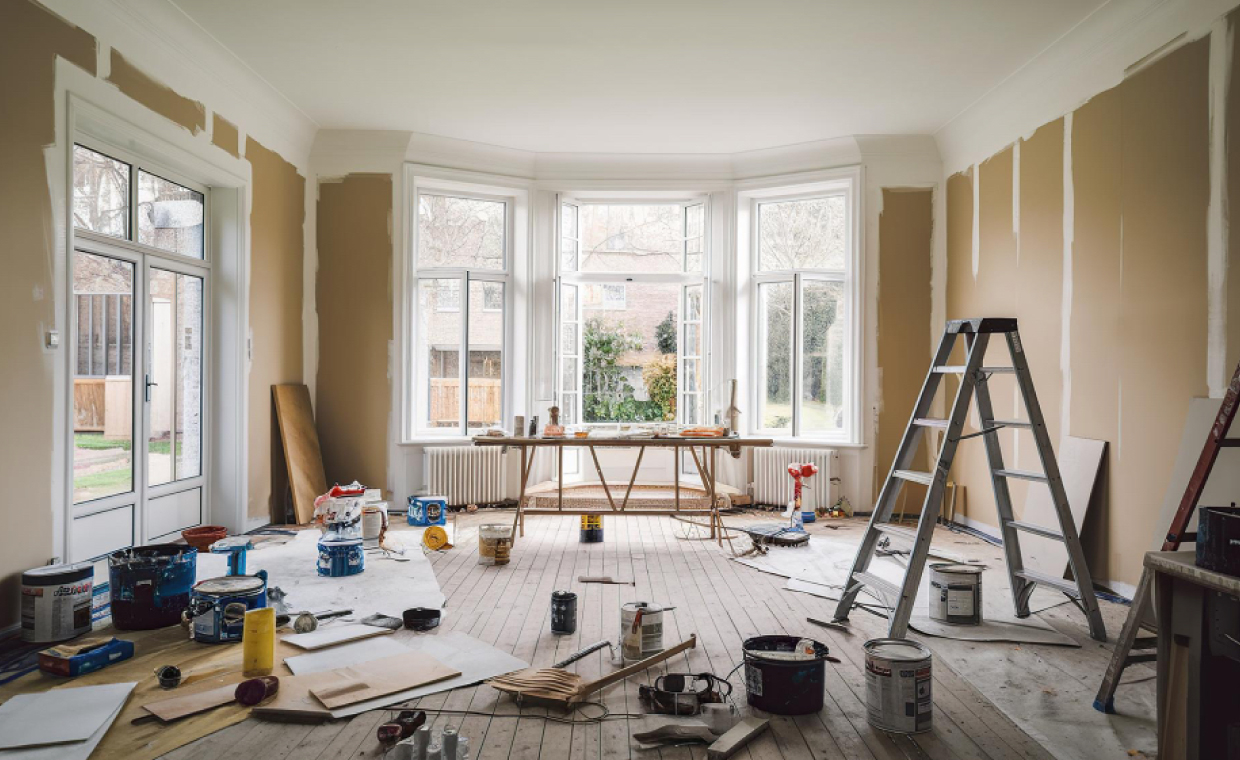
- Site conditions. Assembling cabinets in a dusty, half-finished flat can affect finish quality and alignment.
- Timeline. Assembled units shorten installation, which helps when the kitchen is one of the last jobs before moving in.
- Budget. Flat-pack modules are usually cheaper to transport, though the saving can be reduced by assembly labour on site.
In practice, many projects mix the two, with base and wall units assembled in the factory and tall units or awkward corner pieces assembled on site.
Whichever route you choose, confirm who is responsible if a cabinet arrives damaged or out of square. With factory-assembled units that is usually the supplier, while with on-site assembly the answer can depend on whether the supplier’s own fitter did the work.
Choosing Materials for Indian Conditions

Courtesy - Magnific
Moisture is the main enemy of kitchen cabinets in most Indian homes. Steam from cooking, water near the sink and high humidity during the monsoon all test the board the cabinets are made from.
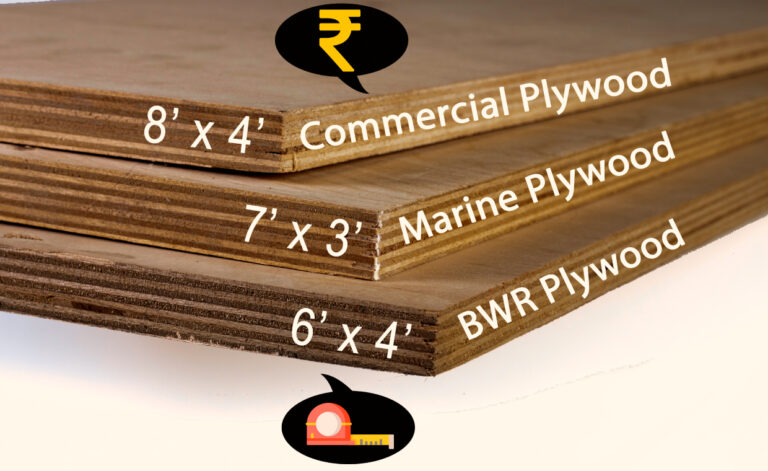
The Bureau of Indian Standards’ plywood standards set out the main grades. IS 303 covers general-purpose plywood, including moisture-resistant (MR) and boiling-water-resistant (BWR) grades, while IS 710 covers marine plywood made for high-moisture and wet conditions.
For most kitchens, BWR plywood is a sensible minimum for carcasses, with marine plywood worth considering for the sink unit and any cabinet near a dishwasher. MR grade is better kept for dry areas such as bedroom wardrobes. Whatever the board, check that the cut edges are sealed with edge banding, since exposed edges absorb moisture first.
Hardware And Fittings
Courtesy - Magnific
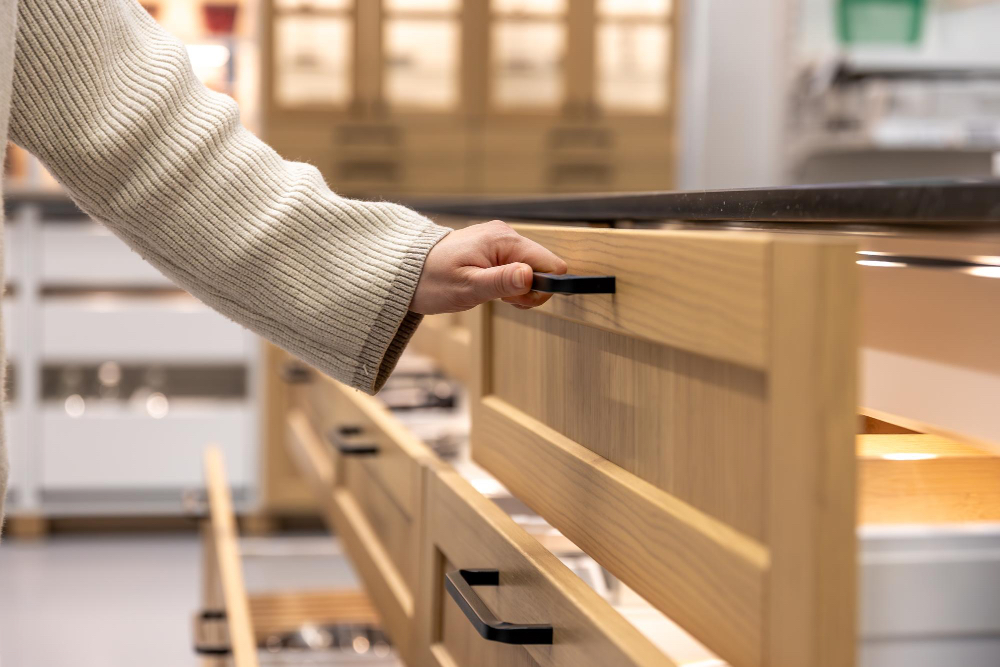
The board is only half the story. Hinges, drawer channels and lift-up mechanisms take daily wear, and cheap fittings are often the first thing to fail.
Soft-close hinges and full-extension drawer channels are now widely available. Check the load rating of drawer channels for heavy items such as pressure cookers and steel utensils, and ask whether the hardware brand offers spare parts locally.
Plan the hob and chimney position early as well. In Indian kitchens, where tempering and frying are common, a properly ducted chimney does more for the kitchen’s long-term condition than almost any cabinet finish.
Finishes That Cope with Daily Use
Courtesy - Magnific
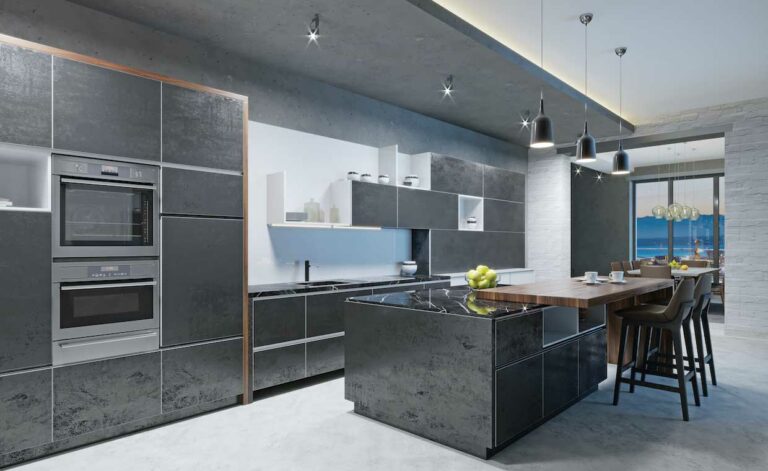
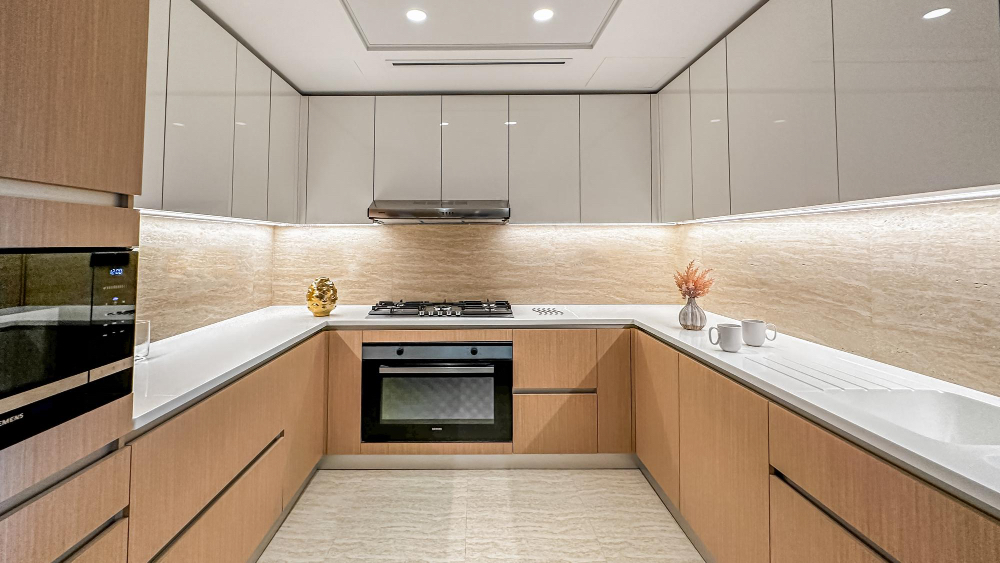
Shutter finishes affect both the look and the upkeep of a modular kitchen. Laminate is the most common choice because it is affordable, comes in many colours and textures, and stands up well to daily cleaning.
Acrylic gives a high-gloss look but can show fine scratches and fingerprints, so it suits homeowners willing to wipe it down often. PU-painted shutters offer a seamless finish in almost any colour, though they usually cost more and need care to avoid chipping.
For the sink and hob areas, a matt or textured laminate often hides wear better than a gloss finish. Ask to see a sample of the actual shutter you are buying, under kitchen lighting if possible, before you confirm the order.
A Comparison from New Zealand
New Zealand offers a useful comparison because kitchen buyers there are dealing with a building boom of their own. Over the twelve months ending July 2026, Christchurch City consented 4,773 new homes, a rise of 28 percent, and the wider Canterbury region recorded the highest rate of new home consents per person in the country.
With so many homes being finished at once, the order of work matters. Suppliers delivering assembled cabinetry to Christchurch homes hand over complete units for the builder to install, so the kitchen can go in quickly once walls are lined and painted. The stone or laminate benchtop is then measured and fitted afterwards.
The lesson for Indian homeowners is about sequence rather than style. Whichever type of module you choose, agree the kitchen layout before tiling and plumbing are finalised, so the cabinets, sink and chimney all line up with the services behind them.
Before You Sign Off
A modular kitchen is a long-term purchase, and the quotation is where most problems can be avoided. Ask for the board grade and thickness, the edge banding, the hardware brand and the warranty to be written into the quote, along with whether modules arrive assembled or flat-packed.
It is also worth asking who is responsible for alignment and finishing after installation. A clear answer at the start saves a great deal of back and forth once the kitchen is in use. Keep a copy of the final drawings with the agreed dimensions, appliance positions and shutter finishes, and check the installed kitchen against them before making the last payment.
Also Read: Essential Things One Must Know About Modular Kitchens!
FAQs on Factory-Assembled vs On-Site Assembled Modular Kitchen
1. What is the main difference in a Factory-Assembled vs On-Site Assembled Modular Kitchen?
In a factory-assembled kitchen, complete cabinet units are built, glued, and fitted with hardware at the plant before delivery, ensuring precise machine squaring. On-site assembled (flat-pack) kitchens arrive as individual panels that a fitter puts together inside your flat.
2. Which option is better for homes with narrow lifts or staircases?
Flat-pack (on-site assembled) modules are better suited for homes with tight access, as the flat panels can easily fit into standard residential lifts or narrow stairwells compared to bulky, pre-built cabinets.
3. Does site assembly affect the finish or quality of the kitchen cabinets?
Assembly in a dusty or uneven environment can sometimes impact alignment and edge finish. Factory assembly reduces human error on-site, though a skilled installer can still achieve a great finish with flat-pack units.
4. Which assembly method is faster to install?
Factory-assembled modules are significantly faster to install because the cabinets arrive ready to fix to the walls, saving several days of labour and site disruption.
5. Is there a big price difference between factory-assembled and flat-pack kitchens?
Flat-pack modules are generally cheaper to transport and ship. However, the overall cost difference often narrows once you factor in the additional labour time required to assemble flat-pack cabinets on-site.
Courtesy - Featured Image(Magnific-AI Generated)
Author & Expert Review
Written By:  Nidhi Patel | Civil Engineer & Content Writer

| Credentials: B.E. (Mahatma Gandhi Institute of Technical Education and Research Centre), Registered with Gujarat Technological University (GTU). Experience: Civil Engineer with 3+ years of content writing experience, currently writing blogs for Gharpedia, part of SDCPL. Expertise: Specializing in SEO-optimized blogs and long-form articles focused on home improvement, construction, interiors and architect topics. I create well-researched, reader-focused content that balances technical accuracy with clarity, making complex subjects easy to understand. Find her on: LinkedIn |
Verified By Expert: Farhan Shaikh – Senior Manager – Architect, SDCPL | Associate Member – IIA

This article has been reviewed for architectural and interior design accuracy by Farhan Shaikh, Senior Manager – Architect at Sthapati Designers & Consultants Pvt. Ltd. As the lead for all architectural and interior projects at SDCPL and an Associate Member of the Indian Institute of Architects (IIA), he brings hands-on experience in architectural planning, interior design, project coordination, and sustainable strategies. His review ensures the content reflects practical design considerations, industry best practices, and real-world applicability across both architecture and interior spaces.
Find him on : Linkedin