






Table of Contents
Quick Summary
- Masonry tools are essential for building, repairing, and finishing brick, stone, and concrete structures accurately.
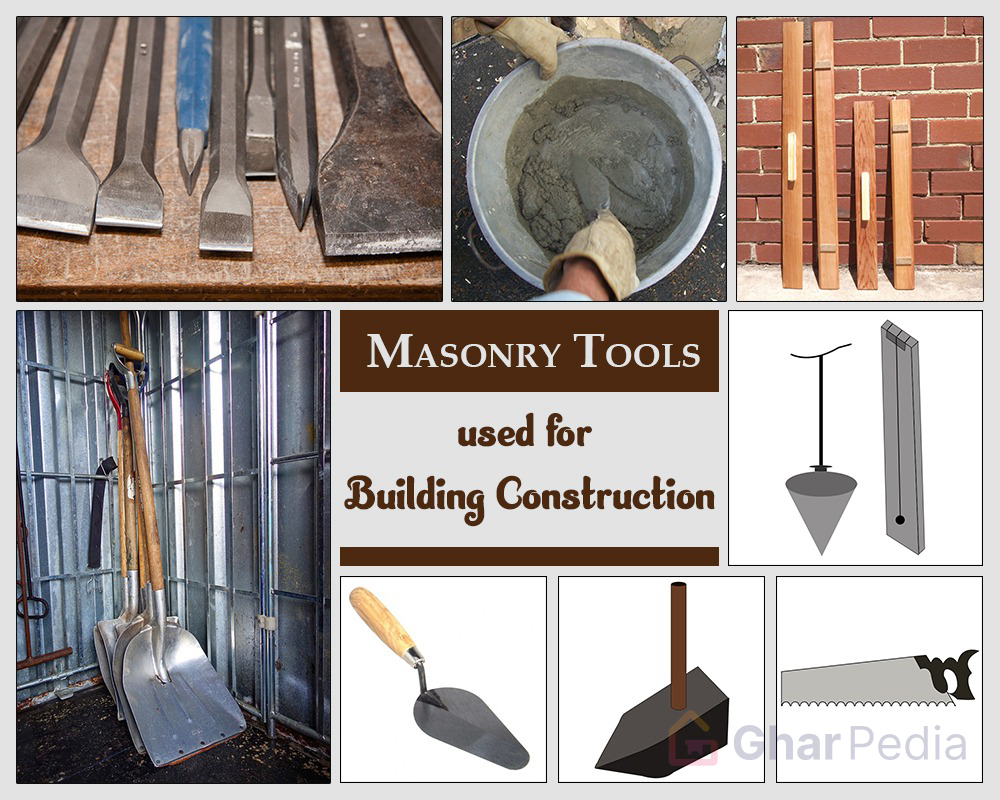
- This guide categorizes 30+ tools into common masonry tools, brick masonry tools, stone masonry tools, and alignment tools.
- Common tools like trowels, spirit levels, plumb bobs, and jointers help ensure proper mortar application, alignment, and finishing.
- Specialized brick and stone masonry tools, including brick hammers, chisels, saws, and crowbars, are used for cutting, shaping, and dressing materials.
- The article also explains how homeowners can choose the right tools, follow safety practices, and maintain tools for long-lasting performance.
Courtesy - Magnific
Masonry tools are hand tools and equipment used for building and repair work. They are used for a variety of tasks, ranging from aligning, shaping, and cutting to spreading, polishing, and other masonry work. There is a high risk of construction errors if these weapons aren’t used properly.
In this blog, Gharpedia lists 30+ masonry tools used in masonry work. Whether you are building a new brick wall, carrying out a small stone repair, or want to understand the various tools you see at a construction site, this guide explains every tool in plain language.
Masonry tools are grouped into four categories: (1) common tools used in all masonry work, (2) tools specific to brick masonry, (3) tools specific to stone masonry, and (4) tools for checking levels and alignment.
What are Masonry Tools and Why Do They Matter?
Courtesy - Magnific
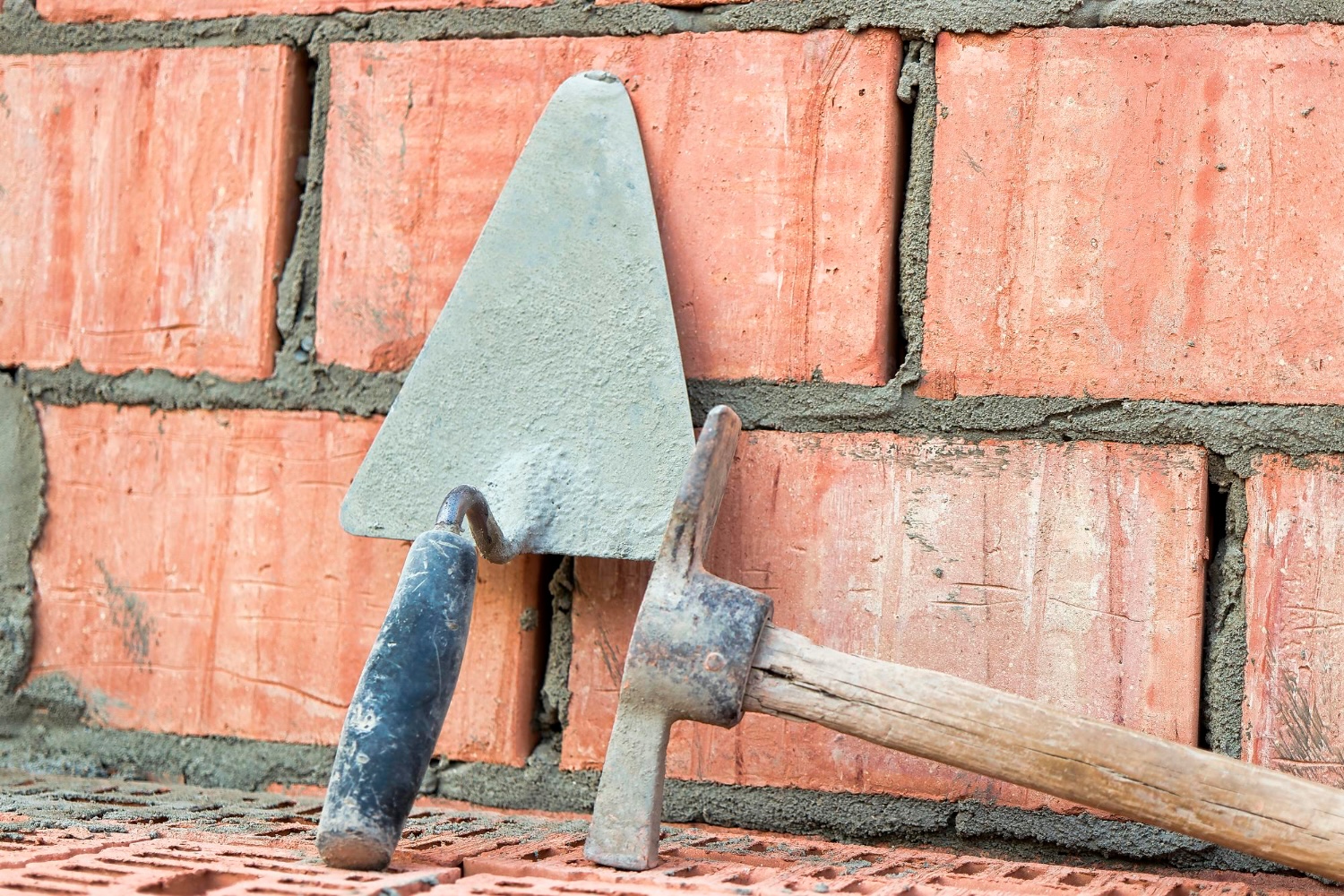
Building a wall or a structure by stacking bricks, stones, or concrete blocks and binding them with mortar is called masonry work. This work requires masonry tools for preparing mortar, placing the units correctly, and checking alignment.
It is important to use the right masonry tools for each job because using the wrong tool or a worn-out one leads to uneven joints, leaning walls, and surface damage.
Here is everything you need to know before we get into the full list.
- Brick masonry and stone masonry use different specialised tools, although many basic tools are common to both.
- Some tools, like a spirit level or a trowel, are used on almost every masonry job.
- Homeowners doing small repairs need only a handful of the tools listed here.
Also read: Few Top-of-the-Line Repair Tools for DIY Projects of House
Common Masonry Tools Used in All Types of Masonry Work
The following are some of the most commonly used tools:
01. Trowel
Courtesy - Magnific
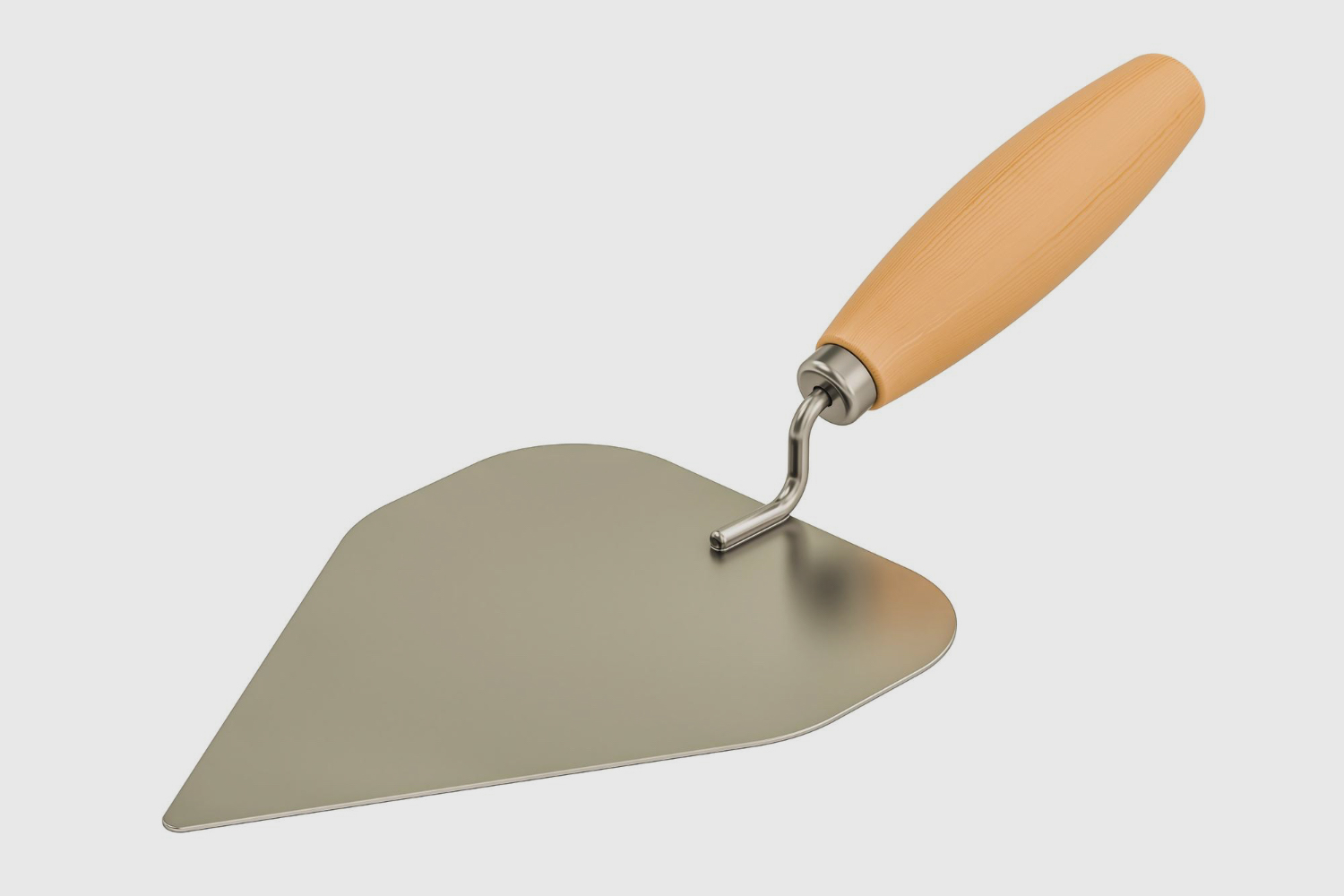
A trowel is the most commonly used tool in masonry work. It has a flat, pointed steel blade with a wooden or plastic handle. The blades come with bull-nosed (rounded) or pointed ends, depending on the job.
Use: It is used to scoop mortar from the pan, spread it evenly on a course of bricks or stone, and scrape away any excess.
Tip – A standard brick trowel handles most repair work around the house, and smaller pointing trowels are used for fine joint work.
Also Read: 50+ Types of Bricks in the Construction | Classification of Bricks
02. Corner Trowel
Courtesy - Magnific
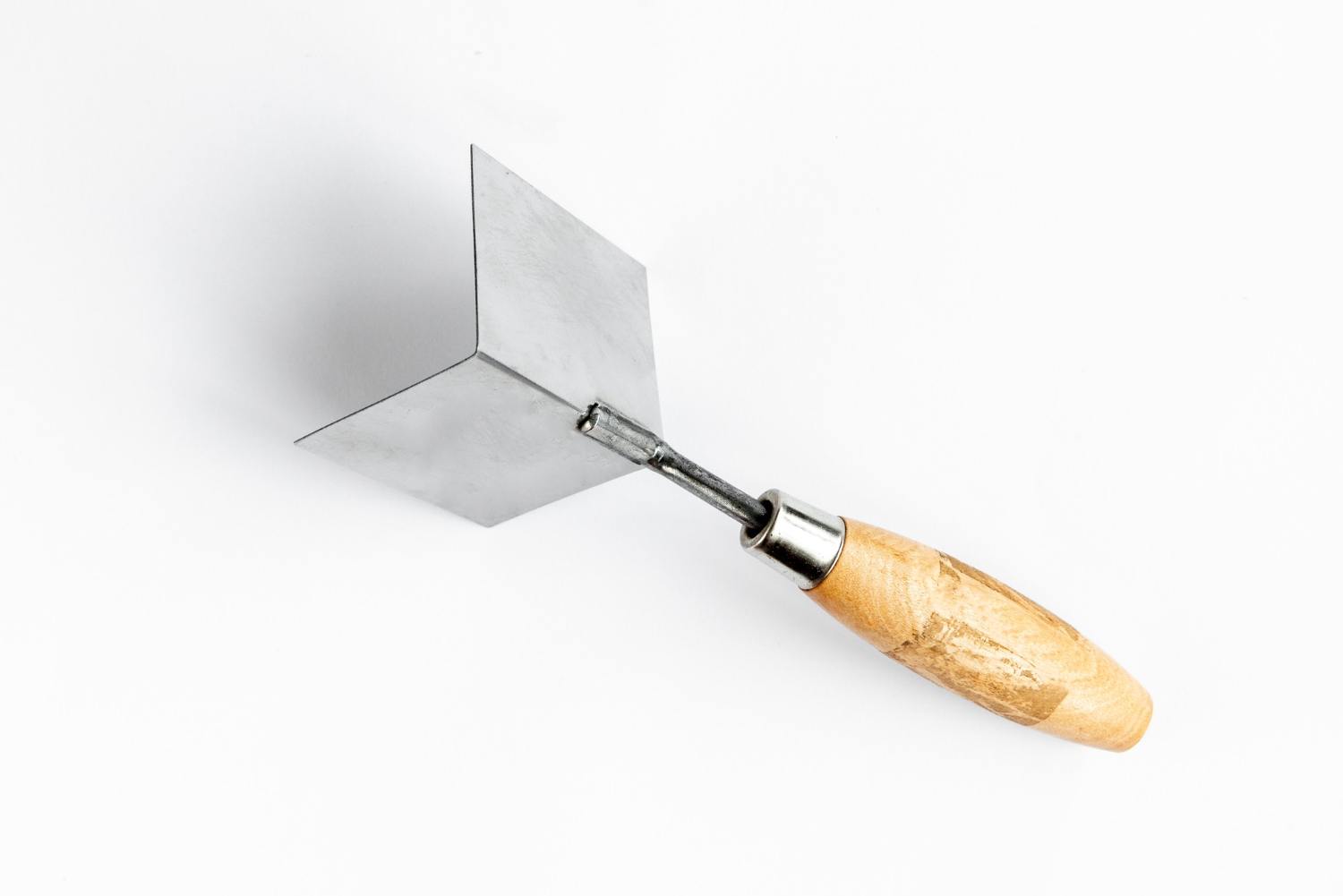
A corner trowel is bent at a 90-degree angle so that it can give a perfect shape and finish to mortar at the wall corners.
An outside corner trowel is used to finish and smooth the outer corners of a wall, while an inside corner trowel is used to clean and finish internal corners.
Also Read: Various Shapes of Brick used in Construction
03. Setting Out Square (Mason’s Square)
Courtesy - Magnific
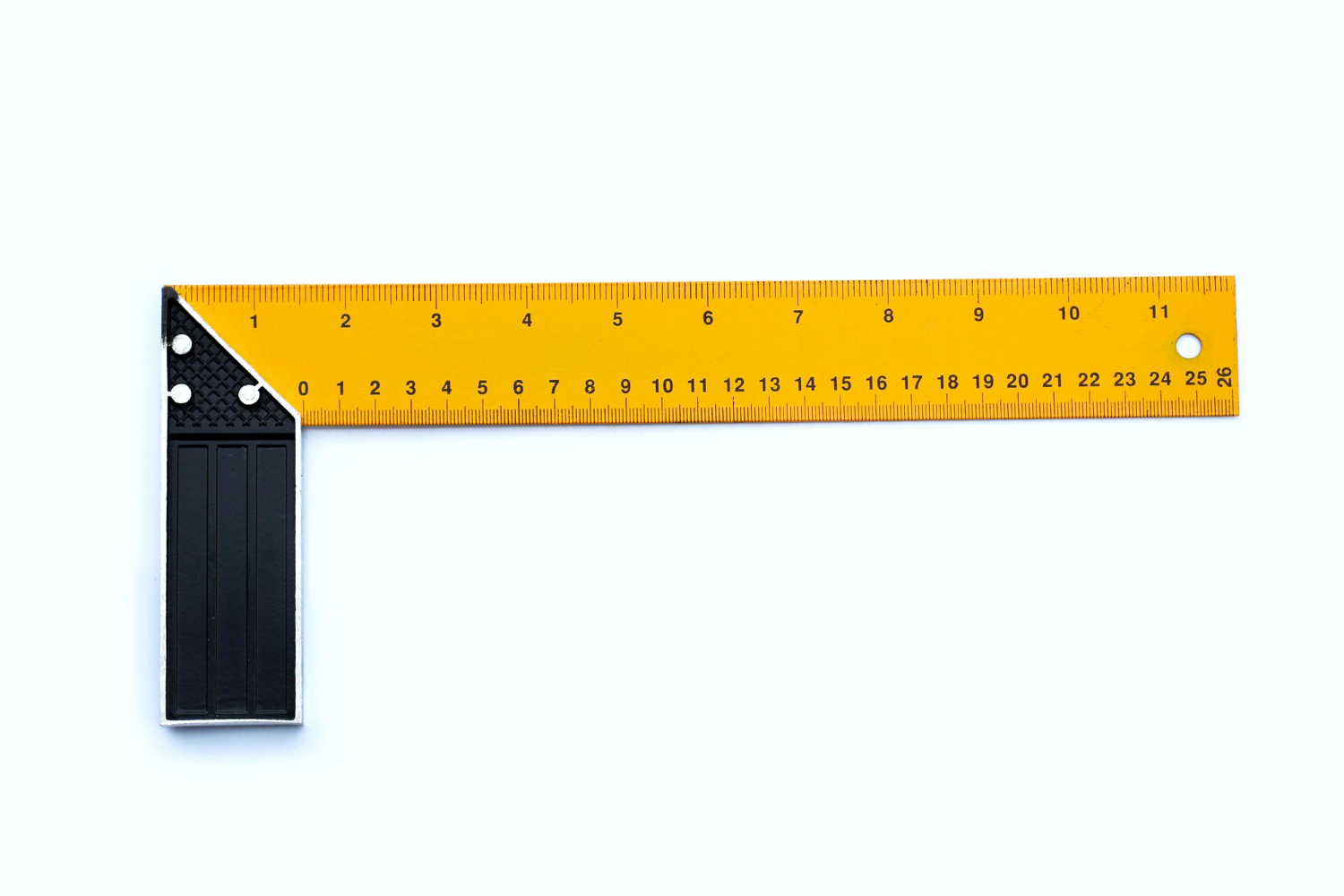
It is an L-shaped flat tool used to mark and check right angles (90-degree corners) before and during masonry work. Using this tool from the very beginning gives you perfect square corners and prevents small errors from becoming big, visible mistakes.
04. Plumb Rule and Plumb Bob
Courtesy - Magnific
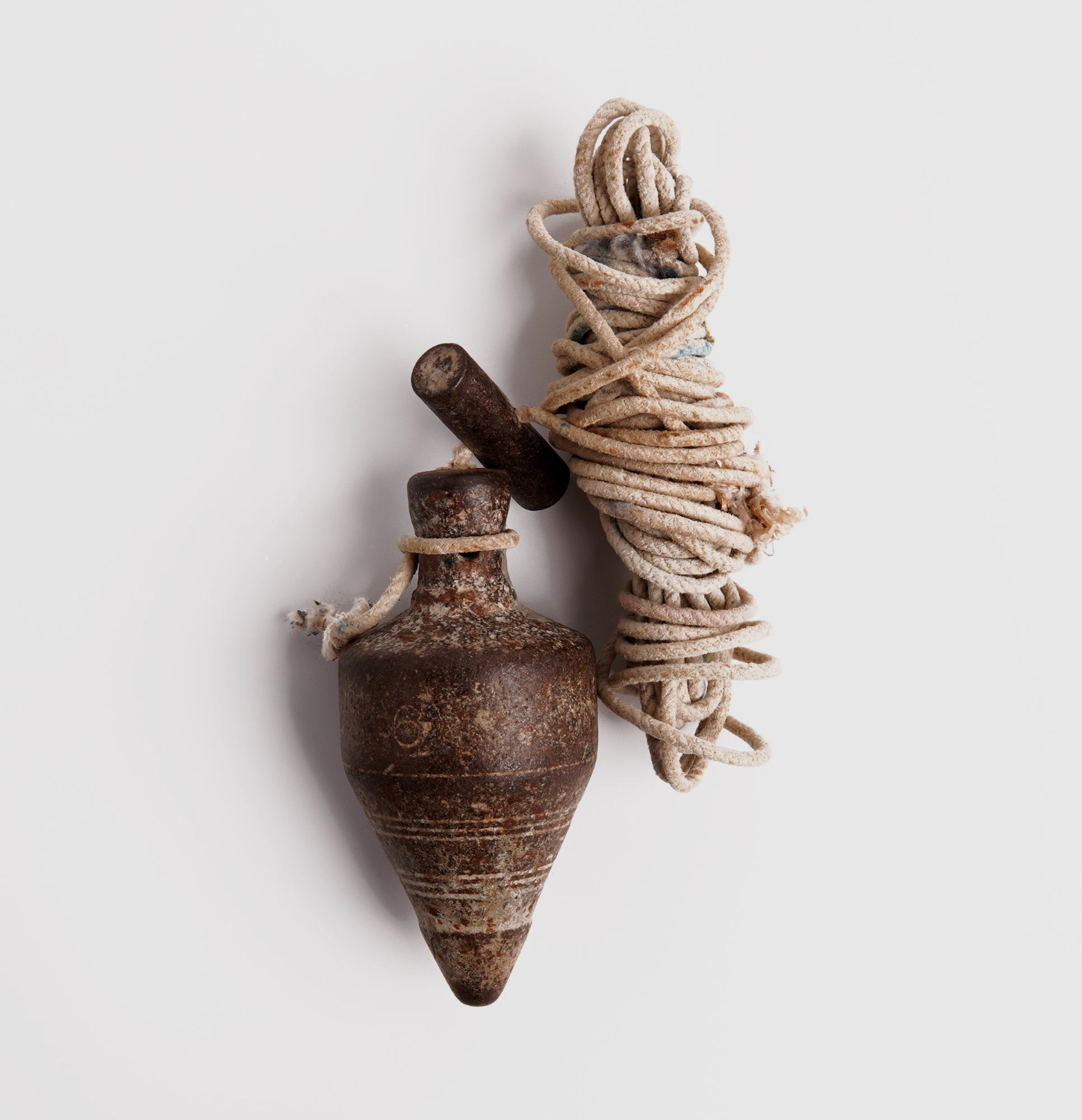
The plumb bob is a small metal weight attached to a string. The plumb rule is a straight wooden board with a central groove. These two tools work together to check whether a wall is perfectly vertical. If the plumb bob shangs freely in the groove, the wall next to it is truly vertical. If the bob swings to one side, the wall is leaning.
Also Read: Types of Masonry that can be Used for Construction of your Dream Home
05. Spirit Level
Courtesy - Magnific
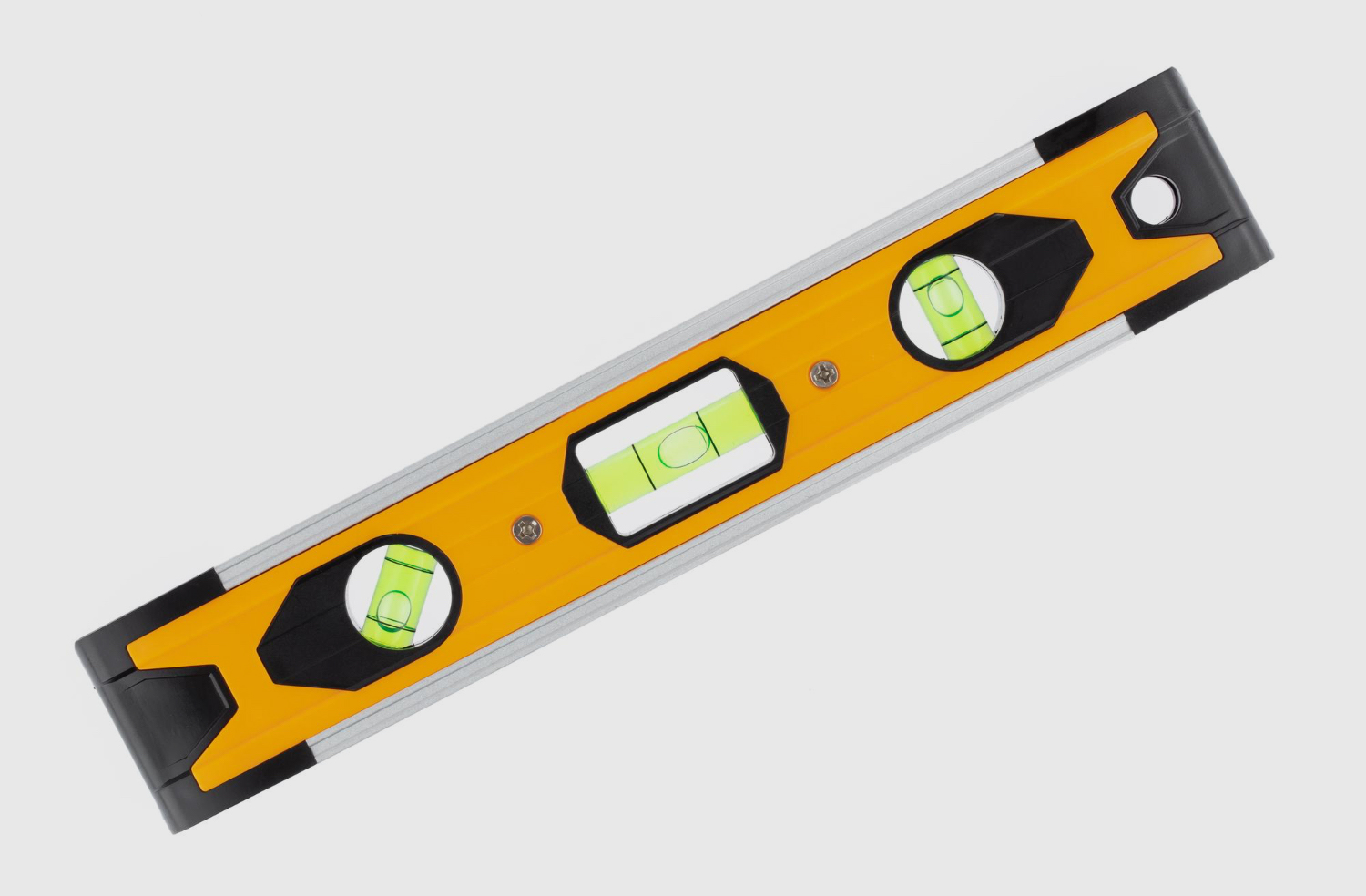
A spirit level is a rigid bar made from hard plastic, aluminium, or wood, with one or more glass vials that are partially filled with liquid, leaving an air bubble. When the bubble sits exactly in the centre of the vial, the surface is level (horizontal) or plumb (vertical), depending on which vial you read.
Spirit levels are used at every course of bricks to check both horizontal and vertical alignment. Today, most spirit levels include separate vials for both horizontal and vertical checking in the same tool, while advanced ones are available in digital versions.
06. Lines and Pins
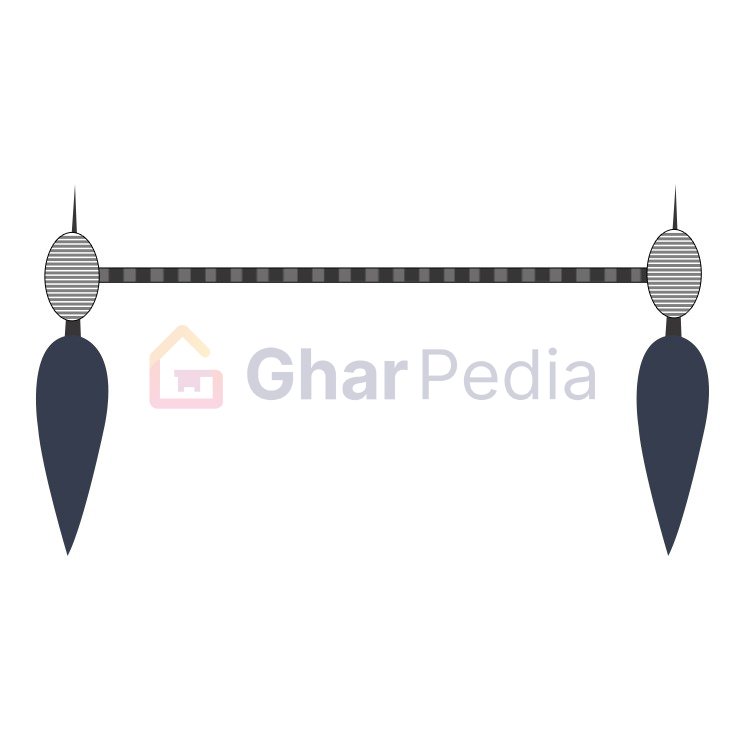
The ‘line’ is a string or nylon cord, while the ‘pins’ are pointed metal rods. Pins are pushed into the mortar joint at each end of a course, and the cord is stretched tightly between them. Lines and pins are used to keep each course of bricks or stones in a straight horizontal line as construction progresses. As each brick is laid, it is aligned with this string to maintain a straight course.
07. Water Level
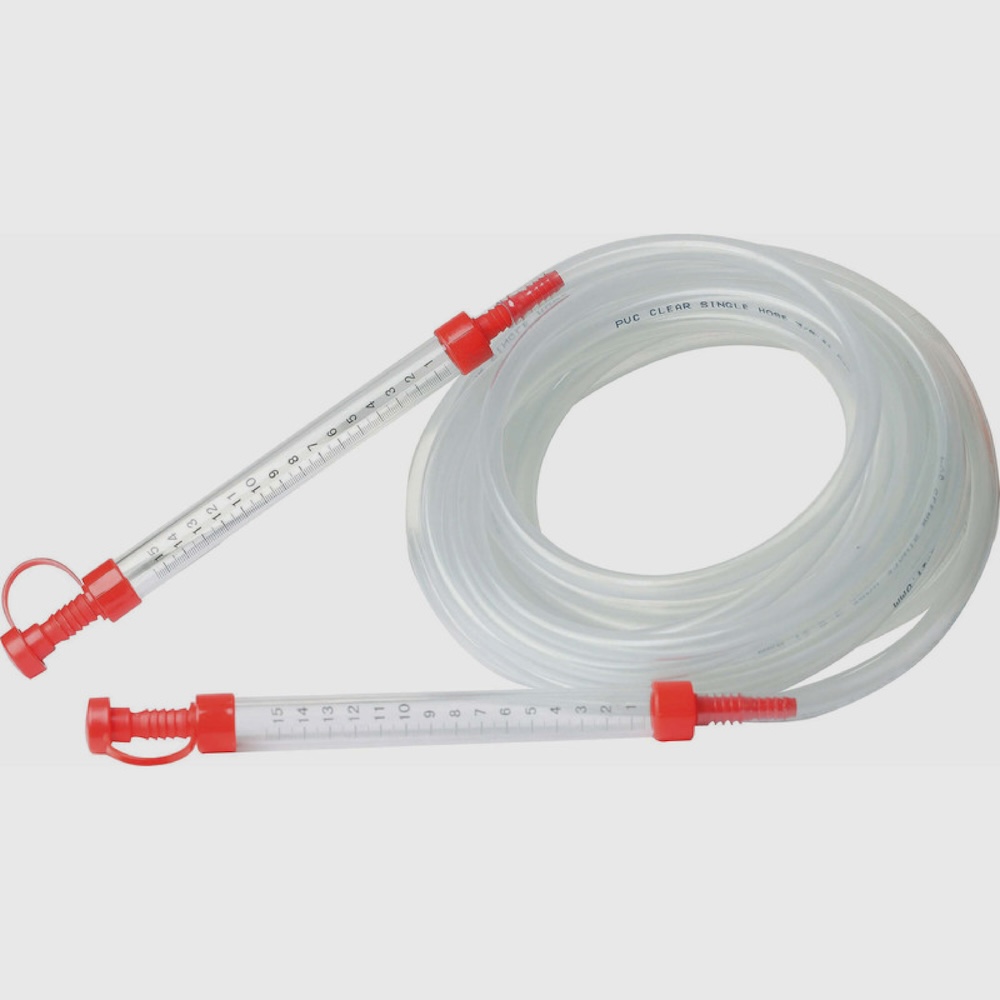
Courtesy - cdn
A water level works on a simple principle: water always finds its own level. It is used to transfer a height reference from one point to another, even around corners or over long distances. It consists of a clear, flexible plastic tube filled with water. When both ends are held upright, the water surface at each end remains at the same height, regardless of the distance between them.
This tool is especially useful on larger construction sites where a spirit level alone cannot span the required distance.
08. Boning Rods
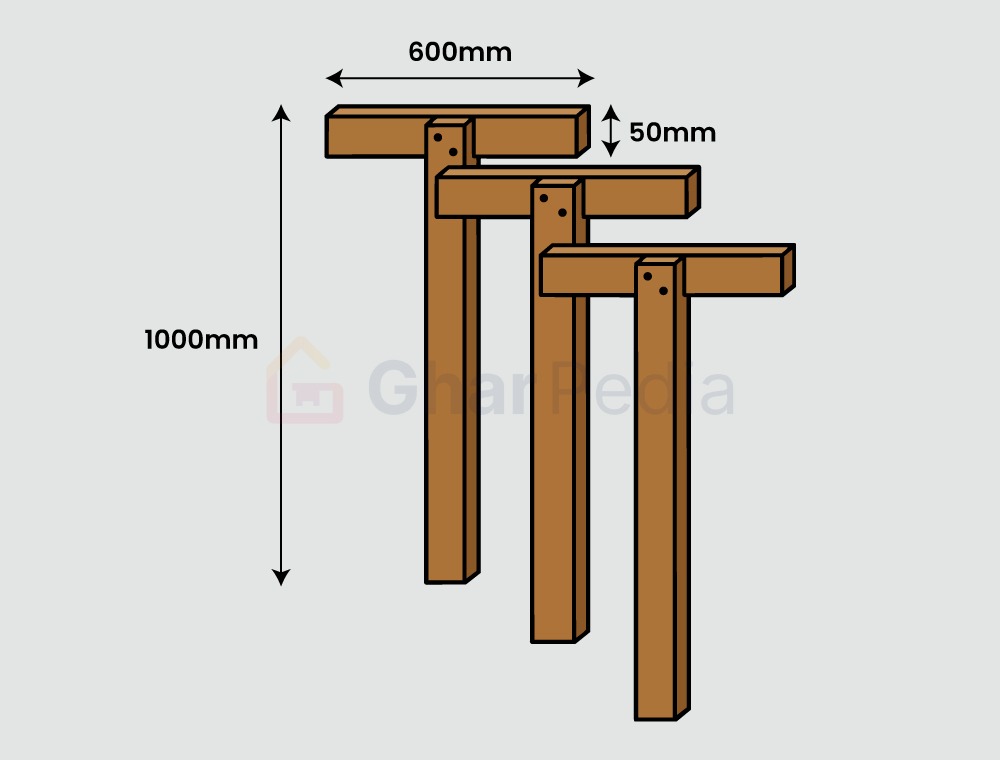
Boning rods are T-shaped wooden or metal rods used in sets of three to check and maintain a consistent level or gradient across a long stretch of masonry or ground. Two rods are placed at fixed reference points, while a third rod (called the ‘travelling rod’) is moved along the work area. When all three T-tops align with the observer’s eye, the surface between them is at the correct level.
09. Spade (Phavada)
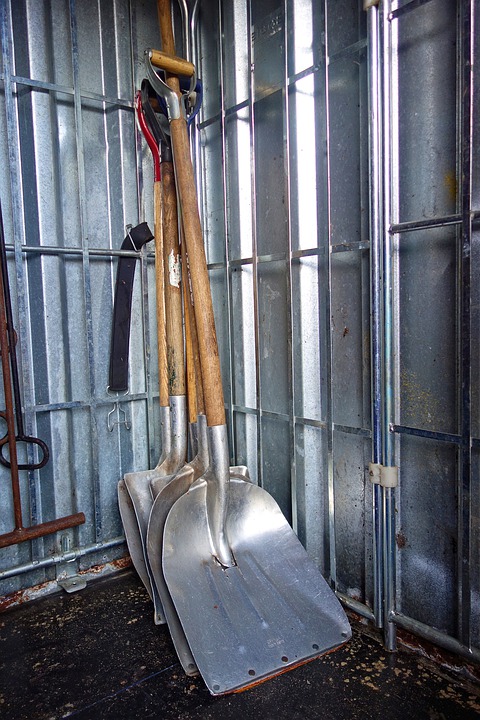
Courtesy - Pixabay
The spade, commonly known as phavada in India, has a flat, broad steel blade with a long handle. It is used to dig, scoop, and mix mortar on the ground or in a mortar pan.
10. Mortar Pan (Ghamela)
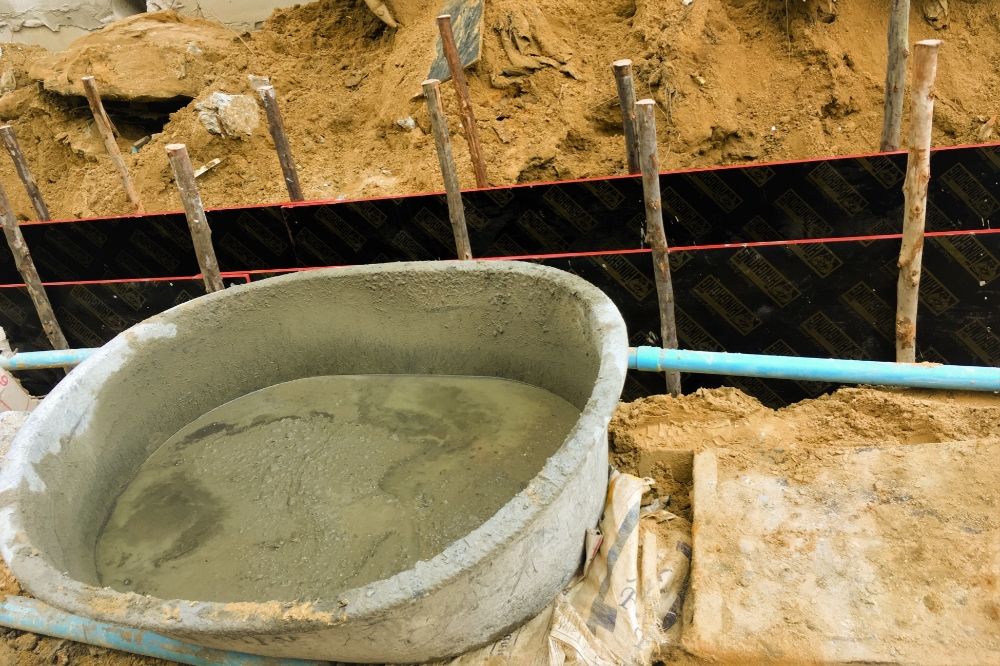
Courtesy - Canva
The mortar pan, which is commonly known as “Ghamela” in India, is a large, shallow metal or plastic tray used to hold freshly mixed mortar cement and concrete near the work area.
11. Jointer & Joint Raker
Courtesy - Marshalltown, Amazon
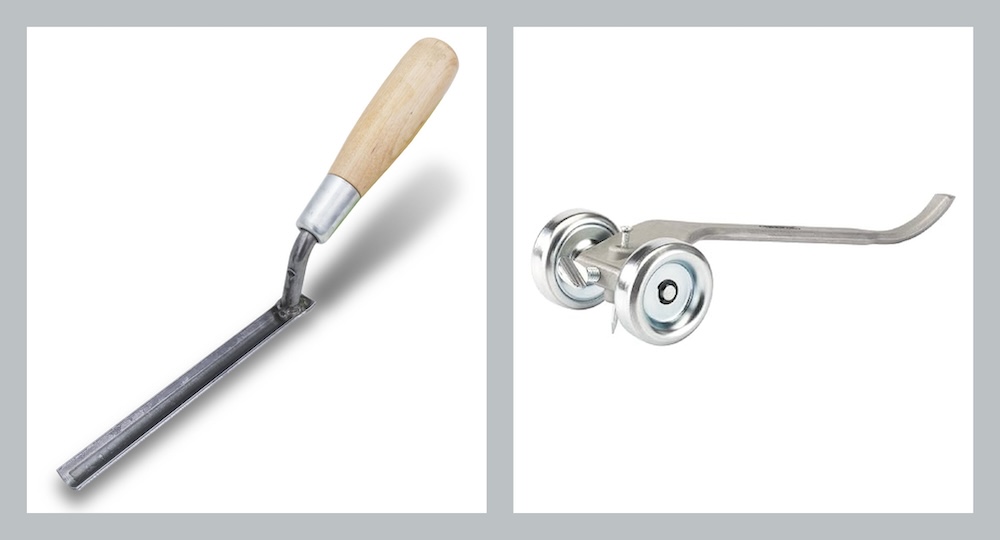
A jointer is a hand tool used to compress and shape freshly applied mortar between bricks. A joint raker, on the other hand, is a specialised scraping tool that digs out or removes the applied mortar to a uniform depth. Using a jointer or a joint raker produces concave, flush, or V-shaped joints. This is partly cosmetic and partly structural, as a well-finished joint sheds water more effectively and reduces the risk of dampness entering the wall.
Masonry Tools for Brick Masonry
The following tools are specially designed for brick masonry work such as constructing brick walls, compound walls, or other fired-brick structures. These are the tools your mason is most likely to use during brickwork.
12. Brick Hammer
Courtesy - Magnific
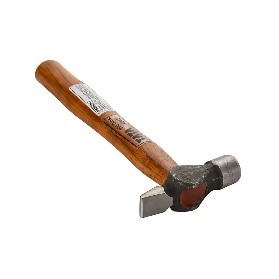
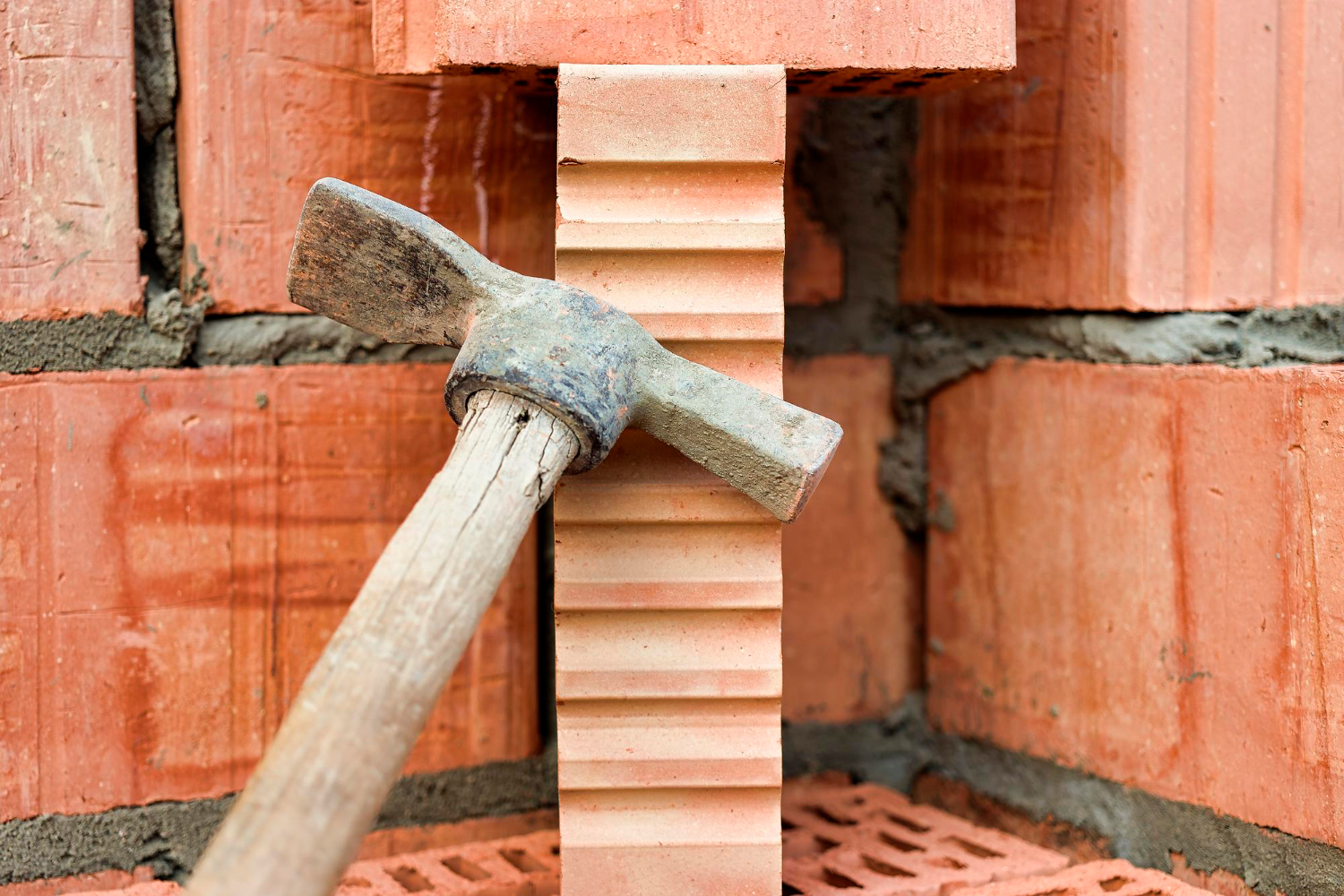
A brick hammer has a square striking face on one side and a chisel-shaped blade (the ‘peen’) on the other. The striking face is used to tap bricks into position, while the peen is used to score and split bricks to the required size.
Also Read: 30+ Guidelines for Constructing a Brick Masonry Wall
13. Lump Hammer and Bolster Chisel
Courtesy - ebayimg
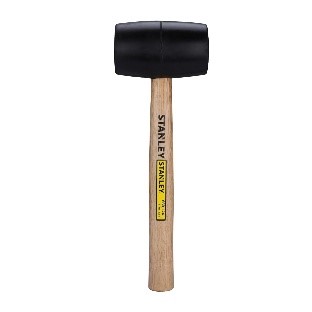
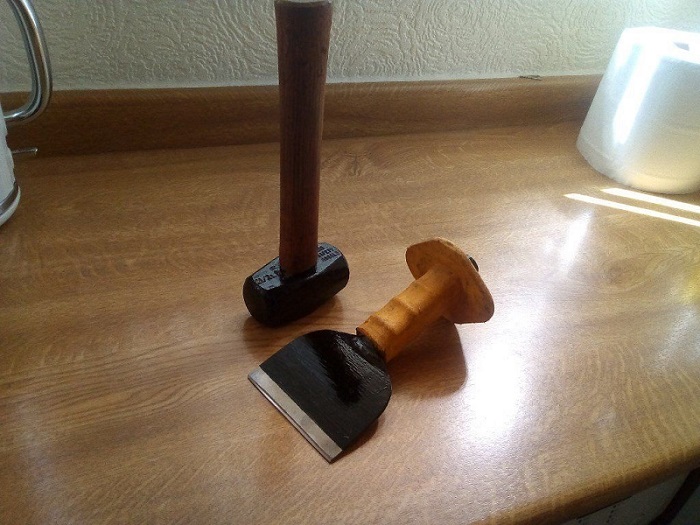
These two tools are always used together. The bolster chisel is a wide, flat-bladed steel chisel, while the lump hammer or club hammer provides the striking force. The bolster is placed across the brick where the cut needs to be, and the lump hammer strikes it. This gives a cleaner, more controlled cut than using a brick hammer alone.
When to use: It is mainly used for cutting bricks to fit around door frames, window reveals, and at the ends of courses where a full brick cannot be accommodated.
14. Double-End Comb Hammer (Skutch)
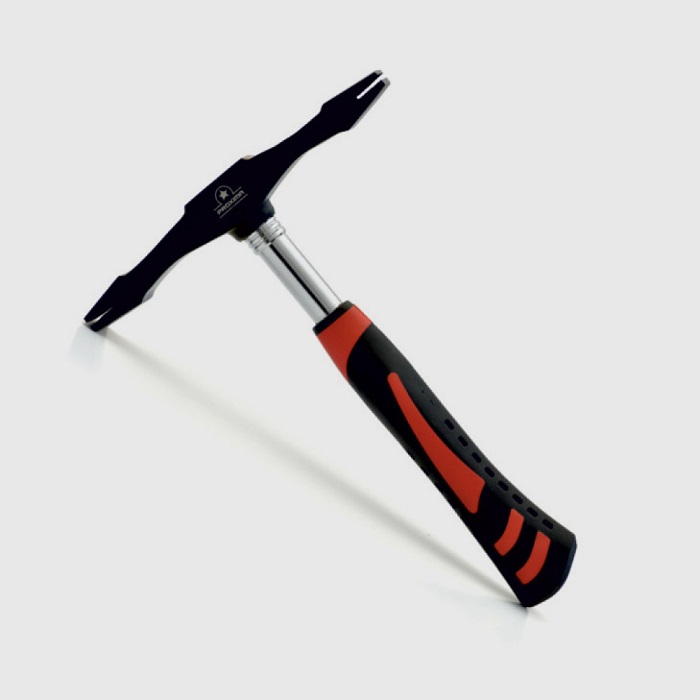
Courtesy - Proximasteel
The skutch has comb-like teeth on both ends instead of a flat striking face. It is used to shape or trim bricks, for example, to reduce a brick’s thickness or to roughen a surface so that plaster bonds more effectively.
15. Straight Edge
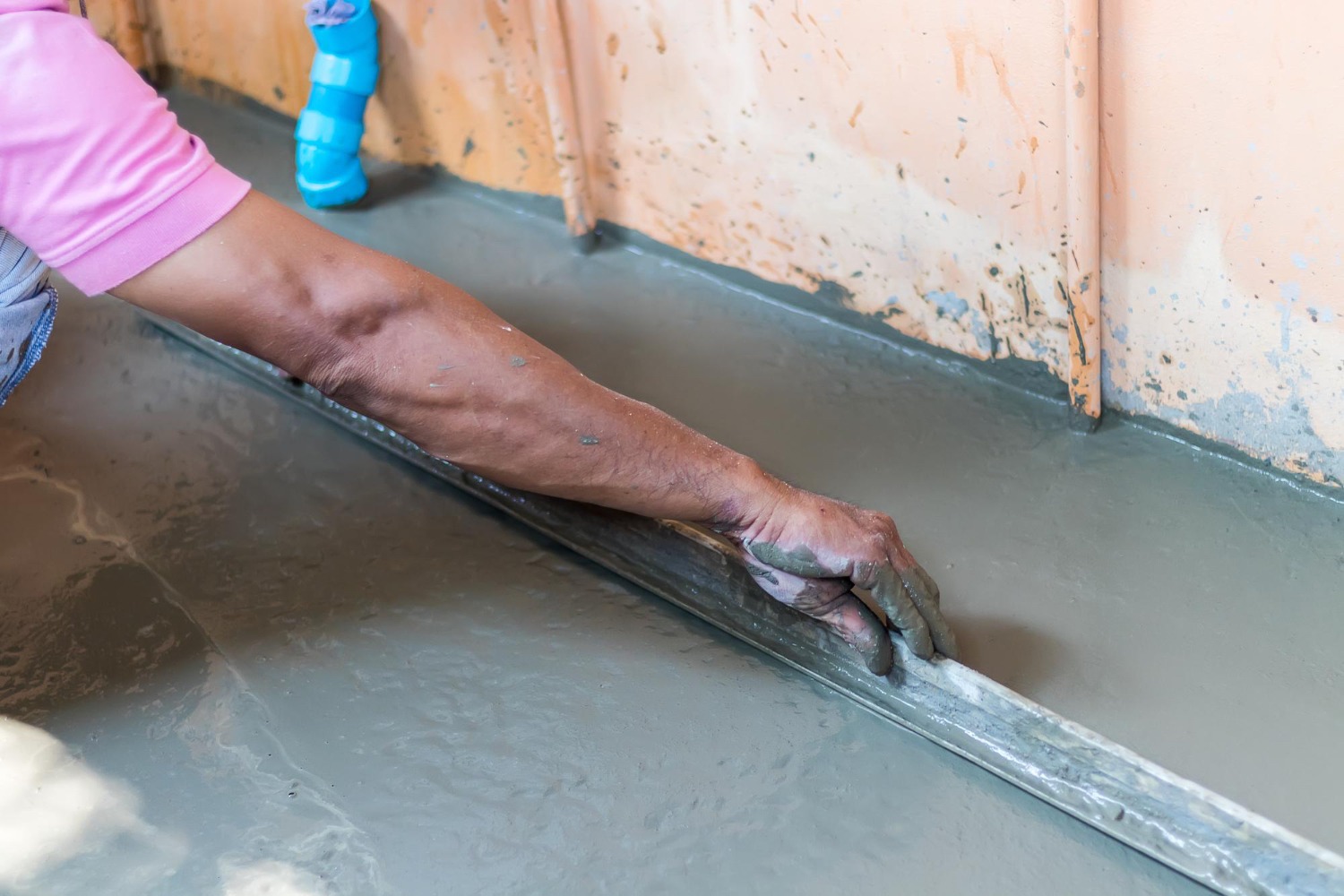
Courtesy - Magnific
A straight edge is a long, perfectly flat aluminium or steel bar used to check whether a surface or a course of brickwork is flat and even. It is placed across several bricks at once. Any brick that projects above or sits below its neighbouring bricks becomes immediately visible.
16. Brickwork Gauge Rod
Courtesy - Magnific
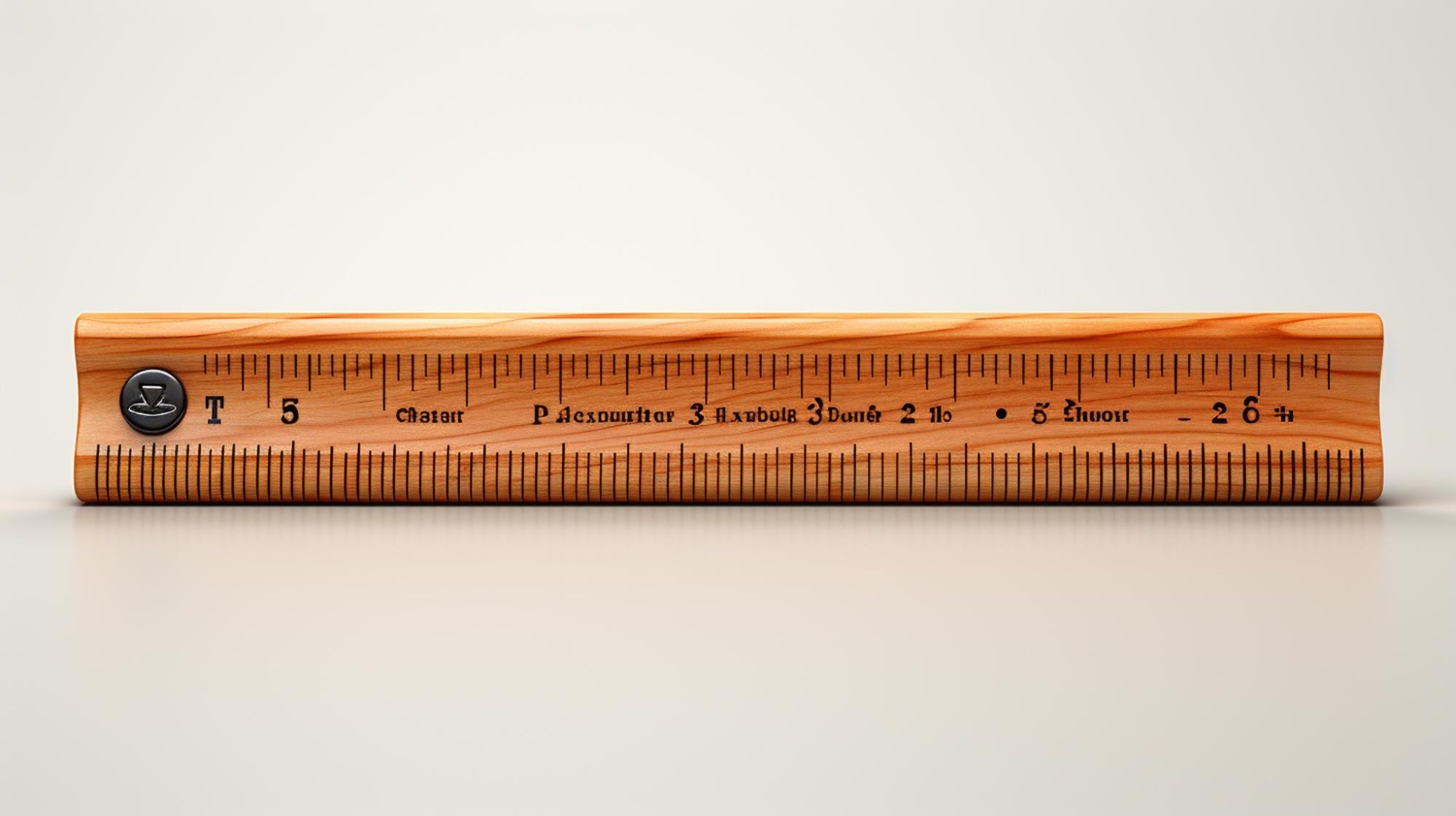
A gauge rod is a timber rod or batten on which the mason marks the height of each course of brickwork, including the mortar joint thickness, from the bottom of the wall to the top. Each mark represents one complete course. The mason holds the gauge rod against the rising wall to ensure that the courses remain even and consistent throughout the construction. This tool is particularly important when building around windows and doors, where the top of an opening must align
perfectly with a full course of brickwork.
Also Read: All About Brick Masonry Construction and Its Precautions
17. Bricklaying Trowel
Courtesy - Magnific
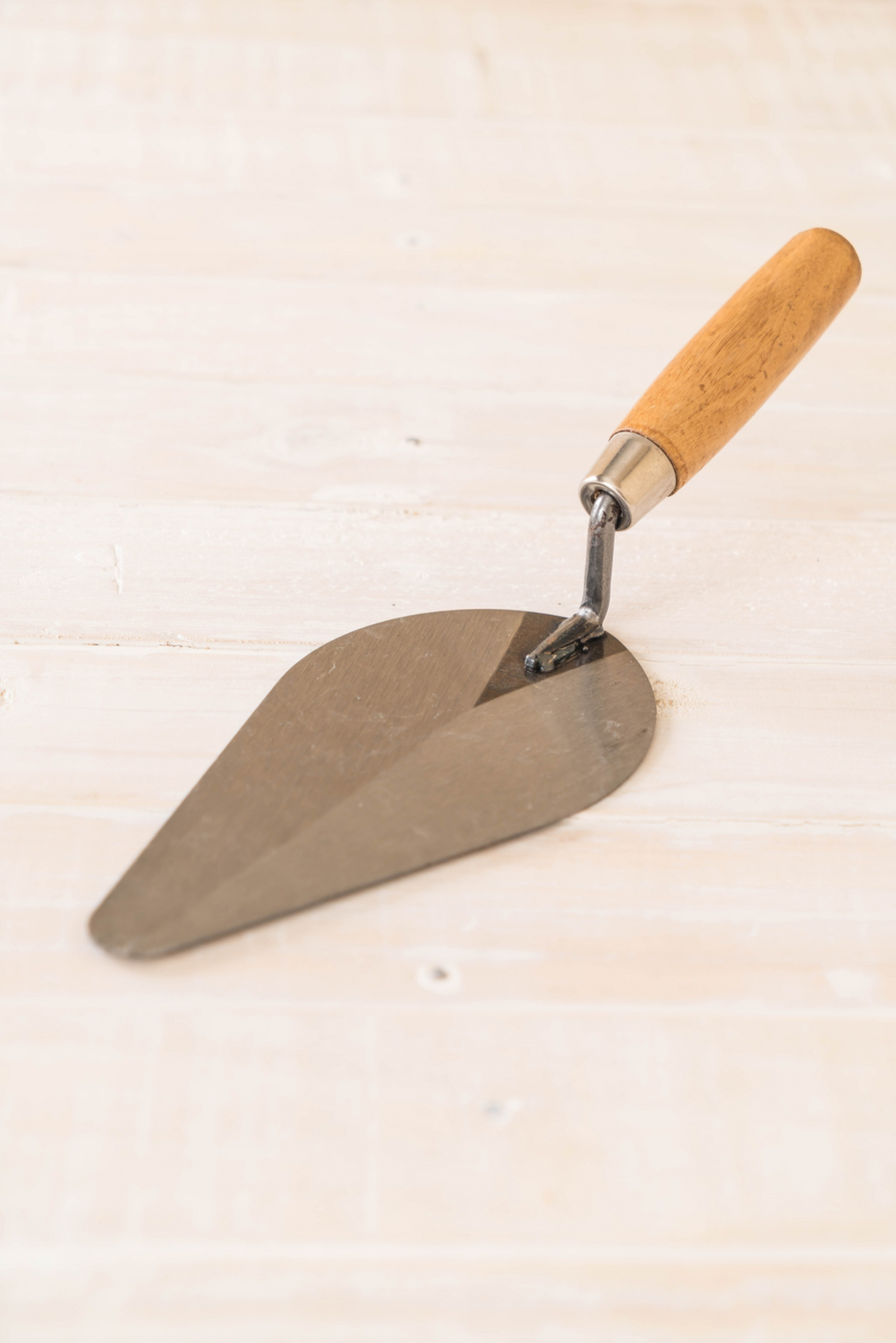
While a general trowel (tool 1) is used for spreading mortar in bulk, a bricklaying trowel is specifically designed for picking up a consistent amount of mortar and laying it smoothly along the top of a brick course. Its blade is slightly narrower than that of a standard trowel, making it easier to work within the width of a brick without pushing mortar over the edges.
Planning to construct a compound wall? Use our Compound Wall Cost Calculator to get an approximate estimate of the construction cost based on your project requirements.
Masonry Tools for Stone Masonry
Tools used for stone masonry are generally larger and more specialised than those used in brick masonry. This is because natural stone must be shaped and dressed (smoothed) before use.
Below, we have grouped stone masonry tools according to the type of work they perform.
Dressing and Finishing Tools
These tools are used to shape and smooth the surface of a roughly cut stone.
18. Chisel (and its Types)
Courtesy - Magnific, Pixabay - (image 1 ,2)
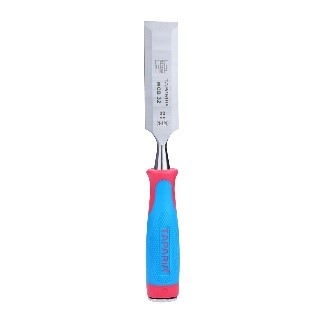
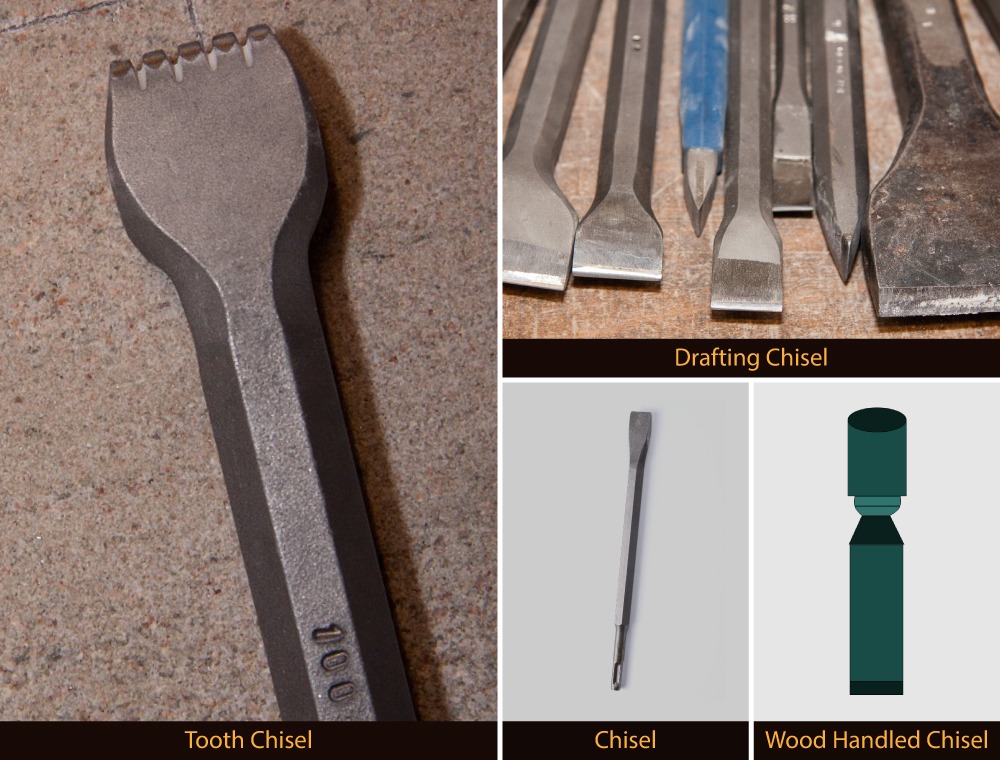
This chisel is the primary shaping tool used in stone masonry. A mason places it on the stone surface and strikes it with a hammer. Different chisel profiles produce different results:
- Wood-Handled Chisel: Used for light shaping and detailed work
- Drafting Chisel: Used to cut a straight line (‘draft’) along the edge of a stone, providing a guide for further dressing.
- Tooth Chisel has a serrated edge and is used to remove material evenly across a stone surface, leaving parallel grooves.
Also Read: Know All About Stone Masonry
19. Boaster
Courtesy - Magnific
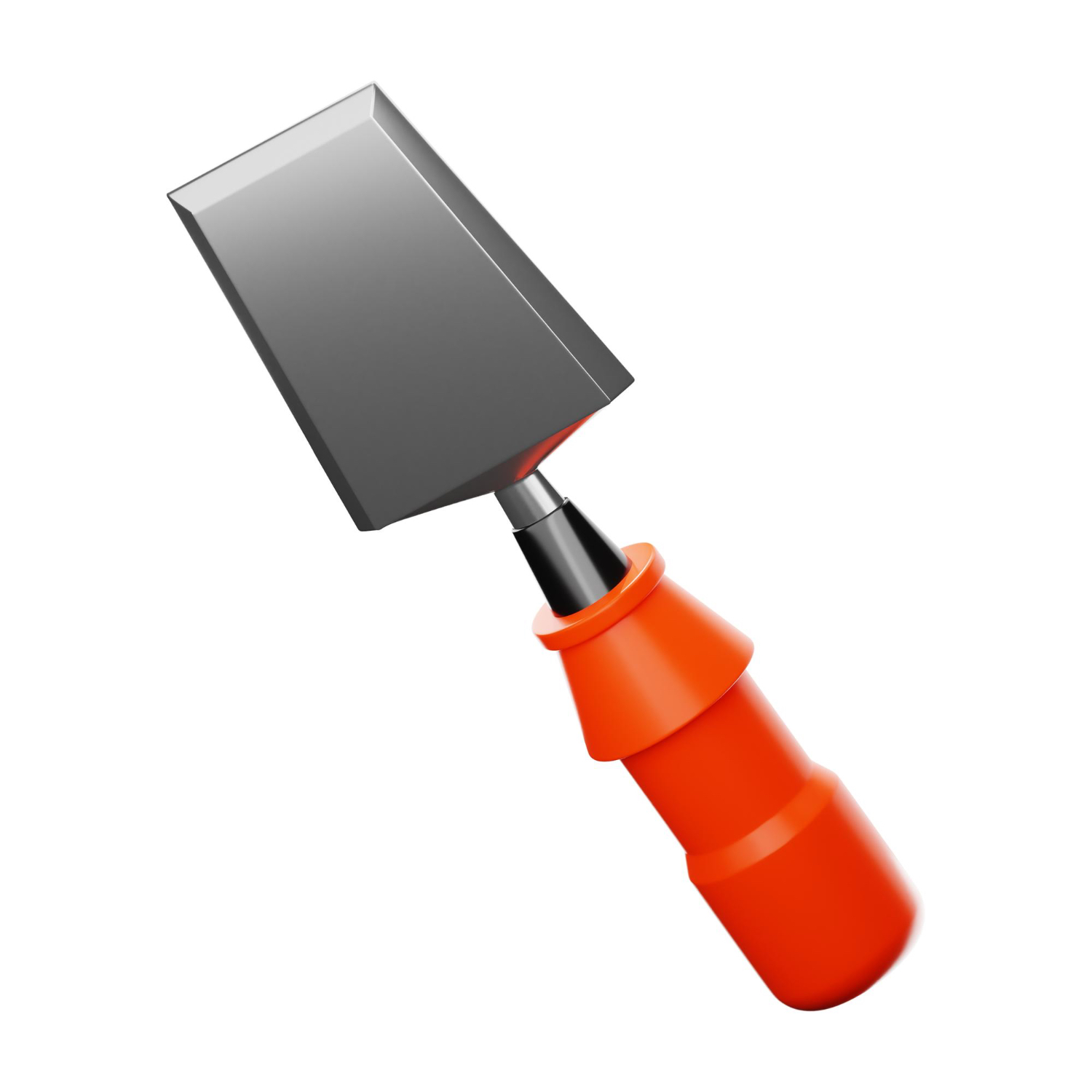
The boaster is a wide, flat chisel (wider than a drafting chisel) used to produce a smooth, flat surface on a stone after the tooth chisel has completed the initial dressing. The mason works across the stone surface with the boaster to level the ridges left by the tooth chisel.
20. Claw Tool
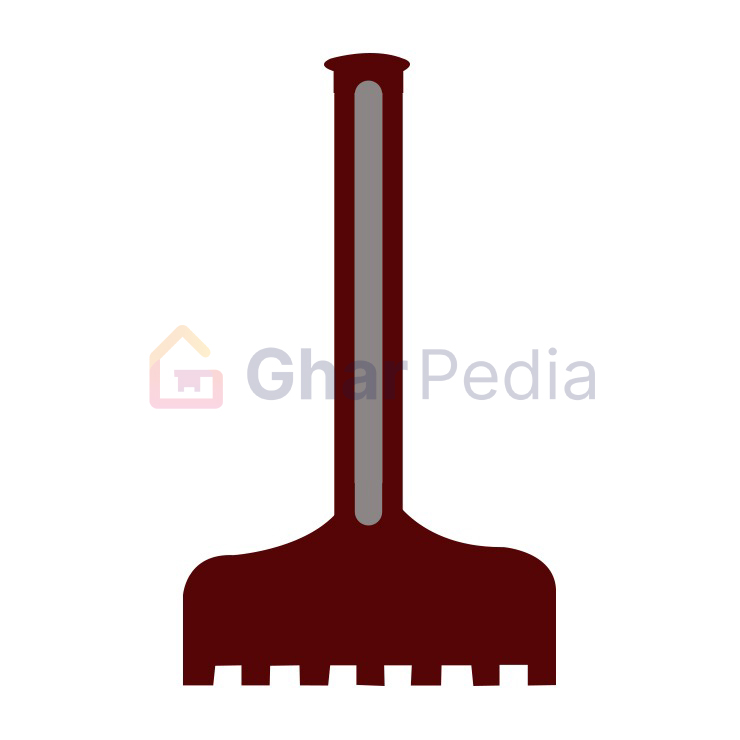
The claw tool has multiple pointed teeth, similar to a multi-toothed chisel. It is used to level and refine a stone surface that has already been worked with a tooth chisel. The claw tool produces a finer texture than the tooth chisel and prepares the stone for final finishing.
21. Drag
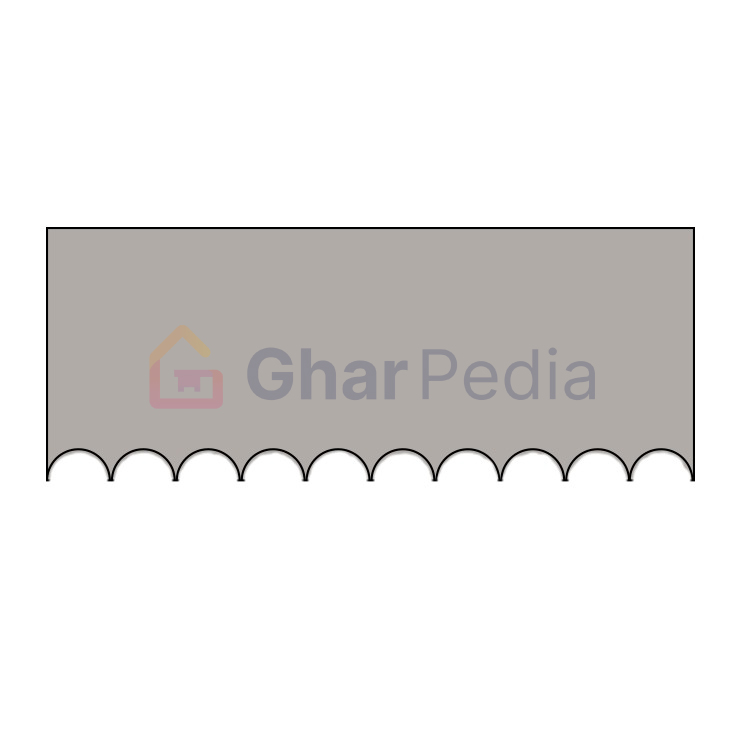
A drag is a flat steel plate with a serrated edge that is pulled across a stone surface to level any remaining ridges. It is one of the final tools in the stone dressing sequence, used to achieve a smooth finish before the stone is laid in the wall.
Cutting and Splitting Tools
These are the heavy tools used to break large stones down to a usable size.
22. Pitching Tool
Courtesy - Canva
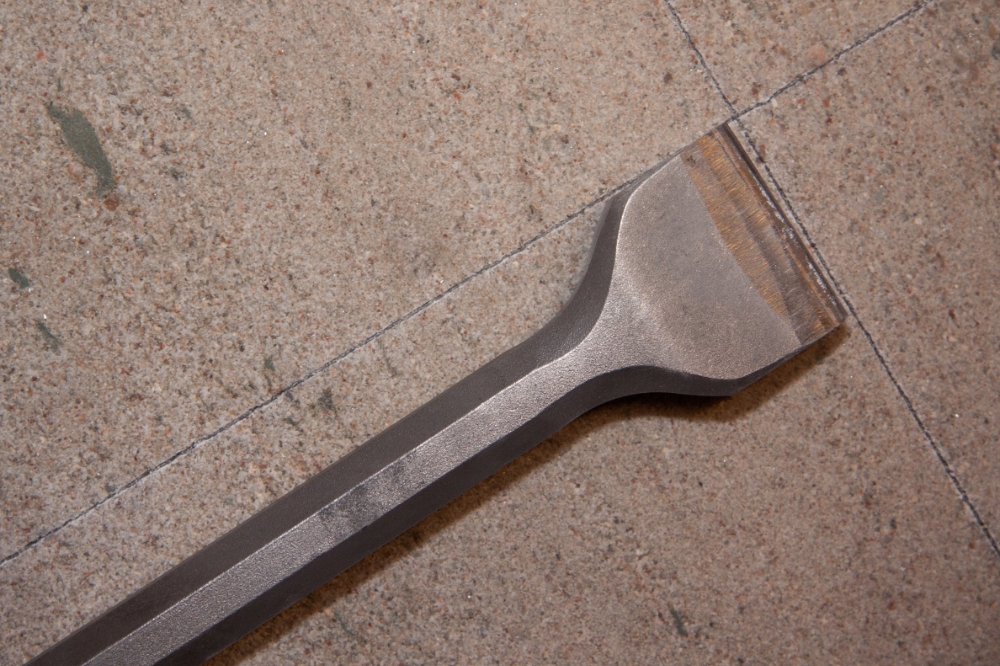
A pitching tool has a blunt, heavy blade that is struck against the edge of a stone to remove large, rough pieces, a process called ‘pitching’. This is the first stage of rough shaping a stone from a larger block. Here, precision is not important. The objective is to simply reduce the stone to a manageable size.
23. Jumper
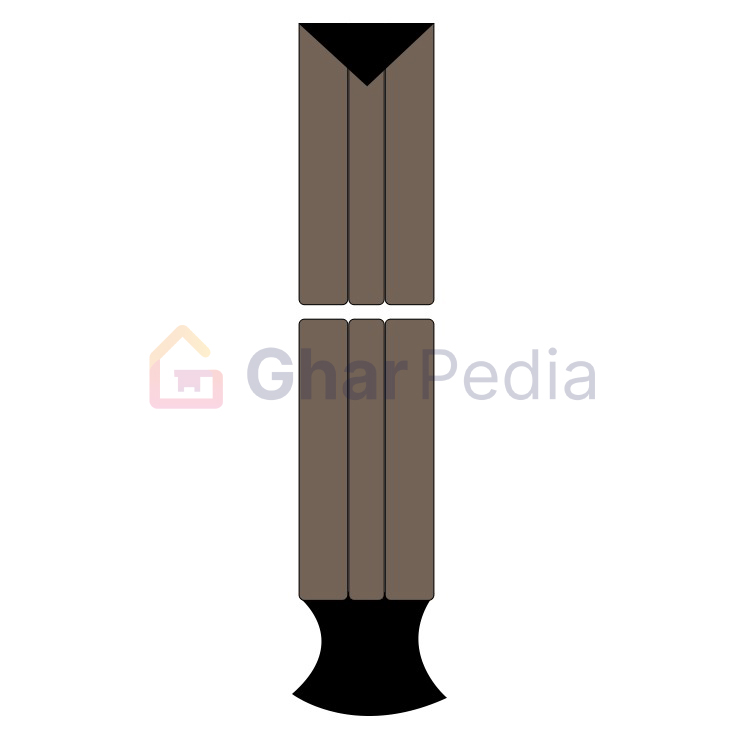
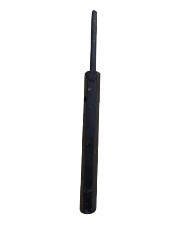
The jumper is a long, heavy steel bar that is repeatedly lifted and dropped (or struck) to break or drill into a rock. In quarrying and site work, it is used to create holes in stone for inserting wedges or explosives. On a construction site, however, it is more commonly used to break large rocks into manageable pieces.
24. Wedge and Feathers (Plug and Feathers)
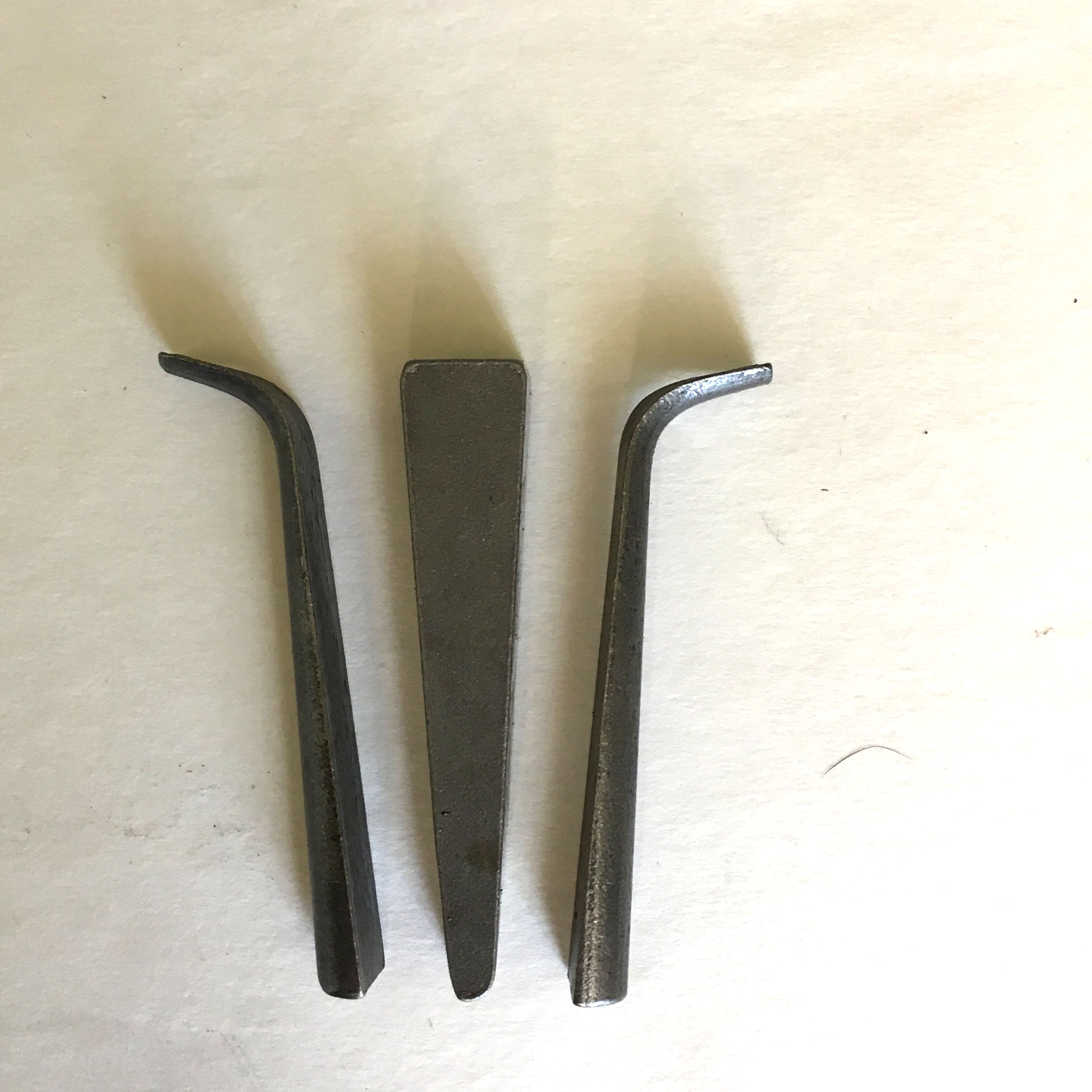
Courtesy - Thestonetrust
This is a precision stone-splitting method. Feathers (also called shims) are two half-round metal liners placed inside a drilled hole. The wedge (also called a plug) is inserted between the feathers and struck with a hammer. As the wedge is driven in, it spreads the feathers apart, exerting force on the stone walls of the hole until the stone splits cleanly along a line of several such holes.
This method produces a much cleaner split than hammering directly – essential for ashlar (fine cut stone) work.
Also Read: Ready Mix Mortar for Brickwork, Plaster and Repair Maintenance!
Hammer
25. Pick Axe
Courtesy - Magnific
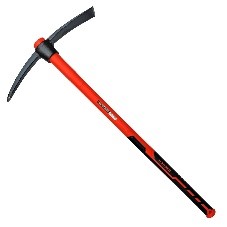
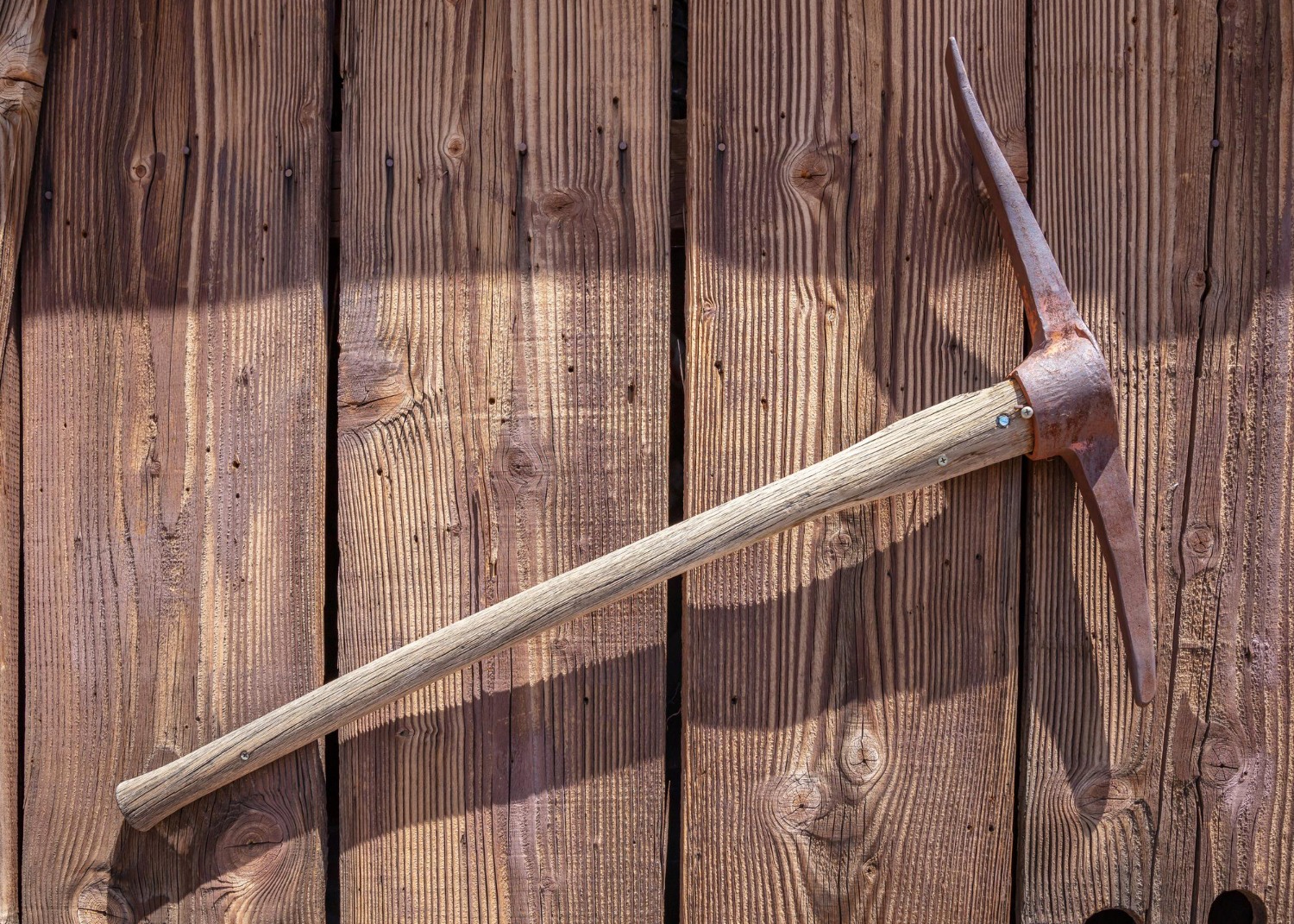
The pick axe has two-pointed ends, or one pointed and one flat end, mounted on a heavy steel head with a wooden or fibreglass handle. It is used for rough stone breaking, loosening compacted soil near stone foundations, and carrying out the initial shaping of large, irregular rocks. It is a heavy tool requiring both hands for safe operation.
26. Crow Bar
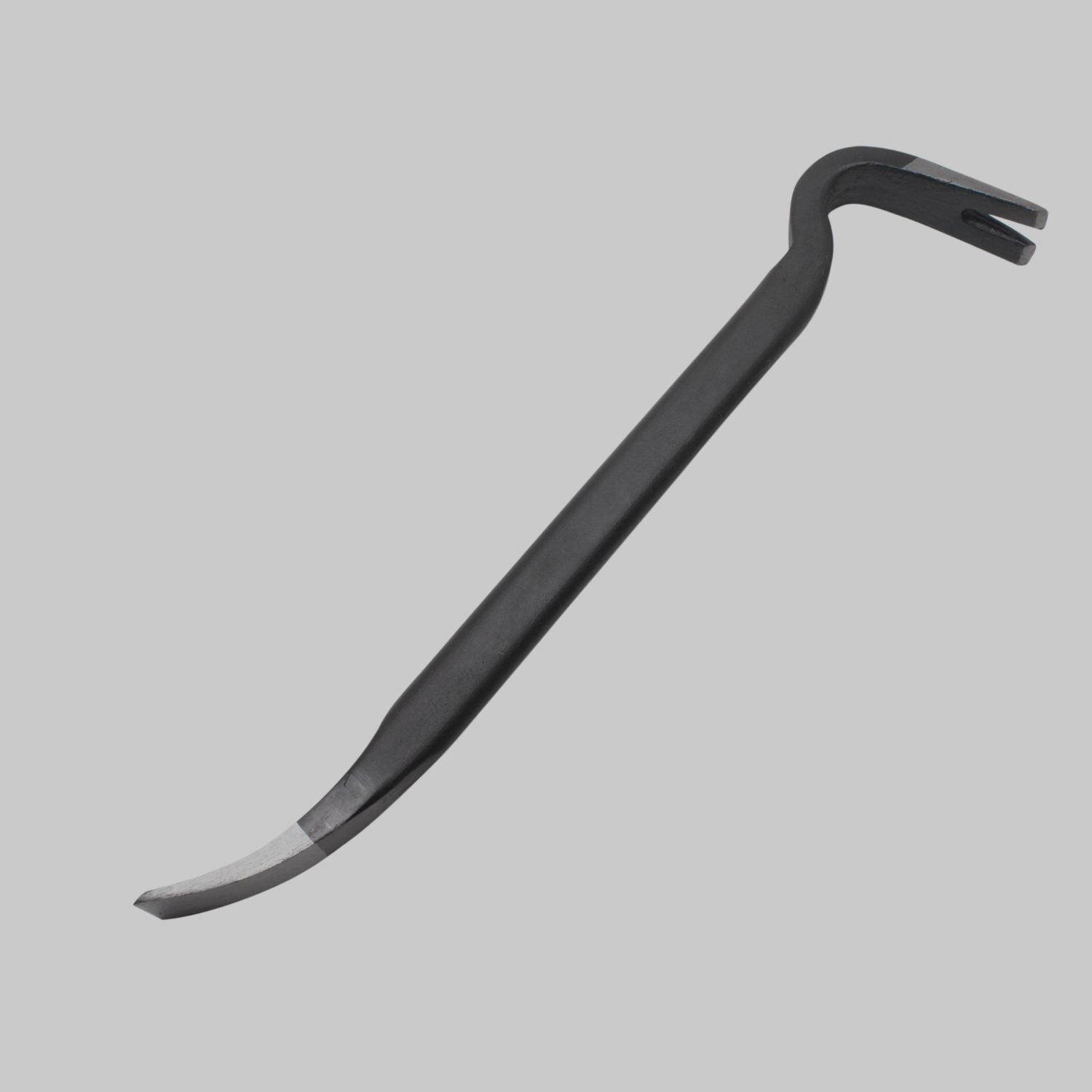
Courtesy - Magnific
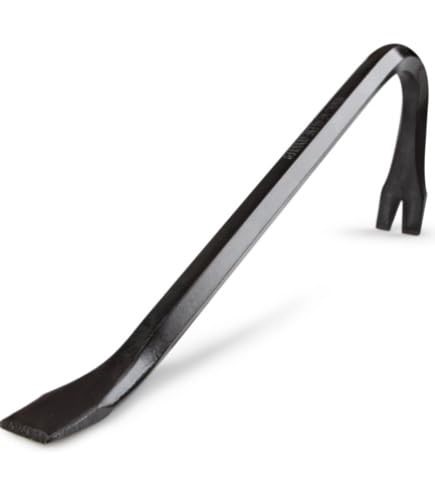
A crow bar is a long, heavy steel bar with one flat end and the other slightly curved. It is used to lift, lever, and shift large, heavy stones into position. Even massive stones can be moved short distances by a single person using a crow bar with a small fulcrum block. It is an essential tool for lifting and positioning stones during masonry work.
27. Gad
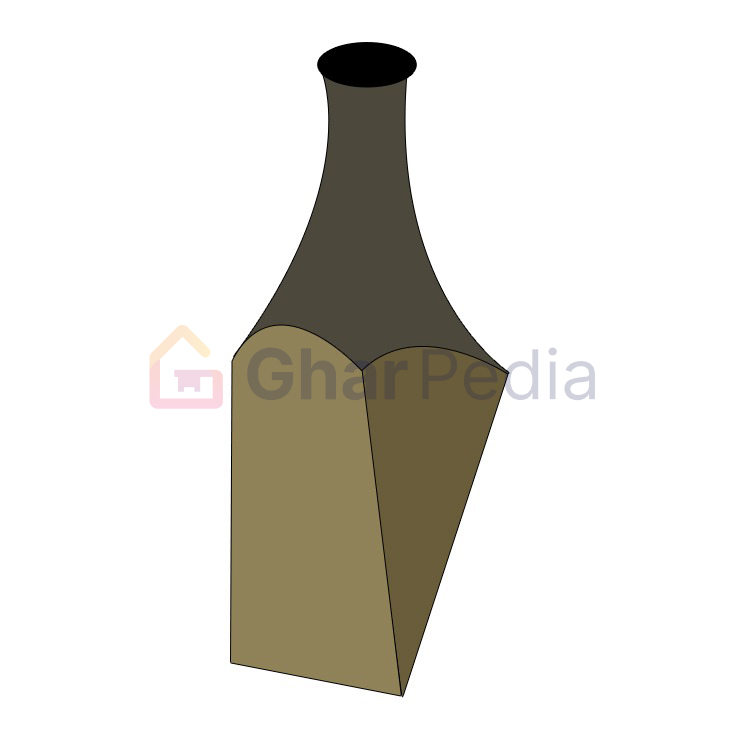
A gad is a short, pointed steel bar used to split stone along existing cracks or natural grain lines. It is placed in a crack or fault line and struck with a hammer, forcing the stone apart. Unlike the wedge-and-feathers method (which requires drilled holes), the gad works where natural fissures already exist.
Stone Masonry Saws
Saws are used when a clean, straight cut is needed in stone or slate. The four commonly used types are:
- Hand Saw: Used for cutting softer stones such as sandstone and limestone. It is slow but provides excellent precision.
- Circular Saw: A power tool fitted with a diamond or abrasive blade. It offers fast, accurate cutting and is the most commonly used saw for modern stone masonry.
- Cross-Cut Saw: A larger hand saw used for cutting stone across the grain. If you are comparing different hand saw options for DIY work, understanding the features of a crosscut saw can help you choose a suitable tool for the job.
- Frame Saw: A large saw mounted within a frame and used for cutting large stone slabs into thinner pieces.
Striking Tools (Hammers) – A Comparison
Stone masonry uses many types of hammers. Here is a clear guide to which is which and when each is used:
| Hammer Name | Primary Use |
| Spalling Hammer | Rough splitting of large stone blocks |
| Mash Hammer | Striking chisels and stone dressing tools |
| Mallet (Wooden) | Striking wood-handled chisels without damaging them |
| Dummy (Iron) | General striking of metal stone tools |
| Scabbling Hammer | Rough dressing – removing projections from the stone surface |
| Waller’s Hammer | General wall-building: shaping and tapping stones into place |
| Club Hammer | Striking bolster chisels in brickwork; general heavy tapping |
Other Stone Masonry Tools
28. Bevel
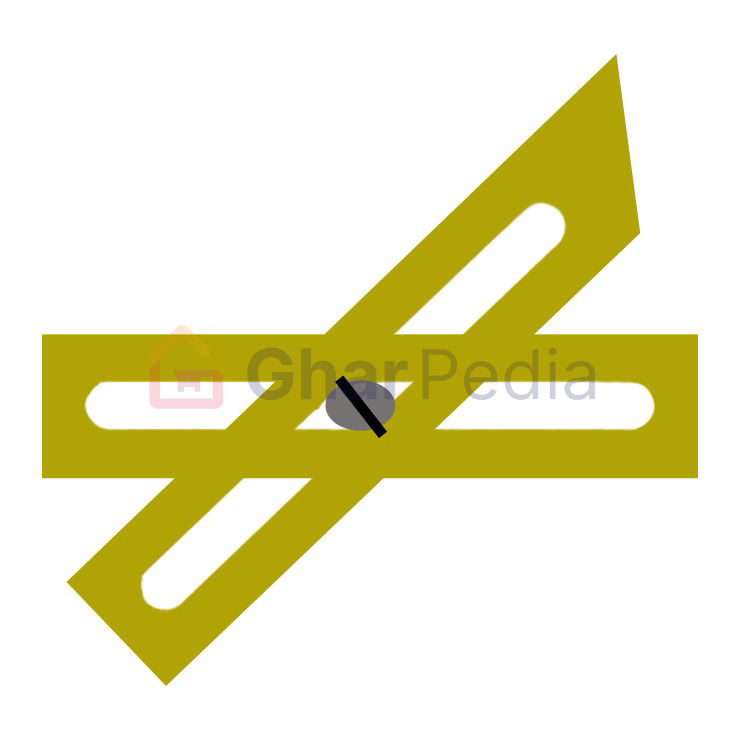
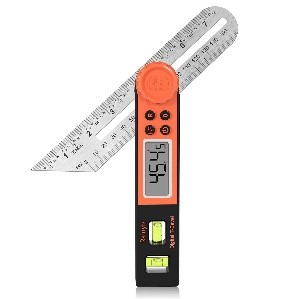
A bevel is an adjustable angled tool used to transfer and check angles other than 90 degrees in stone masonry. It is commonly used for sloping copings, arches, chamfered edges, and other angled stonework. The blade can be adjusted and looked at virtually any required angle.
29. Gauge
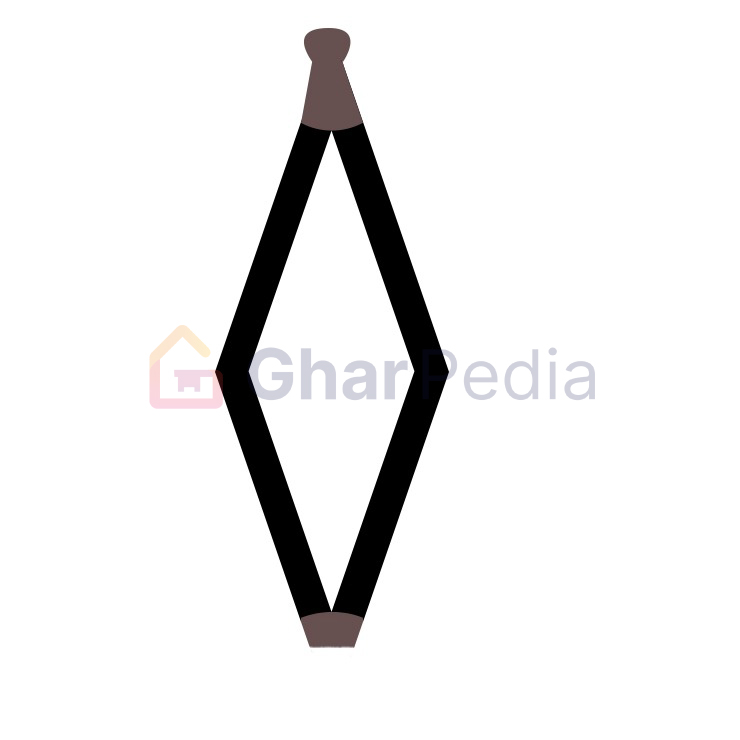
In stone masonry, a gauge is used to check whether the dressed stones are the correct size before they are placed in the wall. It acts as a go/no-go template to maintain consistency when multiple stones of the same size are needed.
30. Punch
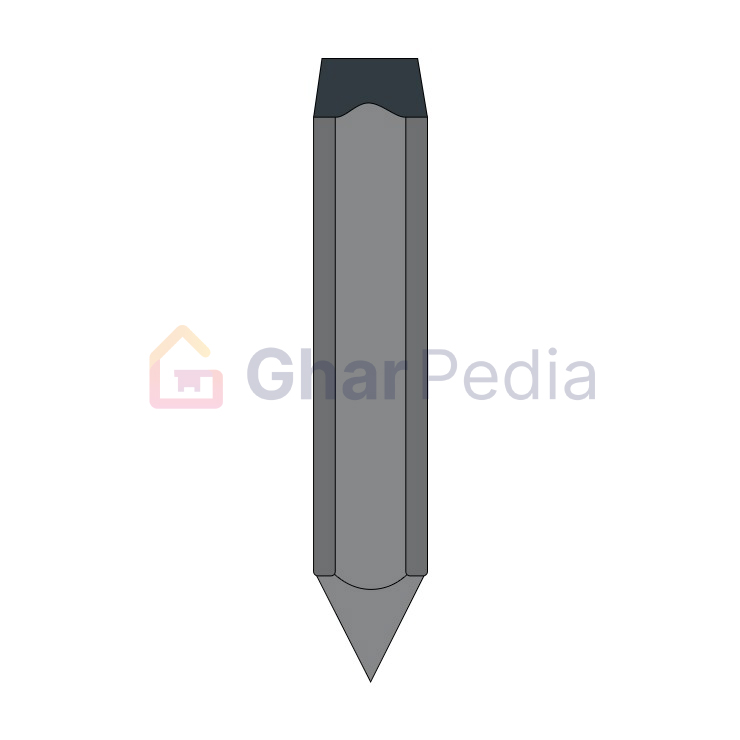
A punch is a pointed steel tool struck with a hammer to remove high spots and projections from a roughly broken stone surface. It is used early in the stone dressing process, before the tooth chisel, to reduce large irregularities to a manageable level.
31. Point
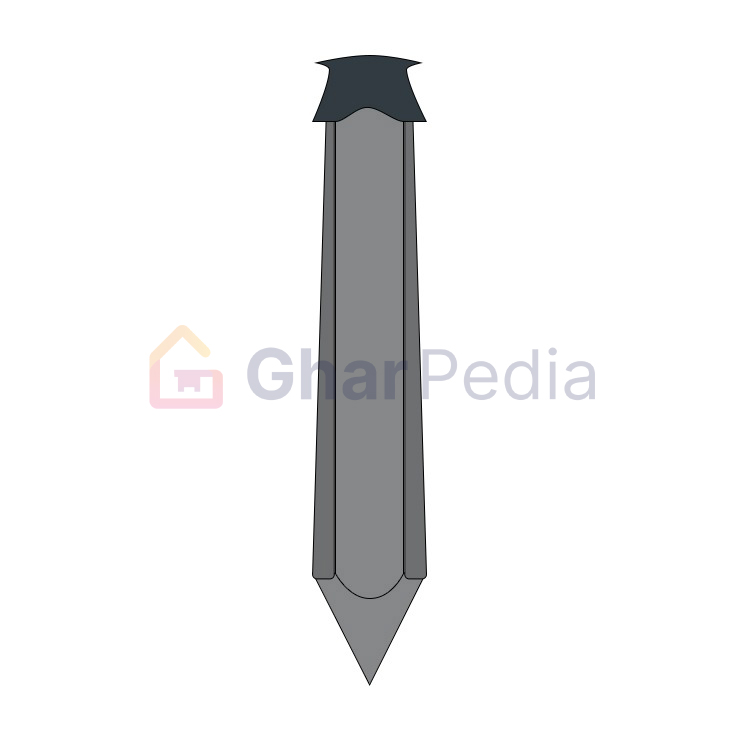
A point is similar to a punch but lighter and is used to achieve more precise work. It helps remove smaller projections and define the final surface of the stone. The tool is held at a low angle and worked systematically across the face of the stone.
32. Nicker (Broad Tool)
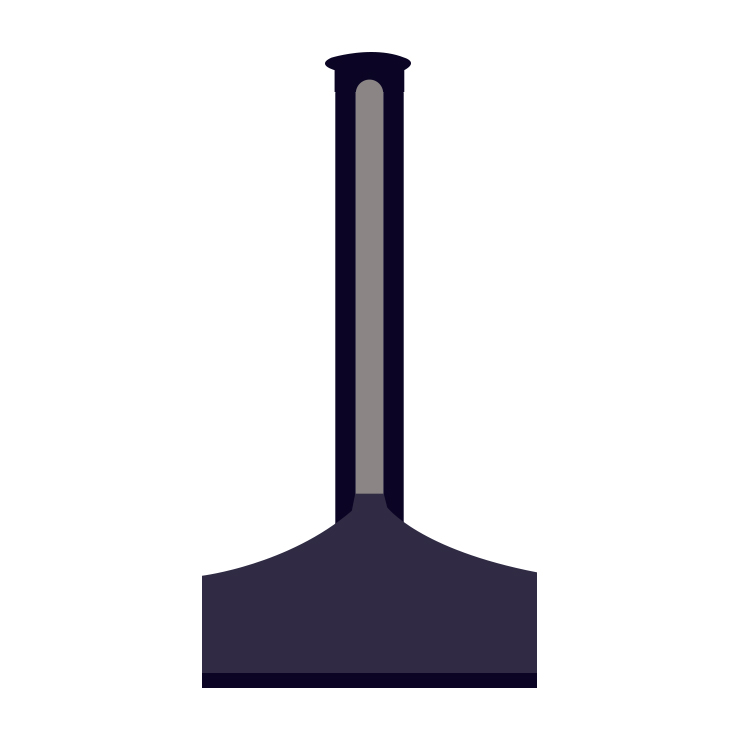
The nicker has a wide, scored blade used to cut a groove or channel into a stone surface. In fine stone dressing, the nicker is used to mark the boundaries of a drafted margin before the surface is worked with other tools.
Also Read: What are the Pros and Cons of Masonry in Construction?
How to Choose the Right Masonry Tool for Your Job
Not every job requires a complete set of professional tools. Choosing the right tools depends on the type of work you plan to undertake. For larger construction or masonry projects, you may also need a wider range of construction tools suited to specific tasks.
For Professional Masons
- You will need the full range of tools appropriate for the material you are working with, whether brick or stone.
- Invest in good-quality chisels and trowels, as these are used every day. Cheap ones wear out quickly and lose their cutting edge.
- Always match striking tools, such as hammers and mallets, with the chisels they are intended to be used with. A mismatch in weight can lead to inaccurate strikes and reduced control.
For Homeowners and DIY Repair
For small repairs, such as repointing a garden wall, replacing a cracked brick, and patching mortar joints, you need only a few basic tools.
A simple homeowner’s masonry toolkit should include:
- A trowel (standard or pointing trowel)
- A spirit level
- A lump hammer and bolster chisel (for cutting)
- A jointer (for finishing joints)
- A mortar pan or old bucket
Rent vs Buy: Power tools (circular saws for stone, rotary hammers for drilling) are worth renting for a one-time job. Hand tools like trowels and levels are cheap enough to own.
Choosing by Material
| Material | Key Tools You Need | Tools You Can Skip |
| Brick (new wall) | Brick hammer, bolster, gauge rod, line & pins, trowel, spirit level | Stone-dressing tools |
| Brick (repair/repoint) | Pointing trowel, jointer, lump hammer, bolster, spirit level | Most stone tools, gauge rod |
| Natural Stone (rough) | Pitching tool, mash hammer, pick axe, crow bar, chisels | Brick-specific tools |
| Natural Stone (dressed) | Full chisel set, saws, bevel, gauge, trowel, spirit level | Pick axe, crow bar |
Masonry Tool Safety – What to Know Before You Start
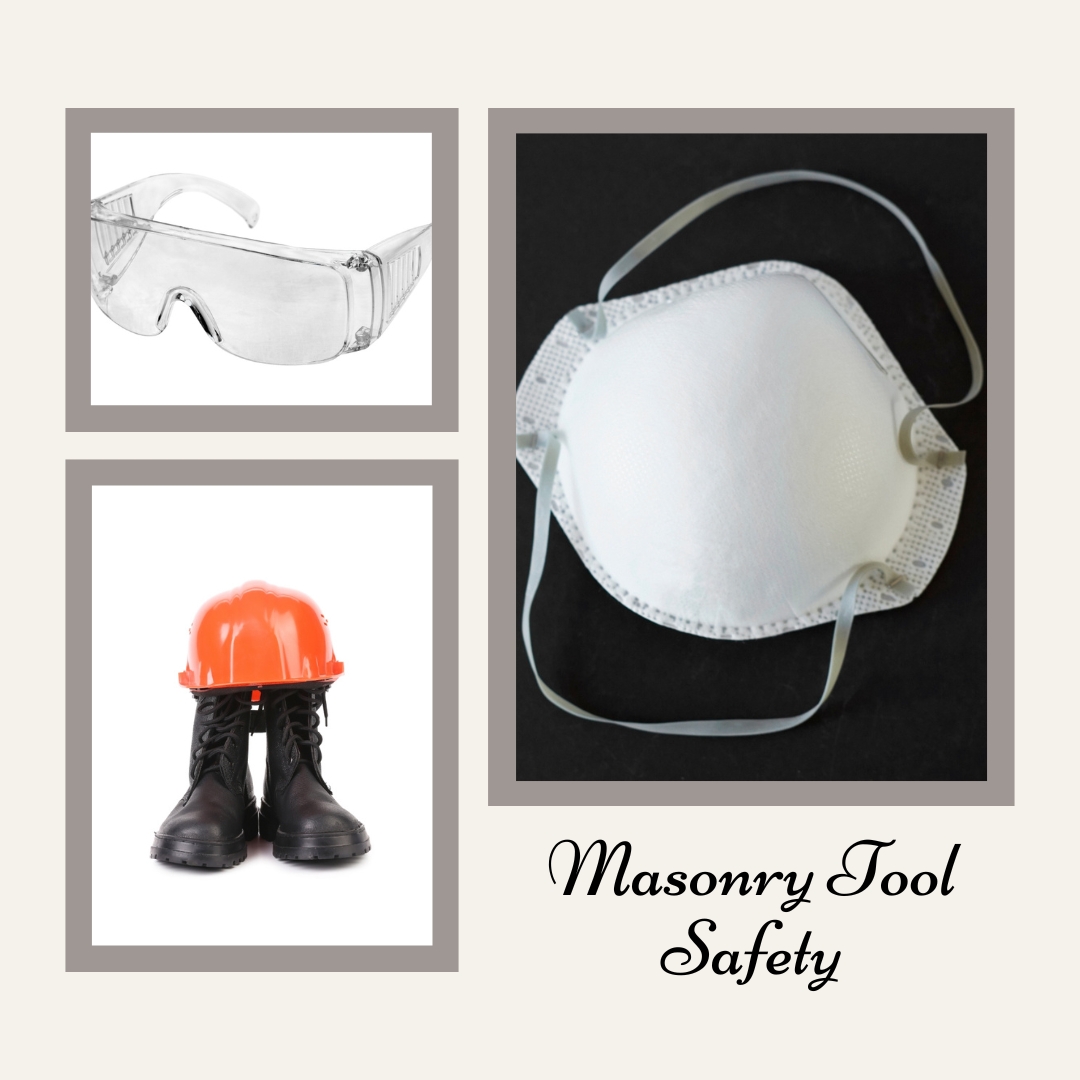
Courtesy - Canva(Image 1, 2, 3)
Masonry tools are heavy, sharp, and generate dust and flying debris. Following a few simple safety precautions can help prevent most injuries.
Essential PPE (Personal Protective Equipment)
- Safety glasses or goggles: These are essential when chiselling, hammering, or cutting stone and brick. Flying stone chips and brick dust can cause serious eye injuries.
- Gloves: They protect hands from sharp edges, abrasion, and lime burns caused by wet mortar. Use heavy-duty leather gloves for stonework and lighter, flexible gloves for trowel work.
- Dust mask (N95 or better): Brick and stone dust contain crystalline silica. Repeated inhalation causes silicosis, a serious and irreversible lung condition. Always wear a mask when cutting, grinding, or working in enclosed spaces.
- Safety boots with steel toe caps: Heavy stones, masonry blocks, and dropped tools can cause foot injuries. Steel-toe boots provide essential protection on construction sites.
Tools That Carry Higher Risk
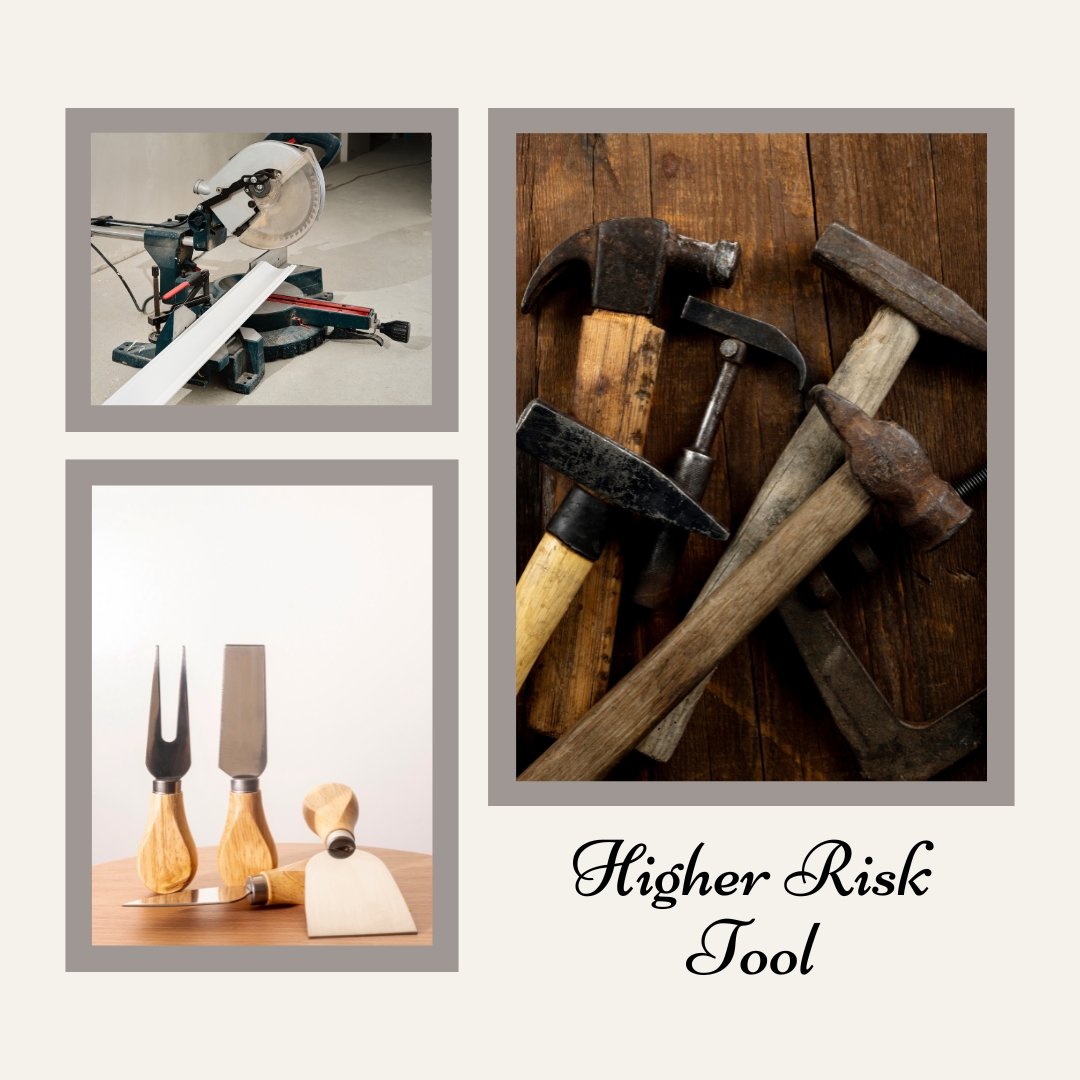
Courtesy - Magnific(image1, 2)
- Chisels and pitching tools: The material being struck can shatter suddenly, sending sharp fragments flying. Never hold the stone you are striking with your bare hand.
- Circular saws (for stone): These generate large amounts of fine silica dust. Use wet cutting whenever possible to suppress airborne dust and improve safety.
- Heavy hammers (spalling, mash): Fatigue can lead to missed strikes and accidents. Take breaks during prolonged use, and always check that the hammer head is secure and free from cracks before starting work.
Tool Maintenance and Storage
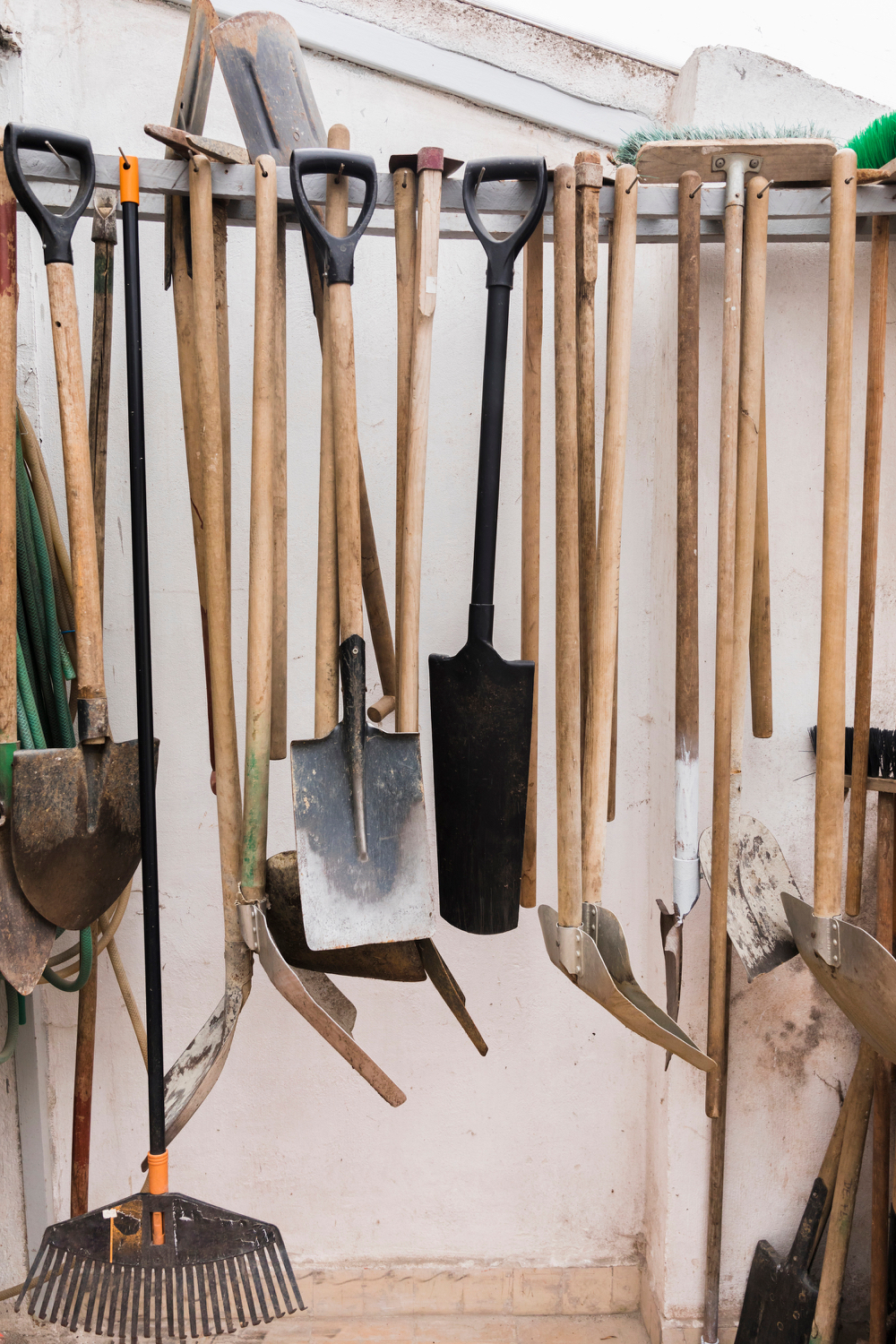
Courtesy - Magnific
- Wipe trowels and other steel tools clean after every use. Dried mortar on the tool is difficult to remove and makes it harder to use the tool the next time.
- Check hammer handles for cracks before use. A damaged handle can break during use and become a serious safety hazard.
- Store chisels with protective blade guards or wrap the cutting edges in foam to prevent them from becoming blunt or damaged when stored with other tools.
Quick Reference: All Masonry Tools at a Glance
Use this table to quickly find a tool by name, category, its main use, and whether a homeowner is likely to need it.
| Sr.no | Tool Name | Category | Primary Use | Homeowner? |
| 01 | Trowel | Common | Spread and apply mortar | Yes |
| 02 | Corner Trowel | Common | Finish wall corners | Sometimes |
| 03 | Mason’s Square | Common | Check 90° corners | Yes |
| 04 | Plumb Rule & Bob | Common | Check the wall vertically | Yes |
| 05 | Spirit Level | Common | Check level/plumb | Yes |
| 06 | Line and Pins | Common | Keep courses straight | Sometimes |
| 07 | Water Level | Common | Transfer levels over distance | Rarely |
| 08 | Boning Rods | Common | Level checks over long spans | Rarely |
| 09 | Spade (Phavada) | Common | Mix and move mortar | Sometimes |
| 10 | Mortar Pan (Ghamela) | Common | Hold the mortar near the work | Yes |
| 11 | Jointer | Common | Finish mortar joints | Yes |
| 12 | Brick Hammer | Brick | Cut and tap bricks | Sometimes |
| 13 | Lump Hammer + Bolster | Brick | Cut bricks cleanly | Yes |
| 14 | Skutch / Comb Hammer | Brick | Rough-shaped or trim bricks | Rarely |
| 15 | Straight Edge | Brick | Check the flat surface | Sometimes |
| 16 | Gauge Rod | Brick | Check consistent course height | Rarely |
| 17 | Bricklaying Trowel | Brick | Lay a mortar bed for bricks | Sometimes |
| 18 | Chisel (3 types) | Stone | Shape and dress stone | Rarely |
| 19 | Boaster | Stone | Smooth stone after tooth chisel | Rarely |
| 20 | Claw Tool | Stone | Refine the stone surface texture | Rarely |
| 21 | Drag | Stone | Final surface levelling on stone | Rarely |
| 22 | Pitching Tool | Stone | Rough-break large stone | No |
| 23 | Jumper | Stone | Break/drill into rock | No |
| 24 | Wedge and Feathers | Stone | Precision stone splitting | No |
| 25 | Pick Axe | Stone | Break and shift stone | Rarely |
| 26 | Crow Bar | Stone | Lever heavy stones | Sometimes |
| 27 | Gad | Stone | Split along natural fissures | No |
| 28 | Saws (4 types) | Stone | Clean straight cuts in stone | Rarely |
| 29 | Bevel | Stone | Check/transfer non-90° angles | Rarely |
| 30 | Gauge | Stone | Check dressed stone dimensions | No |
| 31 | Punch | Stone | Remove rough high spots on the stone | No |
| 32 | Point | Stone | Fine surface dressing | No |
| 33 | Nicker (Broad Tool) | Stone | Cut the margin groove on the stone | No |
| 34 | Hammers (7 types) | Stone | Strike chisels and tools | Varies |
Whether you’re building a new home, repairing a brick wall, or working with natural stone, choosing the right masonry tools makes every job safer, faster, and more accurate. Understanding the purpose of each tool helps you communicate better with contractors, inspect ongoing work, and avoid costly construction mistakes. With the right knowledge and preparation, you can ensure better-quality masonry work and long-lasting results for your home.
Here’s a video to sum up all the points mentioned above:
FAQs on Masonry Tools
1. What are masonry tools used for?
Masonry tools are used to build, repair, shape, and finish structures made of bricks, stones, concrete blocks, and mortar. They help ensure accurate alignment, strong joints, and a professional finish.
2. Which masonry tools are essential for beginners or homeowners?
For basic masonry repairs, homeowners should have a trowel, spirit level, lump hammer, bolster chisel, jointer, mortar pan, and safety gear such as gloves and goggles.
3. What is the difference between brick masonry tools and stone masonry tools?
Brick masonry tools are designed for laying and cutting bricks, while stone masonry tools are heavier and used for shaping, dressing, splitting, and finishing natural stone.
4. Why is a spirit level important in masonry work?
A spirit level helps ensure that walls, bricks, and blocks are perfectly horizontal and vertical, preventing uneven construction and structural issues.
5. What safety equipment should be used while working with masonry tools?
Always wear safety goggles, heavy-duty gloves, an N95 dust mask, steel-toe safety boots, and hearing protection when using power tools or striking masonry materials.
6. Should I buy or rent masonry tools for a home project?
Hand tools like trowels, levels, and jointers are affordable and worth buying. Expensive power tools such as stone-cutting saws and rotary hammers are usually more economical to rent for one-time projects.
7. How can I maintain masonry tools for a longer life?
Clean mortar off tools after every use, dry steel tools thoroughly to prevent rust, inspect hammer handles for damage, sharpen chisels when needed, and store tools in a dry, protected place.
Must Read: Tests to Check Compressive Strength of Brick
Types of Masonry that can be Used for Construction of your Dream Home
Your Mentor to Guide You to Buy Bricks
Courtesy - Featured Image(Magnific - image 1, 2, 3, 4, 5, 6)
Author & Expert Review
Written By:  Nidhi Patel | Civil Engineer & Content Writer

| Credentials: B.E. (Mahatma Gandhi Institute of Technical Education and Research Centre), Registered with Gujarat Technological University (GTU). Experience: Civil Engineer with 3+ years of content writing experience, currently writing blogs for Gharpedia, part of SDCPL. Expertise: Specializing in SEO-optimized blogs and long-form articles focused on home improvement, construction, interiors and architect topics. I create well-researched, reader-focused content that balances technical accuracy with clarity, making complex subjects easy to understand. Find her on: LinkedIn |
Verified By Expert:  Ravin Desai – Co Founder – Gharpedia | Co Founder – 1 MNT | Director – SDCPL

This article has been reviewed for technical accuracy by Ravin Desai, Co-Founder of Gharpedia and Director at Sthapati Designers & Consultants Pvt. Ltd. With a B.Tech. in Civil Engineering from VNIT Nagpur and an M.S. in Civil Engineering from Clemson University, USA, and over a decade of international and Indian experience in the construction and design consultancy sector, he ensures all technical content aligns with industry standards and best practices.
Find him on: LinkedIn