






Table of Contents
Quick Summary
- Hire a licensed local general contractor, verify license status and three recent references, and bring in an independent owner’s representative and real estate lawyer.
- Keep an active US phone number (or virtual line) so contractors, inspectors, and banks can reach you without delays.
- Use clear contracts with milestone schedules, change-order rules, lien waivers, and Limited Power of Attorney or remote/consular notarization options.
- Set up weekly check-ins, dated photos and videos, project software like Buildertrend, or site cameras to stay connected.
- Tie payments to verified progress, confirm banking details to avoid wire fraud, track permits online, and visit the site before drywall goes up and at final walk-through.
- Strong systems and local support make managing a US construction from abroad much smoother despite time zone gaps.
Courtesy - Magnific
It is already tough to oversee the construction of your dream house. It gets trickier when you are located across oceans, with a time difference that varies between 7 and 12 hours.
Is the frame of your future home according to the plan? Was there an inspection, and what was its outcome?
Such concerns become legitimate with a US construction project from abroad.
Quite a number of foreign citizens and Americans living abroad manage US construction projects successfully while spending most of the building process somewhere else.
This process requires some planning, good people around you, and regular practical measures.
This article provides information about all of those issues in detail so you would not worry any longer.
Build a Team of People You Can Count On
Courtesy - Magnific
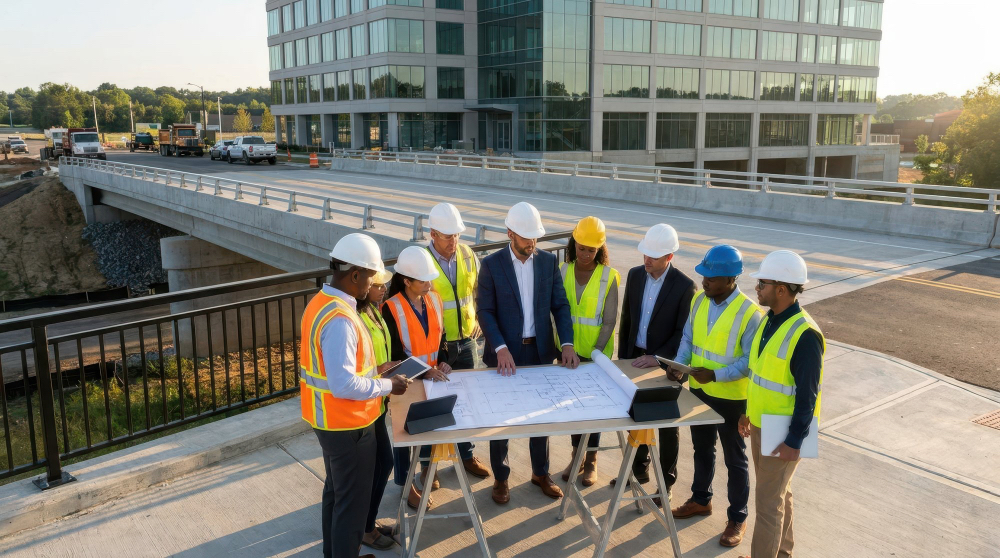
To start with, hire a local licensed general contractor. Requirements vary for licensing depending on your location within America. But almost everywhere in America, a website providing data about the status of any license and complaints connected to it is available. Make your general contractor give you at least three references from the last 3 years and call those people, focusing on his communication skills.
Next, consider hiring an independent owner’s representative. In your case, this option is highly recommended and the best money you would spend on this project.
You may also wish to involve a local real estate lawyer who will be able to take a closer look at your contract before signing it, in case of any dispute in the future.
Always Have an Active US Number
Courtesy - Magnific
Quite often, US contractors, banks, and permitting offices demand that you have a valid US phone number that you can be called on.
Some agencies might text you information regarding the inspections, banks might require you to enter a verification code for money release, and some subcontractors simply refuse to call you back if you are using an international line. Missing one call might delay inspections or payment processing.
To get around the problem, you may acquire a US virtual number. It functions via an app on your phone or computer and allows you to make and receive calls and text messages from any place with internet access. Be aware, though, that not all banks allow you to use it as a number for identity verification.
If you did not obtain a US virtual number yet, follow this guideline on how to get a US virtual phone number while abroad.
Make Sure Your Legal Papers Are Well Drafted
Courtesy - Magnific
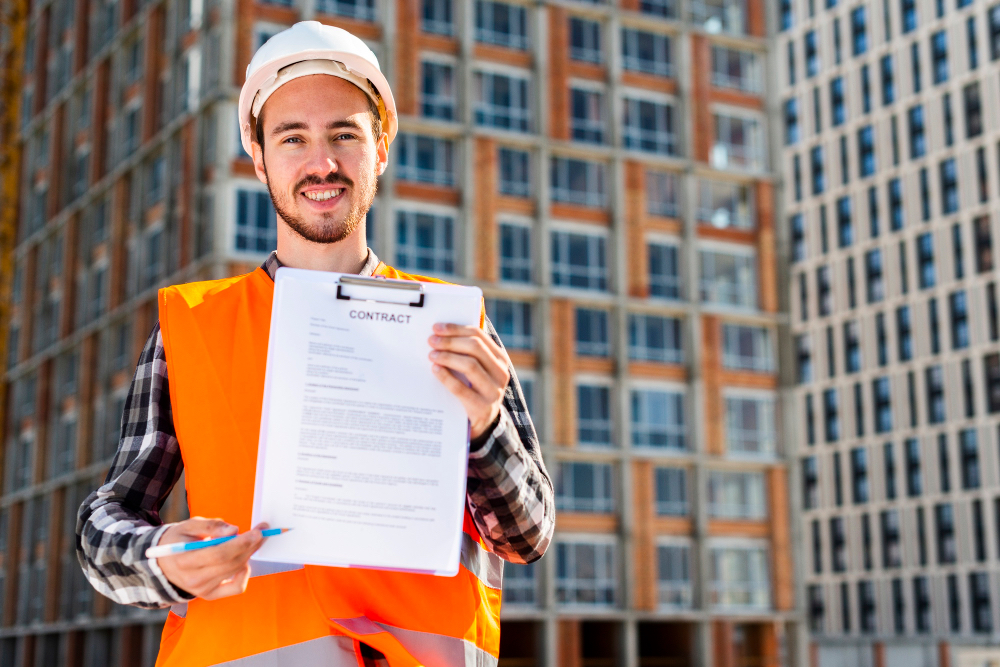
A vague contract causes trouble even for the neighbors. But doing it from a foreign location turns out to be very costly. To make sure your contract covers all the issues, consider including the following:
- Detailed scope of work with attached plans and a list of material specifications.
- Schedule based on work milestones, rather than calendar dates.
- Written procedure for change orders that prevents any extra work from going on without your agreement.
- Lien waivers from your contractor and all major subcontractors with each payment.
- Practical completion date with additional details regarding delays.
In addition, you must provide a way for signing any documents that are required for the deal. Limited Power of Attorney gives the authorization to the chosen agent to sign specific legal documents for you. Notary service is usually provided by US embassies and consulates upon request, but in many states, this could now be done via remote online notarization.
Establish an Effective Communications System
Courtesy - Magnific
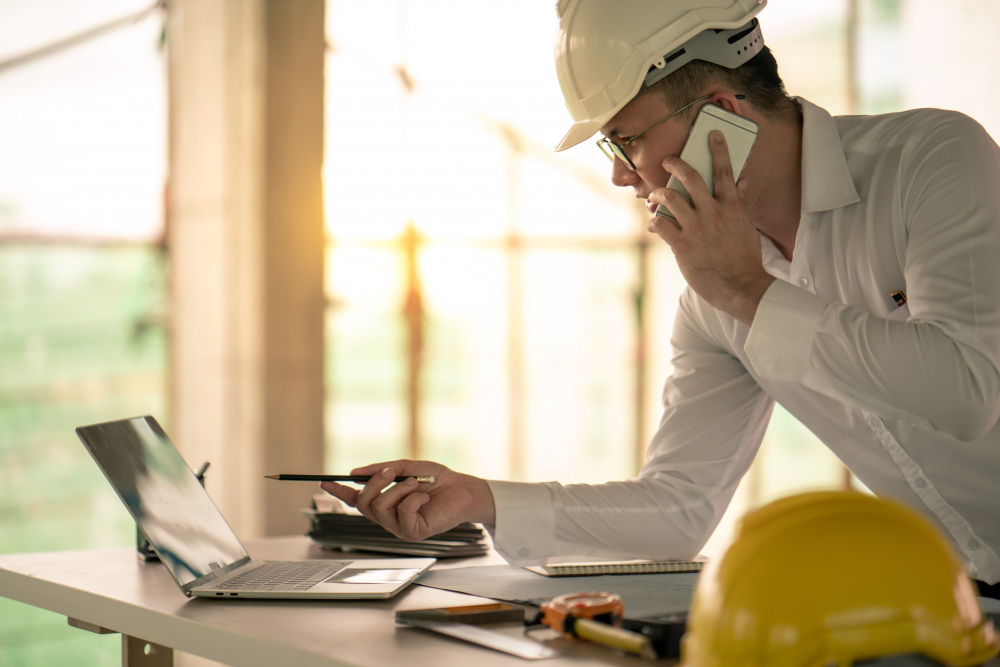
Discuss in advance how frequently you are going to be informed. A weekly meeting via Skype at the same time of the day is very effective considering the time difference.
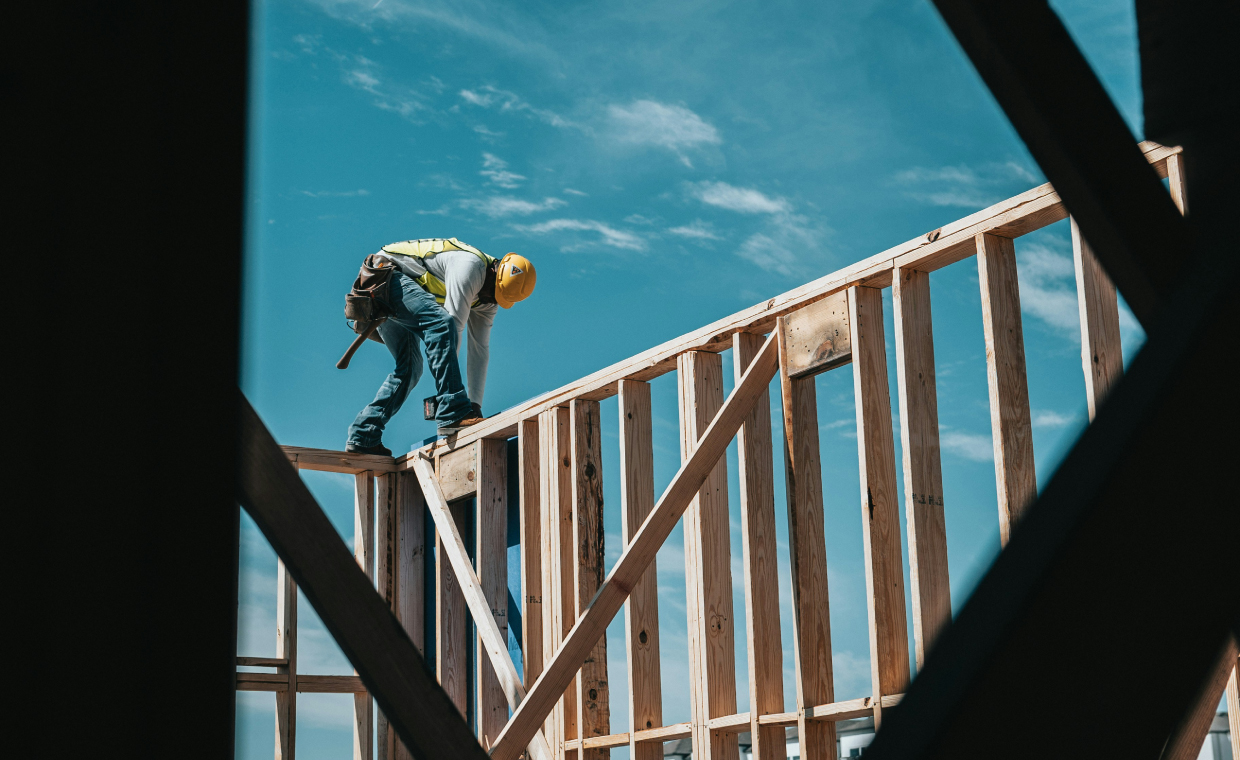
Make sure that your general contractor sends you dated photos and videos at least once a week, and more frequently at important phases such as laying foundations, framing, and rough-in inspection.
Many builders use special project management software such as Buildertrend, where all schedules, invoices, and pictures can be found in one place.
Ask for owner access if your builder uses Buildertrend. Some owners also use a solar-powered camera for the construction site.
Pay Money Wisely
Courtesy - Magnific
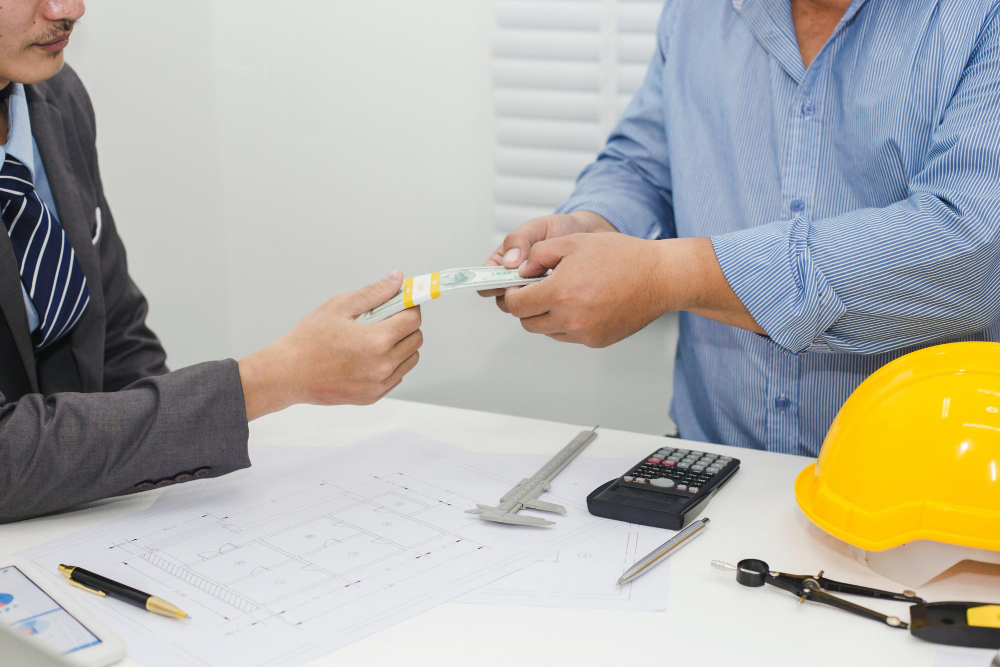
Do not agree to pay large amounts of money upfront. Always release payments only after work is confirmed, if possible, by your owner’s representative or an inspector hired for third-party verification.
Usually, if you have a construction loan, your lender sends their own inspector prior to each draw of money.
Use payment options where your payment history is available to view, and do not transfer money without confirming the banking information. Wire scams are widespread nowadays, and scammers often use emails with updated bank information.
Create a simple spreadsheet for tracking the budget, payments, change orders, and lien waivers.
Control the Permits and Inspections Process
While your contractor pulls building permits in your name, they are bound to your property, and you have to know their status. Many cities and counties offer online services where you can easily track permits and inspection status. Just look into it.
At least try to visit your building site 1 – 2 times. The best periods for this are when your drywall has not yet been installed.
At that time, you will be able to inspect wiring, plumbing, and framing. Also, it could be useful to visit the site during the final walk-through.
Conclusion
Managing a US construction project from abroad becomes quite an easy task when you concentrate on the systems that ensure constant connection with the process.
Find a licensed contractor, hire someone locally to represent you on the site, draft a solid contract, link payments to proven progress of the project, and finally get a working US number and an established system of reporting, and the distance will not be a problem anymore.
Also Read: Effective Construction Project Strategies
FAQs on Managing a US Construction from Abroad
1. What makes managing a US construction from abroad easier?
Setting up reliable communication routines, hiring a licensed local contractor and an independent owner’s representative, tying payments to verified work, and keeping an active US phone number help bridge distance and time-zone differences.
2. Why do I need a US phone number when building remotely?
Contractors, permitting offices, and banks often require a reachable US number for inspection alerts, verification codes, or callbacks, and missing a call can slow down inspections or payments.
3. What should be included in the construction contract?
Include a detailed scope of work with plans and material specs, milestone-based schedules, a written change-order process, lien waivers with each payment, and clear completion and delay terms.
4. How can I track progress when I live overseas?
Schedule regular check-ins accounting for time differences, request dated photos and videos at least weekly (and more often during foundation, framing, and rough-in stages), check online permit portals, and ask for access to tools like Buildertrend or site cameras.
5. When is the best time to visit the construction site in person?
Aim to visit once or twice ideally before drywall is installed so you can check framing, wiring, and plumbing, and again during the final walk-through.
Courtesy - Featured Image(unsplash)
Author & Expert Review
Written By:  Nidhi Patel | Civil Engineer & Content Writer

| Credentials: B.E. (Mahatma Gandhi Institute of Technical Education and Research Centre), Registered with Gujarat Technological University (GTU). Experience: Civil Engineer with 3+ years of content writing experience, currently writing blogs for Gharpedia, part of SDCPL. Expertise: Specializing in SEO-optimized blogs and long-form articles focused on home improvement, construction, interiors and architect topics. I create well-researched, reader-focused content that balances technical accuracy with clarity, making complex subjects easy to understand. Find her on: LinkedIn |
Verified By Expert: Avni Desai Environmental Engineer, SDCPL | M.E. (Environmental Engineering)
 Avni Desai Environmental Engineer,
This article has been reviewed for environmental, MEP, and building services accuracy by Avni Desai, an Environmental Engineer at Sthapati Designers & Consultants Pvt. Ltd. (SDCPL). With over 8 years of experience in water supply, wastewater management, infrastructure design, and building services, she brings practical expertise in MEP services, sustainable solutions, design planning, and on-site practices. Her professional services include planning and design of water supply systems, sewage and wastewater treatment systems (STP/WTP), drainage, rainwater harvesting, and other sustainable building services. Her review ensures the content aligns with environmental standards, efficient services planning, and real-world applicability.
Find her on: LinkedIn