






Table of Contents
Quick Summary
- Understand how rooftop solar can reduce electricity costs in Bangalore homes.
- Compare the financial benefits of solar for independent villas and apartments.
- Explore typical system costs, available subsidies and expected savings.
- Learn why roof ownership, shading, electricity consumption and system size affect payback.
- See why housing societies may benefit more from a common-area solar installation.
- Consider practical benefits such as lower carbon emissions and greater energy independence.
- Find out what homeowners should check before accepting a solar installation quote.
Courtesy - Magnific
“Is rooftop solar actually worth it?” This is probably the most common question Bangalore homeowners ask before they even get a quote. And honestly, the answer isn’t the same for everyone; it depends a lot on the kind of home you live in.
Does solar make the same financial sense for someone living in an apartment as it does for a villa owner with full roof ownership to themselves? Not quite. This blog breaks down the real numbers for both, so you can see where you actually stand. The numbers may vary based on your consumption, how much roof access you actually have, and the system size you go with.
What “Worth It” Actually Means for Rooftop Solar
When you ask if rooftop solar is “worth it,” you’re really asking about three things:
· The upfront cost after the solar subsidy
· The monthly savings on your bill
· How long it takes to recover the solar system installation cost
But one more thing that you must consider is that solar payback is not the finish line. Once your system earns back its cost, the savings keep coming. Household solar panels are built to last 25 years or more, so most of the value comes after the break-even point.
Rooftop Solar for Independent Villas
Courtesy - Magnific
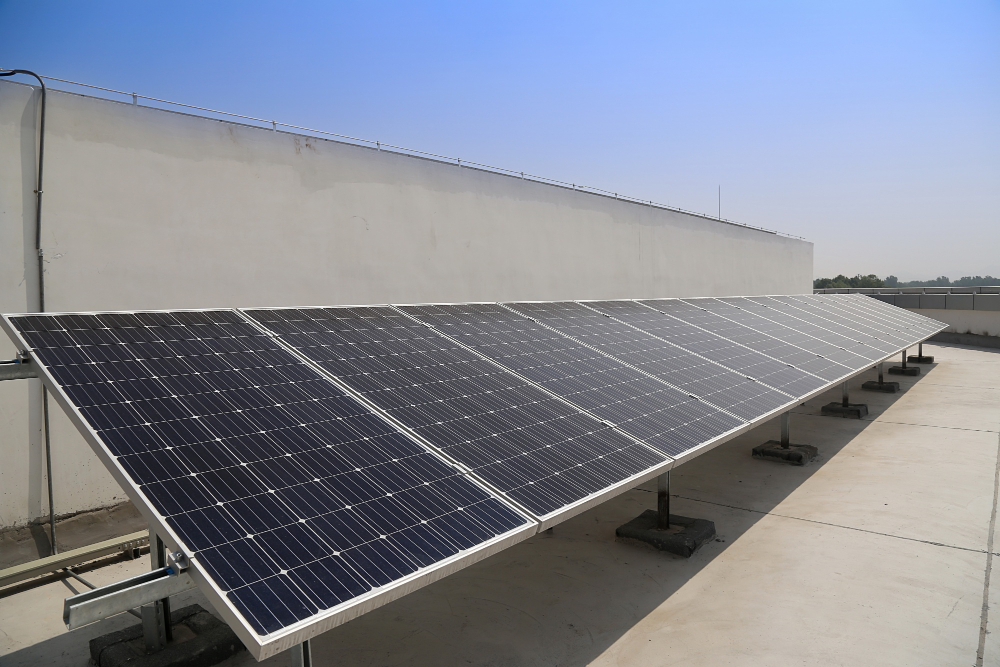
If you own a villa, you’re in the best position to go solar. You have full control over your roof and plenty of usable space. Villas also tend to use more power, with more ACs and bigger appliances running through the day. That works in your favour, because solar makes the most power during daytime hours. The more you use, the more you save, and the faster your system pays for itself.
Most villas comfortably fit a 5-10 kW system. A 5kW system costs around ₹3.3L* before subsidy, dropping to roughly ₹2.55L* after the ₹78,000 subsidy kicks in. A 10kW system in Bangalore costs about ₹5.9L* before subsidy, and around ₹5L* after.
The payback period for most villas in Bangalore is around ~3-5 years, given the city’s decent sunlight hours and relatively high tariffs. For villa owners, installing solar is a smart decision.
*Please note: These prices are taken from average market value, so do not treat them as an actual cost. The final solar panel installation cost in India depends on your city, DISCOM charges, product variant opted for, panel type, inverter type, mounting structure height, type of after-sales service, savings guarantee, roof height, etc.
Rooftop Solar for Apartments
If you live in anapartment, you may face the usual hurdle of shared roof space. You can’t just decide to install panels on your own; you need approval from your housing society, and individual metering adds another layer of complexity.
There are two scenarios to think through separately:
- Individual flat owner on a shared roof: You’re limited to a small system size, since you only get a portion of the shared terrace, and everything depends on your society. Savings here are smaller, simply because the system itself is smaller.
- Housing society/RWA installing for common areas: This is often the more practical route. Societies can get a subsidy of ₹18,000 per kW for common facilities, including EV up to 500kW total, calculated at 3kW per house. This covers things like lifts, common lighting, and water pumps, which help to share costs that every resident benefits from.
Realistically, an individual flat owner sees modest but still positive savings. A society-level installation tends to deliver better value overall because it spreads the cost and benefits across many households at once.
So, installing a rooftop solar in an apartment is worth it, but it works out better more often at the society level than for an individual flat.
Villa vs Apartment Savings Comparison
Courtesy - Magnific
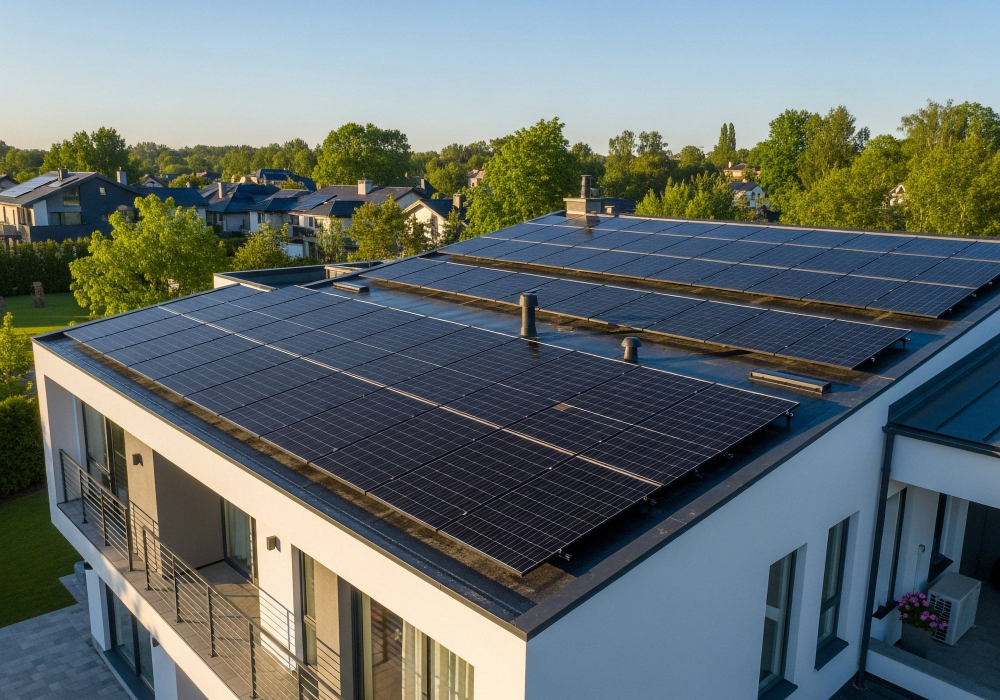
Villas tend to recover their solar system installation cost the fastest, simply because they can install a larger system with full roof access. Societies spread both the cost and the benefit across many households, which makes the per-household investment smaller even if the overall project is larger. You can check the comparison below:
- Cost recovery: Villas can fit a larger system, so they recover their cost faster. In apartments, a society shares the cost and the benefit across many households. Each home invests less, even when the overall project is larger.
- Roof access: Villas have full roof access. Apartments have limited space, so a shadow-free roof matters much more.
- Approvals: Villas decide for themselves. Apartments need society approval, and bylaws and timelines can delay the process.
- Savings size: Villa owners save more overall. Individual flat owners save less, but the savings are still worth having.
Non-Financial Benefits Worth Considering
Installing rooftop solar on villas or apartments isn’t only about the bill. It brings a few other benefits too. Some of the non-financial benefits of installing rooftop solar are given below:
- Backup during outages: Solar systems with battery integration can keep some power running during outages too. This is useful in cities that face load-shedding.
- Lower carbon footprint: Going solar reduces your household’s carbon footprint. More buyers are factoring this in.
- Resale appeal: It may add a little to your property’s appeal. This varies by buyer.
Is Rooftop Solar Worth It in Bangalore?
For villa owners, the answer is a confident yes in nearly every case, given the full roof access and higher consumption. For apartment owners, it’s still a yes, but the better path is usually through your housing society rather than going solo on a shared terrace.
Your actual numbers depend on your consumption and roof access, so it’s worth running your own figures rather than going by generic claims. A proper site assessment by a solar company in Bangalore like SolarSquare can give you the most accurate picture.
The Bottom Line
Solar pays for itself well within its 25-year life, whether you live in a villa or an apartment. After break-even, your panels keep cutting your bill for years.
The best next step is a savings estimate based on your own bill and roof. Homeowners and housing societies in Bangalore can get a free assessment from SolarSquare and check their exact numbers.
Also Read: Home Solar Installation Cost, Subsidies & Financing Options Explained for Beginners
FAQ – Rooftop Solar Bangalore
1. Is rooftop solar worth it in Bangalore?
Yes, rooftop solar can be financially worthwhile in Bangalore, particularly for homes with good roof space, sufficient electricity consumption and limited shading. The actual payback depends on the system cost, subsidy, electricity tariff and energy generation.
2. Is solar better for a villa or an apartment in Bangalore?
Solar is generally easier for a villa because the owner has direct control over the roof. Apartment residents usually need society approval, while a common solar system for lifts, pumps and lighting can be a more practical option.
3. How much does rooftop solar cost in Bangalore?
The cost varies according to system size, panels, inverter, mounting structure, roof conditions and installation requirements. Current Bangalore market examples show that a standard 5 kW residential system can cost around ₹3.8 lakh before subsidy, although the final quotation depends on the site.
4. What subsidy is available for rooftop solar in Bangalore?
Eligible residential systems can receive financial assistance under the PM Surya Ghar scheme. Current published figures provide ₹30,000 per kW for the first 2 kW and ₹18,000 for the third kW, with a maximum residential subsidy of ₹78,000 for systems of 3 kW and above.
5. How long does rooftop solar take to pay for itself?
The payback period depends on your electricity consumption, system cost, subsidy, generation and applicable tariff. A proper calculation based on your electricity bills and roof conditions is more reliable than using a fixed three- or five-year estimate.
Courtesy - Featured Image(Magnific)
Author & Expert Review
Written By:  Gaurav Mishra | Civil Engineer & Content Writer

| Credentials: B.E. (Mahavir Swami College, Surat), Registered with Bhagwan Mahavir University (BMU). Experience: Civil Engineer with 5+ years of content writing experience, currently writing impactful articles for Gharpedia, part of SDCPL. Expertise: Specializes in writing well-researched content on residential construction, construction materials, design planning, on-site practices, and safety, blending technical accuracy with everyday clarity. Find him on: LinkedIn |
Verified By Expert:  Shekhar J. Parikh – Co Founder – Gharpedia | Director – SDCPL

This article has been reviewed for technical and execution accuracy by Shekhar J. Parikh, Director and Consulting Engineer at Sthapati Designers & Consultants Pvt. Ltd. With over 40 years of experience in civil engineering, project execution, and construction management across Gujarat and Maharashtra, he ensures the content reflects practical site knowledge, quality control standards, and industry best practices, while also supporting informed decision-making for property buy, sell, and rent considerations.
Find him on : LinkedIn