






Table of Contents
Quick Summary
- Choosing the right lifting equipment starts with understanding your workshop’s load, reach and working pattern.
- A jib crane can provide a practical lifting solution for fixed workstations and compact loading areas.
- The guide explains freestanding, wall-mounted, articulating and other jib crane options.
- Key selection factors include load capacity, boom length, deflection, foundation strength, rotation and duty cycle.
- It also highlights common mistakes such as overloading, unsuitable wall mounting, poor foundation design and side-loading.
- Comparisons with forklifts, bridge cranes and gantry cranes help identify when another solution may be more suitable.
- The article also explains the information you should prepare before requesting a crane quotation.
Courtesy - Magnific
Yes, a jib crane is often the best lifting solution for a small workshop or loading bay when lifts are repetitive, loads are moderate, and the lifting area is a fixed zone. It is compact, quick to use and much cheaper to install than a full overhead crane. It is not the right tool when you need to move loads across the whole building, which is where a bridge crane fits better.
If your team still lifts motors, steel plates, drums or machine parts by hand or with a forklift, this guide will help you decide whether a jib crane makes sense, how to choose one, and which mistakes to avoid.
What Is a Jib Crane, and Why Does It Suit Small Spaces?
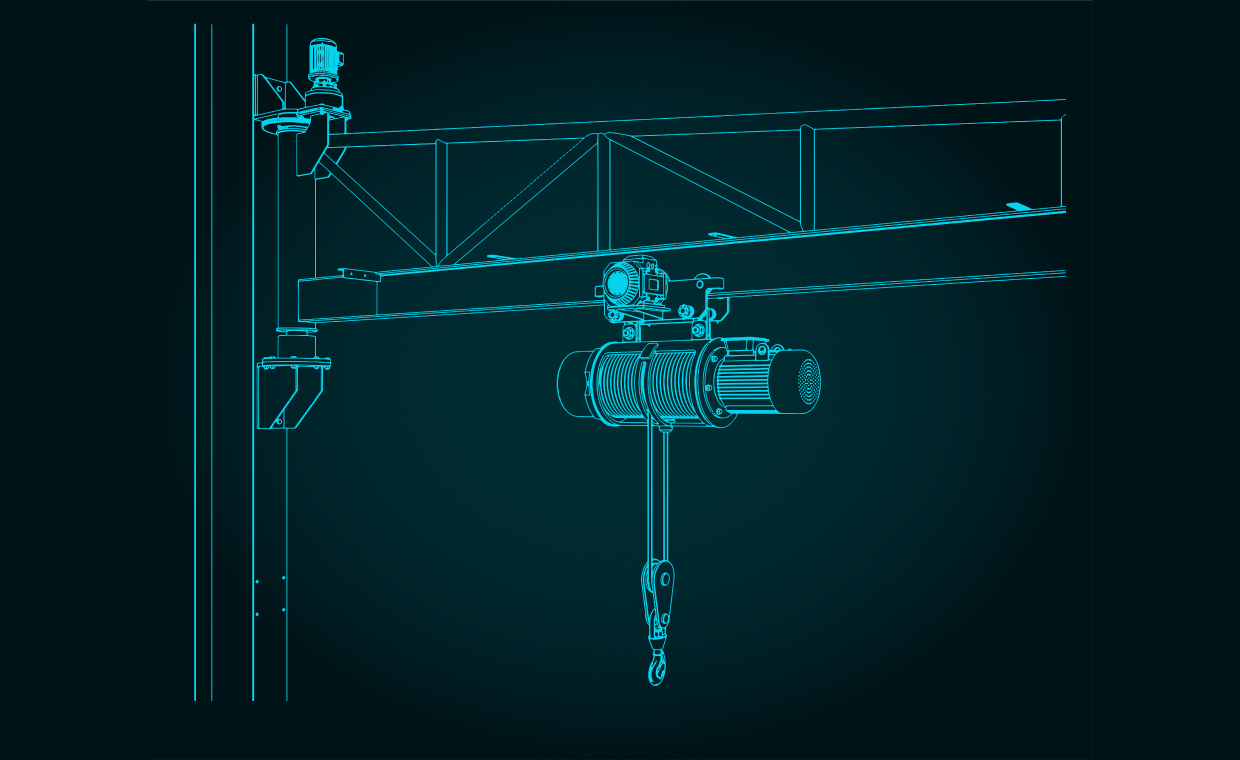
A jib crane has a horizontal arm (the boom or jib) that carries a hoist and trolley. The arm is supported by a vertical mast or a wall, and it swings around that support to cover a circular or semi-circular work area.
That design suits small workshops and loading areas for three reasons:
- Small footprint. There are no long runway beams or tall support columns, so it works in buildings that cannot take a full overhead crane.
- Dedicated workstation. The operator can lift and place a load right where the work happens, such as a lathe, welding bay, assembly table or dock door.
- Fast to use. Compared with waiting for a forklift or a shared bridge crane, a jib crane is available the moment a worker needs it.
Where a Jib Crane Works Best
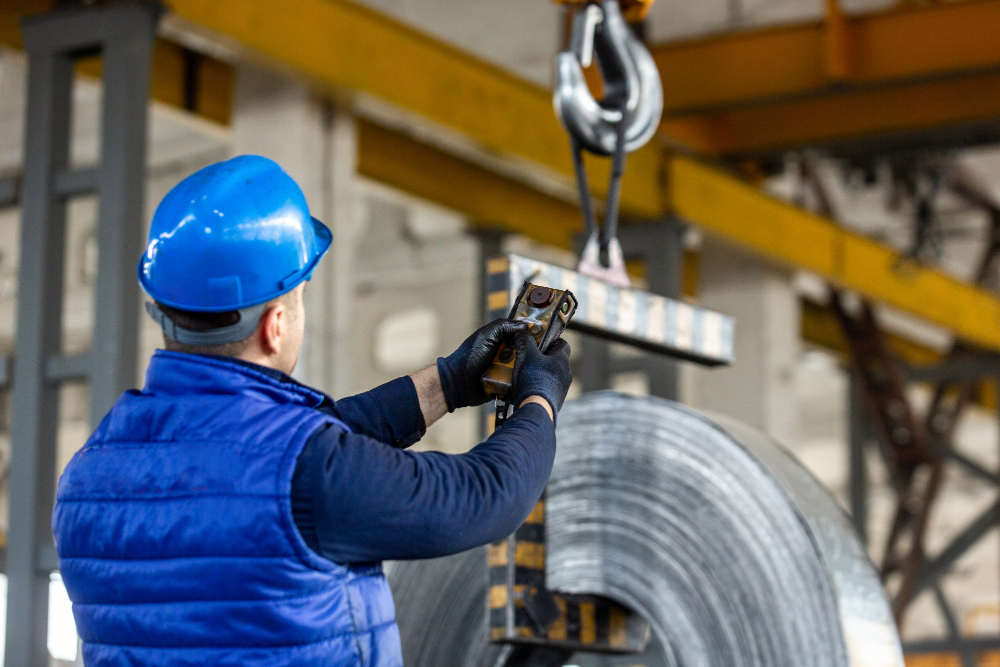
Courtesy - Magnific
Jib cranes are a good fit for:
- Machine shops loading and unloading heavy workpieces on lathes, milling machines or presses
- Fabrication and welding bays handling plates, pipes and frames
- Loading docks lifting engines, drums, motors or crated equipment between a truck bed and the floor
- Warehouses and godowns with a fixed heavy-item station
- Maintenance areas where pumps, gearboxes or motors are swapped regularly
They are a poor fit for moving loads over long distances, covering a very large floor area, or lifting very heavy loads at long reach.
Types of Jib Cranes: Which Mounting Style Fits Your Space?
| Type |
| Freestanding (pillar) jib crane |
| Wall-mounted jib crane |
| Wall-travelling jib crane |
| Articulating jib crane |
| Portable jib crane |
For a loading bay, a wall-mounted or column-mounted unit near the dock edge often saves the most space. For a workshop with free floor area, a freestanding unit gives more freedom, provided the floor can support it.
How to Choose the Right Jib Crane: 6 Key Factors
1. Rated capacity, including the hoist and rigging
Start with the heaviest load you expect to lift, then add the weight of the hoist, slings and lifting attachments. Allow a safety margin for future needs, because workshops tend to take on heavier jobs over time. Capacity is a design limit, not a target to run at every day.
2. Boom length and working radius
Boom length decides how much floor you cover, but it also drives the structural demand. A longer boom creates a bigger bending moment on the mast, the foundation or the wall. Choose the shortest boom that reaches every point you actually need, and do not simply pick the longest one.
3. Deflection and trolley behaviour
Every boom bends slightly under load. Too much deflection makes the trolley drift towards the mast or the tip, and the load feels unstable and hard to position. Before finalising a design, you can use a jib crane deflection calculator to check how the boom is likely to behave for your load and reach. It is a quick way to compare options before talking to a manufacturer.
4. Foundation or supporting structure
This is the most overlooked point. A freestanding jib crane transfers a large overturning moment to the floor, so the slab thickness, concrete strength and anchor design must be checked. A wall-mounted unit depends entirely on the wall or column behind it. Have a structural engineer confirm the building can take the load before ordering.
5. Rotation and coverage
Decide whether you need full 360° rotation, 270° or a 180° swing against a wall. Check for obstacles such as columns, pipes, lights and ducting within the swing area.
6. Duty cycle and power
A crane lifting a few times a day has very different needs from one working all shift. Think about how often you lift, how far the hoist travels and what hoist type you want, whether manual, electric chain or wire rope. Also confirm that a suitable power supply is available at the location.
Common Mistakes When Buying a Jib Crane

Courtesy - Magnific
1. Ignoring the weight of the hoist and attachments. The rated load is what the crane can lift in total, so the hoist and slings count against it.
2. Assuming any wall can carry a wall-mounted jib crane. Brick or lightweight walls are often not suitable. The load goes into the structure behind the crane, so it needs checking.
3. Choosing a longer boom “just in case.” Extra reach increases cost, deflection and the load on the foundation. Match the boom to the real work zone.
4. Skipping foundation design. A thin or poorly cured slab is a real risk for a freestanding crane. The base is part of the crane system.
5. Expecting a jib crane to replace an overhead crane. A jib serves one zone well. If you need to move heavy items along the whole shop, a bridge crane or gantry crane is the right class of equipment.
6. Side-loading and dragging loads. Jib cranes are designed for vertical lifting. Pulling loads sideways or dragging them across the floor adds forces the structure was not designed for.
7. Forgetting the environment. Outdoor or humid loading areas need suitable corrosion protection, and dusty or hot workshops may need a different hoist specification.
8. No inspection routine. Check bolts, the rotation bearing, the hoist, wire rope or chain, and the structure on a regular schedule, and follow the manufacturer’s maintenance guidance.
Jib Crane vs Other Options for a Small Workshop
- Jib crane vs forklift: A forklift is excellent for pallets and transport, but a jib crane gives more precise vertical lifting at a fixed workstation and keeps the forklift free.
- Jib crane vs overhead (bridge) crane: A bridge crane covers the entire bay, but it needs a building structure that supports runway beams and costs more. A jib crane is lighter on the building and the budget.
- Jib crane vs gantry crane: A gantry crane is free of the building structure and can cover a wider span, which suits yards and open areas.
Getting a Quote: What to Prepare
To get an accurate recommendation, have these details ready:
- Maximum load and the typical load
- Required lifting height and working radius
- Mounting preference (floor, wall or column) and the construction of the wall or slab
- Lifting frequency and working hours
- Available power supply and the working environment
With this information, a manufacturer can propose a configuration that fits. You can browse jib crane options and specifications to compare capacity ranges and mounting types before you make an enquiry.
Conclusion
For a small workshop or loading area, a jib crane is often the most practical lifting solution when the work happens at fixed stations and loads are moderate. Match the capacity, boom length and mounting type to the real job, check deflection early, and treat the foundation or wall as part of the crane. Avoid the common mistakes above and you will get a safer, longer-lasting installation.
Also Read: How to Install an Overhead Crane in a Factory or Workshop A Step-by-Step Guide
FAQ – Jib Crane
01. What capacity of jib crane do small workshops usually need?
Many small workshops lift between a few hundred kilograms and a couple of tonnes, but the right figure depends on your heaviest load plus the hoist and attachments.
02. Can a jib crane be mounted on a wall?
Yes, but only if the wall or column is structurally able to take the crane’s load. Always have the building checked by a structural engineer.
03. Is a jib crane suitable for a loading dock?
Yes. A wall-mounted or column-mounted jib crane near the dock lets workers lift heavy items on and off trucks without a forklift.
04. How much space does a jib crane need?
Mainly the swing area of the boom plus clearance for the mast or wall bracket. Check the working radius against columns, pipes and lights before you choose a position.
05. Do I need a foundation for a freestanding jib crane?
Yes. The base must resist the overturning moment, so the slab and anchors need to be designed for the crane.
Courtesy - Featured Image(Magnific)
Author & Expert Review
Written By:  Gaurav Mishra | Civil Engineer & Content Writer

| Credentials: B.E. (Mahavir Swami College, Surat), Registered with Bhagwan Mahavir University (BMU). Experience: Civil Engineer with 5+ years of content writing experience, currently writing impactful articles for Gharpedia, part of SDCPL. Expertise: Specializes in writing well-researched content on residential construction, construction materials, design planning, on-site practices, and safety, blending technical accuracy with everyday clarity. Find him on: LinkedIn |
Verified By Expert:  Avni Desai | Environmental Engineer, SDCPL | M.E. (Environmental Engineering)
 Avni Desai | Environmental Engineer, SDCPL | M.E. (Environmental Engineering)
This article has been reviewed for environmental, MEP, and building services accuracy by Avni Desai, an Environmental Engineer at Sthapati Designers & Consultants Pvt. Ltd. (SDCPL). With over 8 years of experience in water supply, wastewater management, infrastructure design, and building services, she brings practical expertise in MEP services, sustainable solutions, design planning, and on-site practices. Her professional services include planning and design of water supply systems, sewage and wastewater treatment systems (STP/WTP), drainage, rainwater harvesting, and other sustainable building services. Her review ensures the content aligns with environmental standards, efficient services planning, and real-world applicability.
Find her on : LinkedIn