




Table of Contents
Quick Summary
- Before starting renovation, plan furniture placement based on how each room is actually used.
- Measure furniture accurately and place it on floor plans to avoid space and circulation issues.
- Ensure adequate walking clearances around beds, sofas, dining tables, and storage units.
- Use furniture strategically to define zones in open-plan living spaces.
- Incorporate storage solutions into renovation work before walls and cabinetry are finalised.
- Position electrical points, switches, and lighting according to furniture layouts.
- Choose multifunctional furniture to maximise comfort and usability in compact homes.
- Review layouts thoroughly before construction to avoid costly modifications later.
The living room renovation finished on schedule. New flooring, fresh paint, a false ceiling with recessed lights, everything as per the drawings. Then the sofa arrived, and within an hour the family had discovered that it blocked half the balcony door, that the only TV socket sat on the opposite wall, and that the carefully positioned ceiling lights now illuminated a patch of empty floor about two feet from where anyone could actually sit.
The contractor did nothing wrong. The drawings were followed exactly. What went missing was earlier than that – at the planning stage, when nobody asked where the furniture would go.
What Happens in Each Room, Specifically
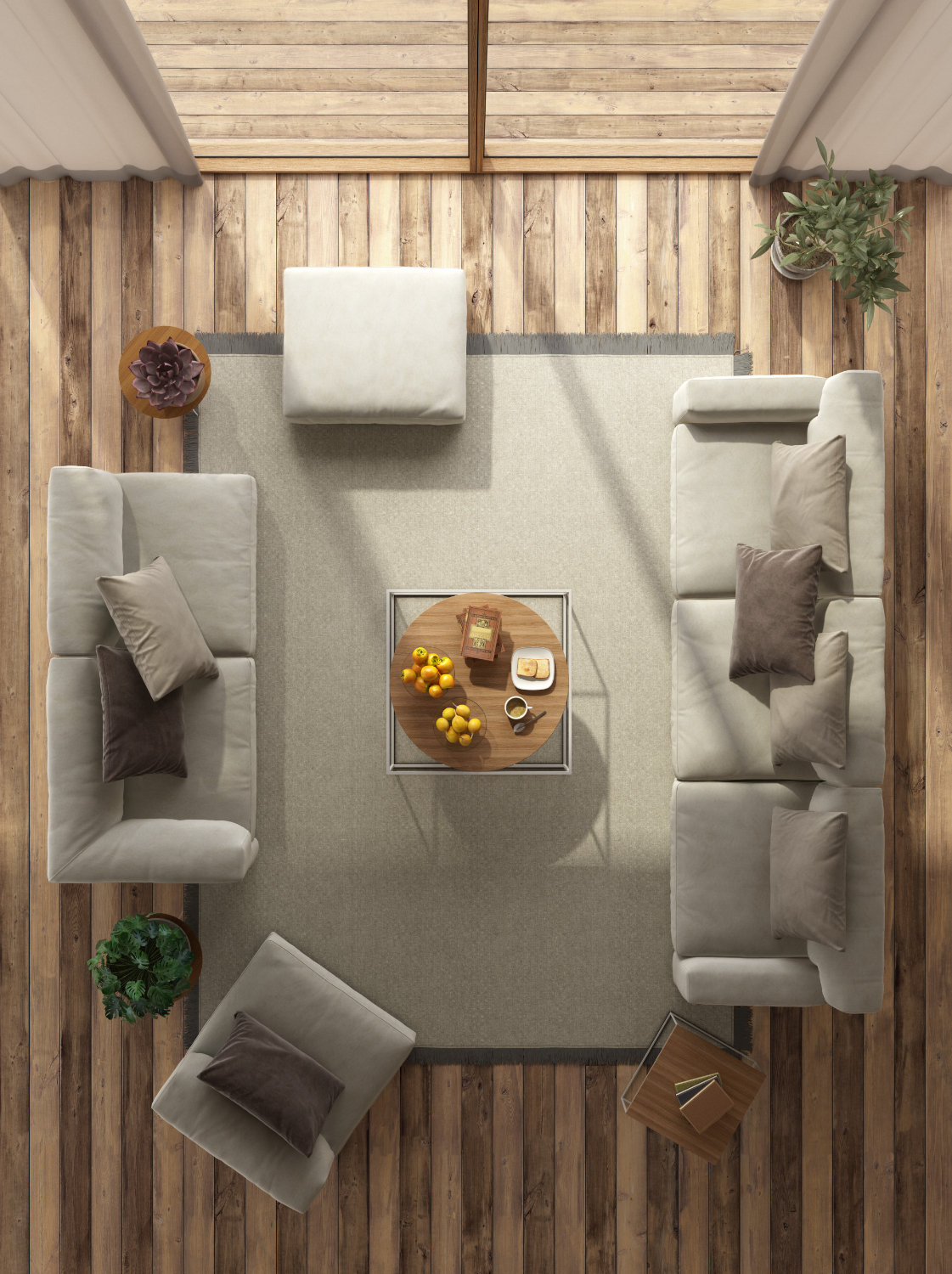
A useful exercise before any layout work: go room by room and describe the daily life there, in detail.
Who sits in the living room, how many at once, and is the television the focus or just present? Which side of the bed does each person use, and does anyone read there at night? How many people eat at the dining table on a normal Tuesday, and how many during festivals or family visits? Where does the laptop work happen – a proper desk, or wherever there is space?
The answers are mundane, and they are the foundation. A renovation plan drawn without them is a plan for a generic family in a generic house, and the actual family will spend years working around it.
Furniture Dimensions Belong on the Renovation Drawings
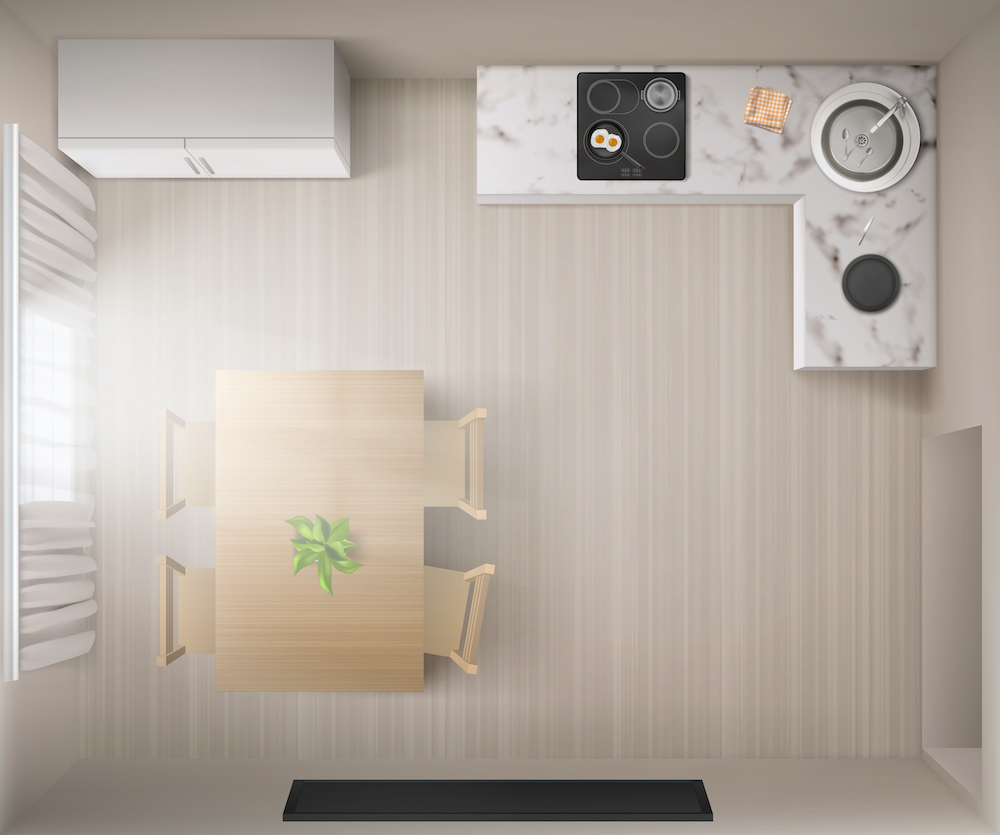
Take the measuring tape to the showroom, or pull the dimensions from the product listings, and get the real numbers for every major piece: the sofa’s depth as well as its length, the bed plus the clearance needed on each side that gets used, the dining table with its chairs pulled out rather than tucked in, the wardrobe including the full swing of its doors.
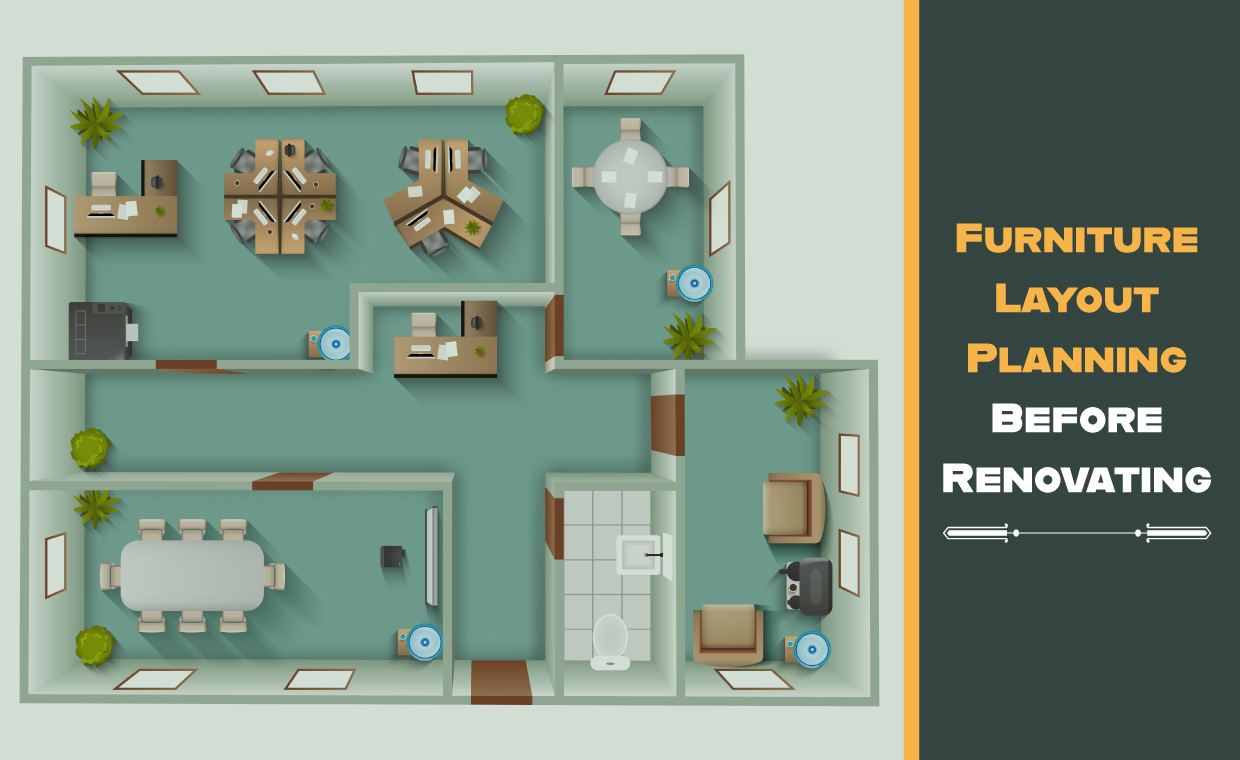
Then put those footprints on the floor plan at true scale and look at what remains. Before ordering large pieces or approving a renovation layout, tools such as mood boards, floor plans, sample boards, and 3d furniture rendering can help homeowners understand whether furniture scale, materials, lighting, and circulation will work together in the finished room. There is also a zero-cost version of the same check: painter’s tape on the existing floor, marking each footprint, and a slow walk through the imaginary room. Most scale problems announce themselves within a minute of doing this.
The timing matters more than the method. Once the electrician and carpenter have their final drawings, every correction starts involving broken walls.
Walking Space
Some working numbers, learned the hard way by many households: main passages want at least 90 cm. Between sofa and coffee table, around 60 cm – close enough to reach a cup, far enough to walk past. Behind a dining chair with someone sitting in it, 75 to 90 cm. Beside any part of the bed used daily, 60 cm minimum.
And the clearances people forget: a wardrobe needs its doors’ full arc kept free, and a chest of drawers needs the drawer’s own depth in front of it. The drawer that hits the bed frame at half-open is a daily irritation that was visible on the plan all along, had anyone drawn the drawer open.
Check the routes too – to the balcony, to the window that gets opened every morning, through the kitchen’s triangle of stove, sink, and storage. A layout that forces a small detour at every turn produces a room that never quite feels comfortable, whatever it looks like.
Open Plans Need the Furniture to Behave Like Walls
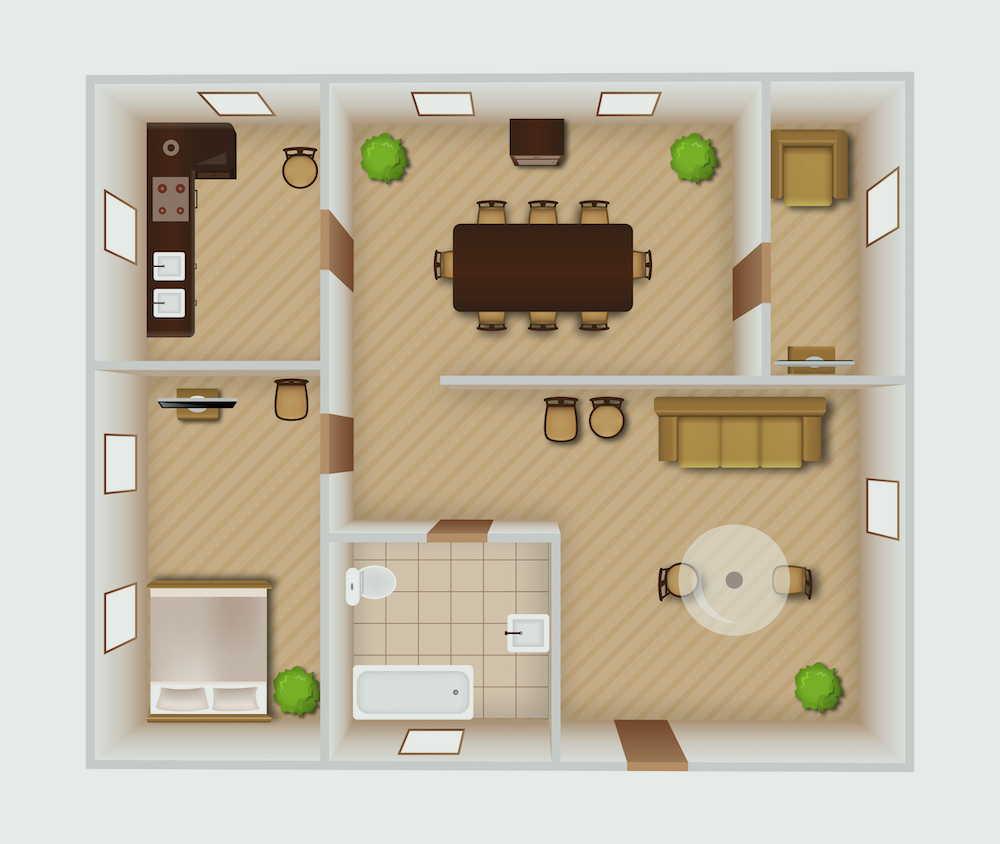
Remove the walls between living, dining, and kitchen, and something has to take over their job of telling the eye where each activity belongs.
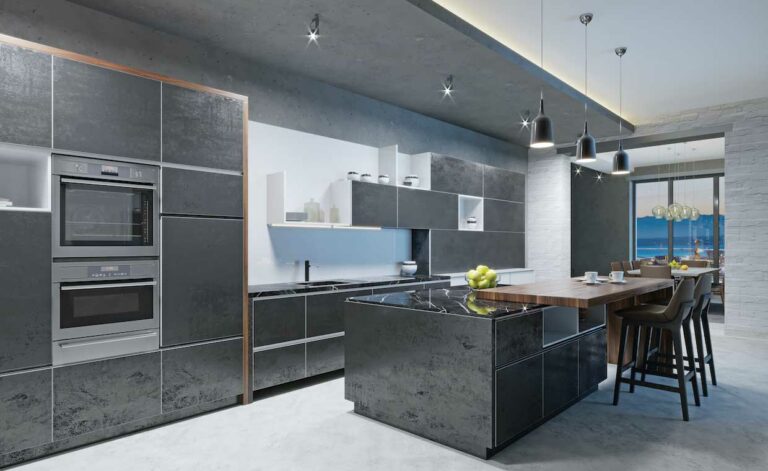
A rug under the seating does part of it. The back of the sofa, turned toward the dining area, draws a boundary without blocking light. A console behind that sofa firms up the line and earns its keep as a surface. The dining table wants its own pool of light – which means a pendant, positioned over the table’s planned location rather than the room’s geometric centre, decided before the ceiling work is done. A low shelf or storage unit can fence off a work corner while still letting air and light move.
All of this is cheap to decide on paper and expensive to retrofit, because the lighting points and flooring transitions should follow the zones – and those get fixed during renovation, not after.
Storage, Before the Walls Close
Make the list early: clothes and linen, shoes near the entrance, kitchen vessels, the dry stores, books, the TV and everything wired to it, cleaning equipment, luggage, the seasonal things that appear twice a year.
With that list in hand, the renovation itself can absorb most of it. Wardrobes built floor to ceiling instead of stopping at loft height. A shoe cabinet recessed into the entry. Kitchen cabinets taken all the way up. Under-bed drawers, if the bed is being made to order anyway. A bookshelf built into the corner that would otherwise hold nothing.
What gets skipped at this stage turns into freestanding cabinets bought later and squeezed into whatever space is left – costing more, holding less, and standing on floor area the room could not spare.
Electrical Points Follow Furniture, Never the Reverse

Here is the most expensive version of the problem: sockets and switches go into the walls, the walls get finished, and only then does the furniture reveal where the sockets should have been.
Bedside charging points belong at side-table height, both sides of the bed. The TV connection goes behind the TV unit’s planned position – a wire crossing the wall to reach it will be visible for the next decade. Desk sockets at desk height, where the laptop actually plugs in, rather than at the skirting behind a cabinet that will never be moved. Task lighting in the kitchen positioned to land on the counter in front of the cook, because a light behind the cook’s head illuminates nothing except their shadow.
None of these placements can be decided without a furniture plan. Which is the whole argument for making one first.
In a small home, the logic changes
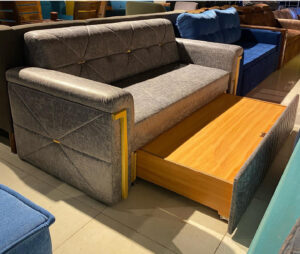
Compact spaces punish the standard approach of buying a full furniture set in a smaller size. What works instead: pieces that do double duty. A sofa bed where guests occasionally stay. Ottomans that store the extra bedding. A dining table that extends for occasions and shrinks for daily life. The bed with drawers underneath.
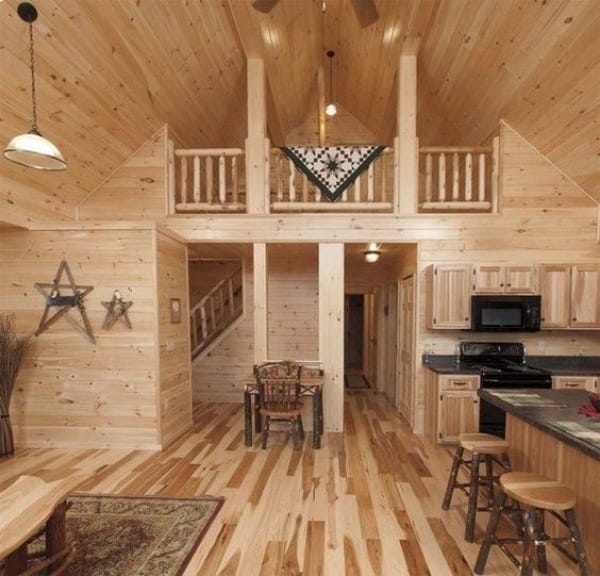
Wall-mounted shelves keep the floor visible, and visible floor reads as space. Furniture on slim legs does the same trick. Five well-chosen pieces will serve a small room better than eight ordinary ones – the three that were left out are the breathing room.
Before the Work Begins
A last pass through the plan, with questions rather than assumptions. Has the function of every room been written down somewhere? Do the drawings show furniture at real dimensions, doors and drawers included? Can a person walk every daily route without sidestepping anything? Do the light points and sockets line up with where the furniture will stand? Has storage gone into the walls while the walls are still open? Have the material and colour samples been seen together, in the room’s own light?
Every problem caught here is a conversation. The same problem caught after handover is a demolition.
A renovation puts the surfaces right. Whether the home then works – whether the light falls where people sit, the sockets serve the actual devices, and the rooms can be walked through without thinking – gets decided by the furniture plan, and the furniture plan only helps if it existed before the drawings were final. The families who do this in the right order rarely notice what they avoided. That is more or less the point.
Also Read: Fire Risks of Popular Interior Decor Materials Used in Homes
FAQs – Furniture Layout Planning
1. Why should furniture layout be planned before home renovation?
Planning furniture layout early helps ensure proper space utilisation, comfortable movement, suitable lighting placement, and correctly positioned electrical points.
2. What is the ideal clearance around furniture?
Most walkways should have at least 90 cm of clearance, while areas around beds, dining chairs, and coffee tables typically require 60 to 90 cm.
3. How does furniture planning affect electrical work?
Furniture placement determines where sockets, switches, TV connections, and lighting should be installed for maximum convenience and functionality.
4. What are the best furniture solutions for small homes?
Multifunctional furniture such as sofa beds, storage ottomans, extendable dining tables, and beds with drawers can help save space.
5. How can I test a furniture layout before renovation?
You can create scaled floor plans, use 3D visualisation tools, or mark furniture footprints on the floor with painter’s tape to assess space and movement.
Author & Expert Review
Written By:  Gaurav Mishra | Civil Engineer & Content Writer

| Credentials: B.E. (Mahavir Swami College, Surat), Registered with Bhagwan Mahavir University (BMU). Experience: Civil Engineer with 5+ years of content writing experience, currently writing impactful articles for Gharpedia, part of SDCPL. Expertise: Specializes in writing well-researched content on residential construction, construction materials, design planning, on-site practices, and safety, blending technical accuracy with everyday clarity. Find him on: LinkedIn |
Verified By Expert: Farhan Shaikh – Senior Manager – Architect, SDCPL | Associate Member – IIA

This article has been reviewed for architectural and interior design accuracy by Farhan Shaikh, Senior Manager – Architect at Sthapati Designers & Consultants Pvt. Ltd. As the lead for all architectural and interior projects at SDCPL and an Associate Member of the Indian Institute of Architects (IIA), he brings hands-on experience in architectural planning, interior design, project coordination, and sustainable strategies. His review ensures the content reflects practical design considerations, industry best practices, and real-world applicability across both architecture and interior spaces.
Find him on : LinkedIn