







Table of Contents
Quick Summary
- First, the article clears up the misconception that spray foam is automatically excluded from Xcel Energy rebates.
- It explains how Xcel evaluates attic insulation based on R-value and air sealing based on measured performance.
- The article highlights why roof deck spray foam can fall outside the standard attic rebate structure.
- It also explains the importance of using an eligible Xcel Energy Trade Ally and completing required testing.
- Finally, it outlines practical steps homeowners can take to check rebate eligibility before starting a spray foam project.
Spray foam isn’t excluded from Xcel Energy’s insulation rebates in Denver. That’s the misconception worth clearing up first if you are choosing a trusted contractor like Grizzly Insulation CO, Denver’s trusted insulation contractor. What actually determines whether a spray foam project qualifies has almost nothing to do with the material itself, and almost everything to do with how the project is structured.
What Xcel’s Denver Rebate Program Actually Rewards
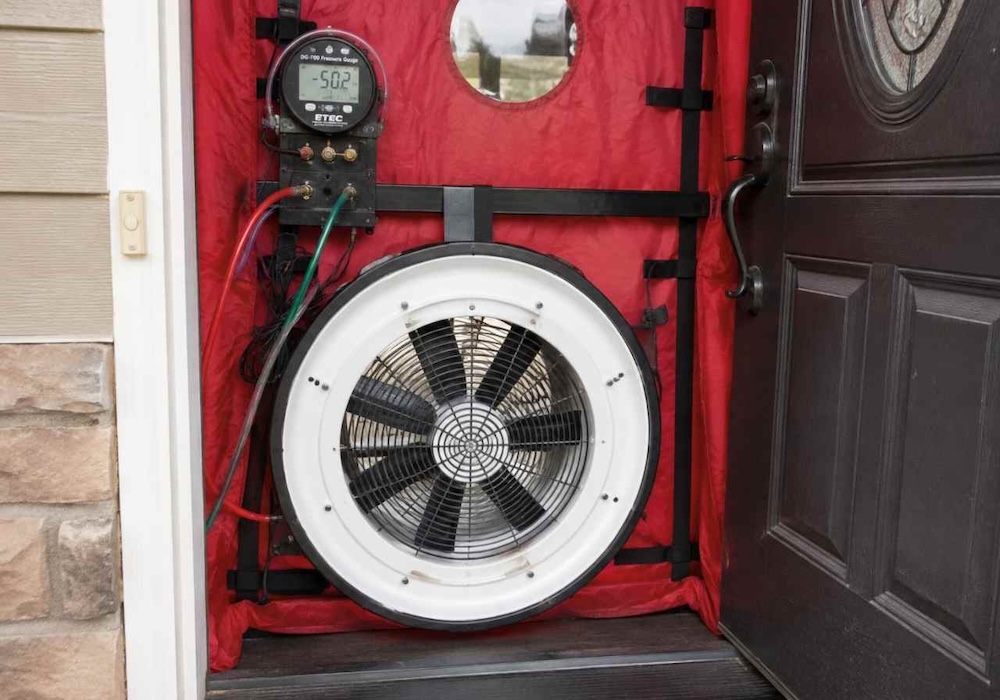
Xcel Energy runs several rebate programs for Denver-area customers, mostly for home energy efficiency upgrades. Xcel’s program is performance-based, not material-based. For attic insulation, the rebate is built around bringing an attic from R-24 or below up to R-60 or higher, verified by an actual measurement, not an assumption based on your home’s age. For air sealing, the requirement is a measured 20 percent reduction in air leakage, tested with a blower door before and after the work, reported in a unit called CFM50. Nowhere in that structure does the program say which material has to get you there. Blown-in fiberglass, blown-in cellulose, and spray foam can all theoretically hit those same numbers.
Why Roof Deck Spray Foam Often Falls Outside the Standard Rebate in Denver
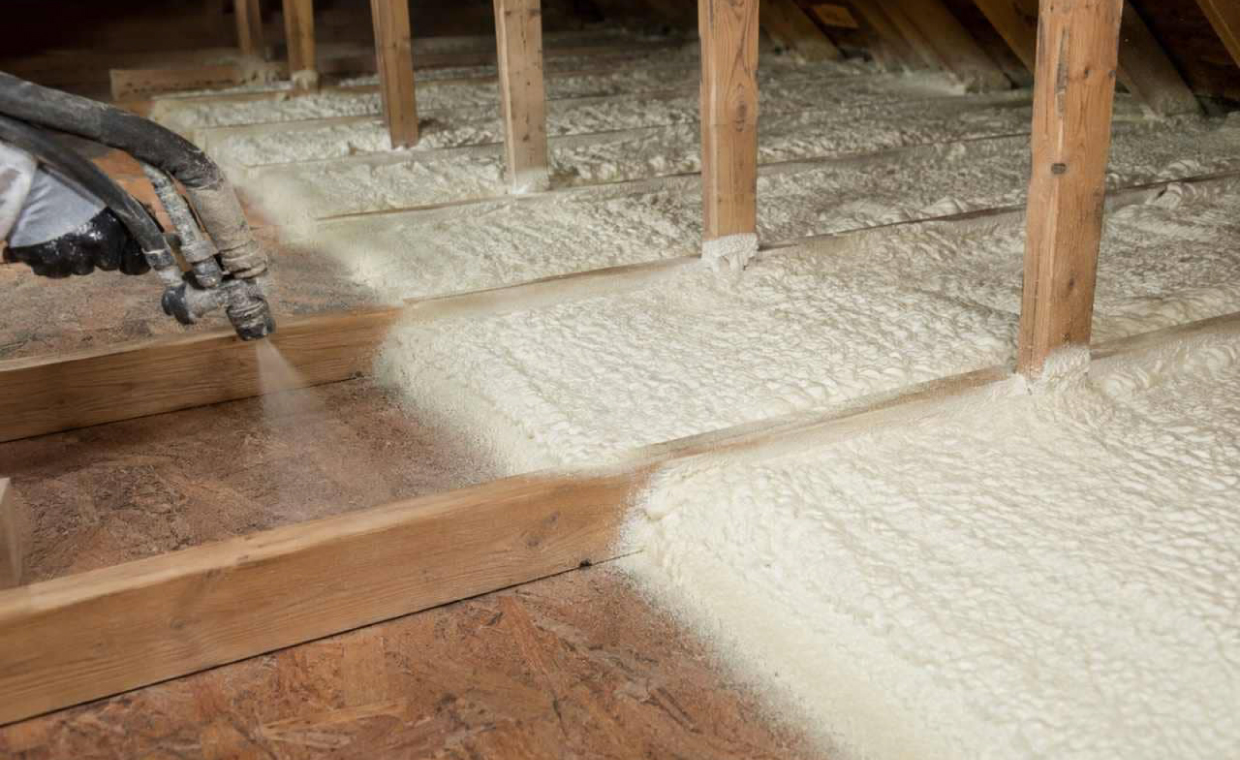
Here’s where spray foam runs into trouble. The standard attic insulation rebate in Denver is built around measuring R-value at the attic floor, the same assembly blown-in insulation creates. Open-cell spray foam applied to that same attic floor, in a similar configuration to blow-in, can generally be measured and verified the same way, so it has a legitimate path to qualifying.
Spray foam applied to the underside of the roof deck instead, to create a conditioned attic, is a fundamentally different assembly. There’s no attic floor insulation layer to measure against the R-24-to-R-60 benchmark the rebate is built around. That doesn’t make a roof deck spray foam job a bad project; it’s often the better long-term choice for a given house, but it doesn’t fit neatly into a rebate structure designed to measure a different kind of assembly. This is a structural mismatch, not a material exclusion, and it’s the single biggest reason spray foam projects fail to qualify when homeowners assumed they would.
Why the Denver Contractor You Choose Determines Rebates
The rebate requires the work to be done by a participating Xcel Energy contractor, and it requires that pre- and post-installation blower door testing actually happen. A skilled spray foam contractor who isn’t enrolled as an Xcel Trade Ally, or who doesn’t build blower door testing into the project scope, can do excellent work and still leave you with no rebate to claim, simply because the paperwork chain required to verify and submit the claim was never in place. This has nothing to do with the quality of the foam job and everything to do with administrative eligibility.
The Cost Difference the Rebate Doesn’t Fully Cover in Denver
Even when spray foam does qualify, it’s worth being clear-eyed about the economics. The rebate caps at a fixed dollar amount regardless of which material got you there, currently up to $1,250 for qualifying attic insulation work. Spray foam costs substantially more per square foot than blown-in spray foam insulation in Denver to reach the same R-value target, so the rebate covers a smaller percentage of a spray foam project’s total cost than it does for a blown-in project. That’s not a reason to avoid spray foam if it’s the right call for your attic, but it’s a meaningful factor in deciding whether qualifying for the rebate should be the deciding reason to choose it.
How to Structure a Denver Spray Foam Project So It Actually Qualifies for Rebates
Our team at Grizzly Insulation CO can tell you the easiest yet concrete steps to determine whether a spray foam project has an actual shot at the rebate before you ever sign a contract.
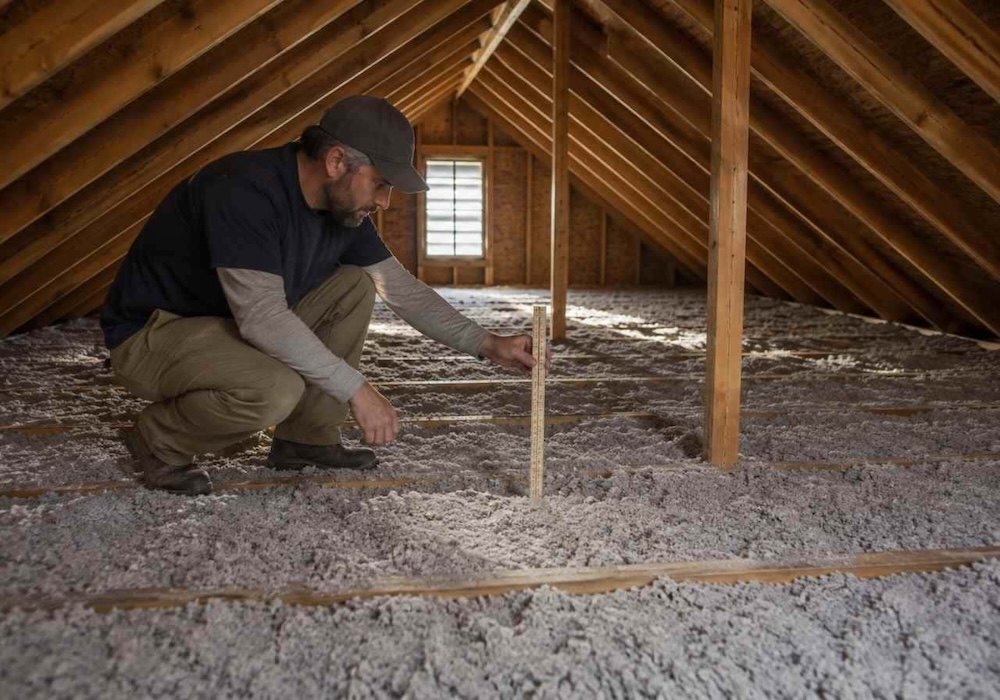
- Start with a measured baseline. Have your current attic R-value actually measured, not estimated from your home’s build year, since that number determines whether you’re even in the eligible range to begin with.
- Confirm your contractor is an active, participating Xcel Energy Trade Ally before signing anything, and confirm blower door testing, both before and after the work, is explicitly included in the project scope.
- If open-cell spray foam is going onto the attic floor in a configuration similar to blow-in insulation, ask specifically whether that configuration has been used successfully for Xcel rebate claims before, not just whether the material is generally eligible.
- If you’re considering roof deck spray foam for a conditioned attic instead, ask directly whether that specific assembly has a path to any current Xcel incentive, since it may fall outside the standard attic rebate even though it’s a legitimate and often superior insulation approach.
Conclusion
Spray foam doesn’t fail to qualify for Xcel rebates in Denver because of what it’s made of. It fails to qualify when it’s applied in an assembly the rebate wasn’t built to measure, or installed by a contractor who isn’t set up to verify and submit the claim. Structure the project around those two things first, and whether spray foam qualifies stops being a mystery and starts being a straightforward yes or no you can know before the work begins.
Also Read: Material Buying Guide for Whole Home Renovations
Frequently Asked Questions – Xcel Rebates for Spray Foam
1. Does Xcel Energy offer rebates for spray foam insulation?
Yes, spray foam may qualify when the project meets the programme’s requirements. Eligibility depends on the installation method, insulation performance, testing and other programme conditions.
2. Why might roof deck spray foam not qualify for an Xcel rebate?
Roof deck spray foam creates a conditioned attic and does not necessarily fit the attic-floor insulation requirements used for the standard rebate.
3. Does the contractor need to be approved by Xcel Energy?
Yes. Using a participating Xcel Energy Trade Ally can be essential for meeting the programme’s contractor and rebate submission requirements.
4. Is blower door testing required for Xcel rebates?
For qualifying air-sealing work, blower door testing is used to measure air leakage before and after the work. The required improvement must meet the programme’s specified threshold.
5. Is spray foam worth using if the rebate is limited?
It can be, depending on the home’s insulation needs and the type of assembly being insulated. Homeowners should consider the overall energy performance and project cost rather than choosing spray foam solely because of a potential rebate.
Author & Expert Review
Written By:  Gaurav Mishra | Civil Engineer & Content Writer

| Credentials: B.E. (Mahavir Swami College, Surat), Registered with Bhagwan Mahavir University (BMU). Experience: Civil Engineer with 5+ years of content writing experience, currently writing impactful articles for Gharpedia, part of SDCPL. Expertise: Specializes in writing well-researched content on residential construction, construction materials, design planning, on-site practices, and safety, blending technical accuracy with everyday clarity. Find him on: LinkedIn |
Verified By Expert:  Shekhar J. Parikh Co Founder – Gharpedia | Director – SDCPL
 Shekhar J. Parikh Co Founder – Gharpedia | Director – SDCPL
This article has been reviewed for technical and execution accuracy by Shekhar J. Parikh, Director and Consulting Engineer at Sthapati Designers & Consultants Pvt. Ltd. With over 40 years of experience in civil engineering, project execution, and construction management across Gujarat and Maharashtra, he ensures the content reflects practical site knowledge, quality control standards, and industry best practices, while also supporting informed decision-making for property buy, sell, and rent considerations.
Find him on : Linkdin