








Table of Contents
Quick Summary
- Ask what caused the fault and whether any other parts show early wear, rather than only accepting that a part was replaced.
- Have the technician demonstrate that plumbing, carpentry, or fixtures work properly before leaving, while letting professionals handle electrical testing.
- Avoid judging AC repairs solely by startup noise, and ask how long to monitor cooling, airflow, and drainage.
- Review the itemized invoice, clarify warranty terms and coverage limits, and save photos, quotes, and service reports.
- Record when recurring issues happen, note any new sounds, smells, or leaks, and contact the provider with your repair details while prioritizing safety during hazards.
Courtesy - Magnific
The plumber has packed up. The puddle under your sink is gone, and everything seems back to normal. It’s tempting to consider the job finished.
But how can you tell if the repair will hold?
When booking home maintenance in Dubai, it’s worth knowing what to check before the technician leaves. You don’t have to understand the technical work. A few questions and a clear explanation can help you tell whether the original problem has been fixed.
Ask What Was Actually Repaired

Courtesy - Magnific
Sometimes a technician’s explanation is as brief as “I replaced the faulty part.” That may be enough to get things working again, but it tells you little about what happened.
Ask what caused the trouble, not just which part was replaced. For a leaking pipe, it could be a worn connection or damage somewhere along the pipe. If a circuit breaker kept tripping, you’ll want to know what was triggering it.
Otherwise, you might end up dealing with the same problem again because the repair only addressed what was visible.
It’s also worth inquiring if the technician noticed anything else while working. Maybe another part is starting to wear out. It might not need replacing right away, but at least you’ll know what to watch for.
Have the Technician Show You That Everything Works

Courtesy - Magnific
Before the technician leaves, spend a few minutes checking the repair together.
For a plumbing job, that might mean running the faucet and looking underneath the sink for fresh drips. After carpentry work, open and close the repaired cabinet or door several times. Check whether it catches, sticks, or moves as expected.
Electrical work calls for more caution. You can ask the technician to demonstrate that a repaired fixture functions properly, but leave electrical testing and anything involving exposed wiring to the professional.
And don’t rush the demonstration. Some problems only become apparent after the equipment has been running for a while. If something doesn’t look or sound right, mention it while the technician is still there.
Pay Special Attention to AC Repairs
Courtesy - Magnific
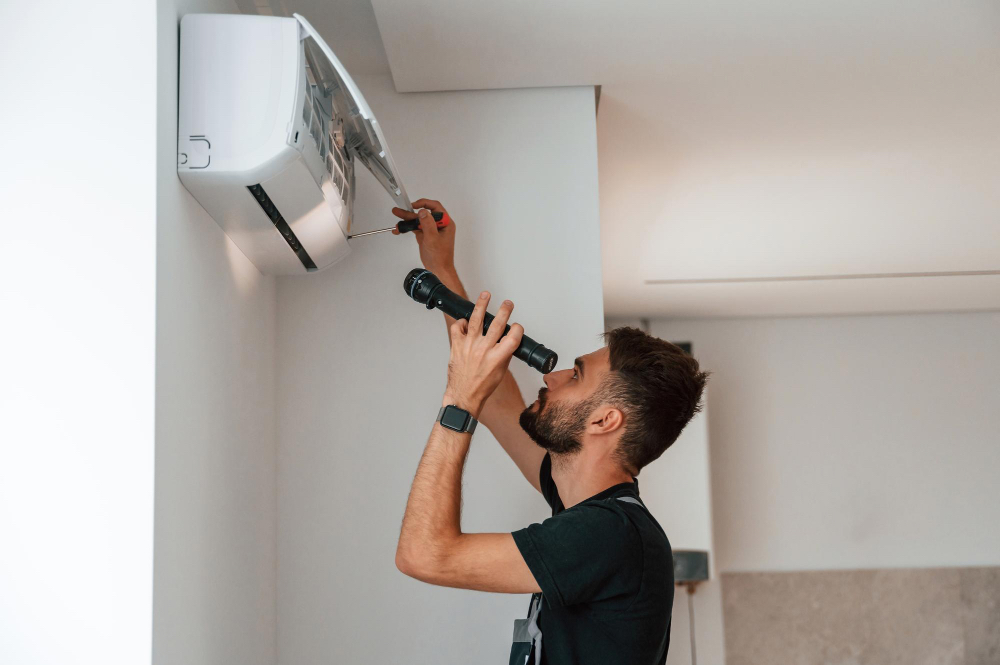
Few things are more frustrating in Dubai than an air conditioner that stops cooling properly. Having a technician get it running again is a relief, but don’t judge the result by the sound of the unit switching on.
An AC can run while delivering very little cooling. A water leak may also take time to reappear.
After arranging AC repair services in Dubai, find out how the technician checked the system. Depending on the original fault, this might involve testing airflow, cooling performance, drainage, or electrical components.
You can observe how the room cools, listen for unusual noises, and watch for visible leaks. However, the technical checks belong to the technician.
Before they leave, ask one more thing: How long should you monitor the AC before you can reasonably expect normal performance?
That answer is particularly useful if the original problem was intermittent. An AC that cools well in the morning but struggles later in the afternoon may need further investigation.
Check the Invoice, Repair Details, and Any Warranty Terms
Courtesy - Magnific
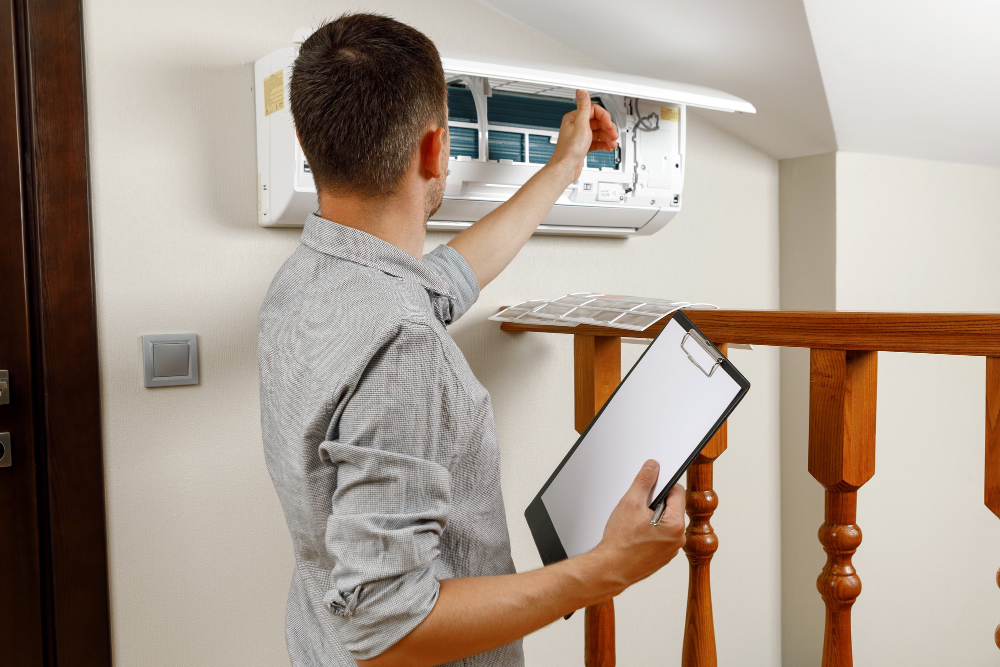
Keep the paperwork, even for a relatively small repair.
Check that the invoice describes what was done and lists any replacement parts. If labor and materials were quoted separately, make sure the final charges are clear.
Before the technician leaves, ask what happens if the same problem comes back. Would you have to pay for another visit? Find out if a warranty covers the labor or replacement parts, how long it lasts, and whether there are any conditions you should know about.
Save the invoice alongside any photos, quotations, or service reports. If you rent your home, these documents may also be useful when updating your landlord or property manager.
Know What to Do If the Same Problem Returns
Say your AC starts blowing warm air again three days after a repair. Does that mean the technician missed something?
Possibly, but not necessarily. Similar symptoms can come from different faults.
Instead of guessing what went wrong, make a note of what’s happening. When did the problem return? Does it happen constantly or only at certain times? Is there a new sound, smell, or leak?
Photos and short videos can help, as long as you can capture them safely.
Contact the original service provider with these details and your repair record. Explain what has changed and ask if a follow-up inspection is appropriate.
If you’re dealing with an electrical hazard, a burning smell, or a serious water leak, prioritize safety. Do not troubleshoot dangerous equipment yourself while you wait for another appointment.
Don’t Be Afraid to Ask Questions
A repair shouldn’t leave you wondering what was done or whether the problem is likely to return. Before signing off, take a moment to see the results, understand the work, and collect the relevant documents. If something goes wrong later, you’ll have a much clearer starting point for getting it sorted.
Also Read: Repair or Replace? How to Evaluate Aging Plumbing Pipes
FAQs on Post-Repair Check
01. How soon should an AC start cooling after a repair?
It depends on the system, the fault, and the repair performed. Ask the technician what to expect and how long you should monitor cooling performance.
02. Is a repair receipt the same as a warranty?
No. A receipt records the payment and services provided. A warranty explains any applicable coverage, limitations, and conditions.
03. Can you ask for photos of replaced or damaged parts?
Yes. This can be particularly helpful when the repaired components are hidden behind walls, ceilings, or equipment covers.
04. What if another technician says the first repair wasn’t necessary?
Ask for an explanation of the second diagnosis, preferably in writing. Compare both findings before deciding whether to question the original repair.
Courtesy - Featured Image(Magnific)
Author & Expert Review
Written By:  Nidhi Patel | Civil Engineer & Content Writer

| Credentials: B.E. (Mahatma Gandhi Institute of Technical Education and Research Centre), Registered with Gujarat Technological University (GTU). Experience: Civil Engineer with 3+ years of content writing experience, currently writing blogs for Gharpedia, part of SDCPL. Expertise: Specializing in SEO-optimized blogs and long-form articles focused on home improvement, construction, interiors and architect topics. I create well-researched, reader-focused content that balances technical accuracy with clarity, making complex subjects easy to understand. Find her on: LinkedIn |
Verified By Expert: Farhan Shaikh – Senior Manager – Architect, SDCPL | Associate Member – IIA

This article has been reviewed for architectural and interior design accuracy by Farhan Shaikh, Senior Manager – Architect at Sthapati Designers & Consultants Pvt. Ltd. As the lead for all architectural and interior projects at SDCPL and an Associate Member of the Indian Institute of Architects (IIA), he brings hands-on experience in architectural planning, interior design, project coordination, and sustainable strategies. His review ensures the content reflects practical design considerations, industry best practices, and real-world applicability across both architecture and interior spaces.
Find him on : Linkedin