





Table of Contents
Quick Summary
- Mud flooring is making comeback with the rise of sustainable architecture.
- Understand the basics of mud flooring – its components, properties, advantages and disadvantages, and installation guide.
- Explore the eco-friendly components of mud flooring, namely soil, sand, straw, and water.
- Learn about traditional and stabilized mud flooring.
- The installation of mud flooring has six easy steps.
- Regular maintenance and modern innovations can increase the life span of earthen floors.
The world is shifting towards sustainable and eco-friendly construction practices. And what could be more sustainable than mud flooring? With the rise of sustainable construction, mud flooring is making a comeback. It is simple, affordable, and offers excellent thermal comfort.
Mud flooring is ideal for tropical countries with diverse climates, as it acts as a natural thermal regulator. In this blog, Gharpedia brings you all the necessary information on mud flooring, including its construction process.
Also Read: Innovations in Sustainable House Construction
What is Mud Flooring?
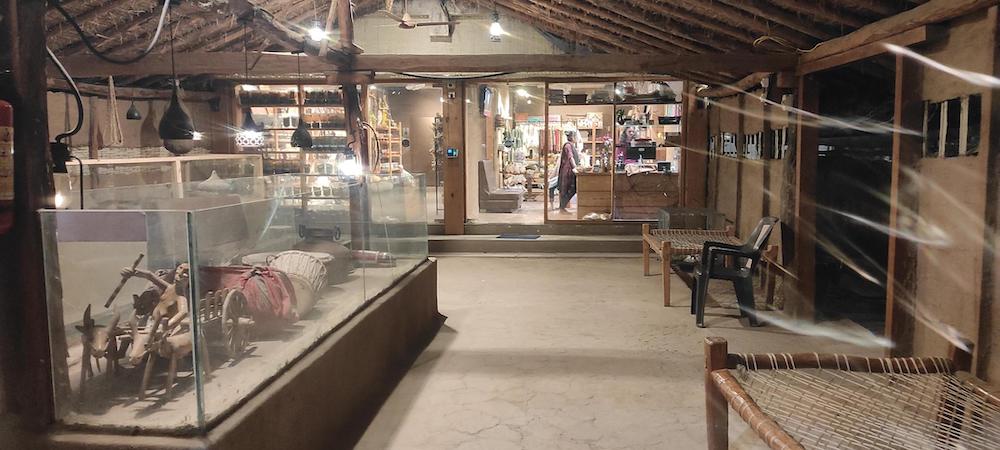
Mud flooring is commonly known as earthen flooring or murum flooring, as it is made from locally available mud (soil). It consists of a mixture of clay, sand, cow dung, and straw (for reinforcement purposes). Water is added to this mixture to make a thick paste, which is spread over a base and then levelled and finished to achieve a hard, smooth surface.
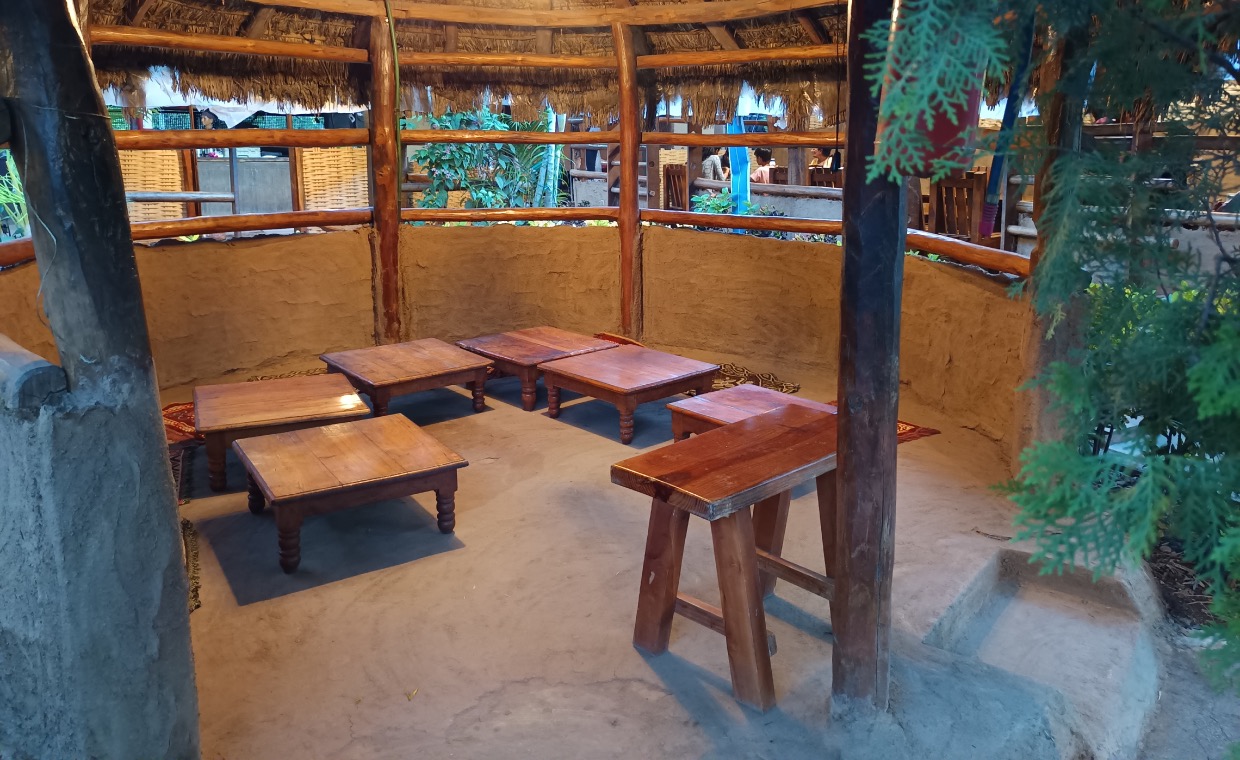
Mud flooring dates back centuries in rural and vernacular architecture when soil was the only construction material available. Even today, it is preferred in tribal huts and retreat centres. Since it is an eco-friendly flooring option, people are now adopting it and giving their interiors an aesthetic that reflects a natural and earthy touch.
Common Components of Mud Floor
A mud floor mix comprises the following components, each having its own characteristics.
- Clay or soil: Provides binding property.
- Sand: Offers resistance to shrinkage and cracking.
- Straw: Acts as a reinforcing element and provides tensile strength.
- Cow dung: Used for a smooth finish.
- Lime or bitumen (optional): Improves water resistance.
Properties
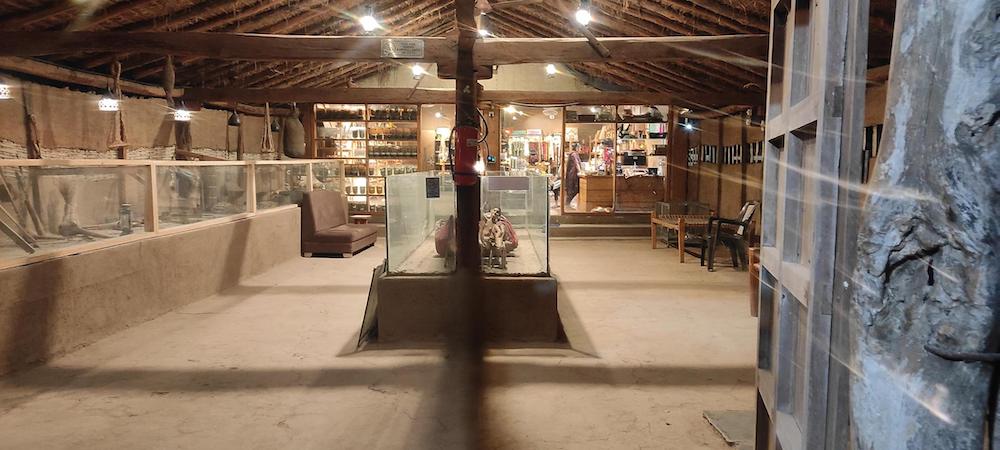
- It provides great thermal comfort by insulating the room from external heat and cold.
- It absorbs sound, making your interiors quieter. There is no squeaking or screeching from furniture.
- Mud flooring has moderate compressive strength, which can be improved by adding stabilisers.
- Mud flooring is not waterproof. However, it is water-resistant to a certain extent. If exposed to water for longer periods, it will disintegrate. Its water resistance can be improved by adding lime to the mud mix or by applying a coat of bitumen.
Types of Mud Floors
Based on the components, composition and finish, mud flooring is of the following types:
1. Traditional Mud Flooring: It is made of mud, sand, straws, and water.
2. Stabilised Mud Flooring: Lime or cement is added to traditional mud flooring to improve strength and durability.
Mud Flooring Installation Guide
Step 1 – Collect all materials required for mud flooring.
- Soil (loam or clay)
- Fine sand
- Cow dung
- Straw
- Lime (for stabilisation)
- Wooden rammer
- Levelling tool
- Water
Step 2 – Clean and level the ground surface properly. Prepare the sub-base by spreading a layer of coarse sand (around 7 – 10 cm thick). This improves drainage and gives a stable base for the mud flooring.
Step 3 – Prepare the mud mixture by mixing clay and sand in a 1:2-3 ratio. Add straw as reinforcing material. Gradually add water to form a thick paste.
Step 4 – Apply the paste in a layer 7 – 10 cm thick on the prepared base. Compact each layer thoroughly using a wooden rammer. Level the entire floor using a levelling tool.
Step 5 – Apply a finishing slurry made of clay, cow dung, and water with a finer consistency. Smooth the surface with a wooden trowel. A thin coat of lime slurry may be applied for extra strength.
Step 6 – Let the flooring cure for 7 – 10 days. Sprinkle water at intervals and protect it from direct sunlight.
Advantages of Mud Flooring
- Eco-friendly flooring option.
- Naturally regulates humidity levels and keeps air breathable.
- Keeps interiors cool in summer and warm in winter.
- Easy to repair.
- Cost-effective flooring option. It is 60-70% cheaper than cement or tile floors.
- Aesthetically appealing. Perfect for earthy home décor.
Disadvantages of Mud Flooring
- Not suitable for wet areas like bathrooms or kitchens.
- Less durable than cement or tile flooring.
- Requires regular maintenance.
- Prone to cracks.
Safety and Comfort Tips
- Avoid using mud flooring in wet or flood-prone areas.
- Use mats or rugs to prevent wear in high-traffic zones.
- Add a thin lime coat for pest resistance.
Maintenance of Mud Floors
Earthen floors are fragile and require regular maintenance. It requires recoating of cow dung or lime slurry every 6 – 12 months. Do not keep mud floors wet for prolonged periods. Avoid dragging furniture and fill cracks immediately with fresh mud mixture. It is recommended to sweep daily with a soft broom to keep the surface dust-free.
Modern Innovations in Mud Flooring
Though mud flooring is an ancient technique, it is widely adopted today with modern innovations that aim to improve durability, water resistance, surface finish, and aesthetic appeal. The following are modern techniques implemented in today’s earthen flooring.
- Lime and cement are added to the mud mix to impart strength and reduce shrinkage.
- Natural sealants like linseed oil, beeswax, and lime wash are applied to prevent cracking of mud flooring.
- With modern tools, it is possible to achieve a smooth and polished finish.
Conclusion
Mud flooring is gaining popularity as an eco-friendly and sustainable flooring option. It is easy to construct, and with regular maintenance, it gives excellent results. However, it is less sturdy and unsuitable for wet areas. Mud flooring provides an earthy feel and helps maintain indoor temperature naturally. Earthen flooring is a good eco-friendly flooring option for sustainable homes.
Also Read: The Top 4 Sustainable Flooring Materials for Your Home!
Mud Flooring FAQs
01. What are the benefits of mud flooring?
Mud flooring is cost-effective, eco-friendly, sustainable, and hypoallergenic. It is easy to install and maintain.
02. How many years does a mud flooring last?
A well-maintained mud flooring can last up to 10-20 years.
03. Is mud flooring waterproof?
No, mud flooring is prone to water. It absorbs moisture easily and gets damaged. A wet mud floor should be dried as soon as possible.
04. How to maintain mud flooring?
Maintenance of mud flooring is quite easy. Sweep it regularly to keep it dust-free. Reapply a thin mud or lime layer yearly. Try to keep the floor dry and avoid dragging furniture.
05. Can mud flooring be installed by oneself?
Yes, the mud flooring installation process is easy. In fact, homeowners can lay it themselves.
06. Which soil is best for mud flooring?
A soil with high clay content, like loam soil, red soil, or yellow soil, is best for mud flooring. Avoid black cotton soil as it develops cracks frequently.
Author & Expert Review
Written By:  Nidhi Patel | Civil Engineer & Content Writer

| Credentials: B.E. (Mahatma Gandhi Institute of Technical Education and Research Centre), Registered with Gujarat Technological University (GTU). Experience: Civil Engineer with 3+ years of content writing experience, currently writing blogs for Gharpedia, part of SDCPL. Expertise: Specializing in SEO-optimized blogs and long-form articles focused on home improvement, construction, interiors and architect topics. I create well-researched, reader-focused content that balances technical accuracy with clarity, making complex subjects easy to understand. Find her on: LinkedIn |
Verified By Expert: Tanvi Lad – Senior Manager (Civil), SDCPL | B.E. in Civil Engineering

This article has been reviewed for technical, cost, and material accuracy by Tanvi Lad, Senior Manager (Civil) at Sthapati Designers & Consultants Pvt. Ltd. With a B.E. in Civil Engineering (2013), she leads the Estimation and Tendering Department at SDCPL and has extensive experience in design review, material specifications, project costing, estimation, tender preparation, tender evaluation, and detailed engineering for residential, commercial, and infrastructure projects. Her review ensures the content reflects appropriate material selection, accurate cost considerations, engineering feasibility, and industry-standard construction practices.
Find her on: LinkedIn