







Table of Contents
Quick Summary
- Discover the key areas covered during a professional roof inspection, including shingles, flashing, vents and chimneys.
- Understand how gutters, downpipes and drainage systems affect overall roof performance.
- Learn how inspectors identify structural issues, moisture damage and poor attic ventilation.
- Explore the warning signs of storm and hail damage that require professional attention.
- Find out when to schedule a roof inspection, whether after severe weather or before buying or selling a property.
- Get practical advice on choosing a qualified roof inspector and avoiding common inspection mistakes.
Courtesy - Magnific
Most homeowners only look closely at their roof when something goes wrong: a stain on the ceiling, a shingle in the yard after a storm, or a request from a buyer’s inspector. By then, the damage has usually been developing for a while.
A roof inspection is meant to catch those problems earlier. Knowing what an inspector actually checks helps you prepare, ask better questions, and tell the difference between a thorough assessment and a quick glance from the driveway.
Quick Answer: What Does a Roof Inspection Include?

Courtesy - Magnific
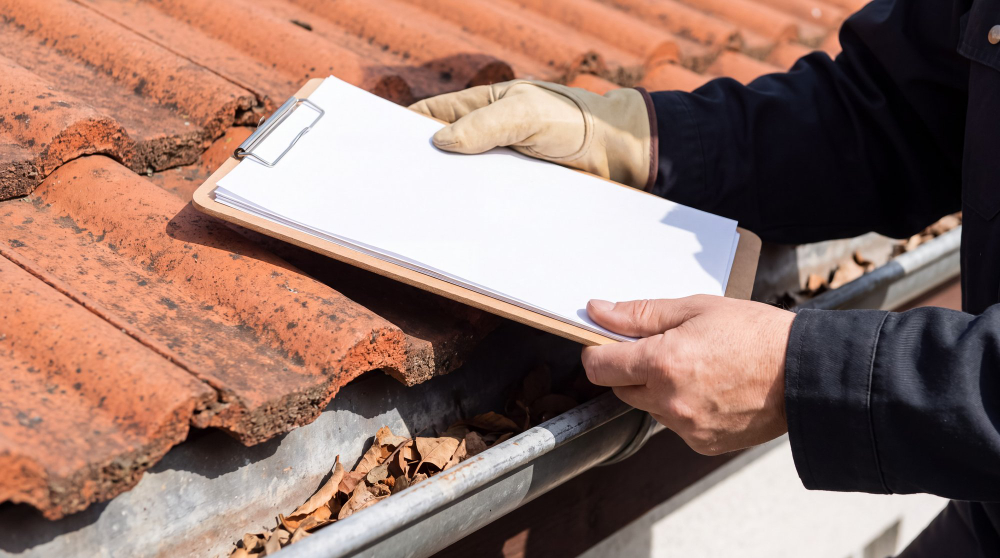
A complete roof inspection covers the roofing surface, flashing, penetrations such as vents and chimneys, gutters and drainage, the roof structure, and the attic interior. The inspector looks for damage, wear, moisture, and installation defects, then provides a written report with photos and recommended repairs or a replacement timeline.
1. Shingles and the Roofing Surface
The inspector starts with the most visible layer. On asphalt roofs, that means looking for:
- Cracked, curling, or buckled shingles
- Missing shingles or exposed nail heads
- Bald spots where granules have worn away
- Blistering or surface bruising, often from hail
- Moss, algae, or debris trapping moisture
Granule loss deserves attention. Granules protect shingles from sun damage, and heavy loss shortens a roof’s remaining life. Other roofing materials, such as metal, tile, and slate, get their own checks for corrosion, cracked pieces, loose fasteners, and slipped sections.
2. Flashing
Flashing is the thin metal that seals the joints where the roof meets something else: chimneys, walls, skylights, valleys, and vent pipes. It’s one of the most common sources of leaks, since a small gap lets water in even when the shingles look fine.
An inspector checks for rust, lifted edges, cracked sealant, and gaps. Flashing problems are often inexpensive to fix when caught early, but they cause serious damage when ignored.
3. Penetrations: Vents, Pipes, and Chimneys
Anything that passes through the roof creates a potential entry point. Plumbing vents have rubber boots that crack with age. Chimneys have mortar and crowns that can deteriorate. Skylights have seals that dry out.
The inspector examines each penetration for cracking, shifting, and signs of water intrusion.
4. Gutters, Downspouts, and Drainage
A roof only works if water can leave it. Clogged or damaged gutters back water up under the shingles, rot fascia boards, and push moisture toward the foundation.
During a roof inspection, the inspector checks that gutters are secure, properly sloped, and free of debris. They also look for shingle granules in the gutters, which can point to surface wear, and for staining along the fascia and soffit.
5. The Roof Structure and Decking
Looking at the roof from above doesn’t tell the whole story. Inspectors check for sagging, uneven planes, and soft spots, which can indicate rotted decking or structural problems. A roofline that dips, or a section that feels spongy underfoot, points to trouble beneath the surface.
6. The Attic and Interior
Many problems show up in the attic first. A thorough inspection includes a look at:
- Water stains or dark streaks on the underside of the decking
- Damp or compressed insulation
- Daylight visible through the roof boards
- Mold or mildew
- Signs of pests
- Ventilation and airflow
Ventilation matters more than most homeowners realize. Poor airflow traps heat and moisture, which can warp the decking, damage shingles from below, and drive up cooling costs.
7. Signs of Storm or Hail Damage
After severe weather, the inspector looks for impact marks, dented metal, displaced shingles, and lifted edges. Documentation matters here. Photos and a written report support an insurance claim and show whether damage is recent or long-standing.
When Should You Schedule an Inspection?
Courtesy - Magnific
Several moments call for one:
- After a major storm. Wind, hail, and falling branches can cause damage that isn’t obvious from the ground.
- Before buying or selling a home. Buyers want to know the roof’s condition, and sellers benefit from knowing what to expect.
- As the roof approaches mid-life. Asphalt shingle roofs commonly last around 20 to 25 years, so an inspection at the 15-year mark helps you plan.
- When you notice warning signs. Stains, leaks, missing shingles, or rising energy bills are all reasons to look closer.
- On a regular schedule. Many homeowners schedule one every year or two, plus after significant weather events.
Buying Guide: How to Choose a Roof Inspector
| Factor | Why It Matters |
| Licensing and insurance | Protects you if there’s damage or an injury on your property |
| Experience with your roof type | Asphalt, metal, tile, and flat roofs each have different failure points |
| Written report with photos | Gives you clear evidence and a record for insurance or resale |
| Inspection scope | Should include the surface, flashing, drainage, attic, and structure |
| Independence | Ask whether the inspector also sells repairs, and how they present findings |
| Price transparency | Know whether the inspection is free, flat-rate, or tied to a repair estimate |
| References | Local customers can speak to thoroughness and honesty |
| Timeline | A prompt appointment matters after storm damage |
Some roofing companies offer a free roof inspection as part of their estimating process, which can be a convenient way to get a professional opinion. Whoever you choose, ask them to show you photos of what they found and explain which items need action now and which can wait.
Common Mistakes to Avoid
Waiting for a leak. By the time water reaches the ceiling, it has often been traveling for a while.
Relying on a ground-level look. Many problems, such as flashing damage and hail bruising, aren’t visible from below.
Skipping the attic. Moisture and ventilation issues often appear there first.
Accepting a verbal summary only. A written report with photos protects you and helps you compare opinions.
Ignoring minor findings. Small issues, such as cracked sealant, often lead to larger repairs.
Climbing up yourself. Roofs are dangerous, and a fall is a serious risk. Use binoculars from the ground for a basic look and leave the rest to professionals.
Expert Tips

Courtesy - Magnific
Take photos of your roof and any interior stains before the inspector arrives, so you can show how things have changed over time.
Keep records of past repairs, warranty paperwork, and installation dates. They help the inspector judge the remaining life.
Ask the inspector to rank findings by urgency, such as immediate, soon, and monitor. That makes budgeting easier.
After a storm, schedule the inspection promptly and report damage to your insurer within the timeframe in your policy.
Compare at least two opinions before committing to a major replacement, and ask each contractor to explain what they saw.
Conclusion
A good roof inspection goes well beyond a walk around the property. It covers the roofing surface, flashing, penetrations, drainage, structure, and attic, and it ends with a written report you can act on. Scheduling one after storms, before a sale or purchase, and as your roof ages gives you the chance to fix small problems on your terms. That’s usually the difference between a modest repair and an emergency replacement.
Also Read: Glass Roof Maintenance_ Essential Cleaning and Care Tips
FAQs – What Does a Roof Inspection Include
01. How long does a roof inspection take?
Most residential inspections take about 30 minutes to an hour, depending on roof size, complexity, and whether the attic is included.
02. How often should I have my roof inspected?
Many homeowners schedule one every one to two years, plus after severe weather, and more often as the roof ages.
03. Is a roof inspection free?
Some roofing companies offer free inspections, while independent inspectors usually charge a fee. Ask what’s included before booking.
04. Will an inspection tell me whether I need a new roof?
It should indicate the roof’s condition and estimated remaining life, and whether repair or replacement makes more sense.
05. Can I inspect my roof myself?
You can check from the ground, look for missing shingles, and inspect the attic. Walking on a roof is risky and can also damage it, so leave detailed inspection to professionals.
06. Does a roof inspection include the attic?
A thorough one does, since the attic shows moisture, ventilation, and structural issues that aren’t visible from outside.
07. Do I need an inspection after hail?
Yes, even if nothing looks wrong. Hail can bruise shingles and shorten their life without leaving obvious holes.
Courtesy - Featured Image(Magnific)
Author & Expert Review
Written By:  Gaurav Mishra | Civil Engineer & Content Writer

| Credentials: B.E. (Mahavir Swami College, Surat), Registered with Bhagwan Mahavir University (BMU). Experience: Civil Engineer with 5+ years of content writing experience, currently writing impactful articles for Gharpedia, part of SDCPL. Expertise: Specializes in writing well-researched content on residential construction, construction materials, design planning, on-site practices, and safety, blending technical accuracy with everyday clarity. Find him on: LinkedIn |
Verified By Expert:  Avni Desai | Environmental Engineer, SDCPL | M.E. (Environmental Engineering)
 Avni Desai | Environmental Engineer, SDCPL | M.E. (Environmental Engineering)
This article has been reviewed for environmental, MEP, and building services accuracy by Avni Desai, an Environmental Engineer at Sthapati Designers & Consultants Pvt. Ltd. (SDCPL). With over 8 years of experience in water supply, wastewater management, infrastructure design, and building services, she brings practical expertise in MEP services, sustainable solutions, design planning, and on-site practices. Her professional services include planning and design of water supply systems, sewage and wastewater treatment systems (STP/WTP), drainage, rainwater harvesting, and other sustainable building services. Her review ensures the content aligns with environmental standards, efficient services planning, and real-world applicability.
Find her on : LinkedIn