







Table of Contents
Quick Summary
- If you want to avoid tearing up your garden, trenchless sewer repair offers a practical solution.
- Explains early warning signs like foul odours, slow drains, and unusually green patches in your lawn.
- Covers common causes such as tree root intrusion and ageing pipe materials.
- Breaks down two main methods: pipe lining and pipe bursting.
- Highlights when trenchless repair works best and when traditional digging is unavoidable.
- Mentions cost factors including pipe depth, length, and permits.
- Encourages proactive inspection and maintenance to prevent costly damage.
Are you concerned that a failing sewer line could ruin your yard, uprooting landscaping, cracking driveways, or damaging patios?
These fears are a thing of the past thanks to trenchless sewer repair. Now, plumbers can replace underground pipes without extensive excavation, known as trenching. Instead, they access the sewer through small access points, keeping lawns and garden beds intact.
Learn more about the signs, processes, and limits of trenchless sewer repair in this homeowner’s guide.
What Are Some Signs to Watch?
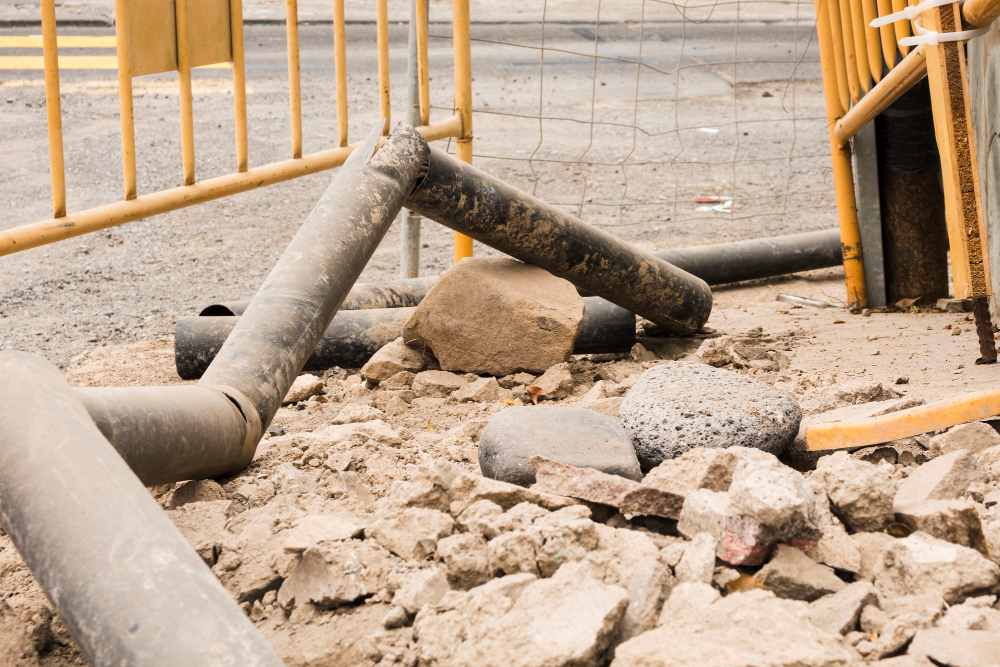
Trenchless repair is ideal for repairing sewer lines that run beneath concrete driveways, trees, and custom-built decks and patios. A common case for trenchless sewer repair is when a tree’s roots breach a sewer pipe. But the pipe itself is still in alignment, requiring a minimally invasive repair. Another sign is minor cracks or leaks in sewer pipes.
This problem is more common with sewer pipes made with clay or cast iron. At this stage, the pipes are starting to sweat, but haven’t yet collapsed. You may smell foul sewer odors and notice increasing water bills. Your cast-iron sewer pipes may also be showing signs of thinning or internal scaling. There may be minor joint shifting, as well.
A particularly sneaky sign is the recent growth of lush grass around the pipe. This means the area is wetter than the rest of the lawn. Be sure to research expert plumbing guides, such as the Service By Heart sewer line repair guide, to learn more about signs like slow drainage and recurring backups. You’ll also learn when the damage is past the point of repair and replacement is required.
How Does Trenchless Sewer Repair Work?
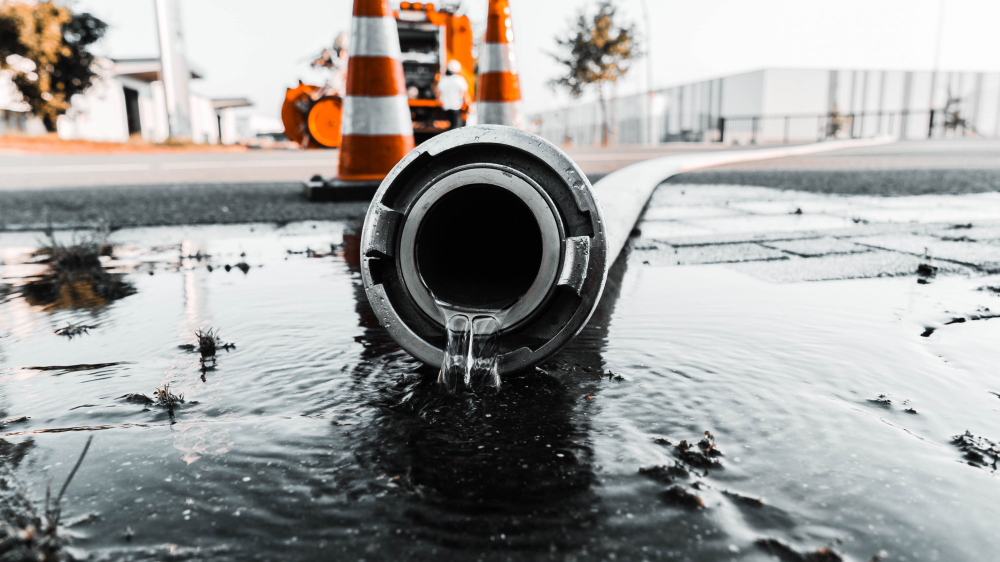
The two primary methods of trenchless sewer repair are lining and bursting. The condition of your current sewer line will determine the right method.
Cured-in-place pipe lining (CIPP) is often called pipe-within-a-pipe. A plumber inserts a flexible tube into the old pipe; this tube is saturated with an epoxy resin. The tube is inverted and cured using either heat, UV light, or steam. This method creates a corrosion-resistant structural pipe within the previous pipe. CIPP is best suited for cracked or rooted sewer lines that are still structurally straight.
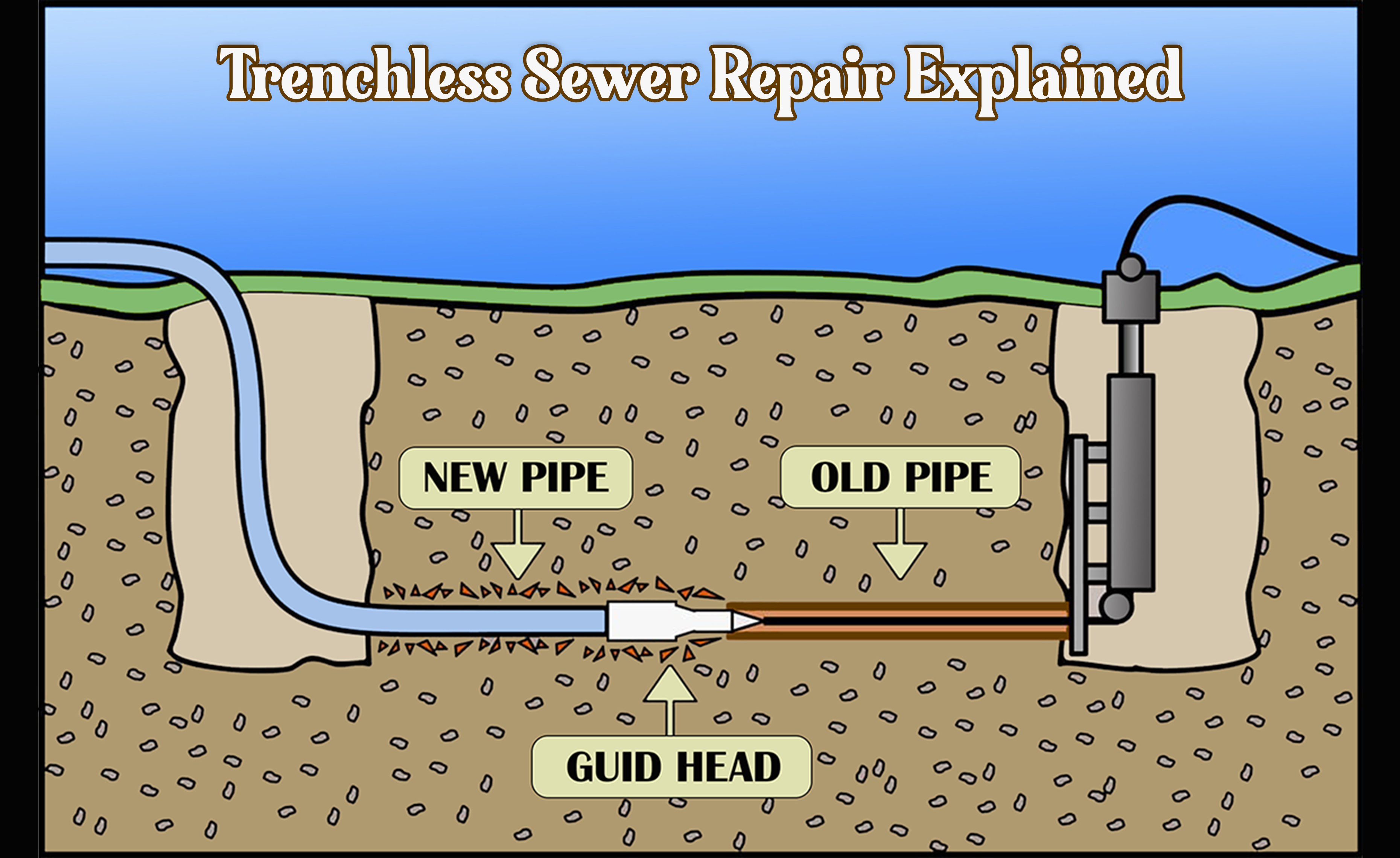
Pipe bursting is required when an old pipe has failed and needs to be replaced. A plumber will replace the pipe with a new high-density polyethylene (HDPE) pipe, but first, the old pipe must be removed. To remove the old pipe, a bursting head (shaped like a cone) is pulled through the old pipeline, effectively breaking the old pipe apart in the soil.
Rates for trenchless repair jobs vary, as they’re determined by several factors, including:
- Pipe depth
- Total pipe length
- The number bends and turns
Specific permits are also required, such as a Sewer Lateral Permit for residential work. A Right-of-Way (ROW) Permit is often required if the repairs extend into a city-owned street.
When Is Trenchless Sewer Repair Not an Option?
There are a few cases where trenchless repair isn’t an option, one of those being severe sewer line bellies. These bellies (sags) can result from improper sewer line installation, soil changes, or tree roots. A trenchless flexible liner will form to the sag, creating a trap for debris and waste.
Collapsed pipes or severely misaligned pipes are not candidates for trenchless repair. These cases require traditional trenching, which requires excavation.
Plan for Trenchless Repair
Now is the time to check your sewer line for potential issues. Turn this guide into a checklist, with signs, repair methods, and when excavation is required. Discuss your checklist with a plumber who can take a look at the problem. Include sewer line maintenance in your complete home improvement plan, along with roofing, lighting installation, pest control, and more. Follow us for more homeowner tips and tricks!
Also Read: DIY Drainage Repair vs. Professional Fixes
FAQs – Trenchless Sewer Repair
1. What is trenchless sewer repair?
It is a method of fixing underground sewer pipes without extensive digging, using advanced techniques like lining or pipe bursting.
2. How long does trenchless sewer repair take?
Most projects can be completed within one to two days, depending on the complexity of the damage.
3. Is trenchless repair more expensive than traditional methods?
It may have a higher upfront cost, but it often saves money by avoiding landscaping and structural repairs.
4. Can all sewer pipes be repaired using trenchless methods?
No, severely collapsed or misaligned pipes usually require traditional excavation.
5. How do I know if my sewer line needs repair?
Signs include slow drainage, foul smells, recurring blockages, and patches of unusually green grass.
Author & Expert Review
Written By:  Gaurav Mishra | Civil Engineer & Content Writer

| Credentials: B.E. (Mahavir Swami College, Surat), Registered with Bhagwan Mahavir University (BMU). Experience: Civil Engineer with 5+ years of content writing experience, currently writing impactful articles for Gharpedia, part of SDCPL. Expertise: Specializes in writing well-researched content on residential construction, construction materials, design planning, on-site practices, and safety, blending technical accuracy with everyday clarity. Find him on: LinkedIn |
Verified By Expert:  Avni Desai | Environmental Engineer, SDCPL | M.E. (Environmental Engineering)
 Avni Desai | Environmental Engineer, SDCPL | M.E. (Environmental Engineering)
 This article has been reviewed for environmental, MEP, and building services accuracy by Avni Desai, an Environmental Engineer at Sthapati Designers & Consultants Pvt. Ltd. (SDCPL). With over 8 years of experience in water supply, wastewater management, infrastructure design, and building services, she brings practical expertise in MEP services, sustainable solutions, design planning, and on-site practices. Her professional services include planning and design of water supply systems, sewage and wastewater treatment systems (STP/WTP), drainage, rainwater harvesting, and other sustainable building services. Her review ensures the content aligns with environmental standards, efficient services planning, and real-world applicability.
Find her on: LinkedIn