







Table of Contents
Quick Summary
- Cutting concrete is required often in out constriction work.
- Following cutting concrete tips can prevent unwanted situations.
- Cutting concrete can be risky without adhering to proper safety measures.
- Always wear good quality protective gear: rugged pants, boots, glasses, a respirator, and earplugs are essential protective accessories.
- Cut slowly with shallow passes for smooth and safe results.
- Use steady water flow with wet saws to control dust and for keeping the blade cool.
- Inspect blades minutely for cracks, warping, or missing teeth before use.
- Ensure good ventilation to remove dust and fumes.
- Always follow the saw manufacturer’s manual for safe operation.
Tips for cutting concrete is useful in various outdoor construction. Many major outdoor construction projects involve cutting concrete slabs, and if you don’t know what you’re doing when you’re cutting this dense and rough material, you could get seriously hurt. Not only should you ensure you’re always using the right tools for cutting concrete, but you should also always follow these safety tips for cutting concrete to avoid injury.
5 Important Tips For Cutting Concrete Safely
01. Wear Protective Gear
Cutting concrete is not a chore that you should try to do if you’re wearing shorts and flip flops. If you’re on a commercial job, there are specific protective gear requirements that you must follow, but if you’re working on a backyard project, you won’t have someone making you wear your gear, so you’ll need to take responsibility for protecting yourself. Always wear long, rugged pants such as blue jeans, boots, protective glasses, a ventilator, and ear plugs.

When you cut dry concrete, you’re going to generate a ton of dust, which is why a respirator or at least a dust mask is recommended. You don’t want that dust getting into your lungs. It’s also a noisy job, so ear plugs, while not mandatory, are suggested so that you can still hear after the project is done.
02. Go Slow
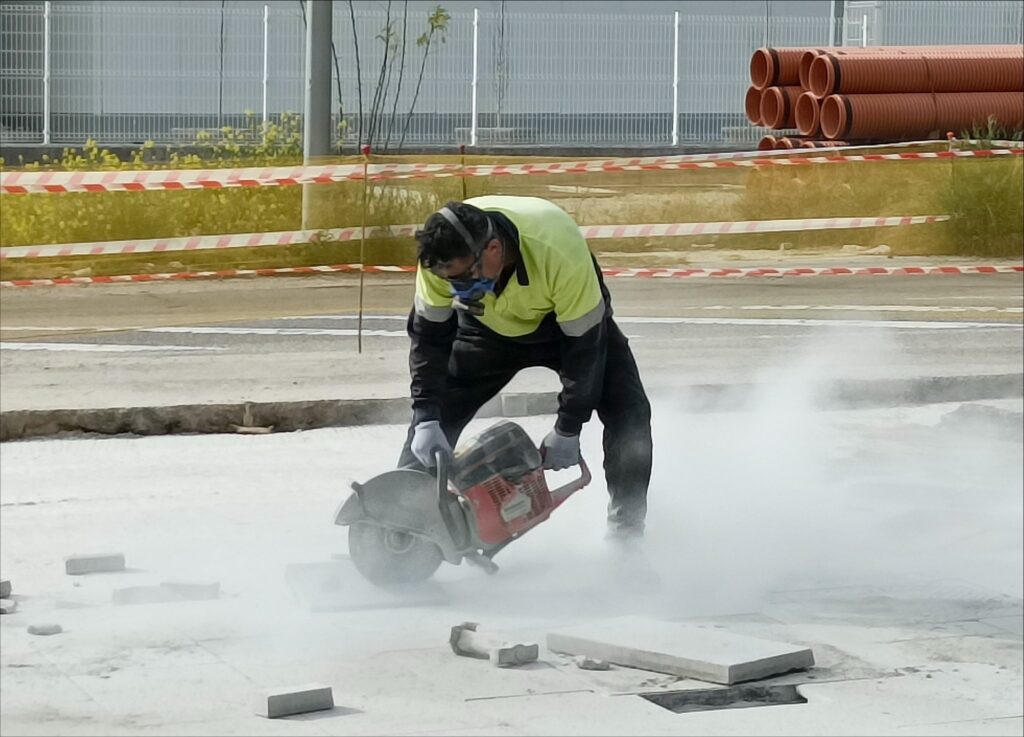
Cutting a concrete slab is not a quick task. In fact, the slower you go, the better results you’ll have. Going too fast can result in sloppy cuts, overheated equipment, and careless moves. For the best results, make several shallow passes over the concrete rather than trying to make one deep cut the first time by. This will protect your saw blade as much as possible and ensure the cuts are even and smooth.
03. Ensure Correct Water Flow
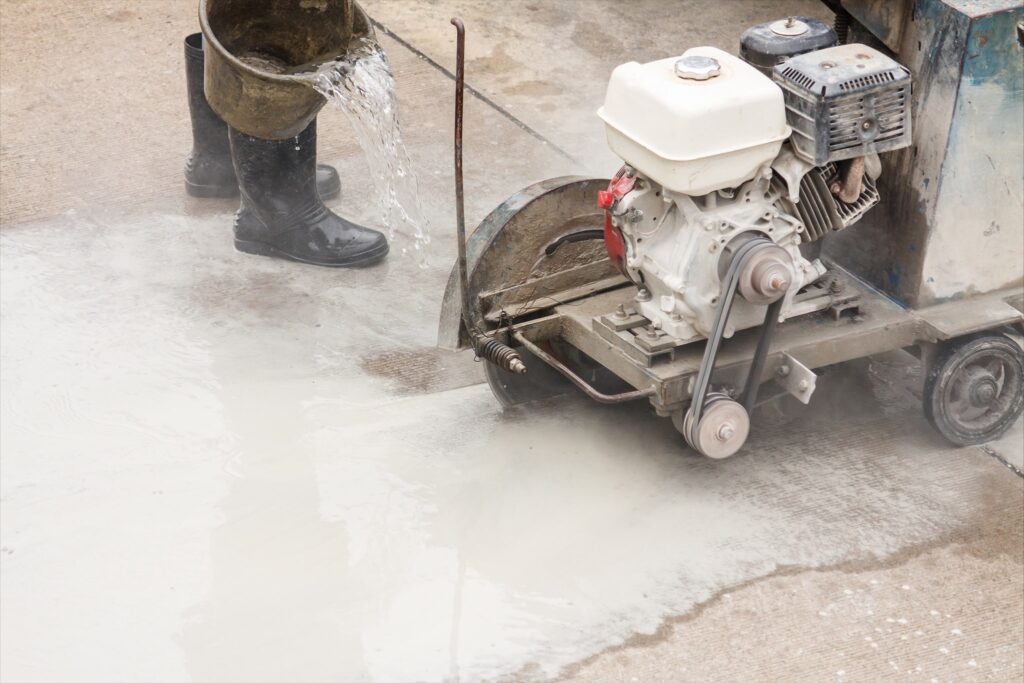
If you’re using a wet saw to cut the concrete slab (and you probably are), make sure you have enough water flowing over the saw blade for the entire project. The water will help mitigate the amount of dust in the air and will keep your saw blade cooler for longer, allowing you to make more cuts at a time. Dry saws are better for projects that don’t have access to a steady flow of water, are indoors, or quick cuts that won’t overheat the equipment.
04. Inspect Your Blade Before Each Use
Working with a damaged saw blade is a huge safety risk. If your saw blade is missing a tooth, is cracked, or warped, it could behave in a way that makes the tool unsafe to operate. Not only that, but you’ll have a much harder time cutting through the concrete at all. Inspect your blade before each use, even if you just used it an hour ago. You never know if something happened on that last cut that caused damage to the blade or if someone used it in your absence and damaged it.
05. Ventilate Well
As previously mentioned, you’ll be generating a lot of dust when cutting a concrete slab, even if you’re using a wet saw (although it will be a lot less than with a dry saw). Moreover, most saws run on gasoline or diesel, and those fumes can build up quickly. For these reasons, make sure you always work in a well-ventilated area and use fans to draw in fresh air and push the fumes and dust out.
Conclusion
All concrete saws come with user manuals that should be read before operation. These safety tips will be reiterated in those manuals because they’re that important. Heed these tips for your next concrete project and stay safe.
It is risky to be near construction sites. Safety must therefore come first for both those who work there and those who just visit. You can read some helpful construction safety advice for a safer working environment here –
Construction Safety Tips for Workers’ Well-Being
FAQs on Tips for Cutting Concrete
1. What Is the Role of Water in Concrete Cutting?
Water keeps the saw blade cool, reduces friction, and limits dust at the time of cutting concrete. A steady water flow prevents overheating, allows longer cutting sessions, and improves efficiency. The presence of water flow makes wet cutting safer and more effective than dry cutting methods.
2. How Can I Protect the Saw Blade While Cutting Concrete?
It is wise to inspect the saw blade before use. You should avoid forcing deep cuts and instead make multiple shallow passes. Also, you should ensure proper water flow for cooling. It is important to use the correct blade type for concrete cutting, and handle the equipment steadily to prevent cracking, warping, or chipping problems.
3. Why Is Ventilation Important When Cutting Concrete Slabs?
Concrete cutting produces heavy dust and fumes from fuel-powered saws. Without ventilation, harmful particles and exhaust gases can accumulate, posing significant health risks. Good airflow reduces dust exposure, keeps the air breathable, and ensures a safer working environment.
4. Are There Any Best Techniques for Making Clean, Smooth Concrete Cuts?
Yes, there are some safety techniques. You should follow a few rules of thumbs. For example, you should move slowly, apply steady pressure, and cut in shallow passes rather than forcing deep cuts. Always use the correct saw blade, maintain proper water flow, and keep a consistent cutting line to achieve accurate, smooth, and even results.
Author & Expert Review
Written By:  Gaurav Mishra | Civil Engineer & Content Writer

| Credentials: B.E. (Mahavir Swami College, Surat), Registered with Bhagwan Mahavir University (BMU). Experience: Civil Engineer with 5+ years of content writing experience, currently writing impactful articles for Gharpedia, part of SDCPL. Expertise: Specializes in writing well-researched content on residential construction, construction materials, design planning, on-site practices, and safety, blending technical accuracy with everyday clarity. Find him on: LinkedIn |
Verified By Expert: Ravin Desai – Co Founder – Gharpedia | Co Founder – 1 MNT | Director – SDCPL

This article has been reviewed for technical accuracy by Ravin Desai, Co-Founder of Gharpedia and Director at Sthapati Designers & Consultants Pvt. Ltd. With a B.Tech. in Civil Engineering from VNIT Nagpur and an M.S. in Civil Engineering from Clemson University, USA, and over a decade of international and Indian experience in the construction and design consultancy sector, he ensures all technical content aligns with industry standards and best practices.
Find him on: LinkedIn