






Table of Contents
Quick Summary
- Discover how to identify invasive plants, particularly Japanese knotweed, before beginning garden clearance.
- Understand the risks of cutting, digging or spraying knotweed and why professional treatment may be necessary.
- Learn how to protect nesting birds, beneficial plants and wildlife while reclaiming neglected outdoor spaces.
- Choose suitable tools and protective equipment to make garden clearance safer and more efficient.
- Explore responsible garden waste management through composting, dead hedges and licensed waste carriers.
- Find practical ways to preserve topsoil, improve soil health and prepare the cleared garden for replanting.
Courtesy - Magnific
Most overgrown gardens are bramble, ivy and long grass rather than anything sinister. But a few plants change the whole job. Here is how to work out what you are dealing with, clear it safely, get rid of the waste legally and leave the ground ready to plant.
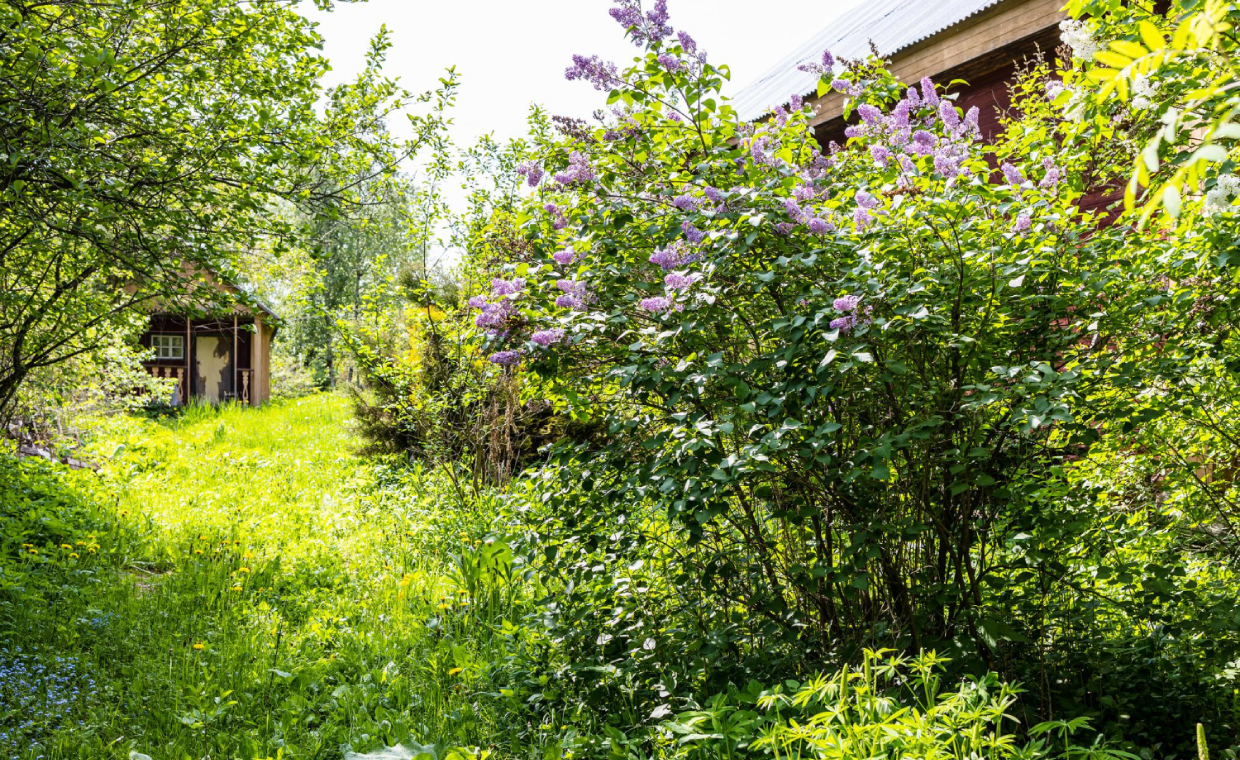
Brambles over the path, a shed you can no longer reach and a lawn waist-high with grass: most neglected gardens look worse than they are. The real risk is clearing in the wrong order. Cut and dig before you know what is growing, and you can spread an invasive weed, destroy a bird’s nest or fill a skip with soil you should have kept. Whether you tackle it yourself or book a London rubbish removal crew to take the waste away, the steps below will save you time, money and a second clearance next year.
Step 1: Identify What Is Growing Before You Cut Anything
Courtesy - Magnific
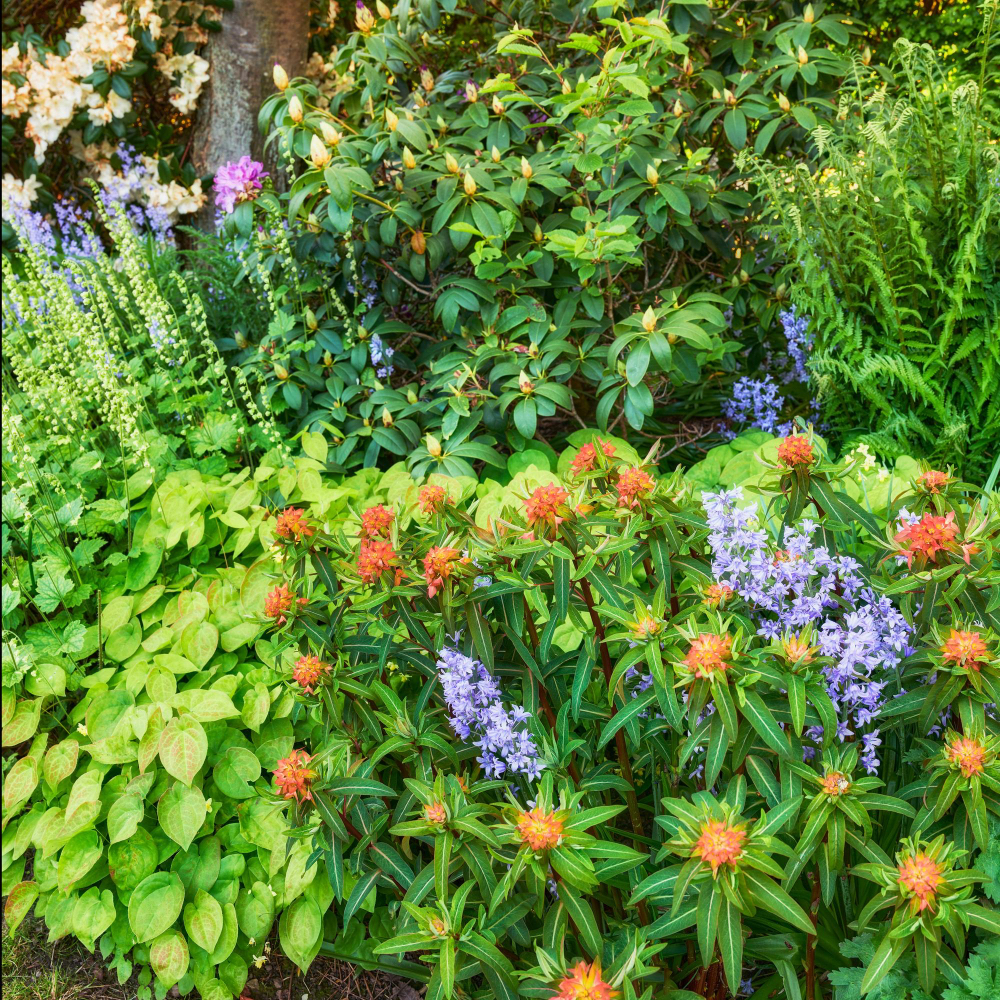
Walk the plot before you pick up a tool. Note anything you don’t recognise, photograph it, and look closely at fast-growing clumps along fences and boundaries.
One plant matters more than the rest. Japanese knotweed costs the UK economy an estimated £246.5 million a year, according to a 2023 Defra-funded study by CABI published in Biological Invasions. That makes it the second most costly invasive non-native species in the UK, after ash dieback. By comparison, the same study puts rhododendron at £6.2 million a year and giant hogweed and buddleia at £1.4 million each.
Knotweed is a problem for clearance because it regrows from tiny fragments. The Broads Authority’s control procedure says rhizome or stem pieces as small as 0.7 g, about 10 mm long, can produce a new plant. Strimming or digging it can turn one clump into several.
If you think you have knotweed, stop clearing that area and get it identified professionally before you go any further.
Step 2: Don’t Panic About Knotweed and Your House
Courtesy - Magnific
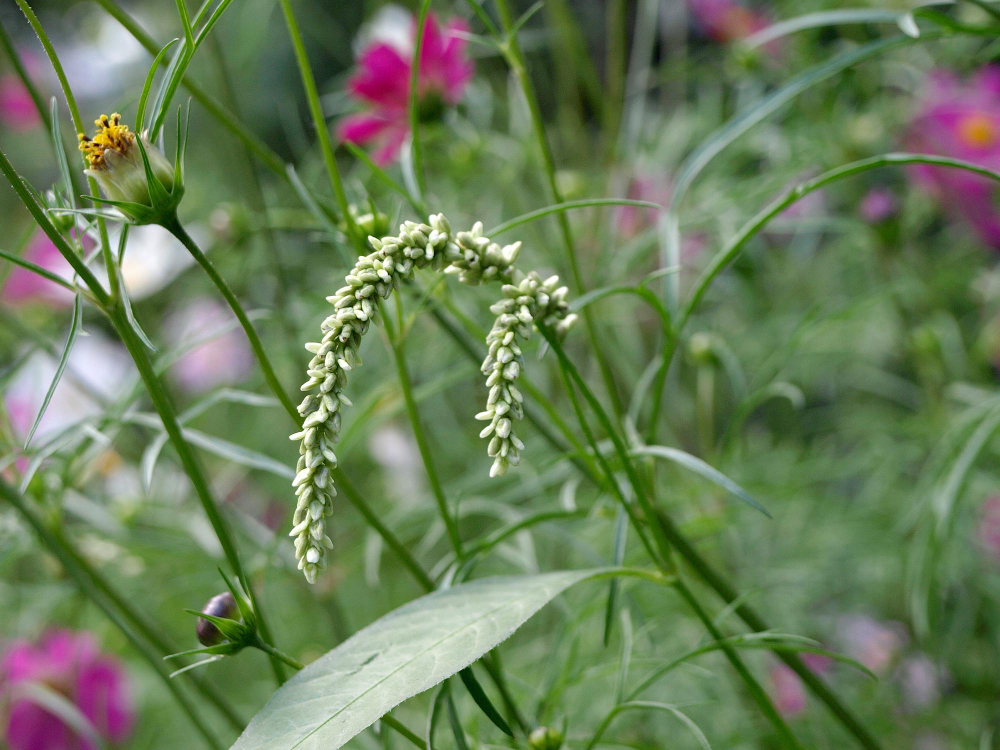
The good news is that the scare stories are overstated.
A 2018 study in the journal PeerJ measured knotweed in 81 excavations. No small stand (4 m² or less) had rhizomes spreading more than 4 m, 75% spread 2 m or less, and the average lateral spread was 1.4 m. The authors concluded the old “7 metre rule” was not statistically robust.
The same study found that only 1 of 51 specialist contractors and 4 of 71 surveyors had ever seen knotweed damage a house. In a case study of 68 homes, buddleia, a common garden shrub, was linked to damage at 42 properties. Knotweed was not linked to damage to any main building.
The Royal Institution of Chartered Surveyors (RICS) has since replaced the 7 m rule with a 3 m reporting distance in its 2022 professional standard. RICS also says herbicide control needs at least four years of treatment and monitoring before a completion certificate is issued. If you are buying, selling or remortgaging, ask any contractor for a treatment plan and a guarantee: RICS says guarantees should run for at least five years after completion.
Step 3: Cut, Dig or Spray? What The Evidence Says
Courtesy - Magnific
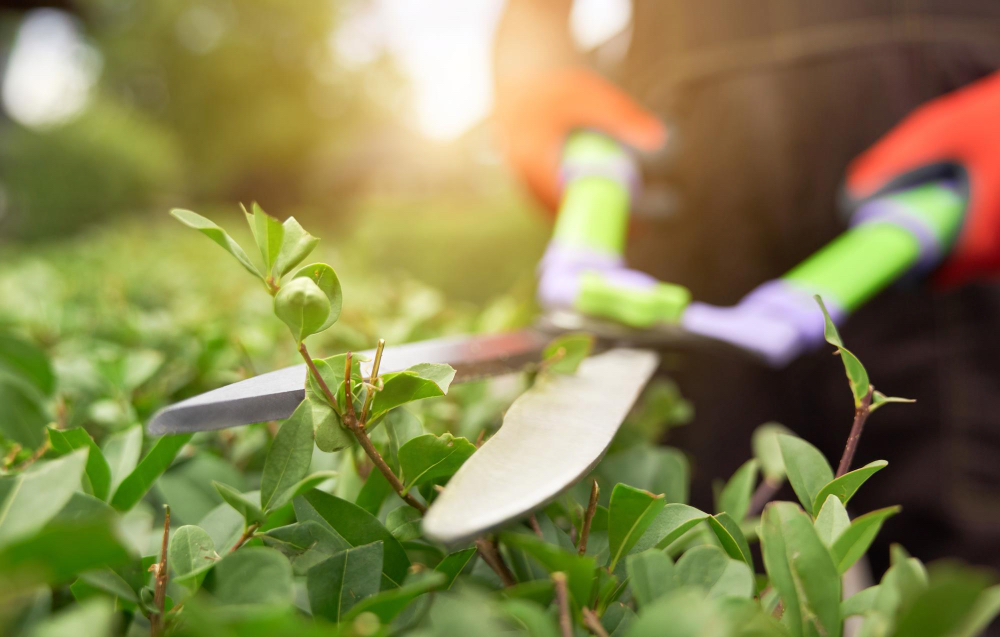
Online advice often tells you to dig knotweed out or smother it with plastic sheeting. The largest field trial of knotweed control suggests otherwise.
Swansea University researchers tested 19 treatments across 58 plots of 225 m² in south Wales over three years. In their 2018 paper, no treatment “completely eradicated” the plant. A two-stage glyphosate spray in summer and autumn gave the best control, and increasing the dose did not improve results.
| Method | Finding in the Swansea trial |
| Two-stage foliar spray (summer and autumn) | Best control of the methods tested |
| Stem injection | Used 15.07 times more glyphosate per unit area, without better results |
| Cut and fill | Used 20.37 times more glyphosate, without better results |
| Covering with plastic or geotextile | Least effective treatment tested |
The researchers recommended dropping physical methods such as summer cutting and excavation, which add cost without improving control.
Digging also creates a lot of waste. RICS says excavating a 2 m x 2 m stand can mean digging an area of 6 m x 6 m to a depth of 1 to 2 m. That is up to 72 m³ of soil from a patch the size of a small rug.
Two legal points apply. Only specific glyphosate products are approved for use in or near water, and the Broads Authority notes that Environment Agency consent is needed before applying herbicide near water. And failing to control knotweed can cost you: RICS records that a Bristol property owner was fined £18,000 in 2018 after the council issued a Community Protection Notice. For anything beyond a very small stand, a specialist contractor is the safer route.
Step 4: Decide What to Keep
Not everything overgrown needs to go. Bramble, the plant behind most “jungle” gardens, is also one of the most valuable for wildlife.
A Fareham Borough Council factsheet says about 240 species of insects and mites feed on bramble leaves, 32 of them exclusively. Bramble also provides nesting sites for song thrushes, nightingales and wrens.
Gardens matter for wildlife on a national scale. The RHS State of Gardening Report 2025, drawing on 30 years of BTO Garden BirdWatch records from more than 34,000 gardens, found that gardens host 44% of UK bird species, 43% of mammal species, 56% of butterfly species and 62% of amphibian and reptile species.
So before you cut:
- Check for nesting birds. Wild birds’ active nests are protected by law, so leave dense hedges and bramble alone in the breeding season, or check carefully first.
- Leave a wild corner. A strip of bramble or long grass along a back fence costs nothing and keeps habitat.
- Keep established trees and shrubs unless they are dead, dangerous or damaging a structure. The soil under them stores more carbon (see Step 7).
- Clear in stages, top growth first, so animals have time to move.
Step 5: Get your Tools and Safety Right
Courtesy - Magnific
Clearance is hard, thorny work, and minor cuts matter more than people think.
A Public Health England study of tetanus in England between 2001 and 2014 found that, where the setting was known, 70.3% of injuries leading to tetanus happened in the home or garden. Only 8.8% of cases were fully immunised for their age, and every death was in an adult over 45 who was not fully immunised. If you are unsure of your vaccination status, check with your GP before you start.
Tools are the other risk. The most detailed tool-by-tool breakdown still comes from RoSPA data for 2006, when an estimated 87,000 gardeners needed hospital treatment. Lawnmowers (6,500), flower pots (5,300), secateurs and pruners (4,400), spades (3,600) and electric hedge trimmers (3,100) topped the list. The figures are old, but the pattern is familiar.
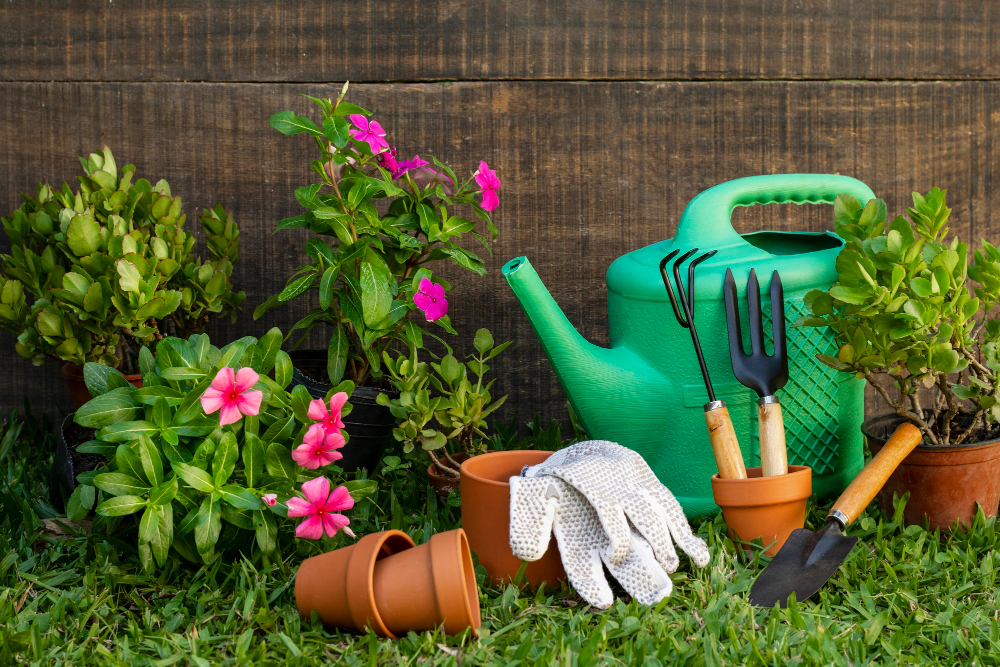
A basic kit list:
- Thick gauntlet gloves and long sleeves for brambles and roses
- Eye protection for strimming, cutting and pruning
- Sturdy boots for hidden glass, metal and uneven ground
- Loppers and a pruning saw for woody growth; a strimmer or brushcutter for long grass
- A rake and heavy-duty bags for collecting cuttings as you go
Read the manual before using any powered tool you have hired or borrowed, and check the ground for hidden debris before you strim.
Step 6: Plan For the Waste, And Dispose of It Legally
A full clearance produces far more green waste than most people expect. University of Southampton researchers found that households in England produce an average of 288 kg of garden waste a year, or 0.79 kg a day, with urban homes producing about 0.64 kg a day. A single overgrown plot can easily outweigh a typical household’s whole year.
Keep What You Can on Site
Many gardeners already do. The RHS State of Gardening Report 2025 found that 42% of UK gardeners sent no gardening waste to landfill in 2024, and 40% made compost at home. About a quarter keep dead wood or a dead hedge.
- Compost soft green material such as grass, leaves and non-woody cuttings.
- Build a dead hedge from woody prunings along a boundary.
- Stack logs in a shady corner for insects and fungi.
Keep Green Waste Clean
Clean garden waste is a resource. The RHS’s 2023 survey of the horticulture industry notes that composted green waste is one of the four main ingredients in peat-free growing media, and that contaminated compost is unusable for growing. Keep plastic pots, string, netting and soil-covered roots with stones out of the green bin.
Never Compost or Bin Knotweed
Knotweed is the exception to every rule above. Waltham Forest Council’s guidance warns householders not to chip, compost, put in green bins or take knotweed to recycling centres. It also says mechanical chippers do not kill it. RICS says knotweed-contaminated soil is likely to be controlled waste under the Environmental Protection Act 1990, so it must go to a licensed facility via a licensed carrier.
Use a Licensed Waste Carrier
English councils dealt with 1.26 million fly-tipping incidents in 2024/25, up 9% on the year, according to Defra figures published in February 2026. Green waste such as prunings, soil, trunks and branches made up 3% of them.
If someone you pay dumps your waste, you can be fined too. Under the household duty of care, you must check that anyone taking your waste is a registered carrier. Ask for their Environment Agency registration number and a waste transfer note. Among councils that responded to Defra, the average fixed penalty for fly-tipping was £626.
Step 7: Protect the Soil and Replant
Courtesy - Magnific
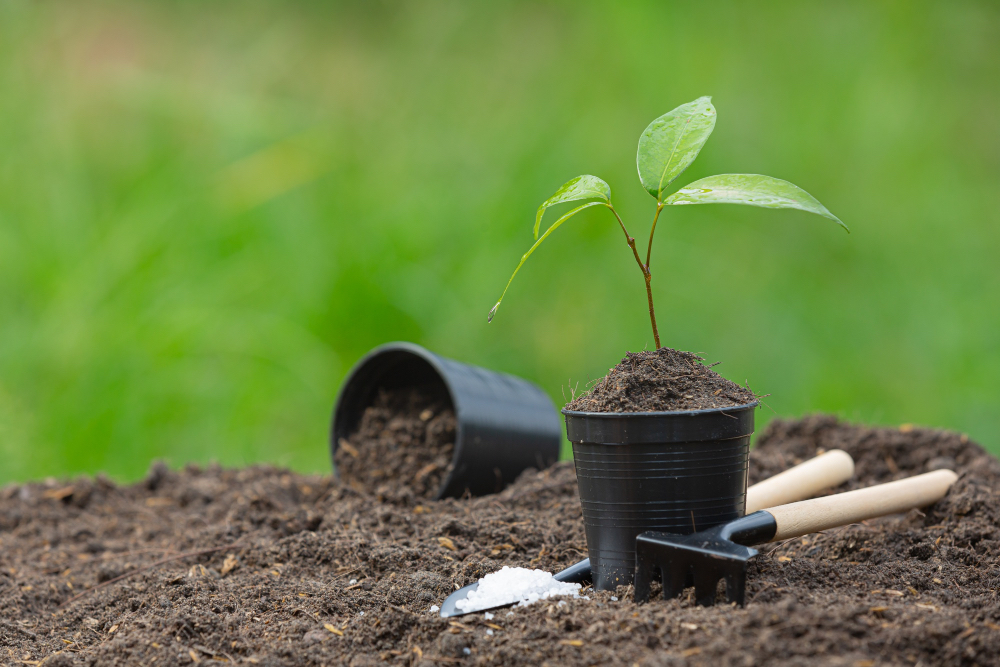
Once the ground is clear, resist the urge to strip it, pave it or lay artificial grass.
The RHS estimates that UK gardens store about 158 million tonnes of carbon, roughly 229 tonnes per hectare, which it compares to a 30-year-old native broadleaved woodland. A University of Sheffield study found soil under trees and shrubs in domestic gardens held a median 13.5 kg of organic carbon per m² in the top 21 cm, more than any other urban land cover it measured.
Yet hard surfaces keep spreading. RHS satellite mapping found 42% of domestic garden space in Great Britain is paved or non-vegetated, rising to 55% of front gardens.
To get the most from reclaimed ground:
- Keep the topsoil. Don’t send good soil away in a skip if you can spread it back over beds.
- Mulch little and often. A Liverpool John Moores University thesis found small amounts of green waste compost raised carbon storage in poor urban soil, while large single applications added little more. Repeated applications worked best.
- Choose peat-free compost. In 2024, 70% of gardeners who bought compost chose peat-free, the RHS reports. Water it carefully: the RHS’s industry survey found irrigation was growers’ top challenge with peat-free media.
- Plant woody shrubs and trees where space allows, for carbon, privacy and wildlife.
- Watch for regrowth of anything you treated, especially knotweed, and keep a record for any future sale.
Also Read: 10 Ideas to add a desert aesthetic to your interiors with houseplants
FAQs – Overgrown Garden Clearance
01. What is the first step in clearing an overgrown garden?
Identify what is growing before you cut anything. Check for Japanese knotweed and other invasive plants, and look for nesting birds, before you start strimming or digging.
02. Can I dig out Japanese knotweed myself?
It is not recommended. Rhizome fragments as small as 0.7 g can regrow, and excavation creates large volumes of soil that is likely to count as controlled waste. A field trial found digging and cutting added cost without improving control compared with a well-timed spray programme.
03. Can I put brambles and garden waste in my green bin?
Yes, for ordinary garden waste such as brambles, grass and prunings, as long as it is free of plastic, string and stones. Never put Japanese knotweed in a green bin or compost heap.
04. How long does it take to get rid of Japanese knotweed?
RICS says herbicide treatment needs at least four years of treatment and monitoring before a completion certificate is issued, and control is normally achievable in three to five years for stands under 100 m².
05. Is knotweed likely to damage my house?
It is rare. In one survey, only 2% of specialist contractors and 6% of surveyors had seen knotweed damage a house. It is more likely to affect sheds, walls and paving.
Courtesy - Featured Image(Magnific)
Author & Expert Review
Written By:  Gaurav Mishra | Civil Engineer & Content Writer

| Credentials: B.E. (Mahavir Swami College, Surat), Registered with Bhagwan Mahavir University (BMU). Experience: Civil Engineer with 5+ years of content writing experience, currently writing impactful articles for Gharpedia, part of SDCPL. Expertise: Specializes in writing well-researched content on residential construction, construction materials, design planning, on-site practices, and safety, blending technical accuracy with everyday clarity. Find him on: LinkedIn |
Verified By Expert: Ravin Desai – Co Founder – Gharpedia | Co Founder – 1 MNT | Director – SDCPL

This article has been reviewed for technical accuracy by Ravin Desai, Co-Founder of Gharpedia and Director at Sthapati Designers & Consultants Pvt. Ltd. With a B.Tech. in Civil Engineering from VNIT Nagpur and an M.S. in Civil Engineering from Clemson University, USA, and over a decade of international and Indian experience in the construction and design consultancy sector, he ensures all technical content aligns with industry standards and best practices.
Find him on: LinkedIn