





Table of Contents
Quick Summary
- A blue bathroom vanity can create a stylish focal point while maintaining a bright and balanced bathroom.
- Different shades, including pale blue, dusty blue, navy, and blue-grey, offer distinct looks and pair well with complementary materials.
- Light-coloured walls, mirrors, reflective surfaces, and adequate lighting help prevent dark blue vanities from making small bathrooms feel cramped.
- White countertops, lightly veined surfaces, and warm stone complement blue cabinets, while brushed brass, polished chrome, and matte black hardware add different design effects.
- Homeowners should compare paint, tile, countertop, and cabinet samples under actual bathroom lighting before making a final decision.
- Accurate measurements, plumbing clearance, storage needs, door swings, and installation costs should be checked before purchasing a vanity.
- Comparing blue and white bathroom vanity options helps homeowners evaluate different styles, dimensions, finishes, and included components.
- Ultimately, choosing a practical vanity that suits the bathroom’s layout, daily needs, and maintenance requirements helps achieve a long-lasting design.
Courtesy - Magnific
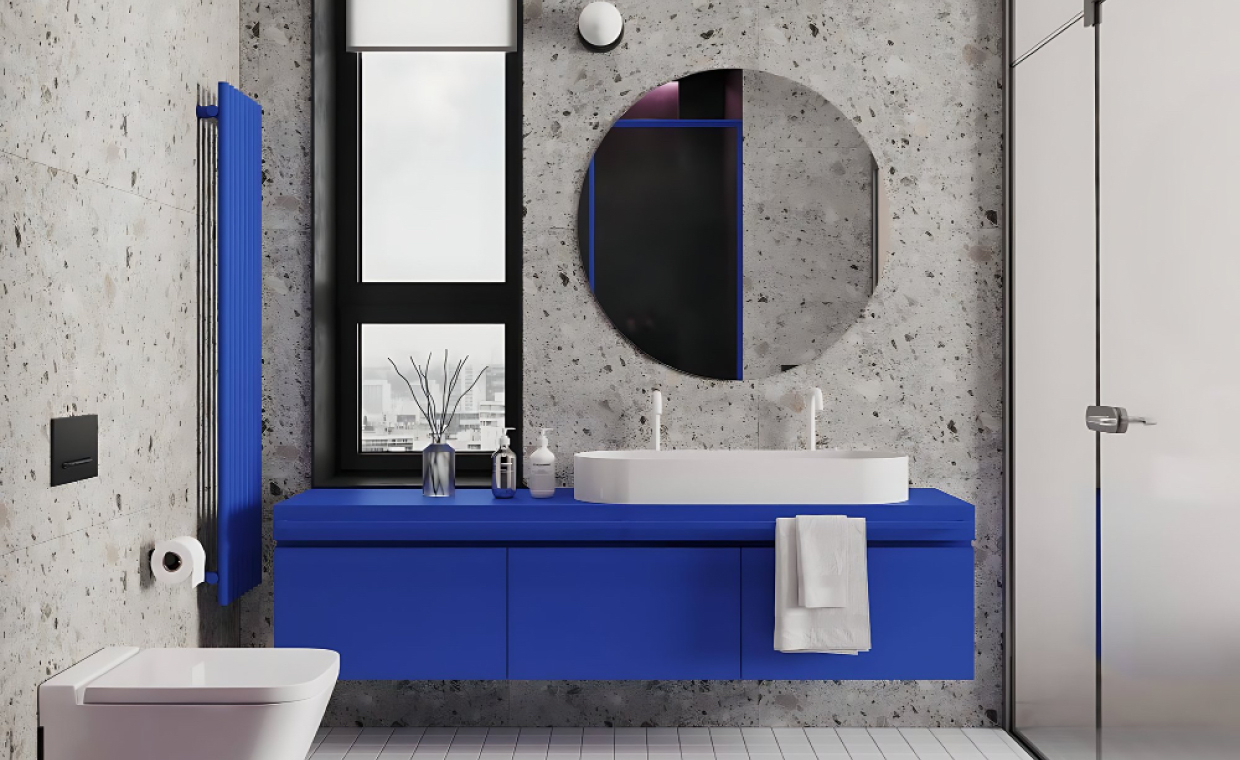
A blue vanity can give a bathroom a distinctive focal point while keeping the rest of the palette quiet. The trick is to evaluate the undertone of the blue against the tile, countertop, hardware and actual lighting in the room.
What should you compare before making a decision?
Courtesy - Magnific
Start with the intended use, the space available and the features that will affect daily comfort. The comparison below is a planning aid, not a substitute for product dimensions or installation instructions.
| Blue tone | Visual effect | Works well with |
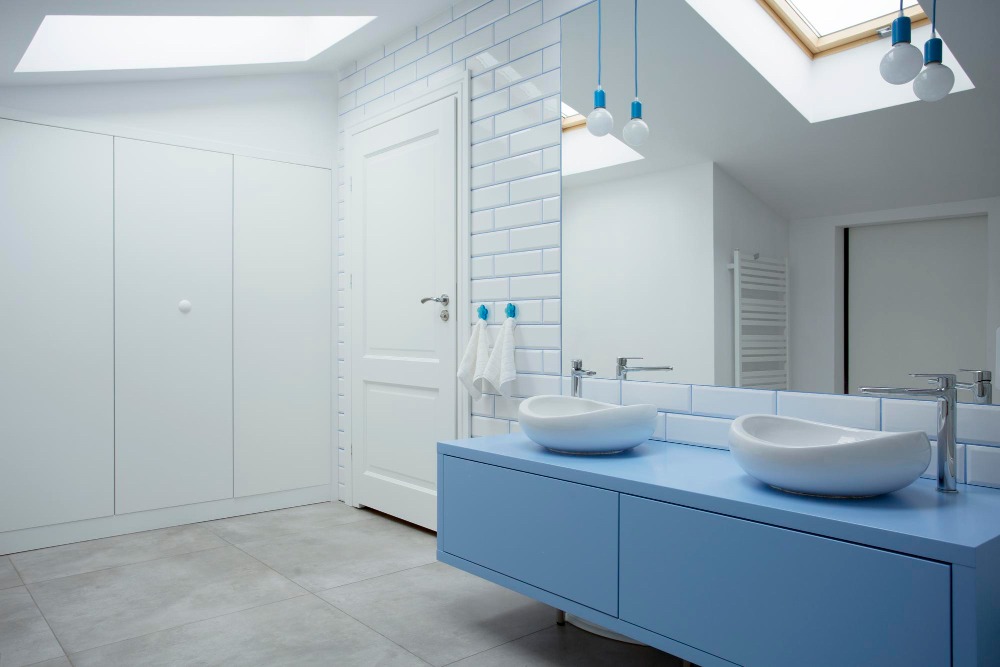
| Pale blue | Airy and understated | White tile and pale wood |
| Dusty blue | Soft, muted character | Warm stone and brushed metal |
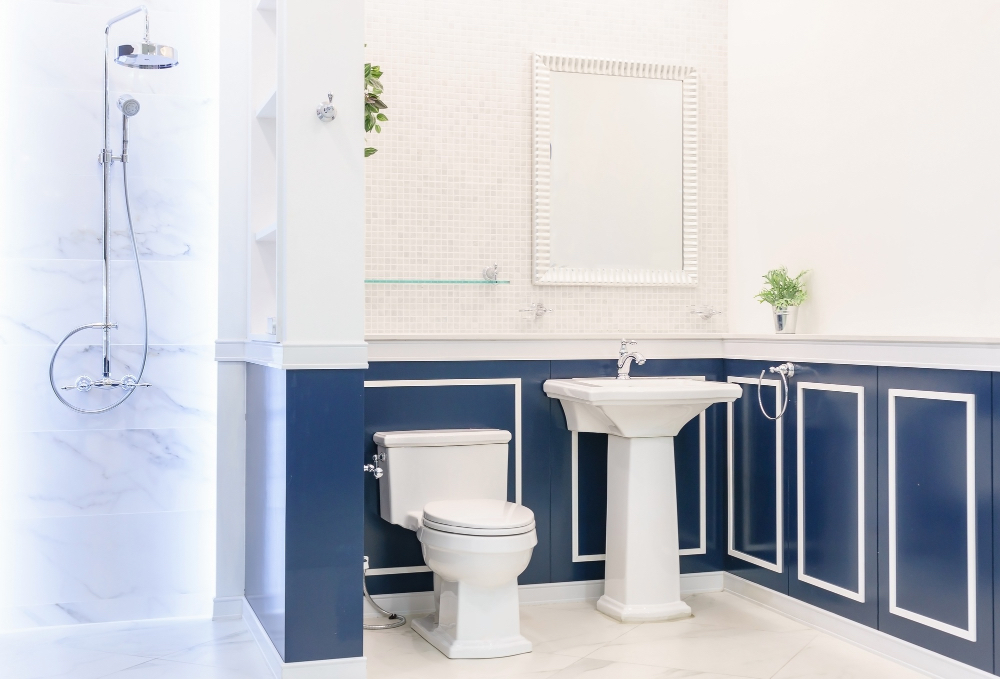
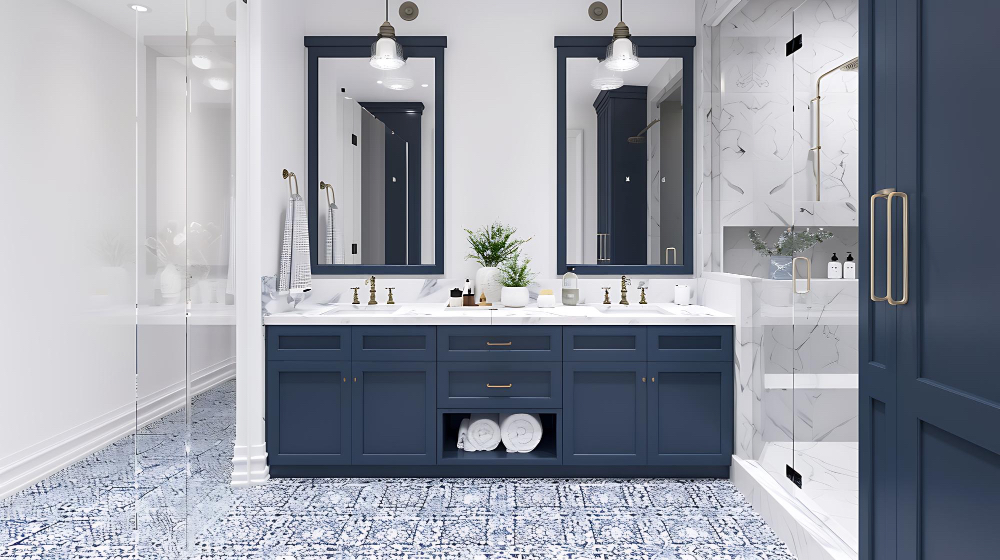
| Navy | Strong focal point | Light walls and reflective surfaces |
| Blue-gray | Subtle, flexible look | Warm whites and natural textures |
Will a blue vanity make a small bathroom look smaller?
Courtesy - Magnific
Not necessarily. A dark vanity can anchor a small room if walls, mirrors and lighting keep the overall space balanced. Evaluate the amount of natural light and how much of the vanity is visible from the doorway.
The practical takeaway is to evaluate the choice in the actual room rather than relying on a single rule of thumb. Manufacturer dimensions, material samples and real-world sightlines can reveal issues that are easy to miss in a product photo.
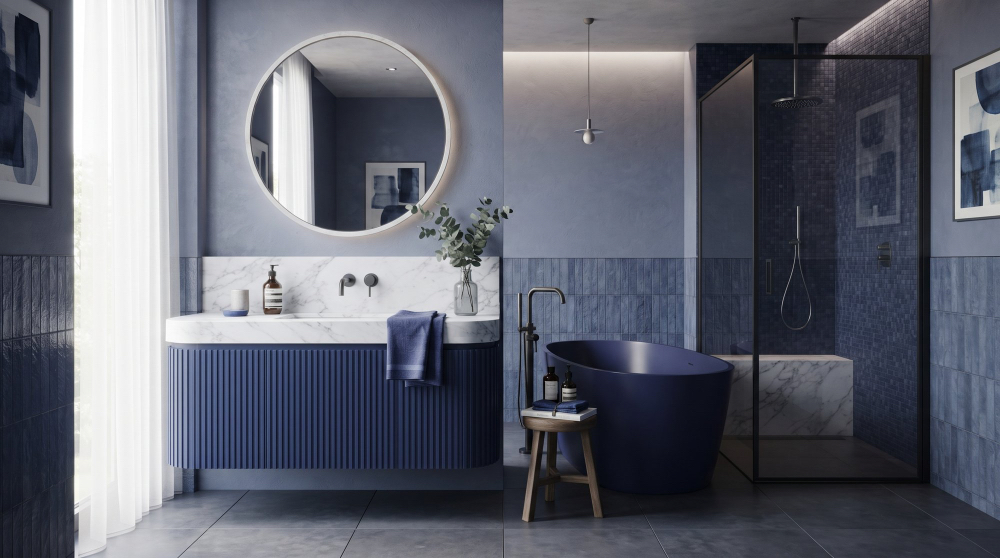
Which countertop colors pair with blue?
Courtesy - Magnific
White and lightly veined surfaces offer contrast, while warmer stone can soften cool blues. Test samples together because blue paint, stone veining and room lighting can shift perceived undertones.
The practical takeaway is to evaluate the choice in the actual room rather than relying on a single rule of thumb. Manufacturer dimensions, material samples and real-world sightlines can reveal issues that are easy to miss in a product photo.
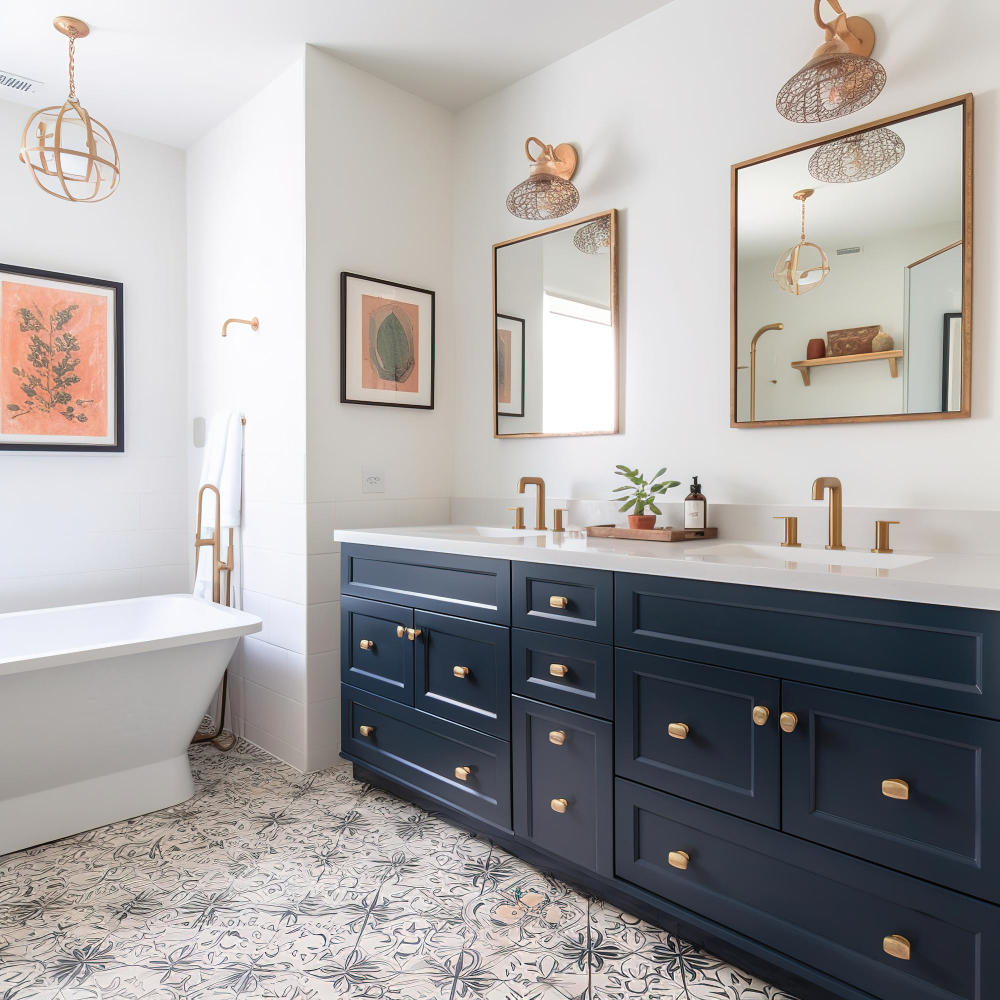
What hardware finish works with blue cabinets?
Courtesy - Magnific
Brushed brass adds warmth, polished chrome looks crisp and matte black creates stronger contrast. Repeat the chosen finish selectively in lighting or accessories so the palette feels deliberate.
The practical takeaway is to evaluate the choice in the actual room rather than relying on a single rule of thumb. Manufacturer dimensions, material samples and real-world sightlines can reveal issues that are easy to miss in a product photo.
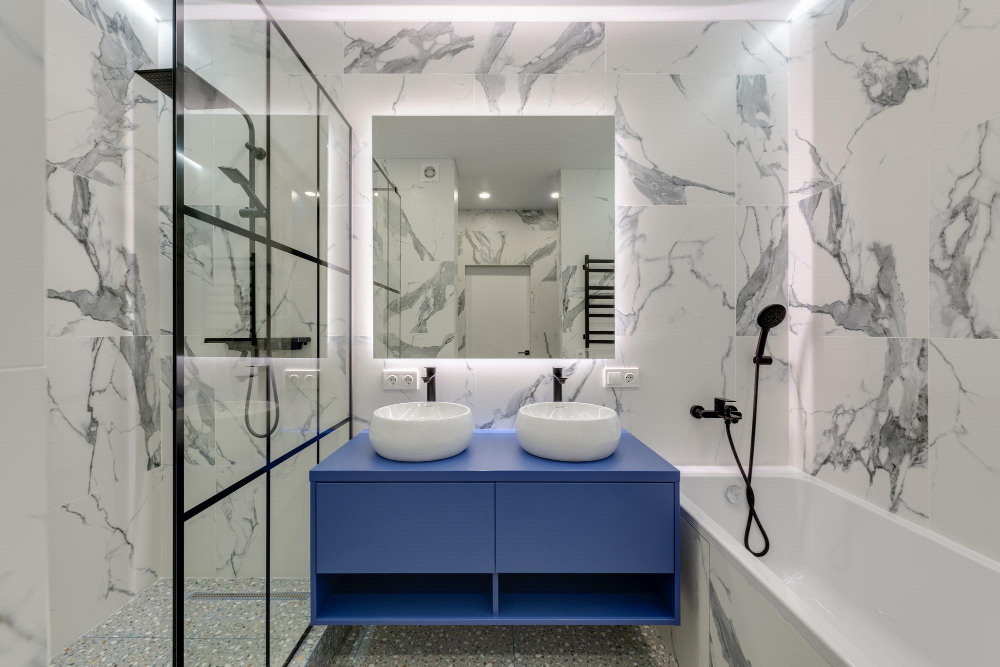
Should the walls also be blue?
Courtesy - Magnific
They can be, but matching every surface may flatten the design. A lighter neutral wall or a complementary tile often gives the vanity room to stand out.
The practical takeaway is to evaluate the choice in the actual room rather than relying on a single rule of thumb. Manufacturer dimensions, material samples and real-world sightlines can reveal issues that are easy to miss in a product photo.
What steps should you take before buying or installing?
- Choose the blue undertone before buying tile or paint.
- Compare countertop and cabinet samples under bathroom lighting.
- Limit the main palette to a few complementary finishes.
- Balance a dark cabinet with adequate mirror and task lighting.
- Treat the measurements and installation conditions as a final checkpoint. If the project involves new wiring, structural support or changes to plumbing, consult a qualified professional and follow the product instructions and applicable local requirements.
What mistakes are easiest to avoid?
A frequent mistake is ordering from the nominal cabinet width without checking the full specification sheet. Handles, countertop overhangs, plumbing and door swings can all change the fit. Another is choosing a finish from a screen alone: compare physical samples under the bathroom’s actual lighting. Finally, confirm what the quoted price includes. The countertop, basin, faucet, backsplash, delivery and installation may be separate line items, and those costs can materially change the comparison.
Think about cleaning and access as part of the design, too. Deep drawers may be more practical than doors in some layouts, but only if the drain assembly leaves enough clearance. A beautiful cabinet that blocks a nearby door or lacks room for daily supplies will be frustrating long after the renovation is finished.
Where can you compare suitable options?
For a useful starting point, browse blue bathroom vanities to compare shapes, finishes and specifications. If your plan calls for an alternative look or configuration, review white bathroom vanities as well. Comparing actual dimensions and included components helps narrow the shortlist before purchase.
FAQs on How to Style a Blue Bathroom Vanity
01. Are blue vanities a short-lived trend?
Blue is a long-used cabinet color; timelessness depends on proportion, finish and the surrounding materials.
02. Do blue vanities suit traditional bathrooms?
Yes. Shaker and furniture-style cabinets can feel traditional, while flat fronts read more contemporary.
03. What is the main takeaway?
The best choice is the one that fits the room, supports its daily routines and remains practical to maintain. Begin with measurements and functional needs, use visual style to refine the shortlist, and verify product specifications before committing. A thoughtful plan usually delivers better long-term results than choosing by appearance alone.
Courtesy - Featured Image(Magnific)
Author & Expert Review
Written & Verified By:  Mansi Shah – Architect & Architectural Content Writer, SDCPL | B.Arch.
 Mansi Shah – Architect & Architectural Content Writer,
| Credentials: Architect associated with Sthapati Designers & Consultants Pvt. Ltd. (SDCPL), with over 25 years of professional experience in architecture and interior planning. Experience: Architect with 25+ years of experience in architectural planning, design development, detailing, and on-site execution of residential, commercial, and institutional projects. Expertise: Specializing in architectural planning, interior design, material selection, construction practices, building bylaws, and space efficiency. She reviews content to ensure it reflects practical design principles, efficient interior planning, and industry-aligned architectural standards. Find her on: LinkedIn |