




Table of Contents
Quick Summary
- Modern architecture emerged in the early 20th century, emphasizing simplicity, functionality, and minimal ornamentation over decorative designs.
- Its core principles include clean geometric forms, open layouts, and the use of modern materials such as steel, glass, and reinforced concrete.
- Major milestones like the Chicago School, Bauhaus movement, and MoMA exhibition helped shape and popularize this architectural style worldwide.
- Key features include flat roofs, large windows, natural lighting, and strong indoor-outdoor connectivity.
- Modern architecture offers several advantages, including efficient space planning, faster construction, energy efficiency, and sustainable design.
- Iconic landmarks such as the Sydney Opera House and Gateway Arch continue to reflect its lasting influence on contemporary architecture.
Courtesy - Magnific
For centuries, buildings focused heavily on ornamentation and grandeur. But as lifestyle evolved, people began valuing simplicity, and this inclination towards minimalism gave birth to modern architecture, one of the most influential architectural movements of the 20th century that transformed how buildings are designed and how people interact with spaces.
Today, modern architecture continues to influence residential and commercial construction worldwide. But what exactly defines this style, and why does its influence remain so strong after more than a century?
Let us understand.
What is Modern Architecture?
Courtesy - Magnific
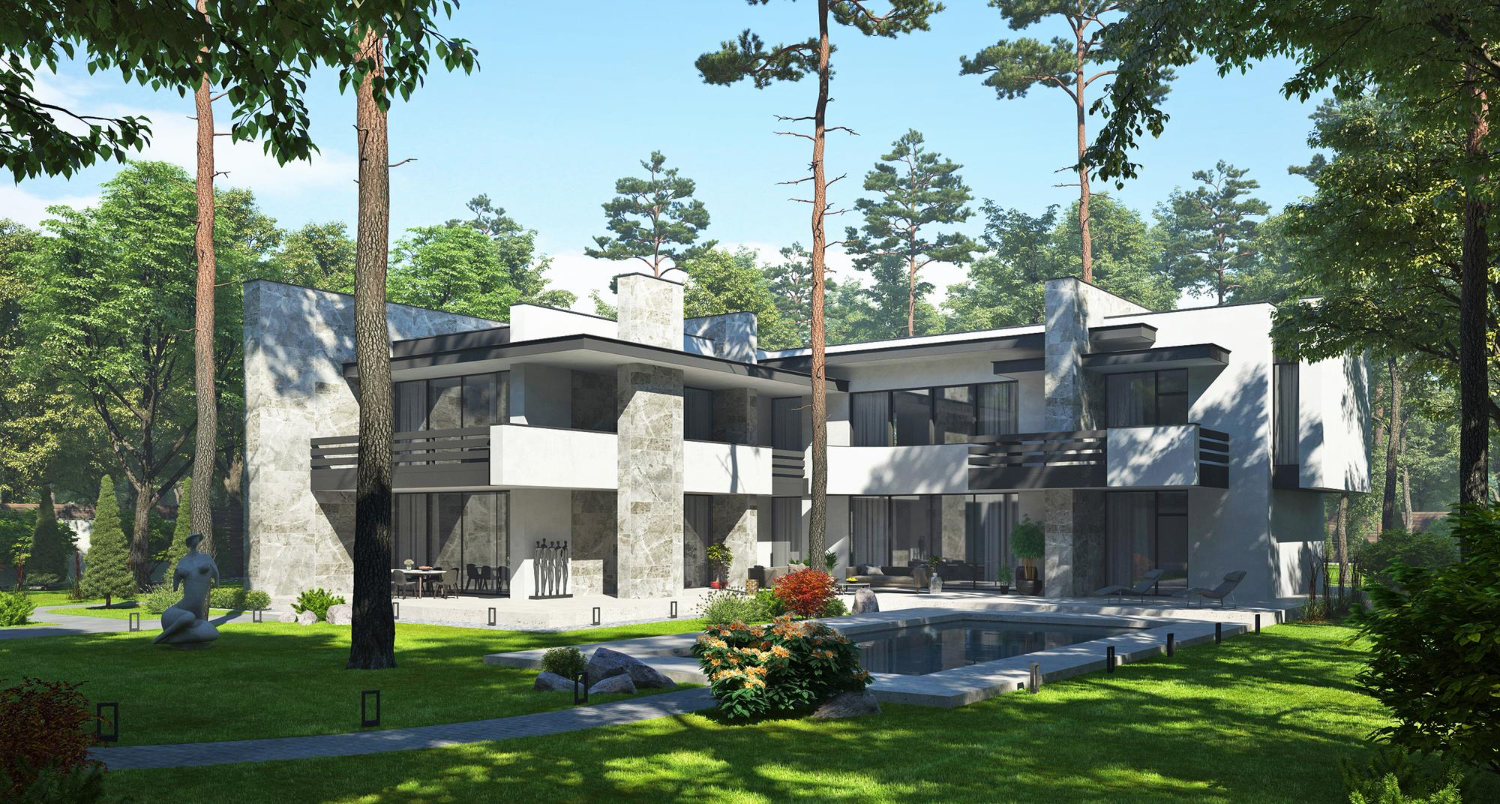
Modern architecture refers to an architectural movement that emerged during the early 20th century, primarily in Europe and America, as an alternative to traditional building styles that focused heavily on decorative detailing and grandeur.
While styles like Victorian or Gothic Revival architecture were all about excessive ornamentation, modern architecture favoured sleek minimalism and functionalism.
The philosophy that modern architecture follows is famously summarised in “form follows function.” In simple words, buildings should primarily serve their purpose efficiently rather than relying heavily on visual appeal.
Modern architecture is the style that dominated the Western world between the 1930s and the 1960s. It was characterised by an analytical and functional approach to building design. It fundamentally changed how architects approached building designs.
Evolution of Modern Architecture
Courtesy - Magnific
The emergence of modern architecture was closely connected to rapid industrial development during the 19th century.
Several factors contributed to its rise:
- The Industrial Revolution introduced advanced building materials such as steel, glass and reinforced concrete.
- Growing urbanisation demanded faster and more practical construction.
- Traditional architectural styles were becoming unaffordable and overly decorative.
- Architects wanted buildings to reflect modern lifestyles rather than older traditions.
Modern architecture did not evolve overnight. It evolved through several milestones.
Chicago School and Early Skyscrapers
A major turning point came after the Great Chicago Fire of 1871. Architects began experimenting with steel-frame construction, which led to the birth of skyscrapers and modern office buildings. American architect Louis Sullivan unveiled the first skyscrapers at the 1893 Chicago World’s Fair. The building had large glass windows constructed with a steel frame. In fact, Sullivan described his design philosophy as “form follows function, which became one of the defining principles of modern architecture.
The Bauhaus Movement and Global Recognition
In 1919, Walter Gropius founded the Bauhaus school in Germany, which played a major role in promoting modern design principles across architecture, art, and design.
Another milestone came in 1932, when the Museum of Modern Art (MoMA) hosted an international exhibition on modern architecture, formally establishing it as a global architectural movement.
Post World War II Expansion
After World War II, modern architecture evolved further and inspired many contemporary architectural styles, especially sustainable and minimalist design.
Courtesy - Magnific
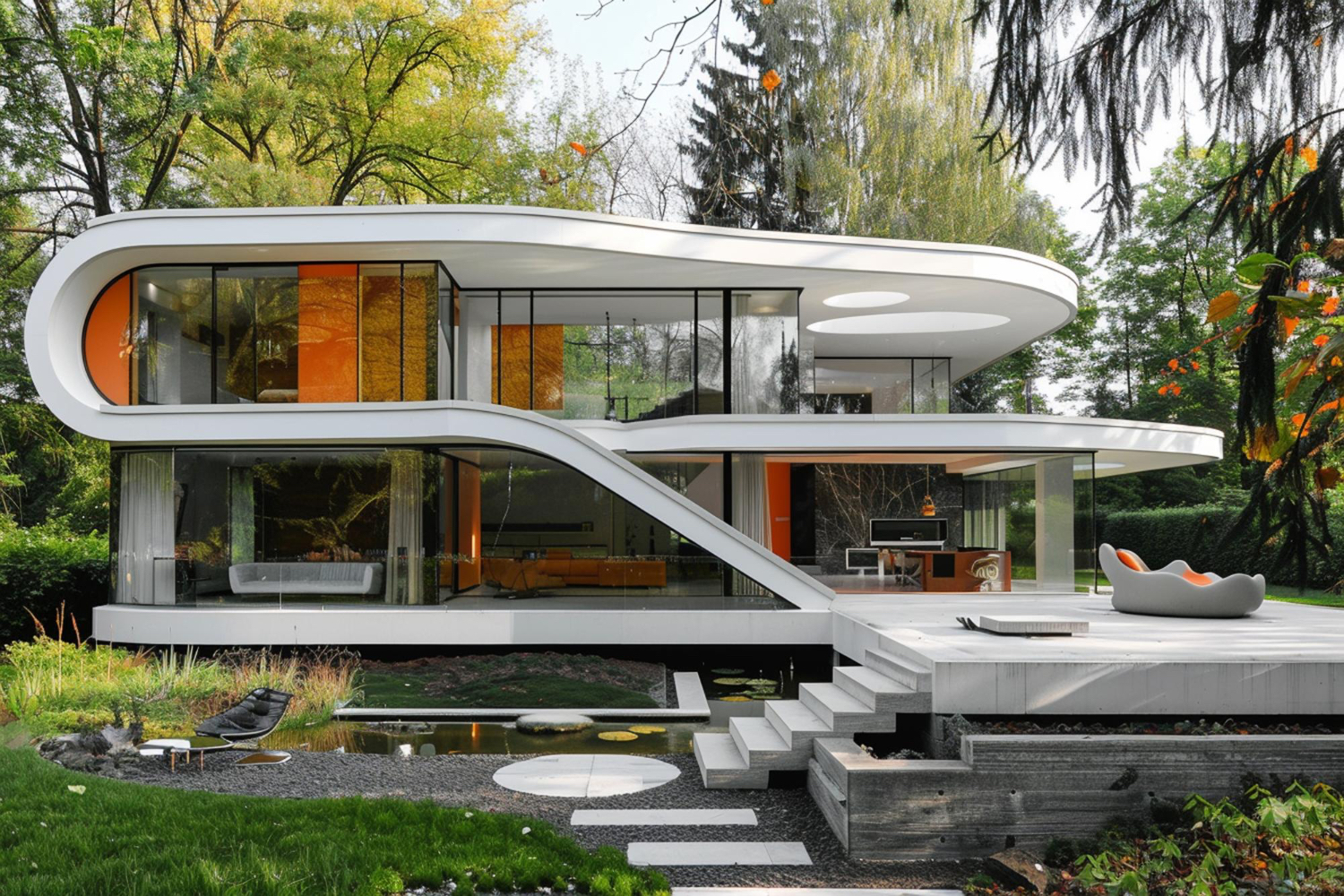
- Streamline Moderne: A new modern style was born, named Streamline Moderne, during the great depression in the 1930s. In this style, the building was inspired by the shape of ocean liners and aerodynamic principles. This style featured curved corners, steel railings, and nautical elements.
- Lasting Legacy of Modernism: Young architects had started to criticise the stark nature of minimalism by the end of World War II. By the 1960s, minimalist sensibilities began to give way to a rebirth of ornamentation. Still. The modern architecture’s legacy continues to live on in iconic buildings, serving as inspiration for contemporary architecture.
What are the Main Features of Modern Architecture?
Several characteristics define modern architecture:
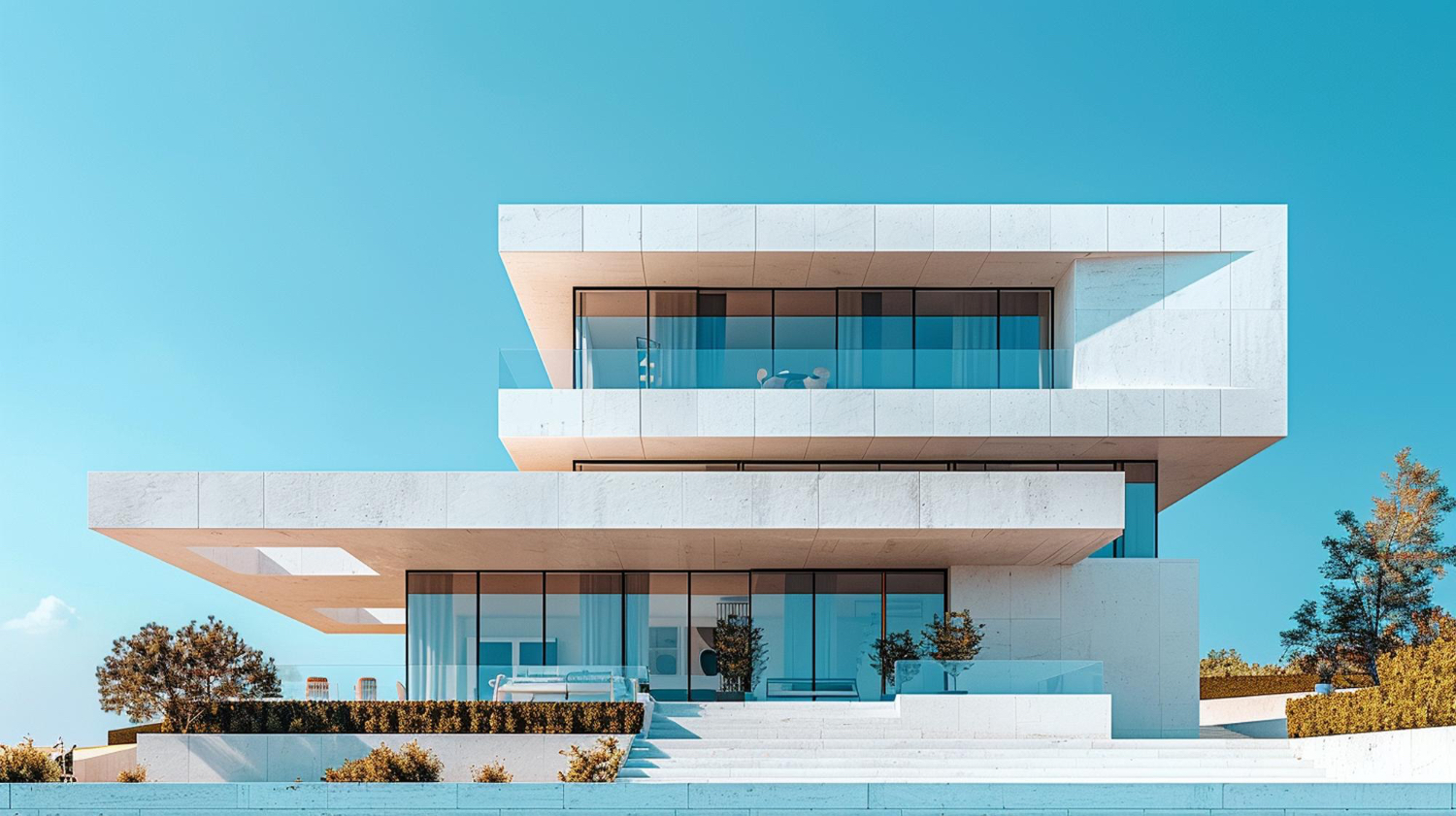
- Clean geometric forms: Buildings feature straight lines, rectangular forms, and simple geometric shapes instead of decorative detailing.
- Minimal ornamentation: Decorative elements are deliberately reduced, allowing the structure itself to become the design focus.
- Flat roof Design: These elements create a sleek and grounded appearance.
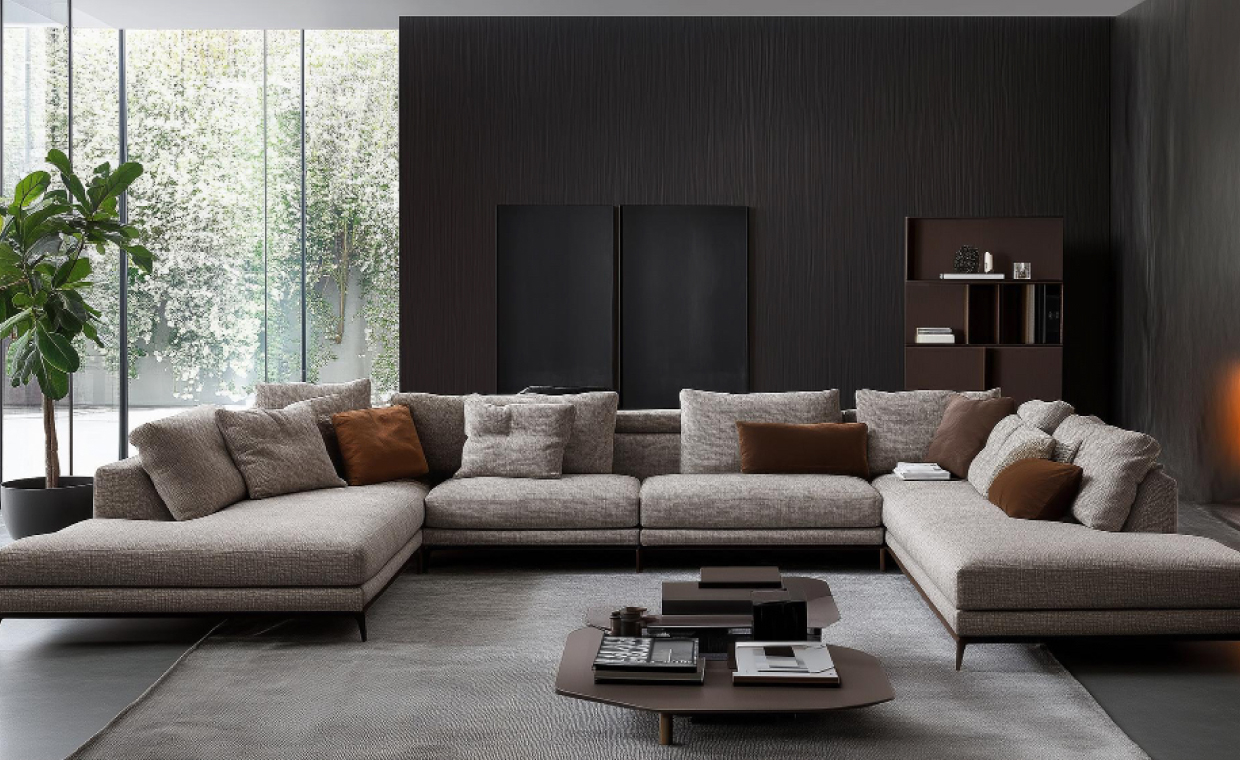
- Open floor planning: Modern homes avoid unnecessary partitions, creating spacious and flexible interiors.
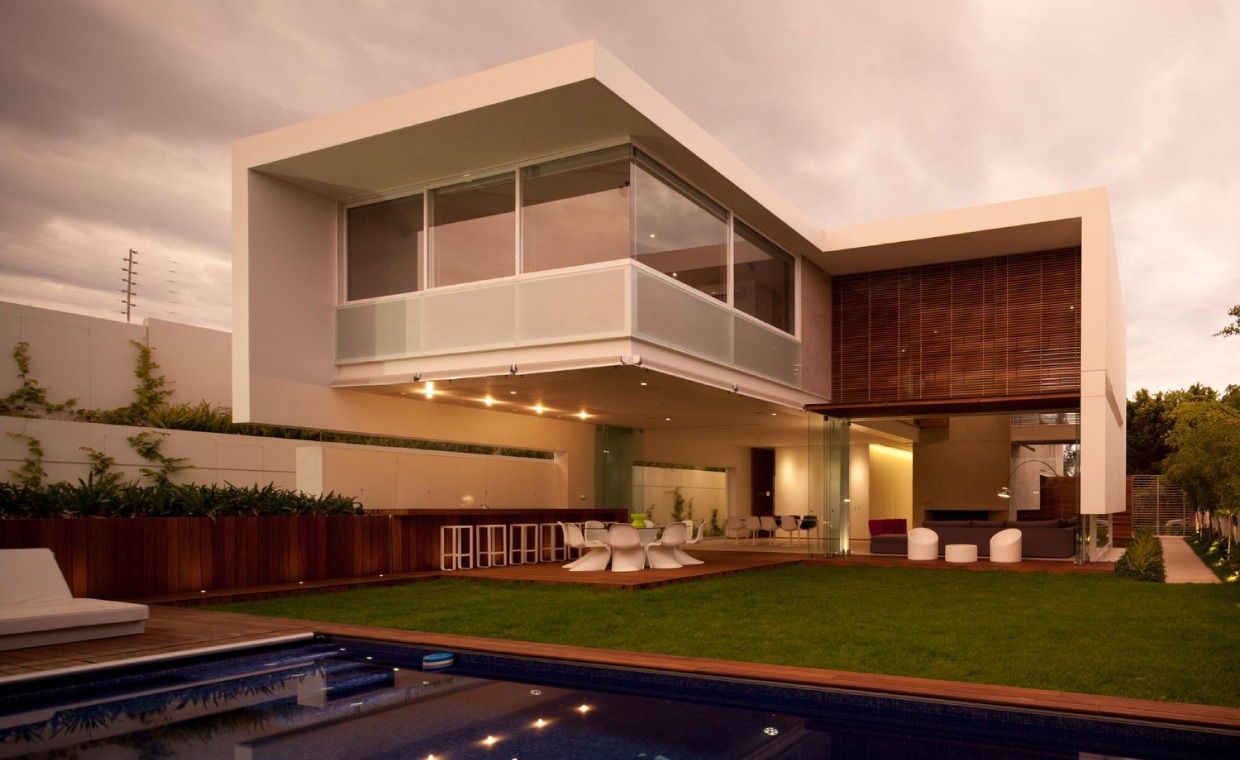
- Large windows and natural light: Glass facades and wide openings maximise daylight and outside views.
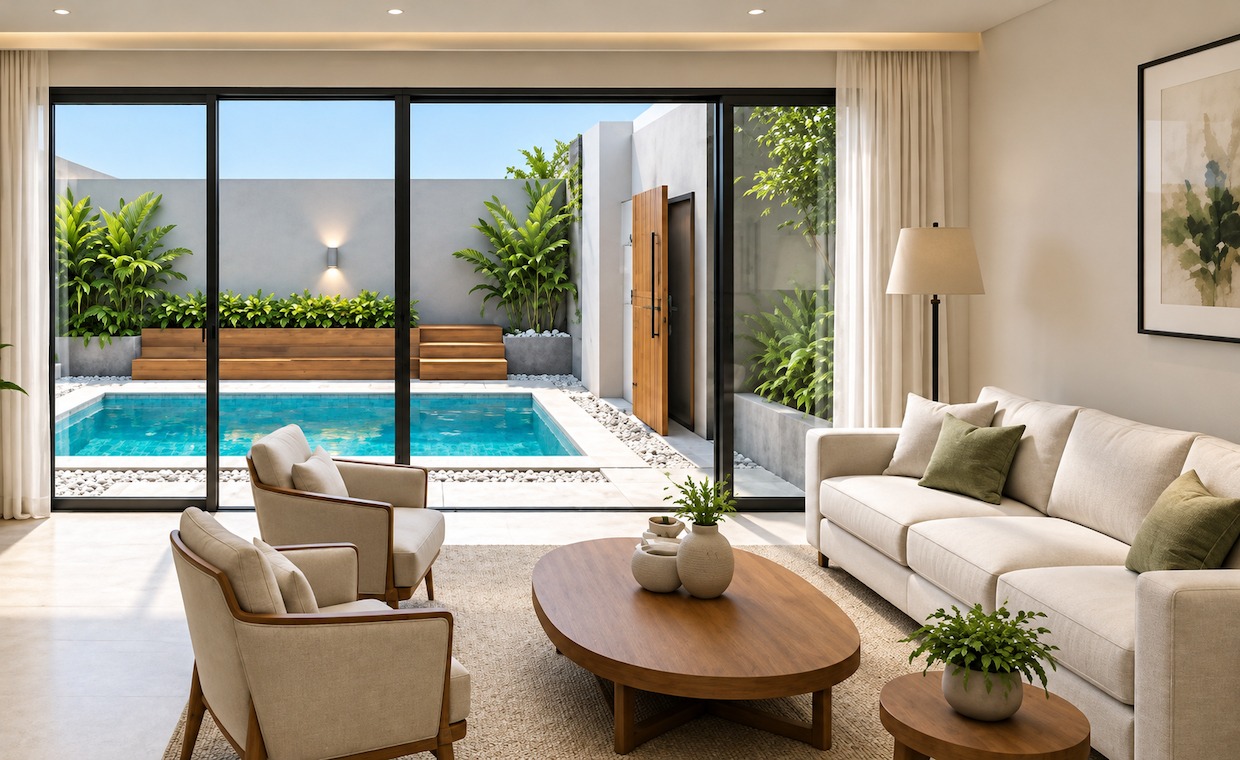
- Indoor-outdoor connectivity: Modern homes often blend interior spaces with surrounding landscapes.
- Climate-responsive design: Overhangs, shading devices, and orientation improve comfort and energy efficiency.
What are the Materials Used in Modern Architecture?
Courtesy - Magnific
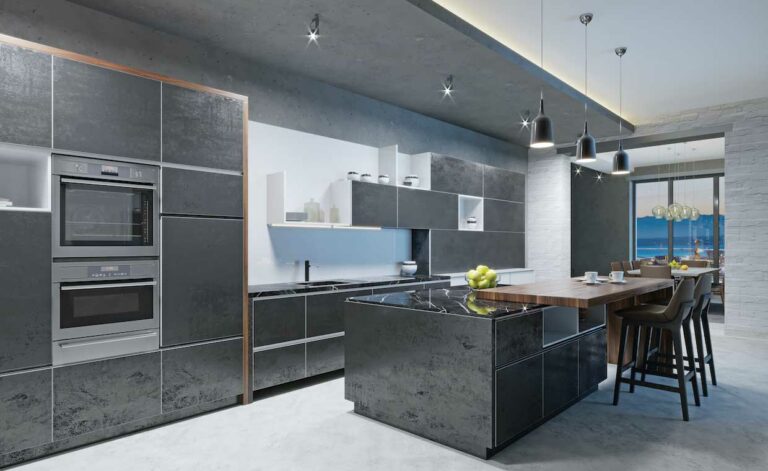
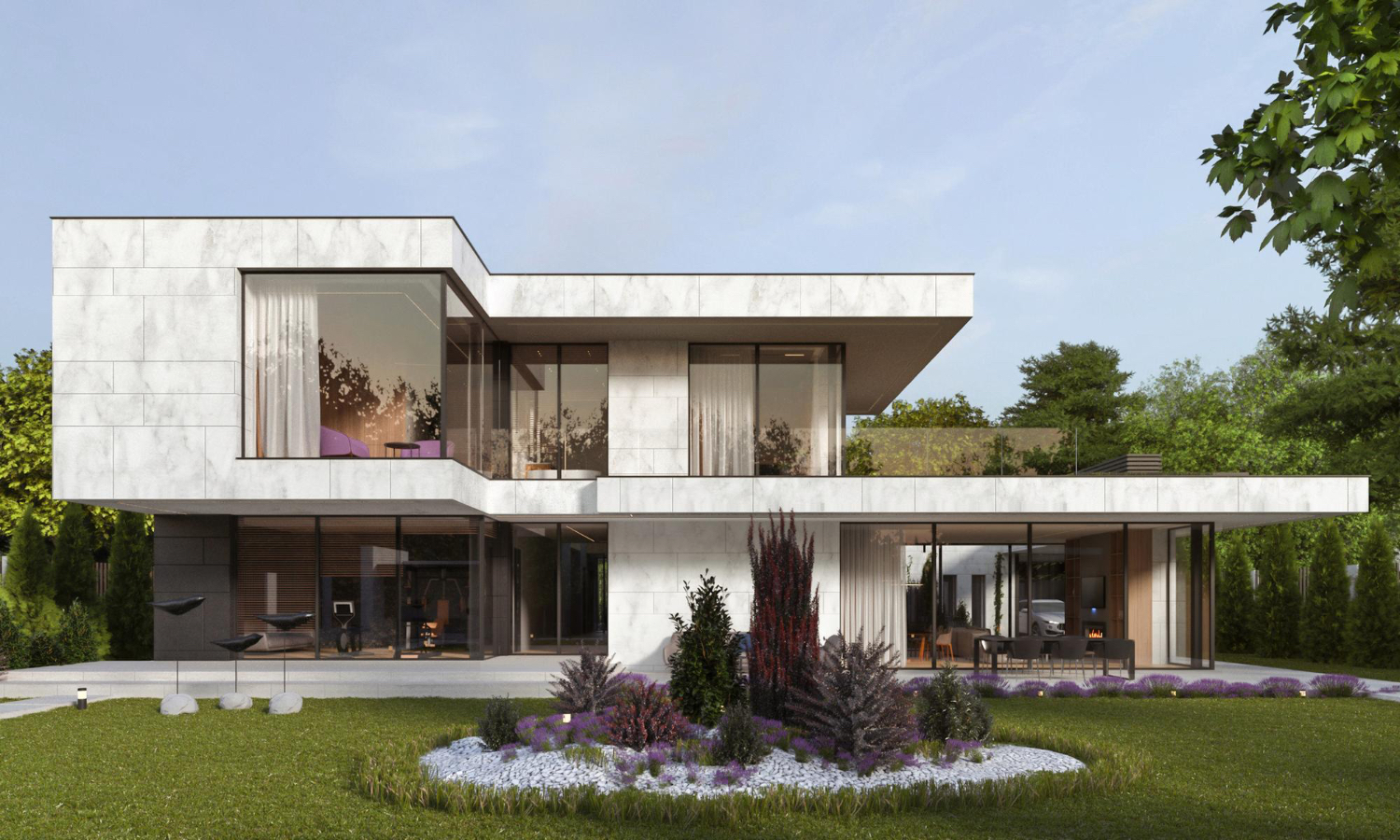
Modern architecture relies on materials that support strength and flexibility along with efficiency.
- Concrete enables the creation of durable structures and innovative forms.
- Steel provides immense structural strength, making large spans and skyscrapers possible.
- Glass creates transparent facades, improves natural lighting, and visually connects interiors with surroundings.
- Aluminium became crucial for lightweight window frames, roofs and facades.
Prefabricated components are also commonly used, helping reduce construction time and labour costs.
Advantages of Modern Architecture
Modern architecture offers several practical benefits:
- Faster construction and efficient space planning
- Better natural lighting and ventilation
- Flexible and spacious interior layouts
- Reduced material usage with stronger structures
- Energy efficiency and Sustainable design
- Minimal yet visually appealing design
These benefits make modern architecture suitable for both residential and commercial spaces.
Disadvantages of Modern Architecture
Modern architecture isn’t without its trade-offs.
- This style may feel cold, impersonal and lacking warmth
- Large expanse of glass adds to the costs of cooling
- Many architects of the modern architecture era believe that strict minimalism stripped buildings of character.
Modern vs Contemporary Architecture: What’s the difference?
Many people confuse modern and contemporary architecture, but they are not the same.
Modern architecture is a design movement that began in the early 20th century and adheres to strict minimalist principles.
Contemporary architecture, on the other hand, refers to architectural styles currently popular. While contemporary buildings often borrow ideas from modern architecture, contemporary design constantly evolves with newer technologies and design trends.
In fact, modern architecture doesn’t mean recently built. It refers to a specific historical style. A building constructed in a classical style last year is not modern architecture, while a 1930s building designed with minimalist, functional principles is.
Iconic Examples of Modern Architecture?
Many famous architects have styled and shaped the building in a modern architectural style.
Fallingwater
The vacation home in Pennsylvania, which dramatically extends over a natural waterfall, was designed by Frank Lloyd Wright in 1939. It is made from concrete slabs and remains one of the finest examples of modern architecture.
Villa Savoye
Designed by Le Corbusier, this villa, built in France, became a defining symbol of minimalist modern design.
Crystal Cathedral
Architect Philip Johnson built the Crystal Cathedral in Garden Grove, California. It was considered the largest glass building in the world when construction was completed in 1981.
Gateway Arch
Located in St Louis, the iconic monument designed by Eero Saarinen remains the world’s tallest arch.
Seagram Building
The 38-storey skyscraper, designed by Ludwig Mies Van Der Rohe in 1958, remains a famous fixture of the New York City skyline.
Sydney Opera House
Sydney Opera House, designed by Danish architect Jorn Utzon in 1973, is one of the most recognised structures associated with modern architectural innovation.
Is Modern Architecture Still Relevant?
Courtesy - Magnific
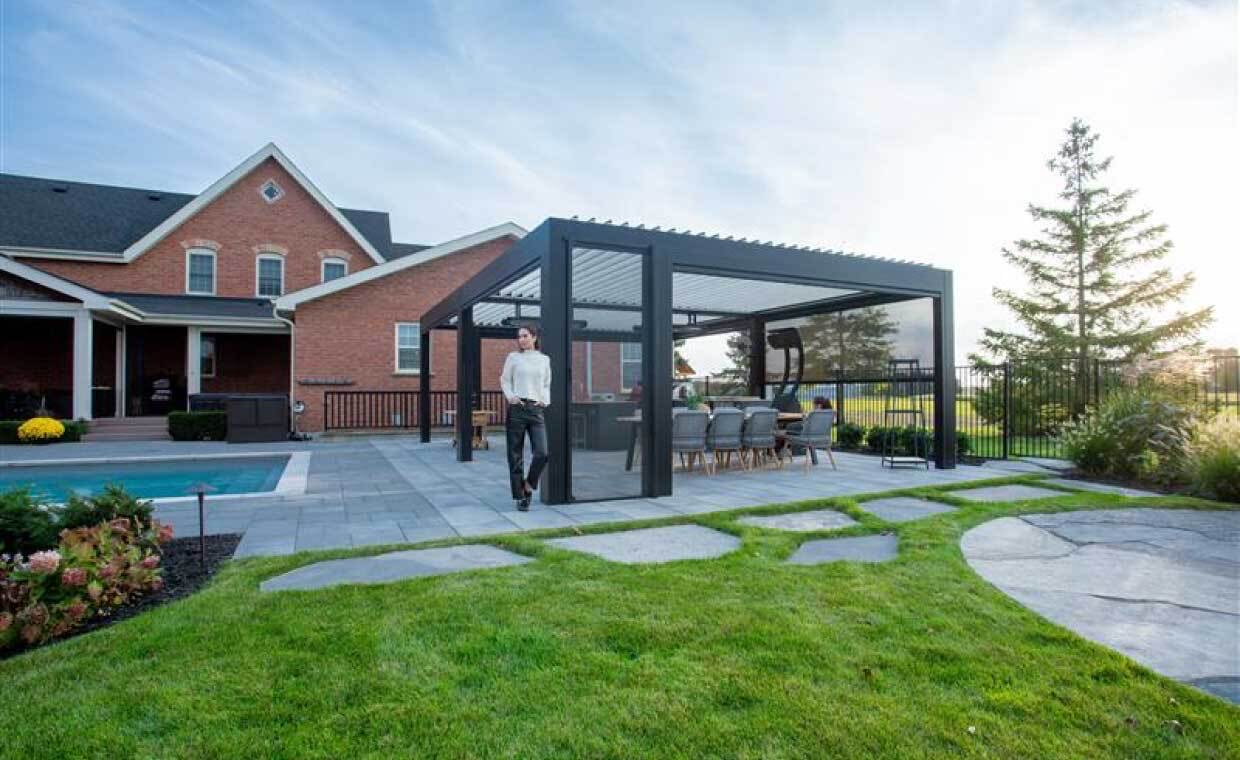
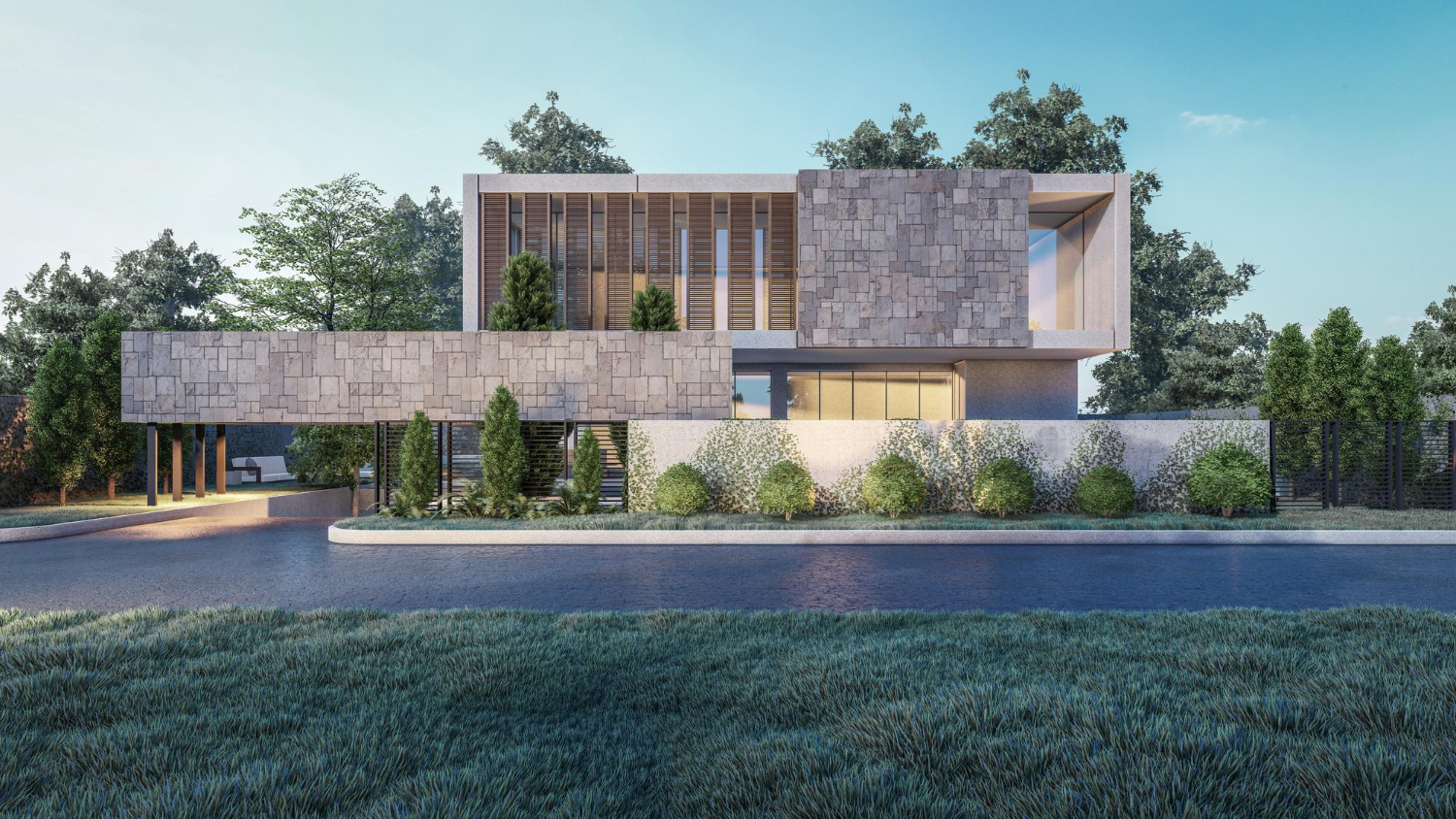
Modern architecture matters today because it is less a fixed aesthetic and more a way of thinking about space, prioritising function, honest material use, and a clean relationship between interior and exterior. Few new buildings are designed in a fully modernist style anymore, but many borrow its elements, such as open-plan homes, flat-roofed extensions, and glass-heavy facades, freely.
Since its design principles naturally support conscious construction and sustainable living, it remains relevant. Better use of natural daylight, reducing dependence on artificial light, passive cooling strategies, reduced material consumption, efficient space planning and strong indoor-outdoor environmental integration make it meaningful at a juncture in time when the world recognises the need for sustainable buildings.
Its simplicity and adaptability are exactly what make it easy to keep borrowing from more than a century after it began.
Conclusion
On a final note, change being the universal law of nature, where initially there were a lot of apprehensions associated with modern architecture, today people are gradually appreciating the functionality and flexibility this form of architecture offers alongside an opportunity to save one’s carbon footprint. Whether or not a building fully commits to modernist principles, its influence on how we plan and light our spaces is hard to miss.
Since you are already reading about one of the architectural styles, we have some more blogs regarding other architectural styles. Have a look at them too:
Features of Contemporary Architecture | All you Must Know!
Ancient Greek Architecture: One of the Leading Ones
Frequently Asked Questions
01. Who is the father of modern architecture?
Louis Henry Sullivan
02. What are the reasons behind emergence of modern architecture?
Revolutions in technology, engineering, building material and the aspiration to step away from historical architectural styles.
03. Who were the prominent figures of the modern architecture?
Mies Van Der Rohe, Walter Gropius and Le Corbusier
04. What are the famous landmarks of modern architecture?
CN Tower in Canada, Burj Khalifa in Dubai, Sydney Opera House in Australia.
And before you take a leave from us, there is a blog which will give your home a modern feel: 17 Tips to Give Your Home a Modern Feel!
Courtesy - Featured Image(Magnific)
Author & Expert Review
Written By:  Nidhi Patel | Civil Engineer & Content Writer

| Credentials: B.E. (Mahatma Gandhi Institute of Technical Education and Research Centre), Registered with Gujarat Technological University (GTU). Experience: Civil Engineer with 3+ years of content writing experience, currently writing blogs for Gharpedia, part of SDCPL. Expertise: Specializing in SEO-optimized blogs and long-form articles focused on home improvement, construction, interiors and architect topics. I create well-researched, reader-focused content that balances technical accuracy with clarity, making complex subjects easy to understand. Find her on: LinkedIn |
Verified By Expert: Mansi Shah – Architect & Architectural Content Writer, SDCPL | B.Arch.
 Mansi Shah – Architect & Architectural Content Writer,
 This article has been reviewed for architectural and interior design accuracy by Mansi Shah, an Architect associated with Sthapati Designers & Consultants Pvt. Ltd. (SDCPL). With over 25 years of professional experience in architectural planning, design development, detailing, and on-site execution of residential, commercial, and institutional projects, she brings deep expertise in architecture and interior planning, material selection, construction practices, and building bylaws. Her review ensures the content reflects practical design principles, interior space efficiency, and industry-aligned architectural standards.
Find her on: LinkedIn