






Table of Contents
Quick Summary
- Start by positioning the lounge chair so it feels connected to the sofa rather than isolated in a corner.
- Check the chair from both the reading and conversation positions before finalising its location.
- Angle or turn the chair to balance a clear view of the sofa with a comfortable reading position.
- Place the side table and lamp where they are easy to reach without blocking movement.
- Test the arrangement with a footrest or ottoman if one is part of the seating setup.
- Walk through the room while the chair is occupied to identify awkward or blocked pathways.
- Adjust the layout until reading, conversation and everyday movement all work comfortably together.
The corner that looks inviting when the house is quiet can feel a long way from the sofa once people sit down to talk. Before setting up a reading spot there, leave the sofa where it is and try the lounge chair near one end. Sit down and see whether you can look toward someone on the sofa without shifting sideways in the seat. Then see what it would take to read in that same spot.
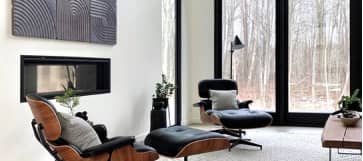
If you’re still choosing a seat, picture how you’d approach it as well as how you’d sit in it. When browsing Daedalus Designs’ Eames chair replica collection, check how much space each chair leaves for a lamp, a side table and, if you want one, a footrest.
Find a Spot Where the Chair Belongs to the Group
Imagine a sofa along the wall and a chair tucked just behind its near arm, beside a bookcase. The books are handy, but the person on the closest cushion has to look over their shoulder to see you.
First, angle the chair toward the sofa without moving it out of the corner. If the person on the sofa still has to turn around, slide the chair forward of the sofa arm and keep it facing the same way. Now you can tell whether changing the angle was enough or whether the chair needed a different spot on the floor.
Try both seats before you settle on the spot. Look toward the far cushion from the chair, then sit on the sofa and check the view back. If the new position puts the chair in the way of the usual walk through the room, try the other end of the sofa. Gharpedia’s guide to living-room chair types has more on matching the seat to its use and its place in the room.
See Whether Reading Calls for A Turn
In the room with the bookcase, try reading with the chair still angled toward the sofa and a lamp beside you. If you’d rather face the bookcase and your chair can turn on its base, try both directions from the same spot. Check that the chair’s arms and back clear the furniture beside them as you turn.
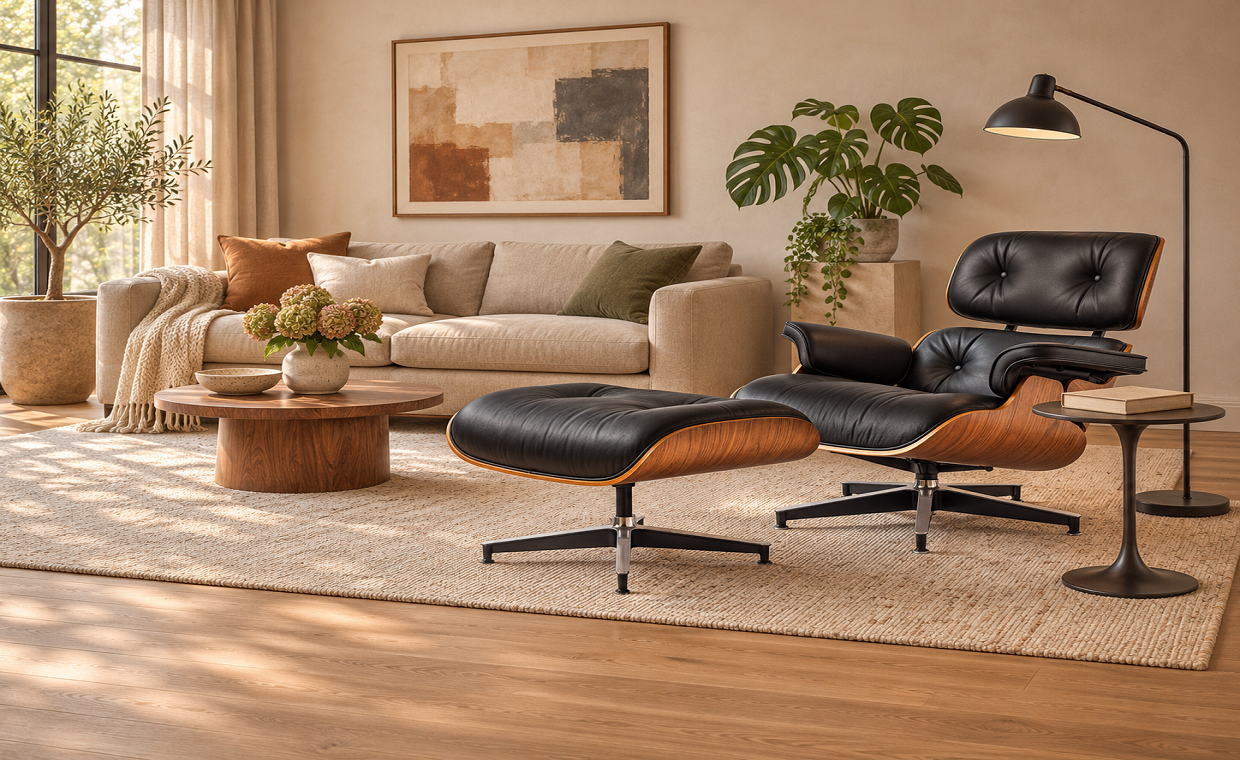
With a chair and a separate footrest, such as Daedalus Designs’ replica Eames Lounge Chair and Ottoman, consider where the ottoman goes when you’re done reading. It can stay in front if people can still pass and you can get out of the chair. If you need to move it, choose a regular spot for it that leaves the way to the sofa clear.
For a chair that stays fixed, try an angle that lets you glance up from the page and see the sofa. If no single angle serves both uses well, set the chair up for what you do more often. A good reading seat that’s a little less social may suit someone who reads every evening and seldom hosts.
Place the Table and Lamp from The Seat
Sit down with a book and try setting it on the table. If you have to reach around the chair arm, move the table closer to the hand you naturally use. If the chair turns for conversation, see whether you can still pick up the book from there.
Once the table is within reach, stand up and see where your feet land. The table needs to leave that space open. If it can’t serve both directions, start by keeping it handy for reading and check that it’s out of your way when you turn toward the sofa.
In its workplace guidance on detecting glare, the Canadian Centre for Occupational Health and Safety suggests looking for reflections from your normal working position. At home, hold an open book as you usually would. If you see a bright patch, shade the page from the lamp with your hand. If the patch disappears, shift or redirect the lamp and check the page again.
Walk Through the Room While the Chair Is in Use
Sit in the chair as you would to read, with your feet on the ottoman if you use one. Ask someone to sit on the sofa and another person to take the usual route through the room. Can they pass without you having to move? Set the book down, face the person on the sofa and get up. Notice where you step and whether a table or footrest is in the way.
Change the piece that caused the problem and repeat that part of the check. If the ottoman is in the way, try its alternate spot and walk the route again. If the chair itself blocks the route, try another position and check the view from both seats.
Keep the arrangement that works on an ordinary evening. When company comes over, you should know whether to turn the chair, move the ottoman or simply leave everything where it is.
Also Read: How to Keep from Sliding Out of Your Leather Recliner?
FAQs – Lounge Chair Placement
1. Where should a lounge chair be placed in a living room?
Place it close enough to the sofa to support conversation while leaving sufficient space for comfortable movement around the seating area.
2. How should I position a lounge chair for reading?
Position the chair where natural or artificial light reaches the reading area without causing glare. It should also provide enough space for a side table and footrest if required.
3. Should a lounge chair face the sofa?
Not necessarily. A slight angle towards the sofa can make conversation easier while still allowing the chair to work as an independent reading seat.
4. How much space should be left around a lounge chair?
Leave enough clear space around the chair for people to sit, stand and walk past comfortably. The exact clearance depends on the room layout and furniture size.
5. Can a lounge chair work in both a reading and conversation area?
Yes. A swivel chair or a chair that can be repositioned easily is particularly useful because it can face the sofa during conversations and turn towards a lamp or bookshelf while reading.
Author & Expert Review
Written By:  Gaurav Mishra | Civil Engineer & Content Writer

| Credentials: B.E. (Mahavir Swami College, Surat), Registered with Bhagwan Mahavir University (BMU). Experience: Civil Engineer with 5+ years of content writing experience, currently writing impactful articles for Gharpedia, part of SDCPL. Expertise: Specializes in writing well-researched content on residential construction, construction materials, design planning, on-site practices, and safety, blending technical accuracy with everyday clarity. Find him on: LinkedIn |
Verified By Expert: Farhan Shaikh – Senior Manager – Architect, SDCPL | Associate Member – IIA

This article has been reviewed for architectural and interior design accuracy by Farhan Shaikh, Senior Manager – Architect at Sthapati Designers & Consultants Pvt. Ltd. As the lead for all architectural and interior projects at SDCPL and an Associate Member of the Indian Institute of Architects (IIA), he brings hands-on experience in architectural planning, interior design, project coordination, and sustainable strategies. His review ensures the content reflects practical design considerations, industry best practices, and real-world applicability across both architecture and interior spaces.
Find him on : LinkedIn