





Table of Contents
Quick Summary
- Choosing the right interior materials before renovation helps homeowners create a cohesive, functional, and long-lasting living space.
- Compare flooring, wall finishes, furniture materials, and decorative elements based on texture, colour, lighting, durability, maintenance, and budget instead of appearance alone.
- Digital 3D visualisation can help preview different material combinations, but physical samples and technical specifications remain essential before making final decisions.
- Review shortlisted materials under different lighting conditions and evaluate their suitability for daily wear, moisture, installation requirements, and maintenance.
- Following a structured material selection process can reduce costly renovation mistakes and help homeowners achieve the desired look with confidence.
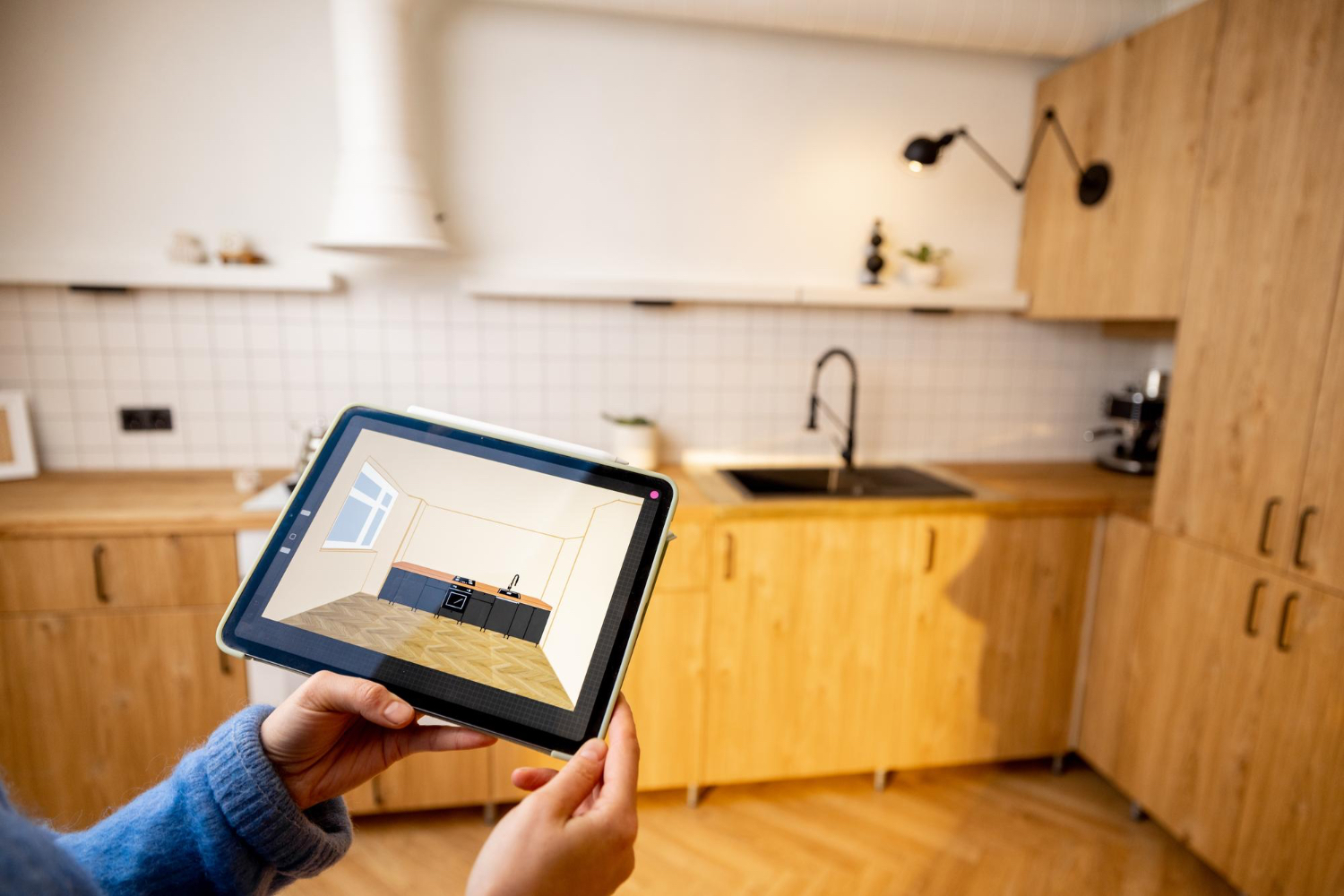
Designers can compare interior materials before renovation by applying different finishes to a digital 3D model, reviewing them under several lighting conditions and then validating the preferred options with physical samples. This process helps homeowners evaluate combinations earlier, but it should support rather than replace on-site checks and professional judgment.
A material that looks attractive in a showroom can appear very different inside a real home. Room size, natural light, surrounding colours and surface area all influence the final effect.
What Should Be Compared Before Materials Are Approved?
A useful material comparison considers more than colour. Designers and homeowners should examine:
- Surface texture
- Gloss or roughness
- Pattern scale and direction
- Colour under natural and artificial light
- Visual relationship with surrounding materials
- Suitability for moisture, heat and daily wear
- Cleaning and maintenance requirements
- Cost and installation limitations
The first six points can be explored through visual mockups. Performance, maintenance and construction suitability must still be confirmed through product specifications, samples and professional advice.
Why Are Small Samples Often Misleading?
A small tile, wood strip or fabric swatch shows the material itself but not necessarily how it will affect an entire room.
A dark stone sample may look elegant when held in the hand. Once applied across a large floor, however, it might make a compact room feel heavier. A strongly patterned marble slab can become visually dominant when used on several walls.
Scale also changes how patterns are perceived. Fine wood grain may disappear from a distance, while repeated tiles can create joints and lines that are not obvious in a single sample.
This is why designers benefit from testing materials both digitally and physically. A 3D model shows the broader composition, while a real sample reveals texture, weight and colour more reliably.
How Can 3D Models Support Material Decisions?

A digital model allows the same room or object to be shown with several finishes without rebuilding the design each time. The designer can keep dimensions and furniture positions consistent while changing only the surface treatment.
AI 3D generators such as Meshy AI can quickly produce individual 3D assets including a sofa, a cabinet, a decorative object from a text prompt or reference image, and its AI texture generator can apply different surface finishes to those assets. The room-level composition and lighting comparison then happens in your visualisation or rendering tool of choice.
The value lies in comparison rather than prediction. A visualisation does not guarantee that the finished room will look identical, but it can reveal whether materials compete with each other, make the room appear too dark or fail to support the intended style.
Which Materials Benefit Most From Visual Comparison?
Flooring
Flooring covers a large area and strongly influences how spacious, warm or formal a room feels. Compare plank or tile direction, pattern scale and transitions between connected spaces.
Do not judge flooring from colour alone. Reflectivity, visible joints and the relationship with wall finishes also matter.
Walls
Wall paint, wallpaper, panels and stone cladding respond differently to daylight. A feature wall may provide balance in one location but overwhelm the room when placed opposite a large window.
When testing wall treatments, include doors, trims and major furniture so the material is reviewed in context.
Furniture
The same furniture shape can communicate different styles depending on its finish. Light oak may feel relaxed, dark wood more formal and painted surfaces more contemporary.
For upholstered furniture, review the scale of the fabric pattern as well as its colour. A pattern that looks subtle on a swatch can become much stronger across a large sofa.
Metal and Decorative Finishes
Brass, chrome, black metal and bronze react strongly to lighting. They should be compared alongside handles, lighting fixtures and other nearby details rather than selected independently.
Using too many unrelated metal finishes can fragment a room, although carefully repeated accents can create a deliberate layered effect.
How Should Lighting Be Included in the Comparison?
Materials do not have a single fixed appearance. Their perceived colour and reflectivity change throughout the day.
At minimum, review each proposed combination under:
- Daylight from the room’s actual window direction
- Warm artificial lighting
- Neutral or cooler task lighting
- Evening conditions with limited natural light
Glossy surfaces can produce glare near windows and bright fixtures. Very rough materials may absorb light and appear darker than expected. Metallic and stone finishes can also change significantly as the viewing angle moves.
Digital lighting is useful for identifying possible issues, but it depends on the accuracy of the model and rendering setup. Physical samples should still be placed in the actual room and observed at different times.
What Might a Living Room Comparison Look Like?
Consider a living room with a medium-grey floor, off-white walls and a large sofa. The homeowner is choosing between three material directions:
| Option | Main materials | Likely visual effect |
| Warm natural | Light oak, beige fabric and brushed brass | Softer and more welcoming |
| Cool contemporary | Dark timber, grey fabric and black metal | Structured and dramatic |
| Light minimal | Pale wood, cream fabric and muted silver | Open and visually quiet |
The designer can apply each direction to the same model and keep the room layout unchanged. This makes it easier to compare the material relationships rather than being distracted by different furniture arrangements.
The exercise may show that the dark timber creates too much contrast with the existing floor. It may also reveal that brushed brass needs to be repeated in a lamp or cabinet handle to look intentional.
The homeowner can then shortlist one or two schemes before ordering larger physical samples.
How Can AI Help Test Surface Variations?
Once a suitable 3D object has been prepared, designers can explore surface directions without manually creating every texture from the beginning. An AI texture generator can apply concepts based on written descriptions or visual references, helping users compare alternatives on the model.
For example, a designer could test:
- Light oak with subtle natural grain
- Dark walnut with a matte finish
- Painted sage-green wood
- Weathered timber with visible wear
The descriptions should be specific enough to produce meaningful differences. “Modern wood” is less useful than “light European oak with fine grain and a low-gloss finish.”
Generated textures still need review. Check whether the grain runs in a believable direction, whether the pattern scale suits the object and whether seams or distortions appear around edges.
What Should Be Checked on the Final Shortlist?
Once the visual options have been reduced, review each material using a consistent checklist.
Visual Fit
- Does the material support the intended mood?
- Does its pattern suit the size of the room or object?
- Does it compete with any existing feature?
- Does it work in daylight and artificial light?
Practical Fit
- Is it suitable for the room’s moisture and heat conditions?
- Can it tolerate the expected level of wear?
- How should it be cleaned and maintained?
- Will it fade, stain or scratch easily?
Construction Fit
- Is the material available in the required dimensions?
- Does it need a particular substrate or installation method?
- Will pattern matching create additional waste?
- Can the budget accommodate delivery, labour and maintenance?
A material should only move forward when it works across all three categories.
What Can 3D Visualisation Not Tell You?
A rendering cannot fully reproduce touch, temperature, acoustic behaviour or the natural variation found in materials such as timber and stone. Screens also display colours differently, which makes exact colour approval unreliable.
A digital model cannot confirm whether a tile is slippery, a fabric is comfortable or a surface will resist staining. It also does not account automatically for imperfect walls, installation tolerances or variation between manufacturing batches.
Before purchasing, request physical samples and place them in the intended room. For major surfaces, consider a larger sample or a small test installation.
A Better Decision Before Construction Starts
Material visualisation gives designers and homeowners a shared way to compare ideas before money is committed to installation. It can identify unsuitable combinations, support clearer feedback and reduce decisions based only on isolated samples.
The most reliable process combines digital comparison with physical testing. Use the 3D model to understand the complete space, then use real samples and technical information to confirm that the selected materials will perform as expected.
Also Read: Materials Buying Guide for Whole Home Renovations
FAQs on How to Compare Interior Materials
01. Should materials be chosen before furniture?
The two decisions should be coordinated. Fixed surfaces usually have a longer lifespan, but furniture scale and colour can significantly affect whether the complete scheme feels balanced.
02. Can a 3D render show the exact final colour?
No. It can provide a useful approximation, but screen calibration, lighting settings and material variation prevent exact colour prediction.
03. How many material combinations should be compared?
Three distinct directions are often enough for an early comparison. Too many minor variations can make the decision harder without providing additional insight.
Author & Expert Review
Written By:  Nidhi Patel | Civil Engineer & Content Writer

| Credentials: B.E. (Mahatma Gandhi Institute of Technical Education and Research Centre), Registered with Gujarat Technological University (GTU). Experience: Civil Engineer with 3+ years of content writing experience, currently writing blogs for Gharpedia, part of SDCPL. Expertise: Specializing in SEO-optimized blogs and long-form articles focused on home improvement, construction, interiors and architect topics. I create well-researched, reader-focused content that balances technical accuracy with clarity, making complex subjects easy to understand. Find her on: LinkedIn |
Verified By Expert: Farhan Shaikh – Senior Manager – Architect, SDCPL | Associate Member – IIA

This article has been reviewed for architectural and interior design accuracy by Farhan Shaikh, Senior Manager – Architect at Sthapati Designers & Consultants Pvt. Ltd. As the lead for all architectural and interior projects at SDCPL and an Associate Member of the Indian Institute of Architects (IIA), he brings hands-on experience in architectural planning, interior design, project coordination, and sustainable strategies. His review ensures the content reflects practical design considerations, industry best practices, and real-world applicability across both architecture and interior spaces.
Find him on : Linkedin