






Table of Contents
Quick Summary
- A container peak roof shelter creates covered outdoor space without permanent construction.
- Ideal for renovation sites, construction zones, and hospitality setups.
- Protects materials, tools, and workers from harsh weather.
- Improves workflow efficiency and reduces project delays.
- Easy to install between shipping containers or fixed supports.
- Requires proper anchoring and site preparation.
- Performance depends on weather conditions and maintenance.
- Supports safe and organized work environments.
- Useful for seasonal storage and temporary expansion needs.
- A cost-effective alternative to permanent structures.
Across Canada, outdoor space has become more valuable for residential improvement projects, hospitality site planning, and seasonal construction work. Property owners, renovation teams, and venue operators often need covered space that can be set up faster than a permanent building and used in changing weather conditions. In this context, a Container Peak Roof Shelter has become a practical option for creating protected work and storage space without a full conventional structure.
This type of shelter is especially relevant in a Canadian setting, where snow, rain, wind, and short outdoor working seasons can affect project timing. For home improvement professionals, builders, hotel site coordinators, and outdoor expansion teams, the ability to protect materials, equipment, and people can improve planning and reduce disruption. A container peak roof shelter is often used to bridge the gap between open outdoor space and fully enclosed construction.
What a Container Peak Roof Shelter Is and How It Is Used
Courtesy - tmgindustrial
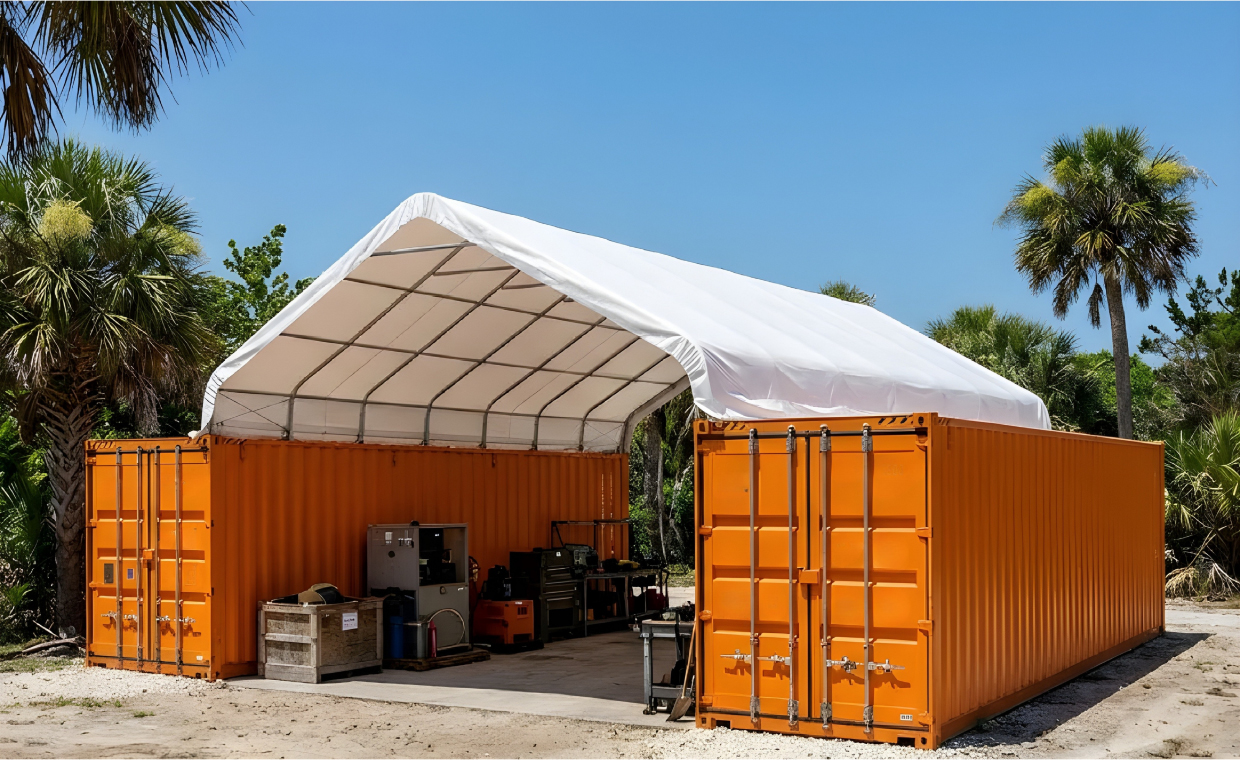
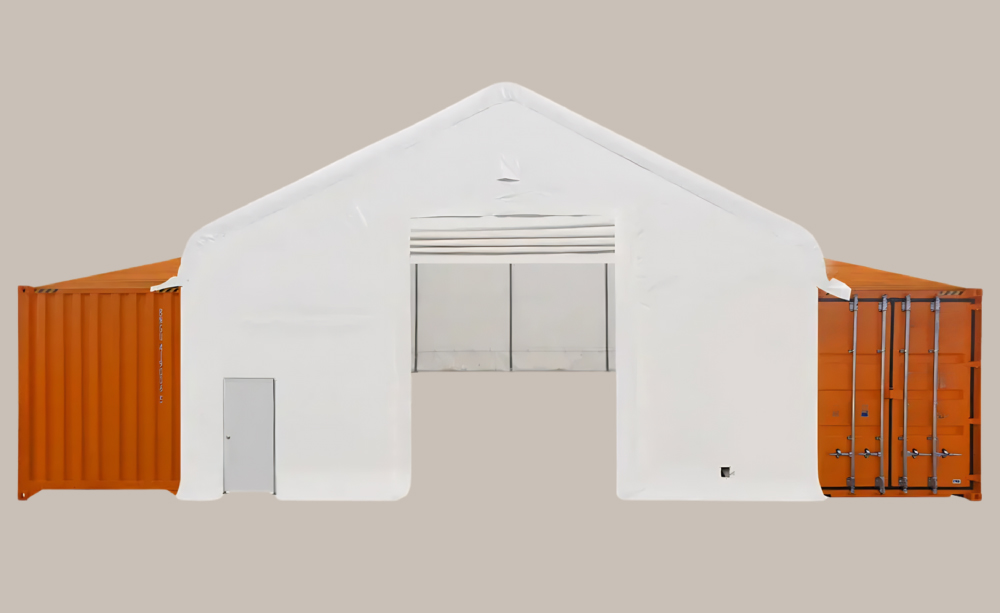
A container peak roof shelter is a covered structure installed between or around shipping containers or similar support points. It commonly uses a steel frame and a heavy fabric cover to create an overhead protected area. In practical use, it can serve as a temporary workshop, event support zone, equipment shelter, or storage area for renovation and building projects.
Common Use Cases
- Covered staging space for home renovation materials.
- Protected work area during outdoor construction.
- Temporary service area for hotel and resort maintenance.
- Shelter for landscaping and outdoor expansion equipment.
- Seasonal storage for tools, lumber, and site supplies.
Because the structure creates usable covered space quickly, it is often considered when timing, site flexibility, and weather protection are major concerns.
Why Efficiency, Safety, and Productivity Matter
In renovation and outdoor construction, delays often come from weather exposure, material damage, and repeated movement of tools and supplies. A covered shelter can support better daily flow by keeping critical items closer to the work area and reducing the need to stop when conditions change.
- It can reduce handling time for materials.
- It can help keep work zones organized.
- It can lower the risk of weather-related damage.
- It can support more consistent scheduling.
For hospitality sites, covered outdoor space can also improve service preparation, temporary storage, and event setup. In each case, efficiency is closely tied to safety and site control.
Technical Considerations Before Installation
Courtesy - tmgindustrial
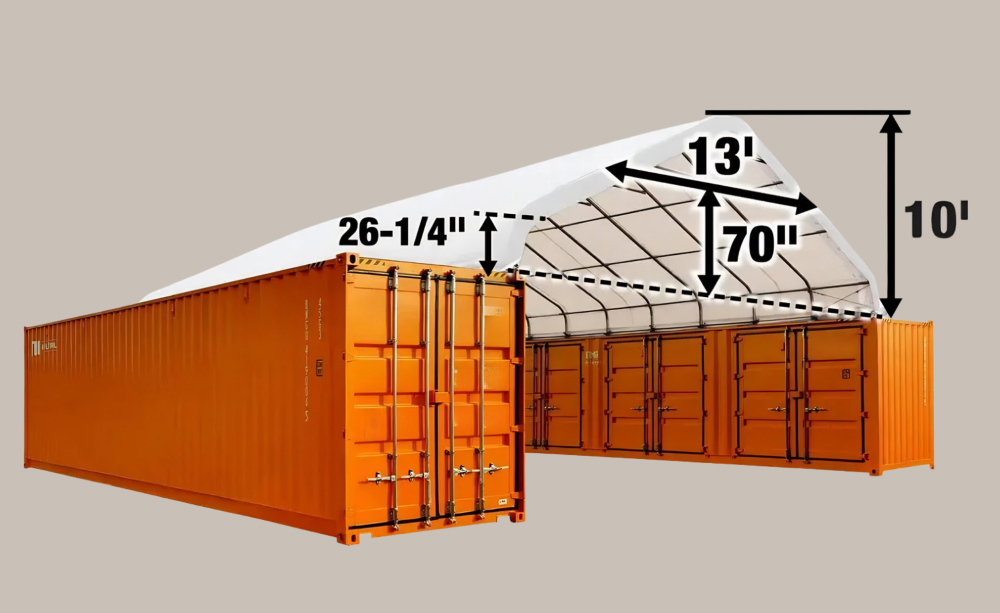
Before selecting a container peak roof shelter, users should review the technical needs of the site. The goal is not only to create covered space, but also to ensure that the structure fits the expected workload and local environment.
- Span width and total covered area.
- Frame strength and connection points.
- Cover material durability and weather resistance.
- Site drainage and ground stability.
- Access needs for workers, carts, or light equipment.
A shelter with enclosed end walls may provide better protection from wind and blowing rain, while overall height and clearance will affect how the space can be used.
Factors That Affect Performance
The performance of a container peak roof shelter depends on more than its size. Real world effectiveness is shaped by site conditions and installation quality.
- Snow load and wind exposure.
- Quality of anchoring and frame assembly.
- Fabric tension and cover condition.
- Frequency and type of use.
- Routine inspection and maintenance.
In Canada, weather is often the most important variable. A structure that performs well in one region may require different planning in another region with heavier snow or stronger wind.
Safety Best Practices
Safety should guide both installation and daily use. Even a temporary shelter needs the same disciplined approach that applies to other site structures.
- Follow site specific anchoring and assembly instructions.
- Inspect the frame, fasteners, and cover regularly.
- Remove snow buildup when required.
- Keep entrances and walk paths clear.
- Do not exceed intended storage or usage limits.
Teams should also plan for lighting, drainage, and safe movement of materials under the shelter.
Equipment, Tools, and Useful Accessories
Container shelters are often used with supporting tools and site equipment, including:
- Shipping containers or fixed support bases.
- Ground anchors and fastening hardware.
- Portable lighting systems.
- Storage racks and material carts.
- Weather protection panels and door systems.
Advantages and Limitations
Advantages
- Creates covered space without full building construction.
- Supports flexible outdoor expansion.
- Helps protect materials and equipment.
- Can improve workflow in changing weather.
Limitations
- Performance depends heavily on installation quality.
- Not a replacement for every permanent structure.
- May require seasonal maintenance and inspection.
- Site suitability varies by local climate and ground conditions.
A Real-World Example
A resort property in Canada needed temporary covered space during an outdoor dining area renovation. By using a container peak roof shelter near the work zone, the team created a protected area for tools, finish materials, and staging. This reduced daily setup time, limited weather exposure, and helped the project continue during light rain. The same structure later supported outdoor service storage during peak visitor season.
Conclusion and Industry Direction
A container peak roof shelter offers a practical way to expand usable outdoor space for renovation, building, hospitality, and site improvement work. Its value comes from flexibility, weather protection, and the ability to support safer and more organized operations.
Looking ahead, demand for adaptable outdoor structures is likely to grow as project teams seek faster deployment, better site efficiency, and more resilient seasonal planning. For readers who want a technical reference in context, a resource such as the Container Peak Roof Shelter product page can help illustrate how these structures are configured for real outdoor use.
Also Read: Hassle-Free Tips for Moving Large Containers on Your Property
Container Peak Roof Shelter FAQs
1. What is a container peak roof shelter used for?
A container peak roof shelter is used to create temporary covered spaces for construction, renovation, storage, and outdoor operations. It helps protect materials and workers from weather conditions.
2. Is a container peak roof shelter suitable for all weather conditions?
Yes, but its performance depends on proper installation, anchoring, and material quality. It can handle rain, wind, and moderate snow, but requires maintenance in extreme climates.
3. How long does it take to install a container peak roof shelter?
Installation time varies based on size and site conditions, but most shelters can be set up within a few hours to a couple of days.
4. Can it replace a permanent structure?
No, a container peak roof shelter is a temporary solution. While it provides flexibility and cost savings, it is not a full replacement for permanent buildings.
5. What factors should be considered before installation?
Key factors include site stability, drainage, wind exposure, snow load, frame strength, and access requirements.
6. Is maintenance required for these shelters?
Yes, regular inspection of the frame, fabric cover, and anchors is necessary to ensure safety and long-term performance.
Courtesy - tmgindustrial ( Image 1)
Author & Expert Review
Written By:  Nidhi Patel | Civil Engineer & Content Writer

| Credentials: B.E. (Mahatma Gandhi Institute of Technical Education and Research Centre), Registered with Gujarat Technological University (GTU). Experience: Civil Engineer with 3+ years of content writing experience, currently writing blogs for Gharpedia, part of SDCPL. Expertise: Specializing in SEO-optimized blogs and long-form articles focused on home improvement, construction, interiors and architect topics. I create well-researched, reader-focused content that balances technical accuracy with clarity, making complex subjects easy to understand. Find her on: LinkedIn |
Verified By Expert:  Ravin Desai – Co Founder – Gharpedia | Co Founder – 1 MNT | Director – SDCPL

This article has been reviewed for technical accuracy by Ravin Desai, Co-Founder of Gharpedia and Director at Sthapati Designers & Consultants Pvt. Ltd. With a B.Tech. in Civil Engineering from VNIT Nagpur and an M.S. in Civil Engineering from Clemson University, USA, and over a decade of international and Indian experience in the construction and design consultancy sector, he ensures all technical content aligns with industry standards and best practices.
Find him on: LinkedIn