






Table of Contents
Quick Summary
- Start with the basics: Understand why absorption and true soundproofing are different.
- Seal first: Close gaps around doors, service penetrations, sockets and ceilings where sound can escape.
- Build the walls: Use additional mass, damping layers and separated surfaces for stronger sound isolation.
- Cover other paths: Floors, ceilings and windows can also allow unwanted noise to travel.
- Choose the right level: Match the soundproofing approach to whether you need general noise reduction or genuine call privacy.
- Consider alternatives: Prefabricated acoustic pods can provide a practical solution where structural alterations are not possible.
Courtesy - Magnific
Soundproofing a home office comes down to two jobs: stopping noise getting in, and stopping your calls leaking out. Both are won at the building level, with mass, sealing, and the right treatment of walls, doors, floors, and ceilings. Soft furnishings help a room sound calmer, but real separation is a construction problem. Here is how to approach it in the right order.
Absorbing is Not Soundproofing
The first thing to get straight is the difference between two words people use as if they mean the same thing.
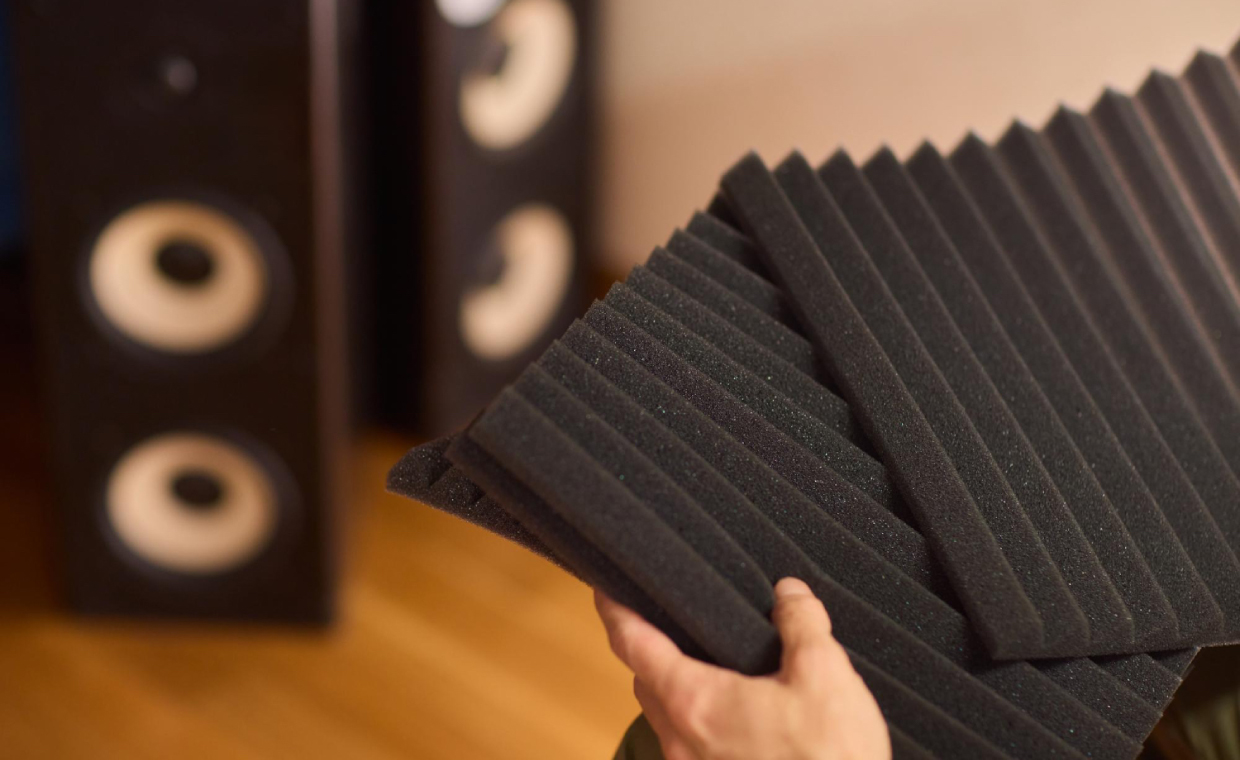
Absorbing reduces echo inside a room. Soundproofing stops sound passing between rooms. Foam panels and soft furnishings absorb. They do almost nothing to block a conversation travelling through a wall or under a door.
If your goal is privacy for calls, or peace from the rest of the house, you are solving a blocking problem, and blocking depends on mass and sealing, not on decoration.
Seal the Gaps First
Courtesy - Magnific
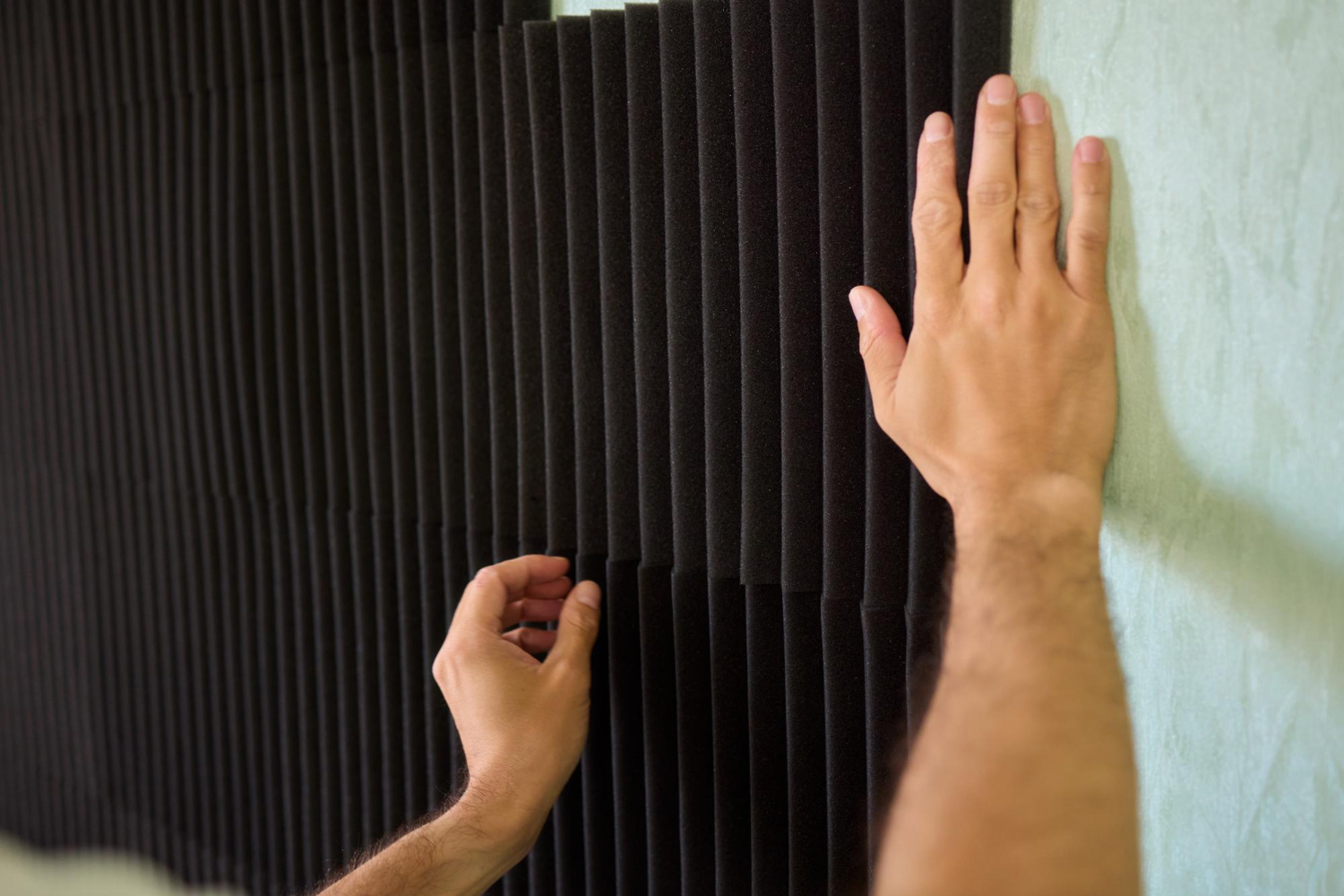
Before adding any material, close the gaps. Sound behaves like water and escapes through the smallest opening.
- Fit a solid-core door in place of a hollow one, and add weather seals around the frame.
- Close the gap under the door with a drop seal or threshold seal.
- Fill and seal service penetrations, sockets, and any holes where pipes or cables pass through the wall.
- Check the ceiling. In many homes the wall stops at a suspended ceiling, leaving an open path over the top into the next room.
Sealing is the cheapest and highest-impact step. A well-built wall with a bad door or an open gap performs like the gap, not the wall.
Treat the Walls
Once the gaps are closed, add mass and separation to the walls that matter most.
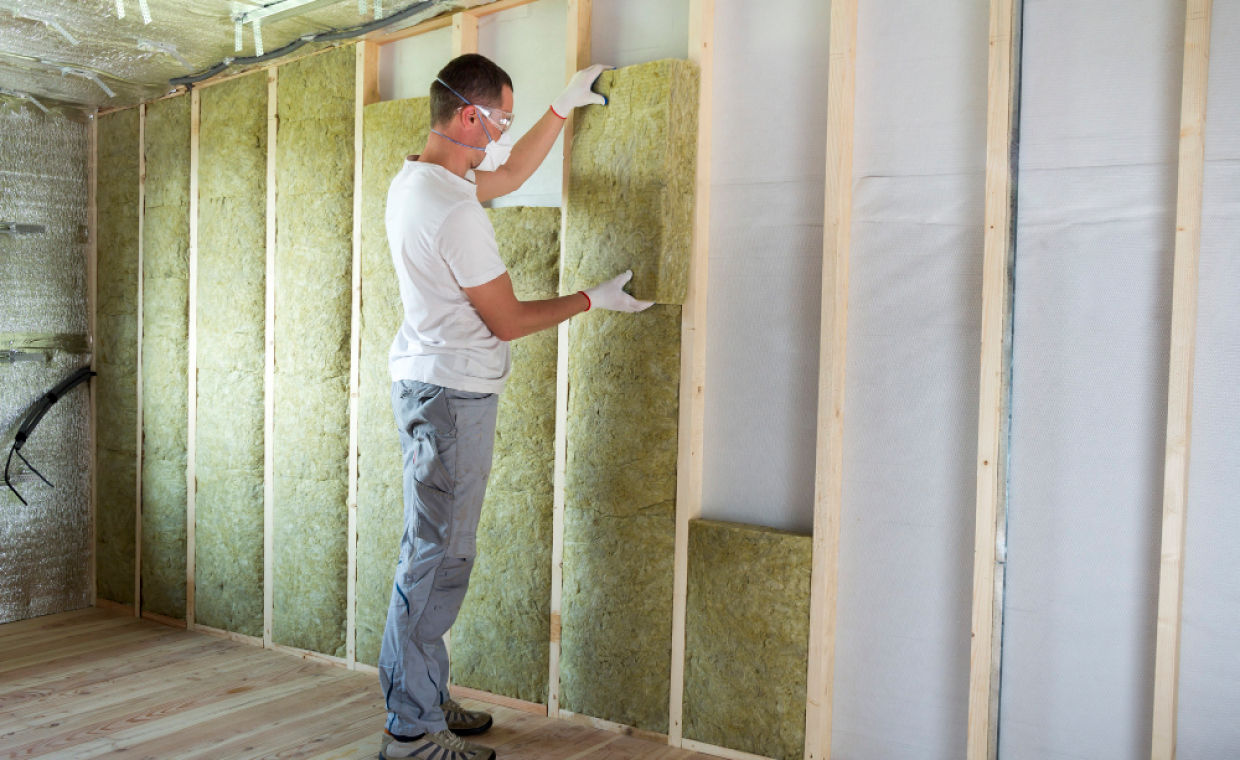
Extra layers of dense board, ideally with a damping layer between them, add the mass that blocks sound. For a bigger improvement, an independent stud line or resilient bars separate the new surface from the original wall, so vibration does not carry straight through. The heavier and less connected the wall, the more it blocks.
Prioritise the wall between the office and the noisiest neighbour, whether that is a living room, a shared wall, or a hallway. There is little point treating all four walls equally when one is doing most of the damage.
Floors and Ceilings
Courtesy - Magnific
Sound travels through structure, not just air, so floors and ceilings matter as much as walls.
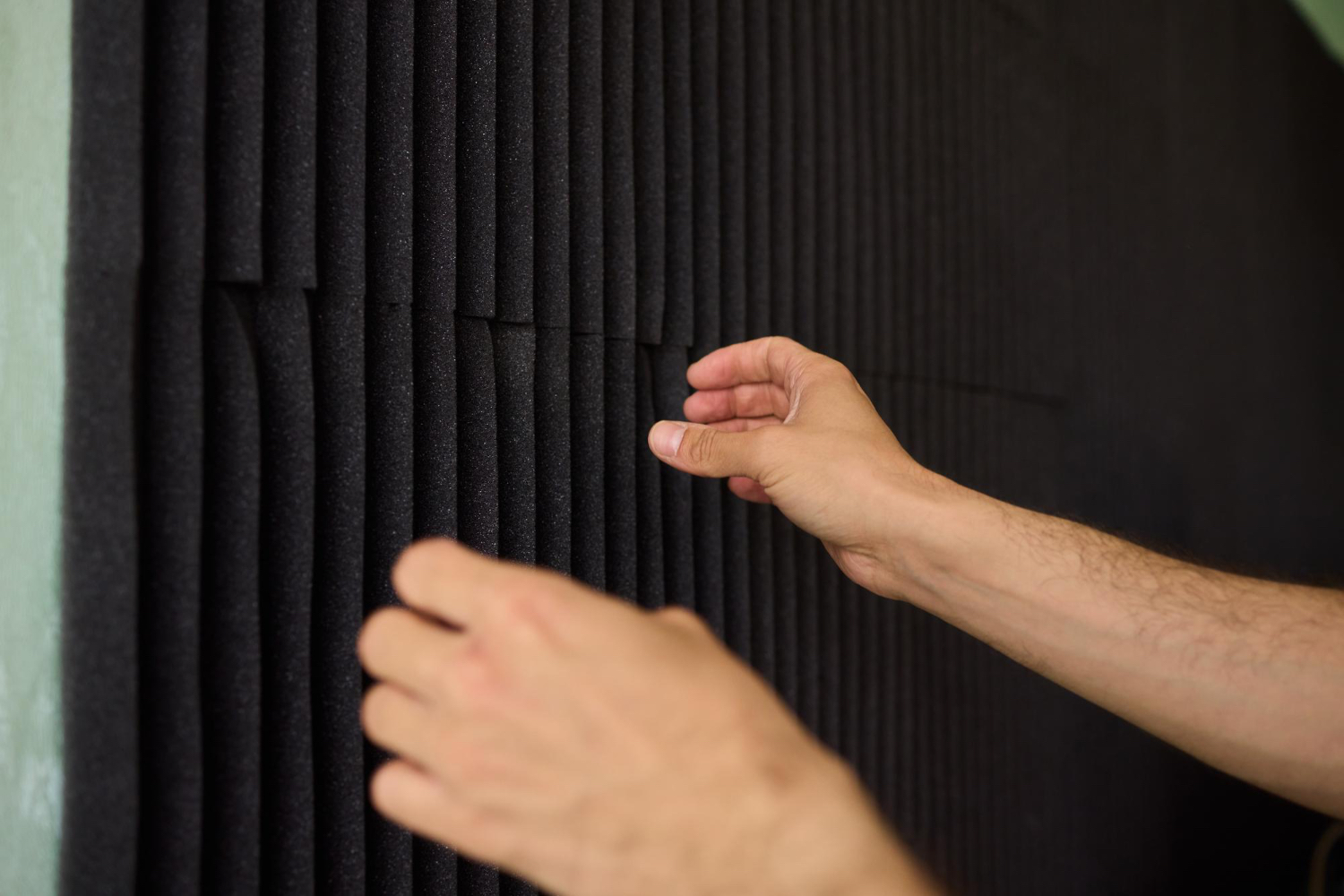
On floors, a dense underlay, an acoustic mat, or simply a thick rug reduces both impact noise and echo. On ceilings, the same logic as walls applies: mass, a damping layer, and ideally resilient fixings to break the path through the structure. In a room below a busy space, the ceiling is often the weakest link, and the one people forget.
Do not forget the windows. A single-glazed window is often the weakest point in an external wall, and secondary glazing, a second internal pane with an air gap, blocks far more than sealing the frame alone.
How Much Do You Actually Need?
Not every home office needs studio-level treatment. Match the effort to the goal.
- To take calls without disturbing the rest of the house, sealing the door and adding some mass to one wall is often enough.
- To keep confidential calls genuinely private, you need proper blocking on every path: walls, door, ceiling, and gaps.
- To work through serious noise, such as a workshop or a busy road, you are into full isolation, and a specialist may be worth the cost.
Deciding the target first stops you overspending on one wall while ignoring the door that undoes it.
When Building Is Not Worth It

Courtesy: Magnific
Full soundproofing is disruptive and, in a rented home or a shared building, often not allowed. This is where a self-contained option makes sense.
A prefabricated acoustic pod is a small, enclosed booth or room that already combines the things a proper build would give you: a sealed, dense envelope, an absorptive lining, and isolating feet. It needs no construction, so it suits renters and anyone who does not want to rebuild a room. Ranges such as prefabricated office pods from SoundBox Store run from single-person booths upward, and can move if you do. When comparing them, look for a measured speech-reduction figure, rated to ISO 23351-1, so you are judging performance rather than looks.
The Bottom Line
Soundproof a home office in order: seal the gaps, add mass to the walls that matter, then treat the floor and ceiling if noise still travels through the structure. If a full build is too disruptive or not permitted, a prefabricated pod delivers the same principles in a movable box. Either way, remember the rule that decides everything: blocking is about mass and sealing, and absorption alone will never make a room private.
Also Read: Why Designers Are Switching to PET Felt for Sound Control?
Frequently Asked Questions – Home Office Soundproofing
1. What is the most effective way to soundproof a home office?
Start by sealing gaps around the door, windows and service penetrations. Then improve the walls with additional mass and, where necessary, resilient or independent construction.
2. Do acoustic foam panels soundproof a home office?
No. Acoustic foam mainly absorbs reflections and reduces echo inside the room. It does not provide significant sound isolation through walls or doors.
3. Is a solid-core door better for a soundproof office?
Yes. A solid-core door provides considerably more mass than a hollow-core door. Combining it with perimeter seals and a drop seal can further reduce sound leakage.
4. Can I soundproof a home office without rebuilding the walls?
Yes. Sealing gaps, upgrading the door, adding suitable wall layers and treating other weak points can improve performance without completely rebuilding the room. A prefabricated acoustic pod is another option where construction is impractical.
5. How can I make confidential calls more private?
For genuine speech privacy, address every potential transmission path, including the door, walls, ceiling, floor, windows and service penetrations. Treating only the wall behind your desk may not be enough.
Courtesy - Featured Image(Magnific)
Author & Expert Review
Written By:  Gaurav Mishra | Civil Engineer & Content Writer

| Credentials: B.E. (Mahavir Swami College, Surat), Registered with Bhagwan Mahavir University (BMU). Experience: Civil Engineer with 5+ years of content writing experience, currently writing impactful articles for Gharpedia, part of SDCPL. Expertise: Specializes in writing well-researched content on residential construction, construction materials, design planning, on-site practices, and safety, blending technical accuracy with everyday clarity. Find him on: LinkedIn |
Verified By Expert: Ravin Desai – Co Founder – Gharpedia | Co Founder – 1 MNT | Director – SDCPL

This article has been reviewed for technical accuracy by Ravin Desai, Co-Founder of Gharpedia and Director at Sthapati Designers & Consultants Pvt. Ltd. With a B.Tech. in Civil Engineering from VNIT Nagpur and an M.S. in Civil Engineering from Clemson University, USA, and over a decade of international and Indian experience in the construction and design consultancy sector, he ensures all technical content aligns with industry standards and best practices.
Find him on: LinkedIn