




Table of Contents
Quick Summary
- Discover the common reasons a furnace stops heating, including thermostat errors, dirty filters, electrical faults and ignition problems.
- Follow seven furnace troubleshooting steps to check the thermostat, air filter, power supply, pilot light, gas supply, vents and condensate line.
- Learn how restricted airflow and blocked flue pipes can affect furnace performance.
- Identify warning signs such as unusual noises, yellow flames and frequent cycling that require professional attention.
- Understand when to contact a licensed technician for safe and effective furnace heating repair.
- Explore preventive maintenance practices, including regular filter replacement and seasonal servicing, to reduce the risk of unexpected breakdowns.
Courtesy – Magnific
Is your house getting colder by the hour?
You raise the thermostat. The furnace comes on. Only cold air blows out of the vents… or maybe no air at all. It rarely happens, but when it does… It’s the worst. Especially in winter. And of course, it always happens on the coldest night.
Here’s the good news:
Most furnace issues are easy to fix. Before spending money on furnace heating repair, try these simple tips in less than 30 minutes.
Here is how to do it…
Inside this guide:
- Why Your Furnace Stops Heating
- 7x Steps to Troubleshoot Your Furnace
- When To Call A Pro for Furnace Heating Repair
Why Your Furnace Stops Heating
Your furnace has a lot in common with your car. Both need fuel, air, a spark and a working control system to function. If just one of those parts fails… the whole system stops making heat.
That matters because many homes use gas heat. Natural gas heats more than 46% of U.S. households, most of which use a gas furnace.
The most common reasons a furnace stops heating are:
- Wrong thermostat settings
- A dirty air filter
- A tripped breaker or switch
- A pilot light or ignitor problem
- A blocked flue or drain line
Some problems can be remedied within 2 minutes. Others require a certified technician with specialized tools and equipment. If you live in a colder northern city with a heating season that lasts many months, a quick call for furnace repair Albany, NY can prevent a minor heating issue from becoming a frozen pipe or damaged heat exchanger.
Here are some steps you can work through as you make the call:
7x Steps to Troubleshoot a Furnace That’s Not Heating
Try each step in sequence. They are in order from the simplest solution to the more complicated.
FOR SAFETY: If you smell gas, quit what you are doing. Immediately leave the building and CALL your gas company from a neighbor’s house.
Step #1: Check The Thermostat
That seems too simple. But your thermostat is the #1 thing homeowners forget to check.
Ensure it’s on “Heat” and not “Cool” or “Off.” Next, set the temperature 5 degrees higher than room temperature. Now check the fan setting. If it is set to “On” instead of “Auto”, the fan will blow all day…even when the furnace is not heating.
Running on batteries? Replace the batteries. A dead battery will cut power to the signal going to your furnace.
Step #2: Replace The Air Filter
Dirty filters are the number one reason your furnace runs but doesn’t heat adequately.
A dirty filter restricts airflow. Your furnace must work harder to distribute warm air throughout your home. Did you know a dirty filter can cause a 15% drop in your furnace’s efficiency?
And here’s the kicker…
One of the quickest ways to trip most furnaces’ safety switch that cuts off the burners when they overheat is restricted airflow.
Remove the filter and hold it up to the light. If you can’t see light through it, throw it away and insert a new one. Inspect your filter monthly during the winter months, and replace it at least every 3 months.
Step #3: Check The Power
Your furnace needs electricity to run, even if it burns gas.
Go to your breaker box and locate a tripped breaker. Reset it by switching it fully off, then back on.
Next, make sure the furnace power switch is on. This is generally a standard light switch located on or near the furnace.
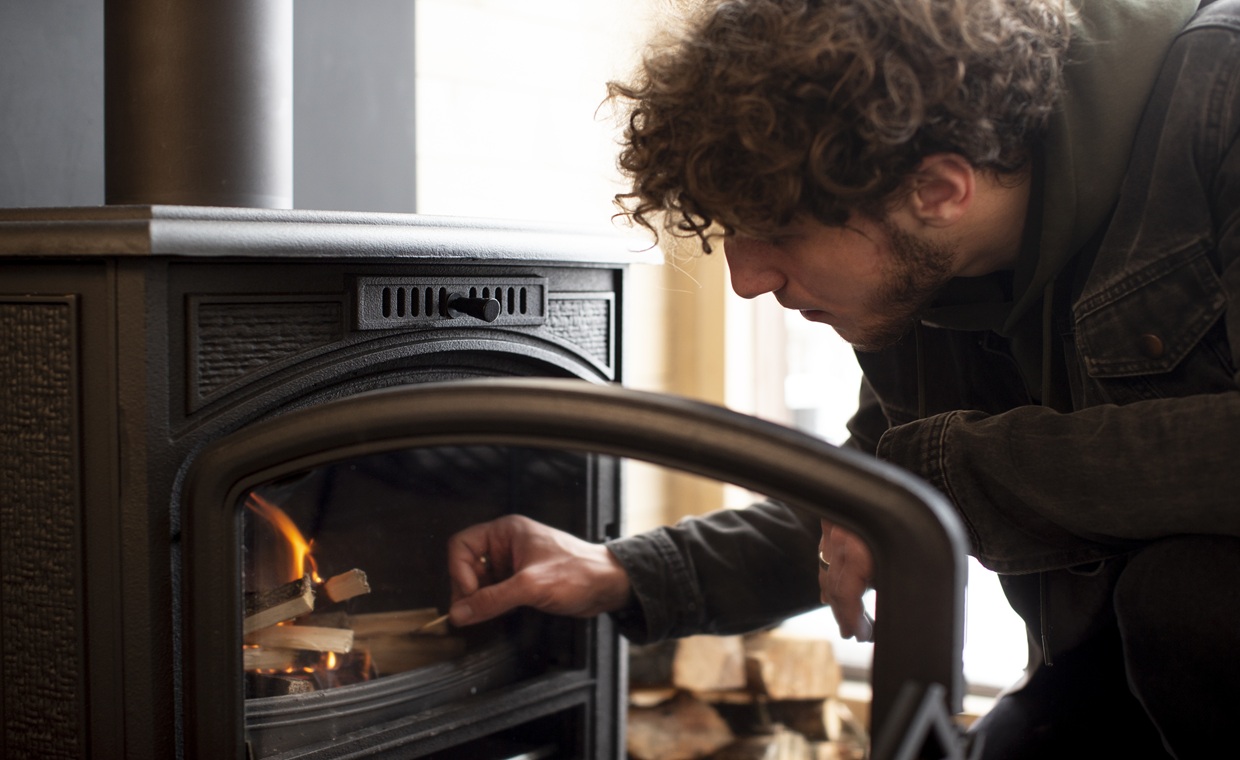
Step #4: Look At the Pilot Light or Igniter
Older furnaces have a pilot light. This is a small blue flame used to light the burners.
If your pilot light is out, see the lighting instructions printed on the label inside your furnace door. If your pilot continues to go out you may have a bad thermocouple. That requires professional repair.
Newer models have an electronic ignitor. You will usually hear a click or see a bright orange glow when your furnace attempts to ignite. If there is no glow, the ignitor could be cracked or glazed over.
Step #5: Check The Gas Supply
Locate the gas valve on the pipe that connects to your furnace. The handle should be parallel to the pipe. If it lays perpendicular, the gas is turned off.
Also test your other gas appliances to see if they run. Try your stove or water heater to see if they work. If they don’t work, then you have a problem with your gas supply, not the furnace.
Step #6: Clear The Vents & Flue
Walk through your home and check every supply and return vent.
Are they open? Are any blocked by furniture, rugs or curtains?
If you have blocked vents, you will have cold rooms. Closing too many vents can cause your furnace to overheat and turn off.
Do you have a high-efficiency furnace? Go outside and locate the 2x white plastic pipes attached to the outside of your house. Snow, ice or leaves can clog them. If they clog, the furnace turns off automatically as a safety precaution.
Step #7: Check The Condensate Line
This one surprises many homeowners.
Condensing furnaces produce water while they operate. This water drips down a small plastic tube into a floor drain or pump.
If the line gets clogged or frozen, there’s a safety switch that turns off the furnace from heating. Check whether water is puddling around the bottom of the unit. Sometimes you can flush the line with warm water to restore operation.
Pretty simple, right?
When To Call A Pro For Furnace Heating Repair
So you’ve worked through all 7x steps and your furnace still isn’t heating?
It’s time to bring in the professionals. Some fixes aren’t DIY safe.
Call a licensed technician if you notice:
- A smell of gas or rotten eggs
- Loud banging, squealing or grinding sounds
- A yellow or flickering burner flame
- The furnace turns on and off every few minutes
- Your carbon monoxide alarm goes off
A yellow flame is cause for alarm. It could be signalling incomplete combustion, producing carbon monoxide. Don’t ignore this.
The Bottom Line On A Cold Furnace
A furnace not heating doesn’t necessarily mean an expensive repair. Oftentimes the solution is fast and inexpensive… You just have to know where to look.
To quickly recap:
- Check the thermostat settings and batteries
- Swap out the dirty air filter
- Reset the breaker and power switch
- Check the pilot light, gas valve and vents
- Clear the flue pipes and condensate line
Try these steps first. If your heat still will not turn on, call a technician before a minor issue becomes a major one.
…Oh, and by the way… the best furnace heating repair is the repair that you don’t have to make. Change your filter regularly and schedule a tune-up before it gets cold. Your furnace (& pocketbook) will thank you!
Also Read: Best Tips for Choosing Local Furnace Installation Experts
FAQs – Furnace Troubleshooting
Q1. What is the first step in furnace troubleshooting?
Start by checking the thermostat settings. Ensure it is set to ‘Heat’, select a temperature above the current room temperature and check whether the fan is set to ‘Auto’. Replace the batteries if necessary.
Q2. Why is my furnace running but not heating the house?
A furnace may run without producing sufficient heat because of a dirty air filter, ignition failure, incorrect thermostat settings, restricted airflow or a gas supply issue. Check the basic components first and contact a technician if the problem persists.
Q3. Can a dirty air filter stop a furnace from heating?
Yes. A dirty air filter restricts airflow, which can cause the furnace to overheat and trigger a safety shutdown. Inspect the filter regularly and replace it according to the manufacturer’s recommendations.
Q4. Why does my furnace blow cold air instead of warm air?
Common causes include incorrect fan settings, ignition problems, restricted airflow and safety controls shutting down the burners. If the furnace continues blowing cold air after basic checks, arrange a professional inspection.
Q5. When should I call a professional for furnace troubleshooting?
Call a licensed technician if the furnace repeatedly shuts down, makes unusual noises, has persistent ignition problems or fails to produce heat after basic checks. If you smell gas, leave the building immediately and contact your gas supplier or emergency service from a safe location.
Courtesy - Magnific
Author & Expert Review
Written By:  Gaurav Mishra | Civil Engineer & Content Writer

| Credentials: B.E. (Mahavir Swami College, Surat), Registered with Bhagwan Mahavir University (BMU). Experience: Civil Engineer with 5+ years of content writing experience, currently writing impactful articles for Gharpedia, part of SDCPL. Expertise: Specializes in writing well-researched content on residential construction, construction materials, design planning, on-site practices, and safety, blending technical accuracy with everyday clarity. Find him on: LinkedIn |
Verified By Expert: Farhan Shaikh – Senior Manager – Architect, SDCPL | Associate Member – IIA

This article has been reviewed for architectural and interior design accuracy by Farhan Shaikh, Senior Manager – Architect at Sthapati Designers & Consultants Pvt. Ltd. As the lead for all architectural and interior projects at SDCPL and an Associate Member of the Indian Institute of Architects (IIA), he brings hands-on experience in architectural planning, interior design, project coordination, and sustainable strategies. His review ensures the content reflects practical design considerations, industry best practices, and real-world applicability across both architecture and interior spaces.
Find him on : LinkedIn