




Table of Contents
Quick Summary
- Start by identifying the flooring material before choosing a cleaning method.
- Learn why hardwood requires careful moisture control and manufacturer-approved cleaning.
- Understand how laminate joints can be damaged by excess water and heat.
- Explore effective cleaning approaches for ceramic and porcelain tiles, including grout care.
- Find out how vinyl and LVP respond to moisture and steam cleaning.
- See where wet-dry vacuum cleaners can make everyday hard-floor cleaning easier.
- Understand when steam cleaning is appropriate and when it should be avoided.
- Learn why controlling water and removing dirty liquid is more important than using excessive water.
Floors are among the most heavily used surfaces in any home, yet they’re often cleaned with the same routine regardless of the material underfoot. That can be a costly mistake. Hardwood, laminate, tile and vinyl react differently to moisture, heat and repeated washing, and a steam function that loosens dried kitchen residue on tile may be unsuitable for laminate whose manufacturer prohibits heat at the joints. The safest rule is simple: identify the flooring first, then choose the cleaning method.
Why Floor Material Should Determine the Method
The biggest variables are moisture tolerance, which varies enormously between tile and timber; heat, since steam can loosen residue but may affect certain finishes; and frequency, since a method used once for a stubborn stain differs from one repeated daily for years. Regular maintenance should be as gentle as possible while still achieving the result.
Hardwood Flooring
“Wood floor” can mean very different constructions – factory finished, oiled, waxed, engineered rather than solid – and these differences affect how much moisture the surface tolerates. The main risk is standing water reaching the wood through joints or damaged finish, which over time can cause swelling or finish deterioration. Remove grit before wet cleaning, wipe spills promptly, and use only the damp-cleaning method the manufacturer has approved – never assume all “sealed wood” is steam-safe. Some manufacturers prohibit steam entirely, so use it only where explicitly permitted.
Laminate Flooring
Laminate typically has a decorative surface over a manufactured core, and the vulnerable point is the joint between boards. Water reaching the core through seams can cause swelling that often doesn’t reverse. A safer routine uses minimal moisture, picks up water quickly, and pays extra attention to seams – for laminate, less water is almost always safer than more. Steam should never be assumed safe here either, since heat and moisture can enter joints even when the surface looks resistant.
Ceramic and Porcelain Tile
Tile is generally far more tolerant of wet cleaning, which is why it’s common in kitchens and bathrooms. The bigger challenge is usually grout, which retains dirt even when the tile itself looks clean. Sweep loose grit first, use a suitable damp-cleaning method, and give grout separate attention when needed. Natural stone tile is different again – acidic cleaners can damage marble or limestone, so stone needs products specific to the material.
Vinyl and Luxury Vinyl Plank
Vinyl and LVP are often more moisture-resistant than laminate, but installation type and manufacturer heat limits still vary. A product marketed as “water-resistant” shouldn’t be treated as immune to prolonged standing water – remove grit regularly, wipe liquid promptly, and check whether steam is specifically permitted before using it.
Where Wet-Dry Vacuums Fit
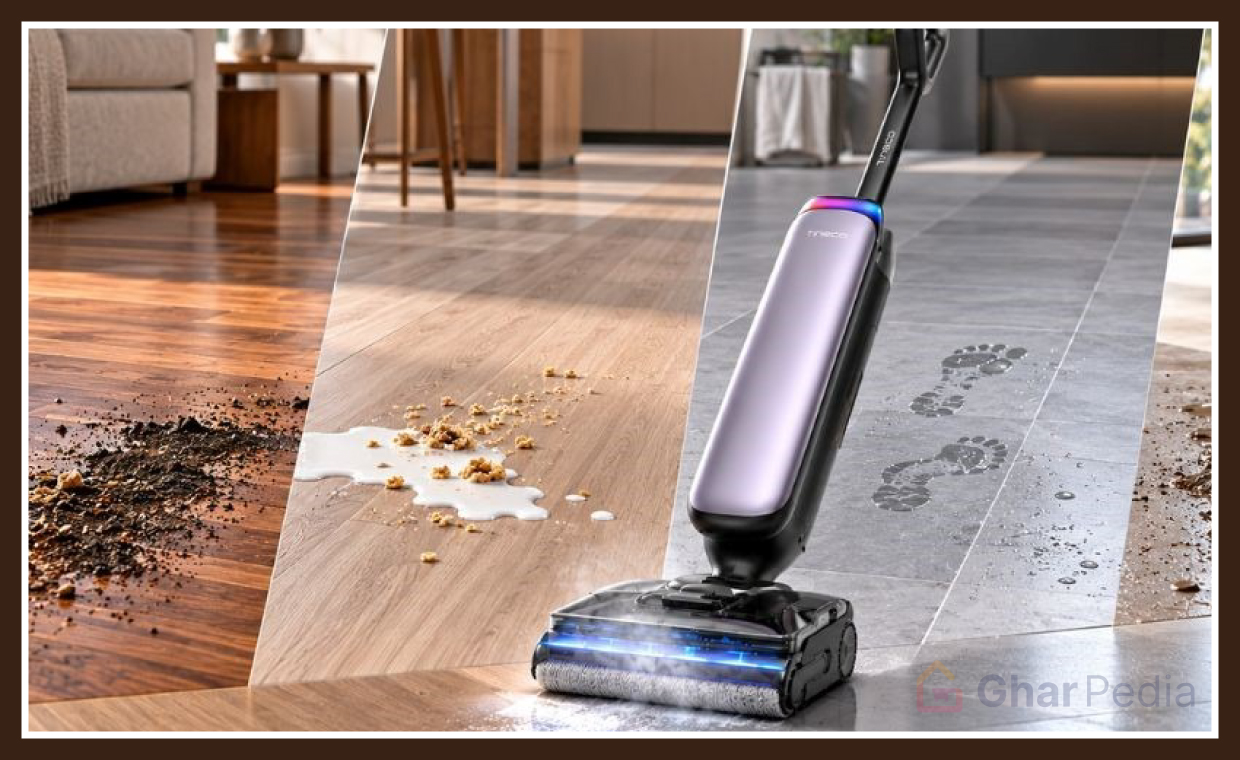
A wet and dry vacuum cleaner is useful on compatible hard flooring because it combines dry debris pickup with wet washing in one routine – particularly convenient in kitchens and homes with pets, where crumbs and small spills occur together. But the important word is compatible: the appliance doesn’t determine whether a floor can be wet cleaned, the flooring manufacturer’s guidance does. The Tineco S7 Stretch Ultra Cordless Wet Dry Vacuum Cleaner is one example, with a 180° Lay-Flat design that reaches beneath low furniture, though that access doesn’t change the underlying floor-care rules.
When Steam Cleaning Makes Sense
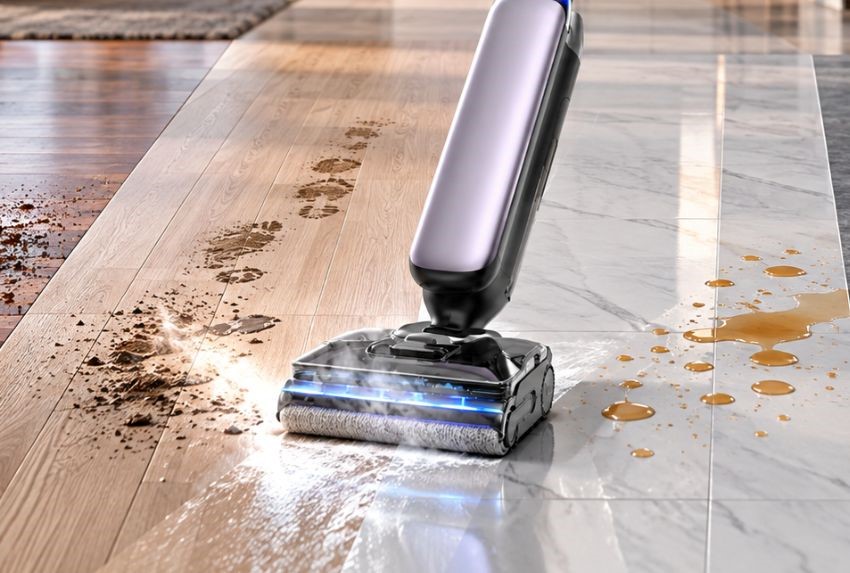
Steam is best treated as a targeted tool for stubborn residue like dried food, rather than a default setting. The Tineco FLOOR ONE S9 Boost Steam Wet Dry Vacuum Cleaner combines targeted BoostSteam with ReverseScrub for tougher messes, but steam compatibility depends on the flooring, not the appliance. Avoid assuming it’s appropriate for unsealed timber, waxed floors, or moisture-sensitive laminate – always check the flooring manufacturer’s documentation first.
Wet-Dry Vacuum vs Mop, and What About Pet Hair?
Neither method is universally better; the real question is which suits this floor and this type of dirt. Wet-dry cleaners are also primarily hard-floor machines and shouldn’t substitute for dry vacuums – pet hair on carpets and stairs is better handled by a dedicated dry cordless vacuum such as the PURE ONE A90S.
Why More Water Doesn’t Mean Better Cleaning
A common misconception is that more water produces a cleaner floor. In reality, excess water causes streaks and a greater risk of penetrating joints. Effective floor care is really about controlling water and removing dirty liquid efficiently, alongside preventive habits like entrance mats and wiping spills before they set.
Conclusion
Good floor maintenance begins with the material beneath your feet: hardwood needs moisture discipline, laminate needs protection at the joints, tile tolerates wet cleaning well but its grout needs attention, and vinyl and stone both need product-specific guidance. Modern cleaning tools can make maintenance faster, but technology never overrides material limitations – choose the method according to the floor, not the floor according to the machine.
Also Read: Building Maintenance: Things to Tick in Your Maintenance Checklist
Frequently Asked Questions – Floor Care Methods
01. Can you use a wet-dry vacuum on hardwood floors?
Only if the exact hardwood and finish are approved for the machine’s damp-cleaning method.
02. Is steam safe for laminate flooring?
Not universally – only use it when the laminate manufacturer explicitly permits it.
03. Can a wet-dry vacuum replace a mop?
On compatible hard floors, yes, combining pickup and washing – but it isn’t automatically the better option for every floor.
Author & Expert Review
Written By:  Gaurav Mishra | Civil Engineer & Content Writer

| Credentials: B.E. (Mahavir Swami College, Surat), Registered with Bhagwan Mahavir University (BMU). Experience: Civil Engineer with 5+ years of content writing experience, currently writing impactful articles for Gharpedia, part of SDCPL. Expertise: Specializes in writing well-researched content on residential construction, construction materials, design planning, on-site practices, and safety, blending technical accuracy with everyday clarity. Find him on: LinkedIn |
Verified By Expert: Ravin Desai – Co Founder – Gharpedia | Co Founder – 1 MNT | Director – SDCPL

This article has been reviewed for technical accuracy by Ravin Desai, Co-Founder of Gharpedia and Director at Sthapati Designers & Consultants Pvt. Ltd. With a B.Tech. in Civil Engineering from VNIT Nagpur and an M.S. in Civil Engineering from Clemson University, USA, and over a decade of international and Indian experience in the construction and design consultancy sector, he ensures all technical content aligns with industry standards and best practices.
Find him on: LinkedIn