






Table of Contents
Quick Summary
- Learn what makes a tree bookshelf look convincingly natural, from textured bark and tapered branches to visible wood grain.
- Explore birch-inspired, rustic, driftwood and dark-finish designs for different interior styles.
- Discover simple ways to style the bookshelf without hiding its organic shape.
- Find practical care tips for protecting bark texture, grain and finish.
- Understand what to consider when ordering a handcrafted tree bookshelf, including size, wood type, finish and branch layout.
Many “tree” bookshelves look flat up close: straight boards cut into a tree outline, with no texture and no grain. Bookshelves that look like real trees are different, and the difference comes down to a few details. This guide explains what makes a tree bookshelf that looks like a real tree convincing, which styles suit different interiors, how to style and care for one, and where to order a handcrafted piece.
Bark, Branches and Natural Grain: What Makes a Tree Bookshelf Look Like a Real Tree
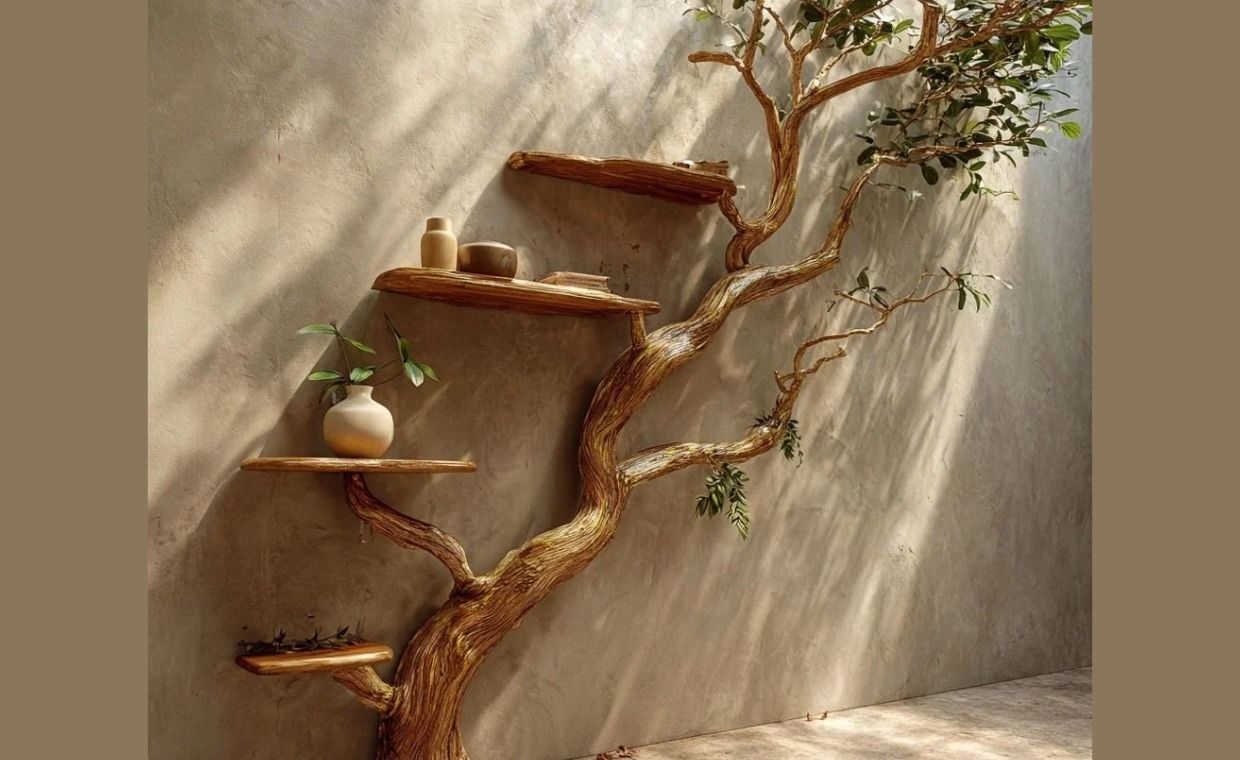
A bookshelf that looks like a real tree depends on four details: the trunk texture, the way the branches grow, the grain of the wood, and in some designs, real branch pieces. Each detail is easy to check in product photos or in person before ordering, and together the four details separate a convincing tree from a flat cut-out.
Bark and Trunk Texture
The trunk is the first thing the eye reads. On a convincing design, the trunk has visible texture, either carved to imitate bark or finished to keep the character of the original wood surface. A flat, smooth trunk with sharp edges looks like furniture shaped like a tree rather than a tree that holds books.
Trunk thickness matters too. A real tree is widest at the base and narrows as it rises. A trunk that flares slightly at the floor looks rooted and stable, while a trunk with the same width from top to bottom looks like a post.
When comparing options, zoom in on the trunk in product photos. Texture should be visible in natural light, not only in close-up studio shots.
Branches That Grow Like a Real Tree
Real branches are never perfectly symmetrical. They leave the trunk at different heights and angles, thin out toward the tips, and split into smaller branches. A bookshelf that copies this pattern looks natural from across the room.
Many lower-quality designs use straight, evenly spaced arms that mirror each other on both sides. That layout holds books, but the result reads as a coat rack more than a tree.
Look for branches that taper, change angle, and vary in length. Check that each branch still offers a flat, level surface for books, because realism should not come at the cost of usable shelf space.
Natural Grain, Knots, and Color Variation
Grain is what separates real wood from printed laminate. A solid wood tree bookshelf shows grain lines that flow along the branches, small knots, and slight color shifts between boards. These marks are part of the material, not defects.
A printed surface repeats the same pattern across every panel, which the eye notices quickly. Natural grain also changes with the finish: a clear or light finish shows the most grain, while darker finishes keep the texture but soften the contrast.
Ask to see photos of the actual wood species and finish you plan to order. Grain becomes more noticeable once a bookshelf that looks like a real tree stands in daylight in your room, so it deserves a close look before the order is placed.
Real Branches and Driftwood Pieces
Some tree bookshelves go further and use real branch or driftwood pieces for the arms. Each piece has its own curve, so no two branches look alike, and the bookshelf feels collected from nature. These designs suit coastal and rustic rooms especially well.
Because every piece is different, real-branch designs are usually made one at a time. Ask the maker how each branch is attached and how much weight each branch is meant to hold.
Those four details define realism. The next step is matching a realistic style to the room.
Realistic Tree Bookshelf Styles for Different Interiors
A bookshelf that looks like a real tree still needs to suit the room around it. Finish color and branch style change the mood of the piece as much as the shape does. The four styles below match common interior themes.
Birch-Bark Look for Scandinavian Rooms
A pale trunk with a birch-bark look brings a light, airy feel to Scandinavian and Japandi rooms. Pair it with white walls, light oak floors, and simple linen textiles. The pale trunk keeps a large bookshelf from feeling heavy in a small room.
Rustic Trunk for Cabins and Farmhouses
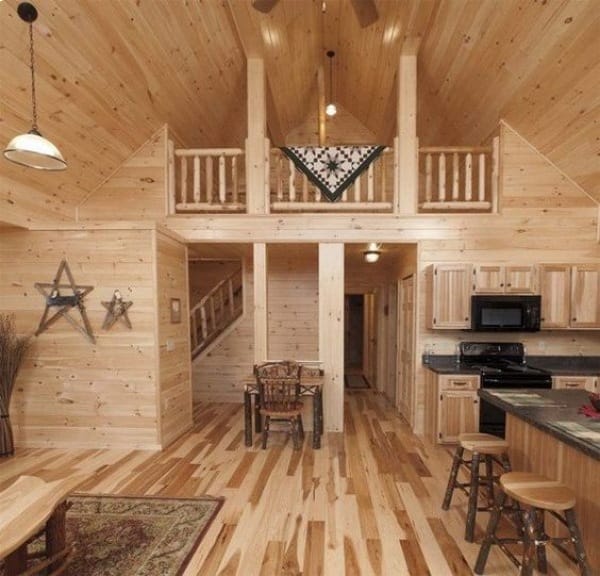
A thick, textured trunk in a warm finish suits cabins, lake houses, and farmhouse interiors. Stone, wool, and leather nearby reinforce the rustic character. A rustic trunk also hides small dents and scuffs, which suits busy family homes.
Driftwood Branches for Coastal Homes
Weathered, silver-toned driftwood branches fit beach houses and coastal rooms. Keep the styling light with shells, sea-glass colors, and paperback novels. Driftwood tones pair well with white oak floors and soft blue walls.
Dark-Finish Tree for Modern Spaces
A tree in a Charcoal or Coal finish creates a bold silhouette against white or pale walls. The dark color keeps the organic shape while matching clean, modern lines. Minimal styling, such as a few hardcovers and one sculptural object, suits this look best.
Choosing a style is one decision. Keeping the bookshelf looking natural over time is another.
Whether you prefer a compact reading corner or an elaborate book collection, explore these home library design ideas for inspiration on creating a functional and inviting reading space.”
How to Style and Care for a Realistic Tree Bookshelf
A realistic tree bookshelf looks best when the styling supports the natural shape and the wood stays in good condition. The two tips below cover both.
Pair It With Other Natural Wood
Natural materials nearby make the tree look at home. A live edge coffee table in front of the bookshelf repeats the raw, organic edge of the branches, and a few potted plants on the lower branches add life.
Avoid filling every branch with books. Leave some open space so the shape of the trunk and branches stays readable. A bookshelf that looks like a real tree loses its effect when every branch is buried under books and decor.
To create a cohesive natural look, explore these wooden home décor ideas for more ways to incorporate wood into your interiors.
Care for Bark, Grain, and Finish
Textured trunks collect dust in their grooves. Use a soft brush or a microfiber cloth once a week, working with the direction of the grain. Keep the bookshelf out of strong direct sunlight, which can fade the finish unevenly over time, and away from heaters, vents, and damp areas. Wipe spills quickly, and refresh the finish as the maker recommends.
Check wall anchors once or twice a year, especially on tall designs or in homes with children and pets.
With style and care covered, the last question is where to find a bookshelf built with these details.
Where to Find a Handcrafted Wood Tree Bookshelf: Tailor Wood Haven
A bookshelf that looks like a real tree takes time to make well, because trunk texture, branch shape, and grain all depend on careful handwork. Tailor Wood Haven builds tree bookshelves by hand, one order at a time, with these details in mind. That approach makes each bookshelf that looks like a real tree fit both the room and the customer’s preferred style.
Handcrafted From Solid Wood, One Piece at a Time
Every Tailor Wood Haven tree bookshelf is handcrafted in solid wood after the order is placed. Natural grain and color variation make each piece one of a kind. The size, shape, wood type, and finish can be adjusted, with freestanding and wall-mounted designs available.
Seven finish options range from light White Oak, Sand, and Shell to Cherry, Charcoal, and Coal, so the bookshelf can match Scandinavian, rustic, coastal, or modern rooms. Delivery is free.
How to Order
Measure the wall or corner where the bookshelf will stand, including ceiling height. Take a photo of the space and note the style you prefer, such as a birch-bark look or a rustic trunk. Mention how many books you plan to store, so the branch layout can match your collection.
Email the measurements and photo to the Tailor Wood Haven team, who will help you choose the design, size, and finish.
Final Thoughts
Bookshelves that look like real trees share the same details: a textured trunk, branches that grow unevenly, and real wood grain you can see and feel. Choose a style that matches your room, keep the styling light, and care for the finish. To order a handcrafted piece for your home, email your measurements to hello@tailorwoodhaven.com and choose a bookshelf that looks like a real tree.
Also Read: The Best Ways to Implement Wood in Your Home
FAQS
1. What makes a tree bookshelf look realistic?
A realistic tree bookshelf usually has a textured trunk, naturally varied branches, visible wood grain and, in some designs, real branch pieces.
2. What wood finish is best for a tree bookshelf?
The best finish depends on the room. Light finishes work well in Scandinavian and Japandi interiors, while warm or dark finishes suit rustic and modern spaces.
3. How should books be arranged on a tree bookshelf?
Avoid filling every branch. Leave some open space between books and decorative objects so the trunk and branching structure remain visible.
4. How do you care for a wooden tree bookshelf?
Dust textured areas regularly with a soft brush or microfiber cloth. Keep the bookshelf away from strong sunlight, heaters and damp areas, and wipe spills promptly.
5. Is a handcrafted tree bookshelf suitable for heavy books?
It can be, provided the branches and mounting system are designed for the required load. Ask the maker about the weight capacity of individual branches before ordering.
Author & Expert Review
Written & Verified By:  Farhan Shaikh – Senior Manager – Architect, SDCPL | Associate Member – IIA

| Credentials: Senior Manager – Architect at Sthapati Designers & Consultants Pvt. Ltd. and Associate Member of the Indian Institute of Architects (IIA). Experience: Architect with hands-on experience leading architectural and interior design projects at SDCPL, including architectural planning, interior design, project coordination, and sustainable design strategies. Expertise: Specializing in architectural planning, interior design, project coordination, and sustainable design. He reviews content to ensure it reflects practical design considerations, industry best practices, technical accuracy, and real-world applicability across architecture and interior spaces. Find him on: Linkedin |