







Table of Contents
Quick Summary
- Choosing the right shade starts with understanding what each room needs from its window treatment.
- Compare blackout, room-darkening and light-filtering Roman shades and their different levels of light control.
- Find out why bedrooms and nurseries often benefit from blackout or room-darkening options.
- See why living rooms and kitchens may be better suited to light-filtering shades.
- Understand how west-facing windows can create strong glare in living and media spaces.
- Learn why blackout fabric alone cannot guarantee a completely dark room.
- Explore how fabric, lining, mounting and installation gaps affect performance.
- Discover how combining Roman shades with curtains can provide greater flexibility.
Courtesy - Magnific
When choosing Roman shades, it is easy to start with color, fabric, or fold style. But there is a more useful question to answer first:
What Does This Room Actually Need the Window Treatment to Do?
A bedroom may need darkness at sunrise. A living room may need privacy without losing daylight. A west-facing family room may be bright enough to create serious TV glare in the afternoon, while a kitchen may simply need softer light and a more finished-looking window.
That is why blackout is not automatically an “upgrade” from light filtering. The right choice depends on the job the room needs the shade to perform.
Blackout, Room-Darkening, and Light-Filtering: What Actually Changes?
The three terms describe different approaches to light control.
Light-filtering Roman shades soften incoming sunlight rather than eliminating it. The fabric still feels illuminated during the day, which can keep a room bright while reducing harsh glare and improving privacy.
Room-darkening Roman shades reduce significantly more light. They work well when you want a noticeably darker room but do not necessarily need the strongest possible light blockage.
Blackout Roman shades use an opaque lining designed to stop light from passing through the shade itself. They are most useful when darkness is part of the room’s function, such as sleeping or watching a projector.
| Room Need | A Good Starting Point | Why |
| Preserve daylight | Light filtering | Softens glare without making the room feel dark |
| More privacy + lower brightness | Room darkening | Creates a darker, more controlled environment |
| Sleep or strong glare control | Blackout | Minimizes light passing through the fabric |
| Daylight by day, darkness by night | Layered treatment | Allows different levels of control at different times |
MorraHome’s made-to-order Roman shades, for example, can be configured with privacy, room-darkening, or blackout linings. Its current blackout option is rated at approximately 95–100% shading through the fabric-but that number does not tell the whole story once a shade is installed.
Choose by Room, not by the “Highest” Shading Level
Bedrooms and Nurseries
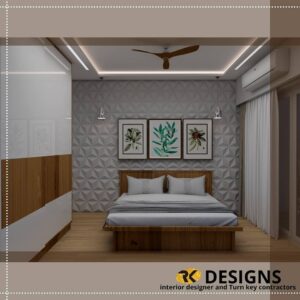
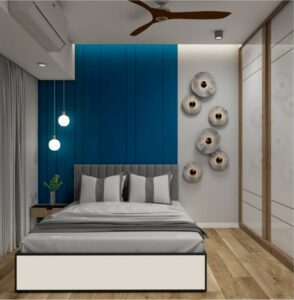
Bedrooms are the clearest case for blackout or room-darkening shades.
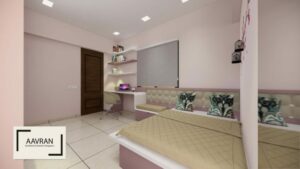
Strong morning sun, nearby exterior lighting, or daytime sleeping can make light control more important than preserving daylight while the shade is closed. Nurseries and children’s rooms often present the same problem when naps or early summer sun are involved.
That does not mean every bedroom needs the darkest available option. Someone who enjoys waking with natural light may prefer room darkening instead. The important distinction is whether darkness itself is part of the room’s job.
Living Rooms and Kitchens
Living rooms usually have a different priority.
These are spaces where natural light contributes to the way the interior feels, so blocking it simply because blackout sounds more “premium” can work against the design. Light-filtering Roman shades can soften direct sunlight and add privacy while preserving the brightness, textile texture, and sense of openness of the room.
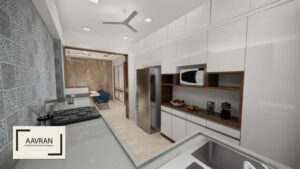
The same principle often works in kitchens. A fabric Roman shade can soften a space dominated by cabinetry, stone, and hard surfaces without making the room unnecessarily dark. There is an important exception: placement. A fabric shade immediately beside a sink or cooking surface also needs to be evaluated for moisture, splashes, and cleanability. In that situation, material suitability may matter more than opacity.
West-Facing Living Rooms and Media Spaces
“Living room equals light filtering” is not a rule.
A west-facing family room can receive intense afternoon sun, and once glare begins reflecting across a television or projector screen, the room’s job changes. In that situation, blackout or room darkening may be far more practical. This is why window orientation matters almost as much as the name of the room.
Studios and Multipurpose Rooms
A studio apartment illustrates the limits of choosing only one opacity. During the day, the same windows may need daylight and privacy. At night, the living area becomes a bedroom and may need much stronger light control. When the room performs two different jobs, expecting one fabric opacity to perform both perfectly can create unnecessary compromise.
Why Blackout Fabric Doesn’t Always Mean a Blackout Room
This is one of the most important details to understand before buying blackout Roman shades. Blackout fabric and a blackout room are not the same thing.
A blackout lining may prevent almost all visible light from passing directly through the fabric, yet light can still appear around the perimeter of the installed shade. With an inside mount, the shade has to move freely inside the window opening. That means some operating clearance is necessary. Even a narrow gap can become visually obvious because the contrast between a dark blackout shade and bright daylight around its edges is so strong.
An outside mount covers more of the wall or trim surrounding the opening. With enough overlap, it can reduce perimeter light substantially. However, outside mounting is not automatically perfect either. If brackets or trim hold the fabric farther away from the wall, light may still travel behind the sides of the shade. So, when maximum darkness is the goal, evaluate three things together: lining + fit + mounting position.
A technically excellent blackout fabric cannot compensate for every installation gap.
Fabric and Lining Do Different Jobs
Another common misconception is that choosing blackout means choosing a heavy-looking or purely functional fabric.
It does not.
The face fabric largely determines what the shade looks and feels like in the interior. The lining does much of the work of controlling light.
That means linen and linen-blend Roman shades can retain a soft, textured residential appearance while using blackout lining behind the decorative fabric.
This separation is particularly useful when designing a home room by room. You do not have to use one aesthetic in the living room and a completely different-looking window treatment in the bedroom just because their light-control requirements differ.
A similar linen texture, for example, can be used throughout the home while the lining changes according to the room.
It is a more cohesive way to design window treatments: keep the visual language consistent, and change the performance where necessary.
When One Shade Isn’t Enough
Sometimes the most useful answer to “blackout or light filtering?” is both.
A bedroom may need strong darkness at night but still benefit from soft daylight during the day. A street-facing living space may need daytime privacy without feeling closed off, then greater privacy after the interior lights come on at night.
Layering creates another level of control.
Roman shades provide a tailored treatment close to the window, while full-length curtains add softness, scale, and another layer that can be opened or closed independently.
In bedrooms and living spaces, pairing Roman shades with linen curtains can also help frame the window, add natural texture, and create the more finished look associated with custom interiors.
The two treatments do not need to do the same job. In fact, layered windows often work best when each layer has a different purpose.
The Bottom Line
The best Roman shade is not automatically the one with the highest shading percentage.
Start with the room’s real job.
If darkness is the job, choose blackout. If daylight is part of the job, choose light filtering. If both are the job, consider layering.
Then consider fabric, lining, fit, window orientation, and mounting together. That approach produces a window treatment that works with the room rather than simply choosing the darkest option available.
Also Read: Aims of Good Lighting in a House
Frequently Asked Questions – Blackout vs Light-Filtering Roman Shades
01. Are blackout Roman shades completely blackout?
The fabric itself can provide extremely high light blockage, but the installed room may not become completely dark. Light can still enter around the sides, top, or bottom depending on the window, measurements, mount type, and installation.
02. Is outside mount better for blackout Roman shades?
Outside mounting can often provide better room darkening because the shade can extend beyond the window opening and cover areas where side gaps would otherwise appear. Inside mounting usually creates the cleaner, built-in appearance, so the choice is a balance between aesthetics and maximum light control.
03. Are light-filtering Roman shades private at night?
Not necessarily. A fabric that provides comfortable privacy during daylight may reveal silhouettes when the room is illuminated at night and the exterior is dark. Nighttime privacy should therefore be considered separately from daytime light filtering.
04. Can linen Roman shades have blackout lining?
Yes. Linen describes the visible face fabric, while blackout performance can be provided by a separate lining behind it. This allows the shade to retain natural textile character while offering much stronger light control.
Courtesy - Featured Image(Magnific)
Author & Expert Review
Written By:  Gaurav Mishra | Civil Engineer & Content Writer

| Credentials: B.E. (Mahavir Swami College, Surat), Registered with Bhagwan Mahavir University (BMU). Experience: Civil Engineer with 5+ years of content writing experience, currently writing impactful articles for Gharpedia, part of SDCPL. Expertise: Specializes in writing well-researched content on residential construction, construction materials, design planning, on-site practices, and safety, blending technical accuracy with everyday clarity. Find him on: LinkedIn |
Verified By Expert: Ravin Desai – Co Founder – Gharpedia | Co Founder – 1 MNT | Director – SDCPL

This article has been reviewed for technical accuracy by Ravin Desai, Co-Founder of Gharpedia and Director at Sthapati Designers & Consultants Pvt. Ltd. With a B.Tech. in Civil Engineering from VNIT Nagpur and an M.S. in Civil Engineering from Clemson University, USA, and over a decade of international and Indian experience in the construction and design consultancy sector, he ensures all technical content aligns with industry standards and best practices.
Find him on: LinkedIn