





Table of Contents
Quick Summary
- Understand why access panel costs should be planned during the estimating stage.
- Build a panel schedule covering sizes, ratings, frame types and locations.
- Compare standard and bespoke panels to keep costs predictable.
- Allow separately for fire, acoustic, airtight and smoke-rated requirements.
- Include labour costs based on the selected frame type and installation sequence.
- Budget for durable labels, as-built locations, certificates and O&M records.
- Assign responsibility for the handover file early to avoid costly last-minute chasing.
Access panels and access doors are fitted near the end of the build, but their cost is decided at the estimating stage. The schedule, ratings, labels, and handover file all depend on choices made before work starts on site. A budget that prices these items in sequence costs less than one that absorbs them as late extras.
Start with the Panel Schedule
The panel schedule comes before everything else because every later cost depends on it. It lists each door, its size, rating, frame type, and location, and it shows how many units fall into standard stock sizes. The schedule belongs to the design stage and should be revised every time the services drawings change. When the design allows standard sizes, panels ship quickly and prices stay predictable from estimate to invoice. When it does not, made-to-measure units change manufacturing and installation cost and arrive on a different timeline. The budget should carry a supplier quote and a schedule allowance for each nonstandard unit before the walls and ceilings that depend on it are closed.
Price the Rating Before the Panel
With quantities known, performance is the next line to price. Rating and size each move unit cost, so they are best quoted as separate inputs. Fire-rated panels carry certified integrity periods, acoustic panels carry decibel ratings for hotels, schools, and multi-residential buildings, and riser doors protect vertical service shafts with heavier frames and hardware. Airtight panels are a distinct requirement, specified where air leakage must be controlled. Smoke performance is priced separately where the project calls for it. Each option is selected for the project’s needs, and the quote should list them individually before any unit price is set.
The certificate matters as much as the panel, and a substitution needs appropriate supporting documentation included in its quoted cost.
Buy the Schedule as One Order
After the schedule and ratings are fixed, how the panels are bought determines how much of the budget survives. Ordering panels room by room splits the spend into small batches, each with its own administration and handling. Some suppliers deliver qualifying orders free, so compare any quoted delivery charges alongside handling costs instead of budgeting a fee for every batch. Asking for one consolidated quotation against the full schedule lets the estimator compare batch pricing with a single order before committing. A single order also gives one point of contact for certificates, which feeds the handover file later. Estimators can price standard, bespoke, and fire-rated options early using a specialist trade supplier such as https://accesspanelsdirect.com/ to compare options, with delivery itemized so the tender figure reflects the true cost.
Match the Labor Budget to The Frame Type
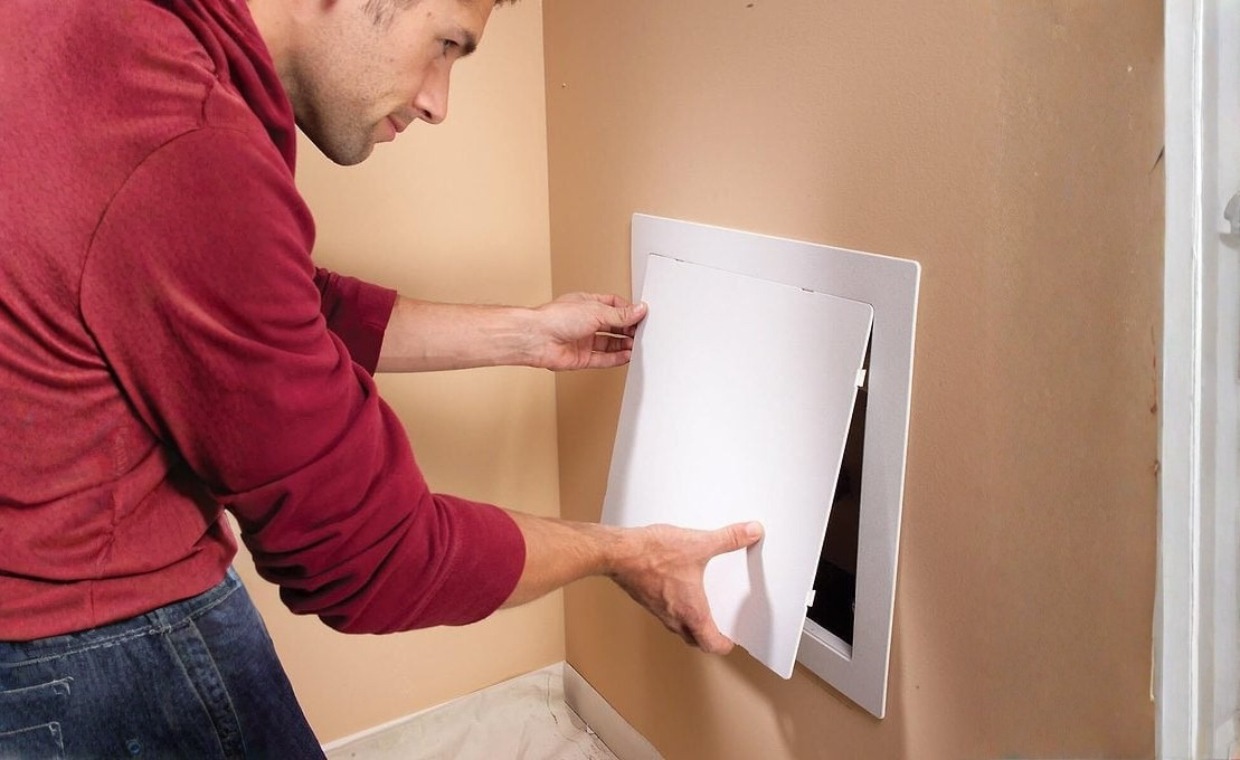
After the order is placed, labor becomes the next dependency. The labor budget splits by frame type. A picture frame panel fits into a finished opening and fixes over completed drywall, so one operative can install it at almost any stage. Picture frame units can even wait until decoration is complete, keeping them clear of the wet trades entirely. A beaded frame panel must be set before plastering and then skimmed flush, which adds wet-trade hours and drying time and ties two trades to the same sequence. An estimate that prices every panel at one labor rate won’t recover the hours beaded frames take, so the schedule should mark the frame type beside each unit.
Budget for Labels and As-Built Records
Installed panels need to be identifiable, and that work has a price. Fire-rated doors should carry durable labels, such as engraved tags or QR codes, so a maintenance team can confirm the rating without removing the door. The labels themselves cost little. The hours spent applying them and recording each as-built location against the drawings cost more. Someone has to walk each floor and tag each panel, then reconcile the schedule against what was actually fitted. Those measured hours belong in the estimate. Facilities managers inherit these labels, and their planned maintenance depends on matching each physical door to the drawings.
Price the Handover File
The last cost arrives after installation, when the handover file is compiled. Every panel needs its datasheet and location entered in the O&M manual, and every rated panel needs its certificate filed beside them. Assembling that file takes dedicated administrative hours, and those hours should sit in project overhead from the start. Certificates are easiest to collect at order stage, when the supplier issues them with the delivery, and hardest to chase after final payment. Before handover, someone has to own the task of gathering datasheets, reference documents, as-built locations and photographs, and keeping each version current as changes arrive. Assigning that responsibility and its hours early keeps the file as planned work with a predictable cost.
These costs are modest on their own, and they are cheaper when planned early. A budget built in the order the work happens gives every stage a price before site pressure can inflate it. The facilities team inherits a building it can maintain, and the contractor keeps the margin that late extras would have spent.
Also Read: How Wheel Stops Solve Home Parking Problems
FAQs – Access Panel
1. What should be included in an access panel budget?
An access panel budget should cover the panel, size, rating, frame type, installation labour, delivery, labelling, certificates and handover documentation.
2. Why is an access panel schedule important?
A panel schedule records the quantity, dimensions, ratings, frame types and locations required. It helps estimators obtain accurate supplier quotations and identify bespoke units before construction begins.
3. Do fire-rated access panels cost more?
Yes. Fire-rated panels require certified performance and supporting documentation, which can increase the product and compliance cost compared with standard panels.
4. How does the frame type affect installation cost?
Picture frame panels can generally be installed over completed finishes, while beaded frame panels need to be installed before plastering and require additional coordination with wet trades.
5. What documents are required at handover?
The handover file should include relevant datasheets, certificates, panel locations, as-built information, photographs and other reference documents required for operation and maintenance.
Courtesy - Featured Image(Magnific)
Author & Expert Review
Written By:  Gaurav Mishra | Civil Engineer & Content Writer

| Credentials: B.E. (Mahavir Swami College, Surat), Registered with Bhagwan Mahavir University (BMU). Experience: Civil Engineer with 5+ years of content writing experience, currently writing impactful articles for Gharpedia, part of SDCPL. Expertise: Specializes in writing well-researched content on residential construction, construction materials, design planning, on-site practices, and safety, blending technical accuracy with everyday clarity. Find him on: LinkedIn |
Verified By Expert:  Shekhar J. Parikh – Co Founder – Gharpedia | Director – SDCPL

This article has been reviewed for technical and execution accuracy by Shekhar J. Parikh, Director and Consulting Engineer at Sthapati Designers & Consultants Pvt. Ltd. With over 40 years of experience in civil engineering, project execution, and construction management across Gujarat and Maharashtra, he ensures the content reflects practical site knowledge, quality control standards, and industry best practices, while also supporting informed decision-making for property buy, sell, and rent considerations.
Find him on : LinkedIn