





Table of Contents
Quick Summary
- A well-designed Sydney garden should be planned for how it will perform three years after installation, not just how it looks initially.
- Sydney has varied soil, climate, drainage, and growing conditions, so garden design should suit the specific location.
- Plan levels, drainage, retaining walls, paving, services, and tree placement before planting, as these are difficult and costly to change later.
- Choose plants based on their mature size and maintenance requirements, rather than how they look when newly planted.
- Use durable, suitable materials and keep the hardscape palette simple for a cohesive appearance.
- Follow the correct construction sequence: drainage and levels → services → hard landscaping → soil improvement → planting → mulch and irrigation → turf → maintenance.
- Regular maintenance every few weeks can prevent a garden from becoming overgrown and expensive to restore.
- The key takeaway is that a garden succeeds when its design, soil, drainage, plants, materials, and maintenance routine suit both the site and the homeowner’s lifestyle.
Courtesy - Magnific
A new garden looks incredible for about eighteen months. What happens after that is decided long before anything gets planted.
Anyone can make a garden look good on handover day. Fresh mulch, plants at nursery size, edges cut sharp, everything watered that morning. The photos are lovely. The real test comes about three years later, when the plants have reached the size they were always going to reach, the soil has done what Sydney soil does, and nobody has had the time to keep on top of it every weekend.
That is the point where you find out whether the garden was designed or just decorated. Plenty of them fail it. Not dramatically, and not all at once. They just quietly become more work than the household is willing to do, and then they stop looking like the plan.
Almost all of it traces back to choices made before a single plant went in the ground.
Sydney Is Not One Climate, It Is About Four

Courtesy - Magnific
This is the first thing that catches people out. A garden that thrives in Bronte will struggle in Penrith, and the reverse is just as true. Sydney is a big city sitting across genuinely different growing conditions.
Out west you have heavy clay, brutal summer heat, and a run of 40 degree days most Januarys. Water sits on clay after storms and then bakes rock hard in the dry. Near the coast you get sandy soil that drains too fast to hold anything, plus salt wind that burns the leaves off anything not built for it. Around the harbour and the lower north shore you have sandstone, shallow topsoil, and a lot of shade from mature trees you are not allowed to touch. In the south and the shire, a mix of the lot.
So the advice you read online, most of which was written for somewhere else entirely, is close to useless. A plant list that works beautifully in a Melbourne courtyard will sulk through a humid Sydney February. Buffalo turf that copes fine in a full sun backyard in Kellyville will thin out and die under a jacaranda in Marrickville.
The Decisions You Cannot Undo Later
Courtesy - Magnific
Some parts of a garden are easy to change. Plants can be moved, mulch gets topped up, a garden bed can be reshaped in an afternoon. Nobody should agonise over those.
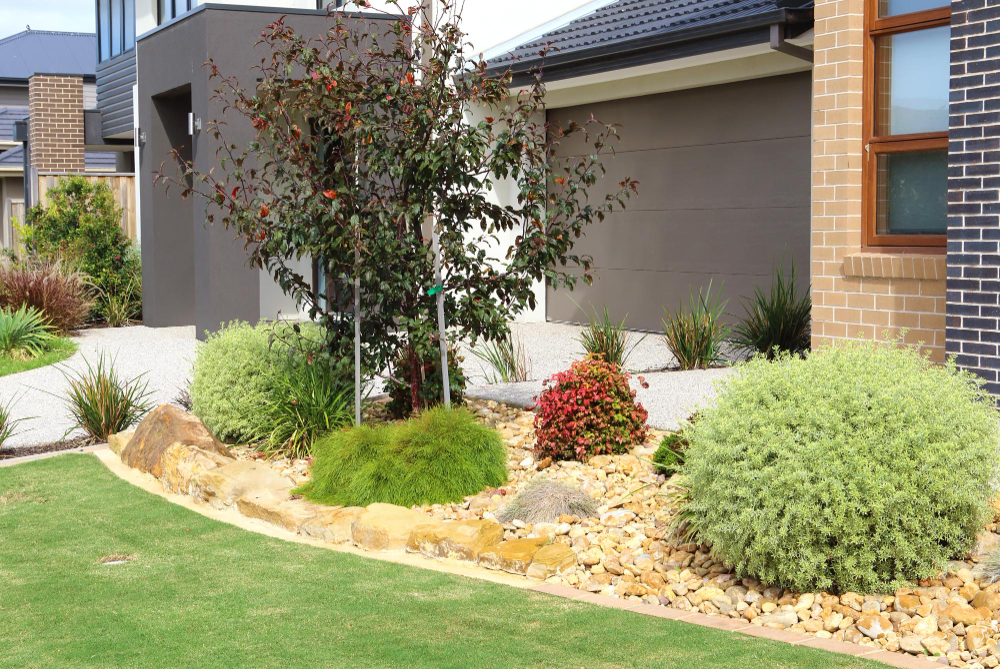
The ones worth agonising over are the ones that get locked in on day one. Where the levels sit and which way the ground falls. Where paving goes and what fall it has been laid to. Where a retaining wall runs and how it drains. Where you put a tree that is going to be eight metres tall in a decade and will shade half the yard in the process. Where the tap, the power and the lighting runs sit, because retrofitting a conduit under finished paving is a demolition job.
Get those wrong and you do not fix them. You live with them, or you pay to rip them out. That is why it is worth investing in professional gardening Sydney conditions that actually suit, rather than working off a picture saved from an overseas account and hoping for the best. A designer who knows the local soil, the drainage rules and what a mature specimen of each plant really looks like will save you far more than the drawings cost.
The other thing a plan does is make the trade offs visible before you spend anything. Wanting a lawn, a veggie patch, a fire pit, a deck and a big shade tree on a 200 square metre block is fine as a wish list. It is not fine as a build, and it is much cheaper to find that out on paper.
Drainage Is What Actually Fails
Courtesy - Magnific
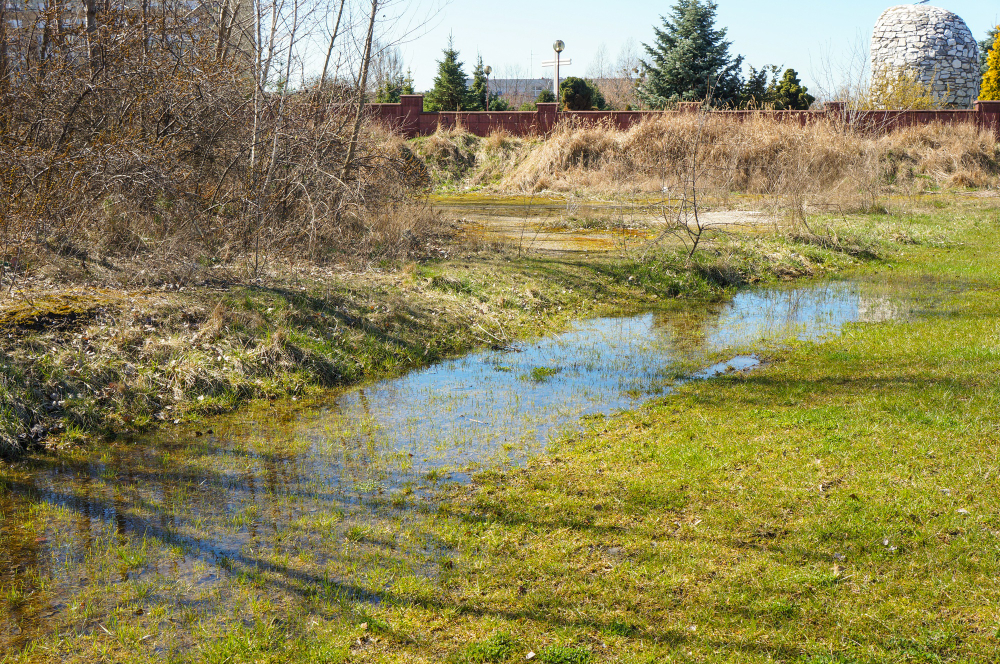
If you asked a hundred Sydney landscapers which single thing goes wrong most often on established gardens, drainage would win comfortably. It rarely gets the attention it deserves because it is invisible when it works and it is not what anyone is excited about.
Clay is the culprit in a lot of the city. Water cannot move through it, so it sits. Sitting water suffocates roots, rots the base of hedges, floats mulch into the driveway and turns a lawn into a bog for a week after decent rain. Add a retaining wall built without agricultural pipe behind it and you now have hydrostatic pressure pushing on the wall every time it rains, which is how walls end up leaning.
The fixes are unglamorous and they all belong in the build, not afterwards. Grading the ground so it falls away from the house. Ag lines behind walls and along the low side of the block. Permeable surfaces where you can use them. Raised beds with imported soil where the native clay is hopeless. Downpipes actually connected to something rather than spilling onto a garden bed.
None of that is expensive while the ground is already open. All of it is expensive later.
Every Plant Choice Is a Maintenance Decision
Courtesy - Magnific
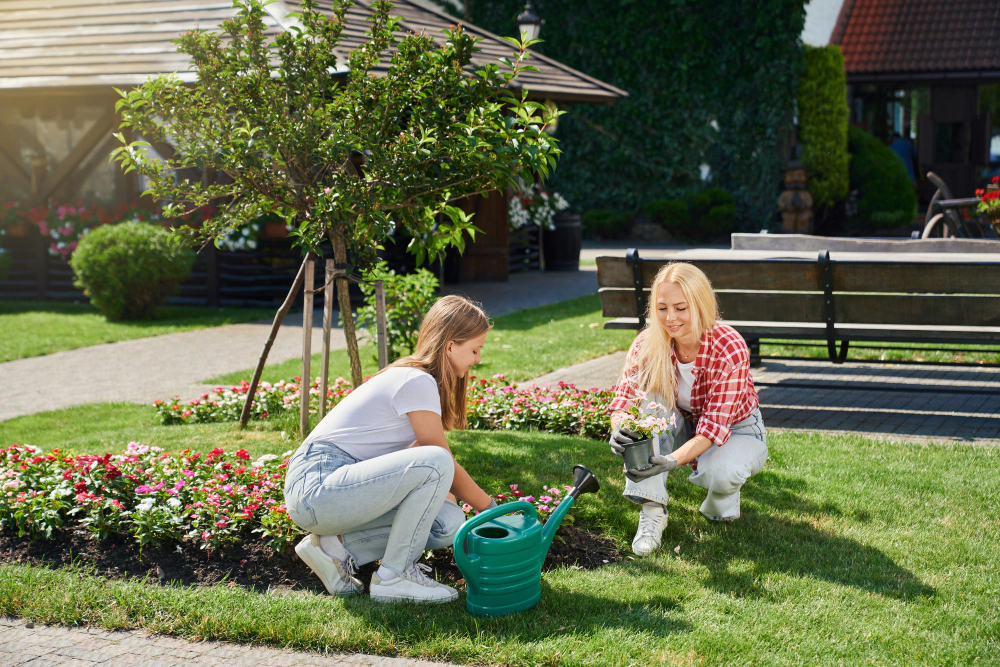
This is the part people underestimate the most. When you pick a plant you are also picking how many hours a year you will spend on it, forever.
A clipped hedge along a boundary looks sharp and it is a commitment to trimming several times a year, every year. Deciduous trees are gorgeous in autumn and they fill gutters in May. Lilly pilly is everywhere in Sydney for good reason, but the wrong variety gets psyllid and grows twice as fast as anyone expected. A lawn is the highest maintenance surface most people put in their yard and also the one nobody counts as maintenance.
Be honest at the design stage about how much of that you will genuinely do. If the answer is not much, design for it. Fewer plant varieties, larger drifts of the same thing, more groundcover and less bare mulch, hedges chosen for a natural mature height close to what you want, and irrigation on a timer rather than a hose you are supposed to remember.
The other honest option is to plan for help from the start. Ask the trusted Sydney gardeners who look after established properties what separates the ones that still look good after five years, and the answer is almost never a bigger budget. It is a regular visit. A couple of hours every few weeks keeps a garden in the state it was designed for, because the work stays small. Leave it for six months and you are not maintaining any more, you are restoring, and that costs a great deal more.
Materials That Survive A Sydney Backyard
Courtesy - Magnific
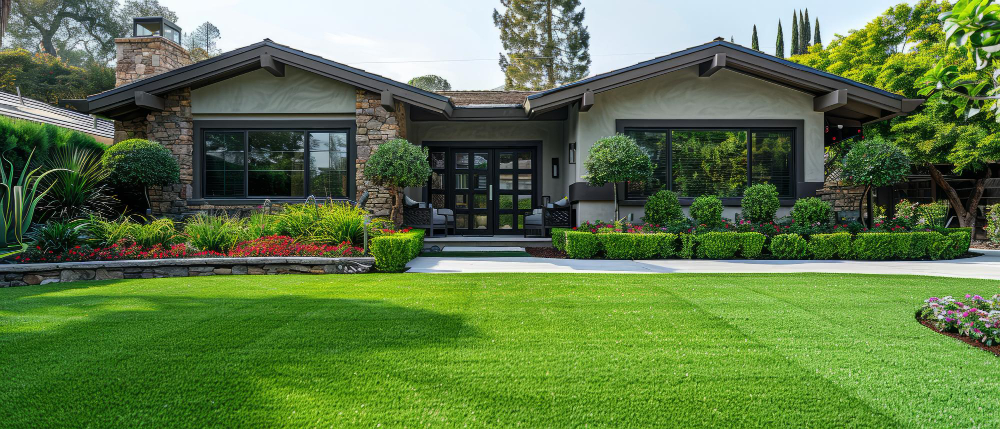
Hard landscaping is where most of the budget goes, so it is worth knowing what holds up.
Sandstone is the local material and it looks right here in a way imported stone often does not, particularly on older properties. It picks up moss on a shaded southern side, but it ages well and it is repairable.
Concrete pavers are the workhorse and there is nothing wrong with them, provided the base is right. Almost every failed paving job in this city is a base problem, not a paver problem. Skimping on the road base under a driveway to save a few hundred dollars is how you end up relaying the whole thing in four years.
Hardwood decking will grey off unless someone oils it, and most people stop oiling after the second year. Decide up front whether you actually want a silver grey deck, because that is what you are likely to get. Composite avoids the argument but reads differently and gets hot underfoot in full western sun.
Whatever you choose, keep the palette tight. Three materials across a small backyard already looks busy. Five looks like the job was done in stages by people who never spoke to each other, which is usually exactly what happened.
A Sensible Order of Works
Sequence matters more than most people realise, because doing things out of order means paying twice.
- Sort drainage and levels first, while machinery can still get in and the ground is open.
- Run every service you might conceivably want next. Water, power, lighting, irrigation. Conduit is cheap now and impossible later.
- Build the hard landscaping. Walls, paving, steps, decks, edging.
- Improve the soil properly before planting. This is the step that gets skipped and it is the one that decides whether anything thrives.
- Plant, then mulch, then set up irrigation and test it before you rely on it.
- Turf last, once nothing else is going to be walked over or driven on.
- Book the first maintenance visit inside the first three months, while the garden is establishing and small corrections still work.
You can absolutely stage a garden across a couple of years to spread the cost. Just stage it in that order rather than doing the fun visible parts first and leaving the ground works until the end.
The Short Version
A garden is not a purchase, it is a system that either suits your block and your habits or slowly fights both. Sort the ground, the water and the levels before anything pretty happens. Choose plants for the conditions you have rather than the ones you would like. Then keep on top of it in small regular doses instead of occasional big rescues. Do that and year three is when the garden finally looks its best, rather than the year it starts going backwards.
Also Read: 10 Amazing Gardening Hacks to Maintain Your Home Garden
FAQs on Sydney Garden Design
01. Do I really need a design for a small backyard?
Small yards need it more, not less. On a big block a mistake is absorbed. On a courtyard, one badly placed step or a tree in the wrong corner ruins the whole space, and there is nowhere to hide it. The plan does not have to be elaborate. It just has to settle levels, drainage and the fixed elements before anything is built.
02. When is the best time to plant in Sydney?
Autumn, comfortably. Soil is still warm enough to push root growth, the heat has gone, and plants get months to establish before their first real summer. Spring works too but you are racing the heat. Mid summer planting means hand watering daily for weeks and losing some anyway.
03. How often does an established garden actually need attention?
Most Sydney gardens sit comfortably on a visit every two to four weeks through the growing season and a little less over winter. Hedges, lawn edges and weeds set the frequency. The rule of thumb is that if you can see it needs doing from the back door, the interval is already too long.
04. Is it cheaper to fix an overgrown garden or start again?
It depends entirely on the bones. If the levels, drainage and hard landscaping are sound, an overgrown garden is usually a hard reset and then regular upkeep, which is far cheaper than rebuilding. If water is pooling, walls are leaning or paving has sunk, cutting things back only buys you a tidy version of the same problem.
05. What is the most common mistake people make?
Planting for the size the plant is in the pot rather than the size it will be in five years. A properly spaced garden looks sparse on planting day, which is why people crowd it. Then everything competes, nothing gets air, and half of it has to come out later.
Courtesy - Featured Image(Magnific)
Author & Expert Review
Written By:  Nidhi Patel | Civil Engineer & Content Writer

| Credentials: B.E. (Mahatma Gandhi Institute of Technical Education and Research Centre), Registered with Gujarat Technological University (GTU). Experience: Civil Engineer with 3+ years of content writing experience, currently writing blogs for Gharpedia, part of SDCPL. Expertise: Specializing in SEO-optimized blogs and long-form articles focused on home improvement, construction, interiors and architect topics. I create well-researched, reader-focused content that balances technical accuracy with clarity, making complex subjects easy to understand. Find her on: LinkedIn |
Verified By Expert: Ravin Desai – Co Founder – Gharpedia | Co Founder – 1 MNT | Director – SDCPL

This article has been reviewed for technical accuracy by Ravin Desai, Co-Founder of Gharpedia and Director at Sthapati Designers & Consultants Pvt. Ltd. With a B.Tech. in Civil Engineering from VNIT Nagpur and an M.S. in Civil Engineering from Clemson University, USA, and over a decade of international and Indian experience in the construction and design consultancy sector, he ensures all technical content aligns with industry standards and best practices.
Find him on: LinkedIn