







Table of Contents
Quick Summary
- Roman blinds combine fabric, linings, and lifting mechanisms, requiring proper care to avoid damaging delicate materials or causing shrinkage.
- Regular maintenance preserves fabric appearance, reduces dust build-up, and protects delicate materials while supporting smooth operation.
- Identifying your fabric type such as cotton, linen, polyester, or velvet is crucial because each material responds differently to moisture and cleaning products.
- Routine cleaning involves lowering the blinds completely, using a vacuum cleaner with a soft upholstery attachment on low suction, and checking for marks or stains.
- Spot cleaning should only be done if permitted by the manufacturer, using a lightly dampened cloth to gently blot stains rather than rubbing or soaking the fabric.
- Different types of stains require specific care, such as gently removing loose residue for food spills and avoiding harsh household degreasers for grease marks.
- Light dusting or gentle vacuuming is recommended every 2 to 4 weeks, with periodic checks on folds, alignment, and operating components.
- Mechanism and cord safety are essential, requiring gentle operation, headrail inspections, and secure safety fittings to protect children from strangulation hazards.
- Motorised Roman blinds require careful cleaning around the headrail without using water or cleaning products near electrical components.
- Controlling indoor humidity, preventing window condensation, and knowing when to hire a professional cleaner or repair service helps extend the lifespan of your blinds.
Courtesy - Magnific
Roman blinds bring warmth, texture and elegance to a room, but keeping their soft fabric folds looking fresh requires regular attention. Dust can settle between the pleats, accidental spills can leave visible marks, and daily operation can gradually affect the way the fabric hangs.
Unlike roller blinds or shutters, Roman blinds combine fabric, linings, stitching and lifting mechanisms. This makes proper cleaning especially important, as unsuitable products or excessive moisture can damage delicate materials.
For Sydney homeowners, maintaining Roman blinds also means managing sunlight, humidity and everyday household dust. Fortunately, most routine maintenance is straightforward when you use the right techniques.
This guide explains how to clean Roman blinds safely, remove common stains, maintain their operating mechanisms and recognise when professional cleaning or repairs may be needed.
Roman Blinds Sydney: Why Regular Cleaning and Maintenance Matter
Choosing quality Roman blinds in Sydney can give your windows a tailored finish while providing privacy and light control. Their soft fabric construction creates an inviting appearance, but it also means dust and other airborne particles can accumulate on the surface and within the folds.
Without regular care, these particles may become more difficult to remove. Fabric can also develop uneven creases, visible marks or discolouration when exposed to unsuitable cleaning products and environmental conditions.
Regular maintenance offers several practical benefits:
- Preserves fabric appearance: Gentle cleaning helps maintain the colour, texture and neat folds.
- Reduces dust build-up: Routine vacuuming removes loose particles before they settle into the fabric.
- Supports smooth operation: Checking the lifting mechanism helps identify problems before they become more serious.
- Protects delicate materials: Using suitable cleaning methods reduces the risk of shrinkage, water marks and fabric damage.
- Improves longevity: Correct handling and maintenance can reduce avoidable wear.
- Maintains a tidy interior: Clean blinds help windows look neat and well cared for.
The best maintenance approach depends on the fabric, lining and operating mechanism. A lightweight unlined Roman blind may have different cleaning requirements from a blockout-lined design.
Always check the manufacturer’s care instructions before using water, detergent, steam or professional cleaning treatments.
Understand Your Roman Blind Fabric Before Cleaning
Courtesy - Magnific
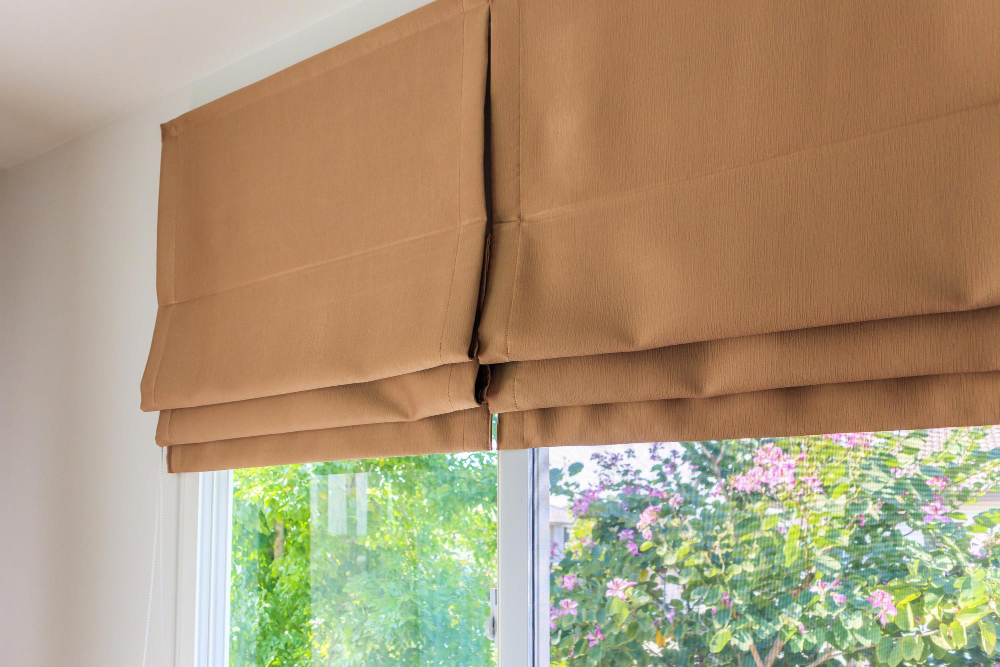
Roman blinds are available in different fabrics, textures and lining configurations. Each material responds differently to moisture, heat and cleaning products, so identifying what your blinds are made from is the first step towards safe maintenance.
Window furnishings can also have different operating systems. For example, motorised curtains use powered controls to open and close the fabric, while Roman blinds may operate through a cord, chain or compatible motorised lifting system. Each arrangement requires appropriate cleaning and mechanism care.
Common Roman Blind Fabrics
| Fabric Type | Cleaning Considerations |
| Cotton | May shrink, fade or develop water marks if cleaned incorrectly |
| Linen and linen blends | Can crease easily and may require specialist cleaning |
| Polyester | Often relatively easy to maintain, depending on its finish and lining |
| Velvet or textured fabrics | May show pressure marks or pile damage from rubbing |
| Blended fabrics | Require care based on the complete fabric composition |
| Blockout-lined fabrics | May have backing or lining materials that are unsuitable for washing or steaming |
These are general characteristics rather than universal cleaning rules. The manufacturer’s care label should always guide your chosen method.
Check the Lining and Construction
Roman blinds commonly use fabric panels, internal battens or rods, lifting cords and a headrail mechanism.
Some designs also feature light-filtering or blockout linings that help control sunlight and privacy.
Washing or soaking a lined blind can create problems if the face fabric and lining shrink at different rates. This may cause puckering, uneven folds or permanent distortion.
Before attempting a deeper clean, confirm whether the entire blind can be cleaned using the proposed method.
How to Clean Roman Blinds Without Damaging the Fabric
Regular light cleaning is generally the safest way to keep Roman blinds looking presentable.
Removing loose dust before it becomes embedded in the fibres can reduce the need for stronger cleaning methods later.
A soft brush or vacuum attachment is suitable for many fabrics, provided the manufacturer allows it.
Step 1: Lower the Blinds Completely
Courtesy - Magnific
Begin by lowering the Roman blind so the fabric hangs as flat as possible.
This makes it easier to inspect the surface and identify accumulated dust, stains or uneven folds.
Check that the blind moves smoothly before cleaning. If the operating mechanism feels jammed or unusually stiff, avoid forcing it.
Step 2: Remove Dust Gently
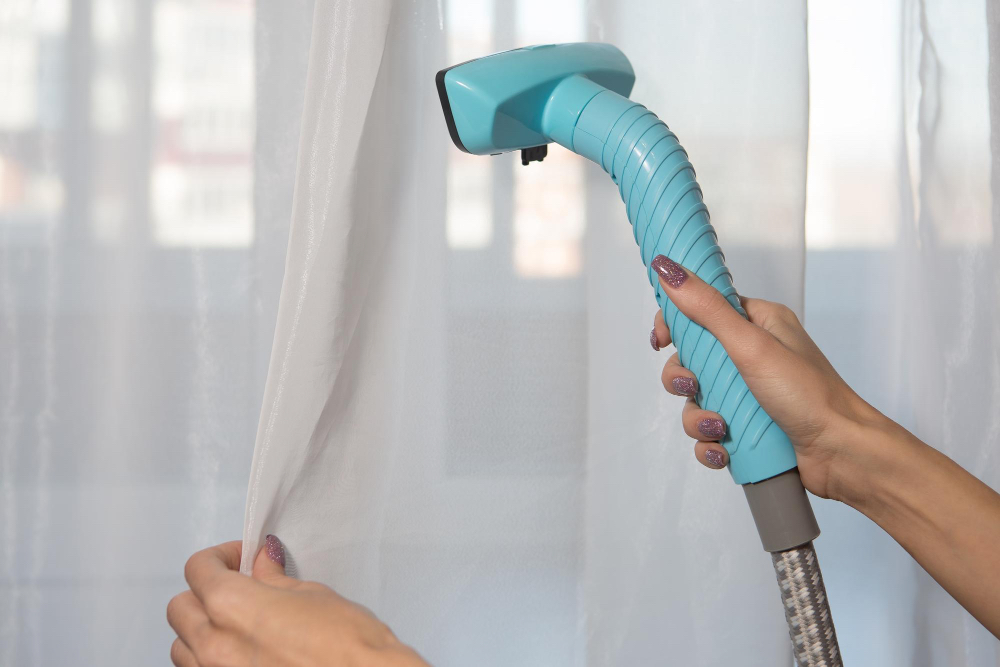
Courtesy - Magnific
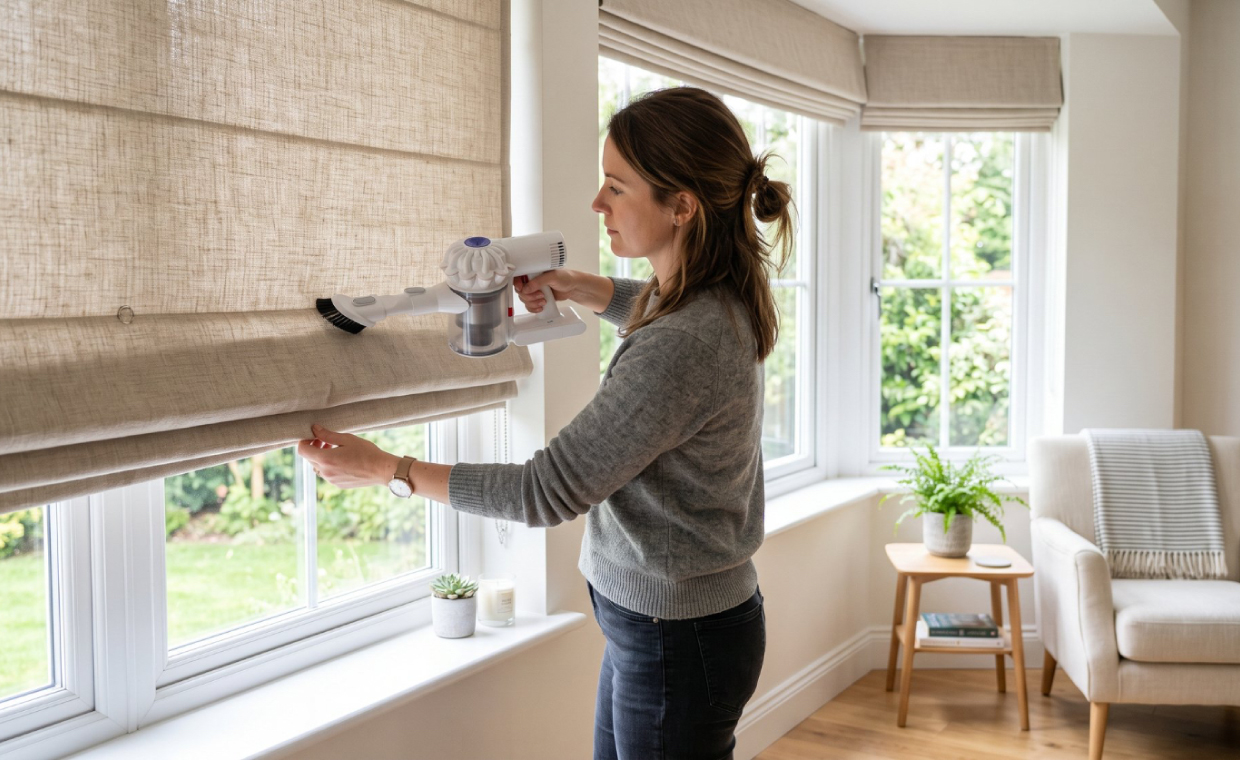
Use a vacuum cleaner with a clean, soft upholstery attachment on a low suction setting.
Move gently across the fabric without pressing heavily or stretching the material.
Pay particular attention to:
- Horizontal folds where dust settles
- Fabric edges and seams
- The upper section near the headrail
- Decorative trims and stitching
- Accessible areas around the bottom hem
For delicate or loosely woven fabrics, a soft brush may be preferable. A clean mesh barrier over the vacuum attachment can also help prevent lightweight fabric from being pulled into the nozzle.
Step 3: Check for Marks and Stains
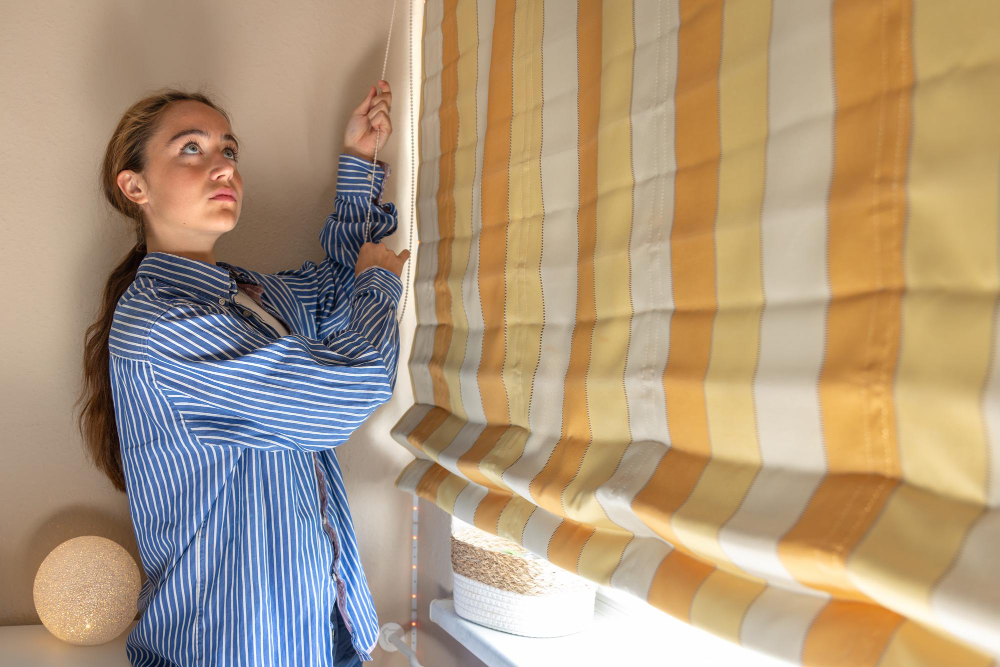
Courtesy - Magnific
After dusting, inspect the fabric for visible spots.
Avoid applying cleaning products immediately. Some materials react poorly to moisture, and the stain may require a fabric-specific treatment.
Check the care label before proceeding.
Step 4: Spot Clean Only When Permitted
If the fabric manufacturer allows spot cleaning, test the proposed method on a small, inconspicuous area first.
Use a clean cloth lightly dampened with water or an approved mild cleaning solution.
Blot the affected area gently rather than rubbing it. Excessive rubbing can spread the stain, disturb the weave or flatten textured fibres.
Avoid saturating the fabric, particularly around seams, lining attachments and internal battens.
Step 5: Allow the Fabric to Dry Naturally
If approved damp cleaning has been performed, leave the blind fully lowered while the treated area dries.
Provide suitable room ventilation and avoid handling the damp fabric unnecessarily.
Do not use a hairdryer, heater or direct high-temperature airflow to accelerate drying. Excessive heat may damage fibres, coatings or adhesives.
Only raise the blind once the material is completely dry.
How to Remove Common Stains From Roman Blinds
Accidental marks are difficult to avoid, especially in family homes where blinds sit near dining tables, kitchens or frequently used windows.
The safest stain-removal method depends on the fabric and the substance involved. Aggressive cleaning can leave a more noticeable mark than the original stain.
Before treatment, identify the stain and check whether the blind is suitable for spot cleaning.
Food and Drink Stains
Food splashes and drink spills can leave marks on fabric blinds.
If the material permits spot cleaning, gently remove any loose residue without spreading it across the surface.
Blot the area using the approved cleaning method. Avoid rubbing the stain deeper into the fibres.
Coffee, wine, oil-based sauces and other strongly coloured substances may require professional treatment, particularly on pale fabrics.
Grease and Oil Marks
Grease stains can be difficult to remove because ordinary water may not dissolve oily residues.
Avoid applying household degreasers, dishwashing liquid or solvents unless the blind manufacturer specifically approves them.
An unsuitable product can create discolouration or damage the fabric finish.
For valuable or delicate Roman blinds, professional cleaning is often the safer approach.
Dust and Fingerprints
Fingerprints and light surface dirt may respond to gentle dusting or an approved spot-cleaning method.
Use a soft cloth and minimal pressure.
Pay particular attention to the lower edge of the blind, where household members may touch the fabric while adjusting it.
If marks appear repeatedly, check whether the blind can be operated using its chain or control rather than pulling directly on the material.
Water Marks
Water can leave visible rings on some fabrics, particularly linen, cotton and textured materials.
Avoid repeatedly wetting the affected area in an attempt to blend the mark into the surrounding fabric.
If ordinary cleaning has caused a water stain, stop and seek fabric-specific advice before applying further treatment.
How Often Should Roman Blinds Be Cleaned?
Cleaning frequency depends on the location of the blinds, household activities and the amount of airborne dust.
Blinds in a quiet bedroom may remain relatively clean for longer than those positioned near a busy road, kitchen or frequently opened window.
A regular maintenance routine helps prevent dirt from becoming difficult to remove.
Suggested Maintenance Schedule
| Maintenance Task | Suggested Frequency |
| Light dusting or gentle vacuuming | Every 2–4 weeks, or as needed |
| Visual inspection for stains | During routine cleaning |
| Check folds and fabric alignment | Monthly |
| Inspect accessible operating components | Every few months |
| Check cord and chain safety devices | Regularly and whenever damage is noticed |
| Professional fabric cleaning | When recommended by the care label or when deeper cleaning is needed |
| Check motorised operation | During normal use and routine maintenance |
These intervals are general guidance. Follow the manufacturer’s instructions and adjust the routine according to your home.
For Sydney properties near busy roads or areas exposed to salt-laden coastal air, more frequent light dusting may be helpful.
Adjust Cleaning for Different Rooms
Living room blinds may collect dust from frequent window opening and everyday activity.
Bedroom blinds can accumulate airborne particles and should be cleaned gently as part of regular household maintenance.
Kitchen blinds may face greater exposure to cooking vapour and grease. Where possible, use suitable ventilation while cooking and avoid placing fabric blinds close to heat, steam or splashing water.
Maintain Roman Blind Cords, Chains and Lifting Mechanisms
A Roman blind’s appearance depends partly on how smoothly its lifting system operates.
Over time, frequent use can reveal uneven movement, damaged cords or problems around the headrail.
Routine visual checks can help identify issues before continued operation causes additional damage.
Operate Blinds Gently
Raise and lower Roman blinds using the intended control.
Avoid pulling directly on the fabric or forcing the mechanism when it resists movement.
If the blind rises unevenly, check for visible obstructions without dismantling the lifting system.
Do not attempt to adjust internal cords or tensioning components unless the manufacturer provides instructions that permit user maintenance.
Inspect the Headrail and Components
The headrail supports the blind and houses the operating system.
Look for signs of:
- Loose or damaged mounting brackets
- Frayed or visibly deteriorated cords
- Twisted or displaced lifting components
- Uneven movement between fabric sections
- Unusual noises during operation
- Damaged chain guides or safety fittings
If the blind repeatedly becomes stuck or hangs unevenly, arrange professional inspection.
Avoid applying household lubricants to the headrail without manufacturer approval, as some products can attract dirt or affect internal components.
Keep Roman Blind Cords Safe Around Children
Cord safety deserves particular attention in homes with babies and young children.
Loose or looped blind cords can create a serious strangulation hazard. Australia has mandatory safety standards covering the supply and installation of corded internal window coverings.
Regular maintenance should include checking that all required safety devices remain correctly secured and functional.
Check Cord and Chain Safety Fittings
Inspect cord guides, tensioning devices and cleats for damage or loose attachment.
Never leave long or looped cords hanging where children can reach them.
Keep cots, beds, chairs and climbable furniture away from windows with blind cords.
If a safety device is damaged or missing, stop using the blind and arrange appropriate repair.
Consider Cordless or Motorised Operation
Cordless and suitably designed motorised Roman blinds can reduce hazards associated with exposed operating cords.
However, the absence of an external chain does not automatically eliminate every potential hazard. The complete installation must be suitable for the household and comply with applicable requirements.
When replacing older blinds, ask about compliant operating systems and professional installation.
How to Maintain Motorised Roman Blinds
Courtewsy - Magnific
Motorised Roman blinds provide convenient operation without requiring users to adjust the fabric manually.
Depending on the system, the blinds may operate through a remote control, wall switch or compatible smart-home controls.
Although motorisation reduces direct handling, the fabric and lifting components still require regular care.
Clean Around the Motor Carefully
Use a soft, dry cloth to remove accessible dust from the headrail and surrounding surfaces.
Keep water and cleaning products away from electrical components, motors and control units.
Do not dismantle the motor housing or apply cleaning solutions inside the mechanism.
Follow the manufacturer’s instructions before cleaning near any powered equipment.
Watch for Unusual Operation
A motorised blind should move consistently within its programmed operating limits.
Potential warning signs include:
- Unexpected stopping during movement
- Uneven lifting
- Unusual grinding or clicking sounds
- Reduced response to controls
- Repeated changes in the stopping position
Some battery-powered systems may require charging or battery replacement according to their instructions.
If simple manufacturer-approved checks do not resolve the problem, contact a qualified technician or the original supplier.
Prevent Fading and Sun Damage
Sydney homes can experience strong sunlight throughout the year, particularly around north-facing and west-facing windows.
Prolonged sunlight exposure may contribute to fading or changes in fabric appearance.
Different materials and colours respond differently to ultraviolet exposure, so some Roman blinds may retain their original appearance longer than others.
Protect Roman Blinds From Moisture and Mould
Moisture can be particularly problematic for fabric blinds.
Condensation around windows, high indoor humidity and poor ventilation may encourage mould growth or leave persistent marks.
The risk can increase in bathrooms, laundries and other rooms where moisture regularly accumulates.
Reduce Condensation Around Windows
Keep indoor humidity under control through suitable ventilation and moisture management.
Wipe condensation from window glass and frames where accessible, and avoid allowing damp fabric to remain pressed against wet surfaces.
Check for leaks around windows, particularly after heavy rainfall.
Recognise Signs of Moisture Damage
Possible warning signs include musty odours, visible mould growth, persistent dampness and unexplained fabric discolouration.
Do not apply bleach or strong mould-removal chemicals to Roman blinds without manufacturer approval.
Mould affecting fabric, lining or internal components may require professional cleaning or replacement.
If the problem returns, address the underlying moisture source rather than repeatedly treating the fabric.
Common Roman Blind Cleaning Mistakes to Avoid
Some cleaning methods that work well on curtains or washable household fabrics are unsuitable for Roman blinds.
Their layered construction means aggressive cleaning can affect the face fabric, lining, stitching and internal supports.
Avoiding common mistakes helps protect both the appearance and operation of the blind.
Machine Washing Without Checking the Care Label
Roman blinds are not automatically machine washable.
Their battens, linings and lifting components may be damaged by washing, and different fabric layers can shrink unevenly.
Only machine wash a blind if its manufacturer explicitly permits the process and provides suitable instructions.
Using Excessive Water
Soaking the fabric can create water marks, shrinkage and problems with lining materials.
Use moisture only when the care instructions allow it.
Scrubbing Stubborn Stains
Hard brushing or vigorous rubbing can damage fibres and alter the fabric texture.
For persistent stains, professional cleaning may offer a safer alternative.
Applying Steam Directly to the Blind
Steam can damage heat-sensitive fabrics, linings and bonded materials.
Do not use a garment steamer unless the manufacturer approves steam treatment for the complete blind.
Using Strong Household Chemicals
Bleach, concentrated detergents, solvents and abrasive cleaners can affect dyes, coatings and fabric finishes.
Choose only manufacturer-approved cleaning products.
Forcing a Jammed Mechanism
A stuck blind may have a damaged cord, misaligned component or obstruction.
Forcing the mechanism can worsen the problem or cause parts to break.
Stop operating the blind and arrange suitable inspection.
When Should You Hire a Professional Blind Cleaner?
Routine dusting is generally manageable for homeowners, but some cleaning tasks require specialist attention.
Delicate fabrics, heavily stained blinds and complicated lining systems may not respond well to household cleaning methods.
Professional assistance may also be appropriate when removing the blind would involve dismantling its lifting mechanism.
Signs Professional Cleaning May Be Needed
Consider professional assistance when:
- The care label specifies dry cleaning or specialist treatment.
- Stains remain after permitted routine cleaning.
- The fabric has developed persistent odours.
- Large areas show discolouration or ingrained dirt.
- The blind includes delicate decorative finishes.
- Moisture or mould has affected the fabric.
- The lining or stitching appears damaged.
Choose a cleaner experienced with Roman blinds rather than assuming every curtain-cleaning service can handle their construction.
Ask About the Cleaning Process
Before booking, provide the cleaner with information about the fabric, lining and any known stains.
Ask whether the blind needs to be removed and how the lifting components will be protected.
Request a quotation that identifies the cleaning method and any additional removal or reinstallation charges.
Repair or Replace: What Should You Do With Damaged Roman Blinds?
Not every problem means the entire blind needs replacing.
Some faults involve replaceable operating components, while others affect the fabric or structure more extensively.
A professional inspection can help identify whether repair is practical.
When Repairs May Be Suitable
Repairs may be worthwhile when the fabric remains in good condition but the blind has a localised mechanical problem.
Examples include a faulty operating component, loose stitching or a damaged fitting that can be replaced safely.
Ask whether compatible replacement parts are available and whether repairs will affect the existing warranty.
When Replacement May Be Better
Replacement may be more practical if the fabric has extensive fading, permanent shrinkage or widespread damage.
Repeated mechanical failures, significant mould contamination or unavailable replacement components can also influence the decision.
If you’re planning an upgrade, compare fabric options, lining choices, operating systems and professional installation services.
Roman Blind Maintenance Tips for Sydney Homes
Different rooms create different maintenance challenges, so a single cleaning approach may not suit every window.
Sydney homes range from coastal apartments to suburban family houses, and the surrounding environment can influence how quickly blinds collect dust or show wear.
A room-by-room routine makes maintenance easier to manage.
Bedrooms
Choose gentle dusting methods that protect the fabric and lining.
For blockout Roman blinds, avoid soaking or aggressive cleaning that could affect the light-blocking layer.
Check cord safety carefully in children’s bedrooms.
Living Rooms
Living room blinds may receive frequent sunlight and regular operation.
Inspect the folds occasionally to make sure the fabric hangs evenly.
Keep nearby windowsills clean to reduce dust transfer onto the blind.
Kitchens
Cooking grease and airborne moisture can settle on fabric surfaces.
Use suitable kitchen ventilation and avoid positioning Roman blinds where they may be exposed to excessive heat, steam or food splashes.
Clean light surface dust before it combines with grease and becomes difficult to remove.
Coastal Homes
Properties exposed to salt-laden air may experience additional deposits around windows and fittings.
Keep window frames clean and inspect accessible metal components for signs of corrosion.
Avoid using harsh cleaning products on the fabric or operating mechanism.
Simple Roman Blind Maintenance Checklist
A straightforward routine can make caring for Roman blinds less time-consuming.
Regular checks also provide an opportunity to identify damage while it is still relatively minor.
Use the following checklist as a guide:
- Check the fabric care label before cleaning.
- Remove loose dust with a suitable soft brush or low-suction vacuum.
- Inspect folds for trapped dirt.
- Look for stains or changes in fabric colour.
- Check that the blind raises and lowers smoothly.
- Inspect accessible headrail components.
- Confirm cord and chain safety fittings remain secure.
- Keep window condensation and moisture under control.
- Check motorised systems for unusual operation.
- Arrange professional cleaning or repairs when needed.
Adjust the schedule to suit the fabric type, room conditions and manufacturer’s maintenance instructions.
Keep Your Roman Blinds Looking Their Best
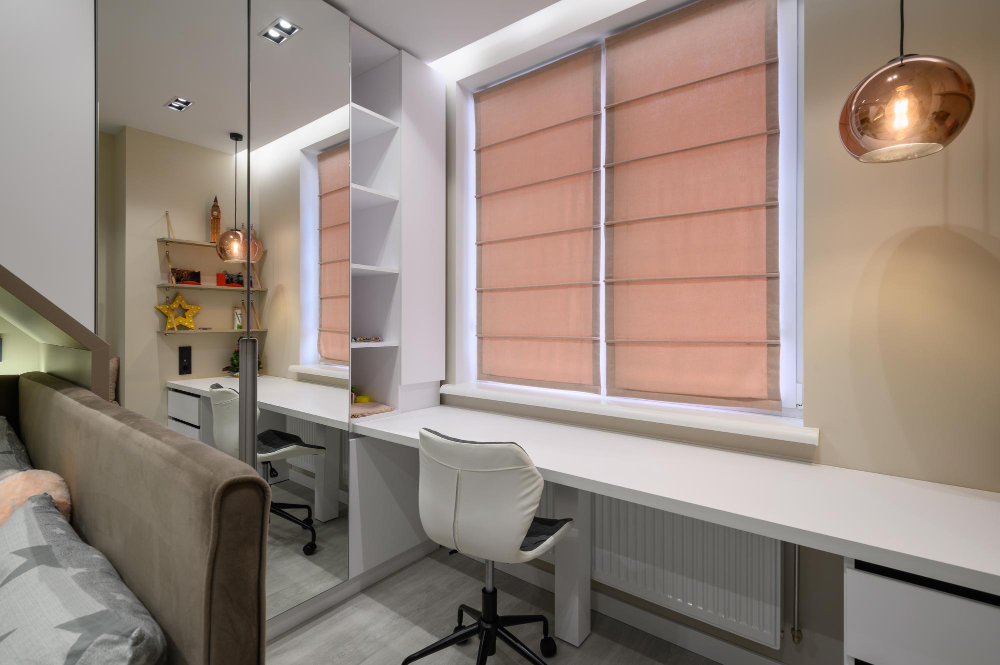
Courtesy - Magnific
Roman blinds can remain attractive and functional with consistent care and suitable cleaning methods. Gentle dusting, careful stain treatment and routine mechanism checks help protect their fabric folds and support smooth daily operation.
The key is to match the cleaning method to the material. Avoid excessive moisture, harsh chemicals and unnecessary force, particularly when dealing with delicate linings or operating components.
If your blinds show persistent staining, mechanical problems or signs of fabric deterioration, professional advice can help you decide whether cleaning, repair or replacement is the better option.
Also Read: How to Clean Mini Blinds?
FAQs on Roman Blinds Cleaning and Maintenance
1. How often should Roman blinds in Sydney be cleaned?
Roman blinds in Sydney generally benefit from light dusting or gentle vacuuming every two to four weeks, depending on household conditions. Homes near busy roads, coastal areas or frequently opened windows may require more regular attention.
Inspect the blinds for stains and uneven folds during routine cleaning. More intensive cleaning should follow the fabric manufacturer’s instructions rather than a fixed schedule. For delicate materials or lined designs, professional cleaning may be appropriate when ordinary maintenance no longer removes accumulated dirt.
2. Can Roman blinds be washed in a washing machine?
Most Roman blinds should not be machine washed unless the manufacturer specifically confirms that the complete blind is suitable for this method. Many designs contain linings, battens, stitching and lifting components that may be damaged during washing.
The face fabric and lining may also shrink differently, causing uneven folds or distortion. Check the care label before attempting any wet cleaning. Gentle vacuuming and approved spot cleaning are often more suitable for routine maintenance, while delicate fabrics may require professional treatment.
3. What is the best way to remove stains from Roman blinds?
The best method depends on the fabric, lining and type of stain. Begin by checking the manufacturer’s care instructions to confirm whether spot cleaning is allowed.
For compatible fabrics, gently blot the mark with a clean cloth and an approved cleaning solution after testing an inconspicuous area. Avoid rubbing, soaking or applying strong chemicals, as these can damage the material. Grease, wine and persistent water marks may require professional cleaning to reduce the risk of permanent discolouration.
4. How do I prevent mould on Roman blinds in Sydney homes?
Preventing mould involves controlling moisture around the windows and keeping the fabric dry. Use suitable ventilation in humid rooms, remove condensation from window surfaces and investigate any leaks that cause repeated dampness.
Avoid leaving Roman blinds pressed against wet glass or allowing moisture to remain trapped within the folds. If mould appears, check the manufacturer’s cleaning advice and seek professional assistance where needed. Do not automatically apply bleach or household mould sprays, as these products may damage fabric and linings.
5. How long do Roman blinds last with proper maintenance?
The lifespan of Roman blinds depends on their fabric quality, construction, sunlight exposure, operating mechanism and frequency of use. Regular dusting, gentle handling and timely repairs can help reduce avoidable wear.
Blinds exposed to strong sunlight, humidity or frequent operation may show deterioration sooner than those in more sheltered rooms. Inspect the fabric, folds and lifting components periodically. If the material remains sound but the mechanism develops a fault, repairing compatible components may extend the blind’s useful life without requiring complete replacement.
Courtesy - Featured Image(Magnific)
Author & Expert Review
Written & Verified By:  Mansi Shah – Architect & Architectural Content Writer, SDCPL | B.Arch.
 Mansi Shah – Architect & Architectural Content Writer,
| Credentials: Architect associated with Sthapati Designers & Consultants Pvt. Ltd. (SDCPL), with over 25 years of professional experience in architecture and interior planning. Experience: Architect with 25+ years of experience in architectural planning, design development, detailing, and on-site execution of residential, commercial, and institutional projects. Expertise: Specializing in architectural planning, interior design, material selection, construction practices, building bylaws, and space efficiency. She reviews content to ensure it reflects practical design principles, efficient interior planning, and industry-aligned architectural standards. Find her on: LinkedIn |