








Table of Contents
Quick Summary
- RBI raises repo rate: The Reserve Bank of India increased the repo rate by 25 basis points, from 5.25% to 5.50%, on October 7, 2026.
- Floating-rate loans may become expensive: Borrowers with floating-rate home construction loans could face higher EMIs or longer repayment tenures.
- Fixed-rate loans offer temporary protection: EMIs generally remain unchanged during the agreed fixed-rate period.
- EMI impact depends on the loan: A ₹50 lakh loan at 8.50% interest over 20 years would have an EMI of approximately ₹43,391. At 8.75%, it would rise to approximately ₹44,186.
- Construction loans have a different repayment structure: Since funds are disbursed in stages, an interest rate increase can also affect pre-EMI payments.
- Check your loan agreement: Understand the applicable benchmark, interest rate spread and reset frequency.
- Consider partial prepayments: Reducing the outstanding principal can help lower the overall interest burden.
- Maintain a contingency fund: Keep additional funds aside to manage unexpected construction expenses and higher repayments.
- Compare refinancing options: Switching lenders or moving to a fixed-rate loan may help, but account for processing fees and other charges.
- Plan before borrowing: Assess your repayment capacity and ensure that your household budget can accommodate possible interest rate increases.
Courtesy - Magnific
The Reserve Bank of India (RBI) raised the policy repo rate by 25 basis points to 5.50 per cent on October 7, 2026, its first increase since February 2023. Now, what impact will this have on your home construction loan EMI?
The RBI repo rate impact on home loans depends on your lender, the interest rate linked to your loan and the terms of repayment. However, borrowers with floating-rate loans will face higher monthly EMIs or an extended loan tenure following this hike.
In this blog, let’s explore whether a repo rate hike automatically means a higher EMI. And if it does, how much more may you have to pay? Understanding the connection between the RBI’s monetary policy and your home construction loan can help you plan your finances better.
What Is the Repo Rate, and Why Does It Matter?

Courtesy - Magnific
The repo rate is the interest rate at which the Reserve Bank of India (RBI) lends short-term funds to commercial banks against eligible securities. It is one of the key instruments the central bank uses to manage inflation and maintain economic stability.
When inflation rises, the RBI may increase the repo rate to make borrowing more expensive and moderate spending. Conversely, when inflation is under control and economic growth needs support, it may reduce the rate to encourage borrowing and investment.
The RBI’s Monetary Policy Committee (MPC), in its October 2026 meeting, increased the repo rate by 25 basis points (0.25 percentage points), taking it from 5.25% to 5.50%. The decision also marked a shift in the RBI’s policy stance from neutral to calibrated tightening, indicating a more cautious approach towards future interest rate movements.
While this adjustment may appear small, it can influence the cost of borrowing across the banking system. For someone taking a home construction loan or already repaying one, it is worth understanding how this change could affect monthly repayments.
Will Your Home Construction Loan EMI Go Up?
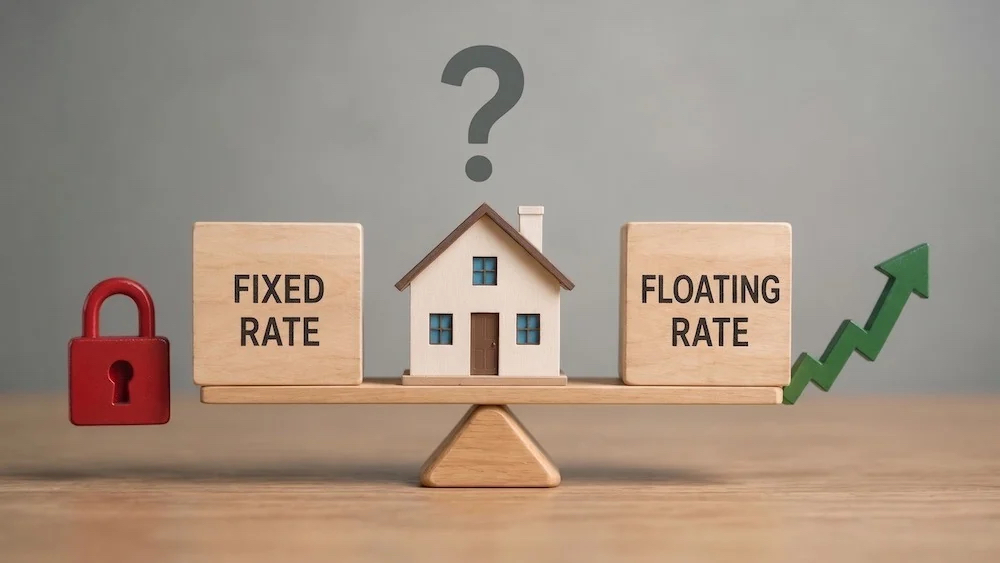
As mentioned earlier, the straightforward answer is: it could, especially if you have a floating-rate home construction loan linked to the repo rate. Understanding the RBI repo rate impact on home loans is particularly important if your home construction loan is linked to an external benchmark, as changes in the benchmark may affect your borrowing costs at the next reset.
Banks generally offer two types of home loan interest rates: fixed and floating.
- Fixed interest rate: The interest rate remains unchanged for the agreed fixed-rate period. Therefore, a repo rate hike does not automatically increase your EMI during this period. However, check whether the loan has a fixed-rate tenure or a reset clause.
- Floating interest rate: The interest rate moves in response to changes in the benchmark to which the loan is linked. If your loan is linked to an external benchmark such as the RBI repo rate, an increase in the benchmark can result in a higher lending rate.
Under RBI guidelines, banks must link floating-rate personal and retail loans, including housing loans, to an external benchmark. Such loans must be reset at least once every three months. However, the actual impact depends on the loan agreement, applicable spread and reset date.
For instance, if your home construction loan carries an interest rate of 8.50% and your lender passes on the entire 0.25 percentage point increase, your revised interest rate could become 8.75%.
However, the increase is not necessarily immediate. Your existing interest rate may remain unchanged until the next scheduled reset. Also, borrowers whose loans are linked to MCLR or other internal benchmarks may experience a different rate adjustment depending on their lender’s funding costs and lending policies.
Therefore, before assuming that your EMI will increase, check which benchmark your loan is linked to.
How Much More Could You Pay? An EMI Illustration
Even a small increase in the interest rate can make a noticeable difference over a long repayment period. Consider a borrower who has taken a home construction loan of ₹50 lakh for 20 years.
Here is how a 0.25 percentage point increase in the interest rate could affect the EMI.
| PARTICULARS | BEFORE HIKE | AFTER HIKE |
| Loan Amount | ₹50 lakh | ₹50 lakh |
| Interest Rate | 8.50 % | 8.75 % |
| Loan Tenure | 20 years | 20 years |
| Monthly EMI | ₹43,391 | ₹44,186 |
Here, assume that the entire loan is disbursed, the outstanding principal is ₹50 lakh, and the original 20-year repayment tenure is retained.
The difference works out to approximately ₹795 every month. This means an additional outgo of around ₹9,530 annually.
While this may not appear substantial at first, remember that a home construction loan is a long-term financial commitment. If interest rates continue to rise, the cumulative impact on your household budget could be significant.
Alternatively, your lender may choose to retain the existing EMI and extend the repayment tenure. In such a situation, you may not feel the immediate pinch of a higher monthly instalment, but you could end up paying interest over a longer period.
If you want to understand how loan amount, interest rate and repayment tenure determine your monthly instalment, read our guide on how EMI works and the factors affecting it.
Home Construction Loans: Why the Impact Can Be Different
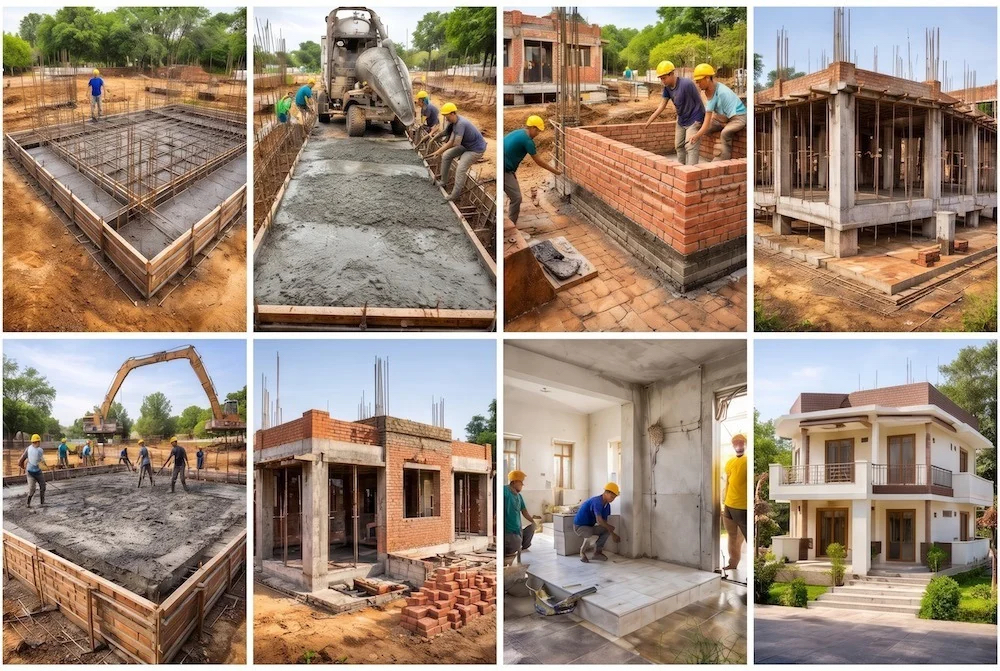
Unlike a conventional home loan for a completed property, a home construction loan is generally disbursed in stages, depending on the progress of construction.
For example, a bank may release the loan amount in phases as the foundation, structural framework, roofing and other construction milestones are completed. The borrower does not necessarily receive the entire sanctioned loan amount at once.
This makes the interest calculation particularly important.
During the construction period, borrowers may opt for pre-EMI payments. Pre-EMI is the interest payable on the amount disbursed by the lender, rather than the entire sanctioned loan amount. It is generally paid during the construction period until regular EMI repayment begins, as specified in the loan agreement.
Suppose you have been sanctioned a home construction loan of ₹40 lakh, but the bank has disbursed only ₹15 lakh towards the initial stages of construction. Your pre-EMI interest is calculated on the ₹15 lakh disbursed.
If the interest rate increases, the pre-EMI amount could also increase. As construction progresses and additional loan amounts are released, the interest burden may rise further.
Once the entire loan is disbursed and regular repayment begins, your EMI will generally comprise both the principal and interest components.
Therefore, a repo rate hike can affect borrowers even before they move into their newly constructed homes.
Since construction loans have unique requirements, disbursement schedules and repayment conditions, borrowers should understand what to know before applying for a home construction loan before committing to financing.
What Can Homeowners Do to Manage a Higher EMI?
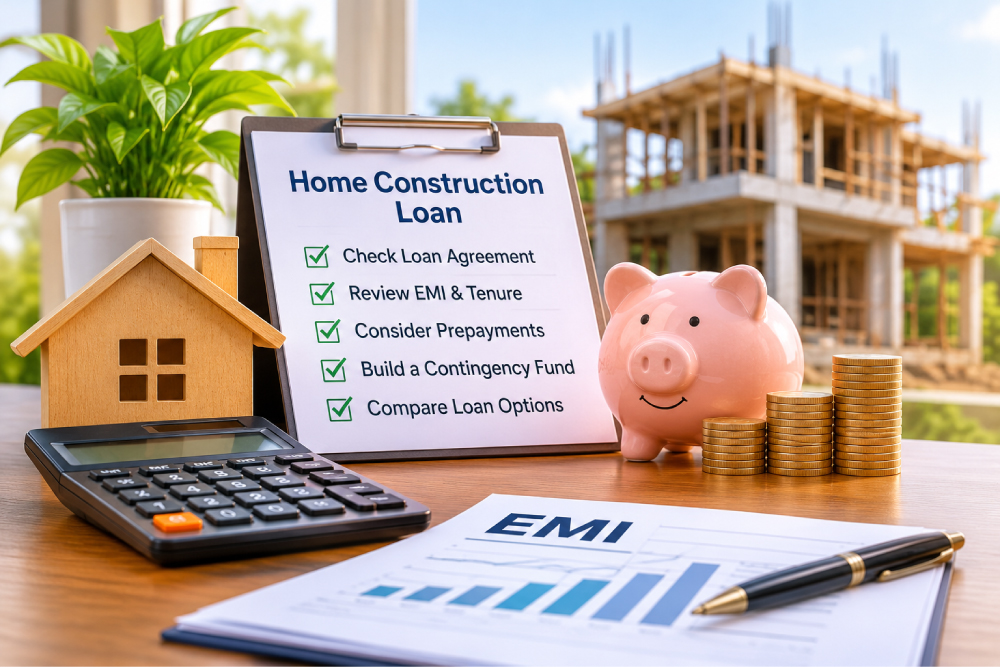
A rising interest rate need not derail your home construction plans. However, it does call for better financial planning. Here are a few practical steps you can consider.
1. Check Your Loan Agreement
Find out whether your home construction loan is linked to the repo rate, MCLR or another benchmark. Also, check the applicable interest rate, spread and reset frequency. This will help you understand when and how the recent rate hike could affect your repayment.
2. Review Your EMI and Loan Tenure
Contact your lender to understand how the revised interest rate will affect your EMI and repayment tenure. If your budget permits, consider retaining the existing tenure and paying a slightly higher EMI rather than extending the loan period. This can help limit the additional interest burden.
3. Consider Partial Prepayments
If you have surplus funds from savings, bonuses or other sources, consider making partial loan prepayments. Reducing the outstanding principal can lower the interest payable over the remaining loan tenure. Check the applicable terms and charges before making a prepayment.
4. Maintain a Construction Contingency Fund
Construction expenses rarely remain exactly as planned. Material price fluctuations, labour costs, design changes and unforeseen site conditions can stretch your budget. Keep a separate contingency fund to meet these expenses without relying on additional borrowing.
5. Compare Loan Options Carefully
If your existing loan has become expensive, explore whether switching to another lender or moving to a fixed-rate option makes financial sense. However, compare the revised interest rate, processing fees, administrative charges and other costs before making a decision. A lower advertised interest rate does not always translate into overall savings.
Importantly, RBI guidelines provide borrowers with options when floating-rate equated instalment-based personal loans are reset. These include an increase in EMI, extension of loan tenure, a combination of both, switching to a fixed-rate option as per the lender’s policy, or making partial or full prepayments. Applicable charges and switching conditions may vary between lenders.
Should You Delay Your Home Construction Plans?
A repo rate hike may make borrowing slightly more expensive, but it does not necessarily mean that you should put your home construction plans on hold.
Interest rates are only one part of the overall cost of building a house. Land prices, construction materials, labour availability, location, design and the duration of construction also influence the final expenditure.
If you have stable income, enough savings for the initial construction expenses and a manageable loan-to-income ratio, you may still be able to proceed with your plans.
A repo rate hike may be a small adjustment in percentage terms, but its impact can extend across a long repayment period. For homeowners building their dream houses, the key is not to panic but to understand how the change affects their loan.
Before committing to a home construction loan, examine the interest rate structure, repayment terms, disbursement schedule and your ability to accommodate a higher EMI. If you already have a loan, stay in touch with your lender and review your repayment options whenever interest rates change.
After all, building a home is not just about laying a strong foundation with bricks and concrete. It is equally important to build a sound financial foundation that allows you to enjoy your home without carrying an uncomfortable debt burden.
Also Read: Home Loan Interest Rate Comparison February 2026: Top Banks Vs NBFCs
FAQs on Repo Rate Hike 2026 and Your Housing Loan
1. Will the RBI repo rate hike increase my home construction loan EMI?
Not necessarily. Borrowers with floating-rate loans linked to the repo rate may face higher EMIs or longer repayment tenures. Fixed-rate borrowers are generally unaffected during their agreed fixed-rate period.
2. How much will my EMI increase after a 0.25% repo rate hike?
For a ₹50 lakh loan with 20 years remaining, an increase in interest from 8.50% to 8.75% would raise the monthly EMI from approximately ₹43,391 to ₹44,186, assuming the full increase is passed on.
3. Does a repo rate hike affect pre-EMI payments on construction loans?
Yes. If the lender increases the interest rate, pre-EMI payments may also rise. They are calculated on the amount disbursed by the bank, rather than the entire sanctioned loan amount.
4. Can I switch my floating-rate home construction loan to a fixed interest rate?
You may be able to, depending on your lender’s policy. Check the applicable switching conditions, charges and revised interest rate before making a decision.
5. Should I prepay my home construction loan when interest rates rise?
Partial prepayment can reduce your outstanding principal and future interest burden. However, retain sufficient savings for construction expenses and emergencies before committing surplus funds towards repayment.
Courtesy - Featured Image(Magnific)
Author & Expert Review
Written By:  Jyoti Kaur | Content Writer & Keyword Research Support

| Credentials: B.Sc. in Information Technology from Ranchi University and B.Ed. from Mumbai University. Experience: Content Writer and Keyword Research Support at Gharpedia, with 3+ years of experience in SEO, content writing, and digital marketing activities. Expertise: Specializing in keyword research, on-page SEO, link-building outreach, and reader-focused content creation. She focuses on developing SEO-friendly, well-researched articles that improve search visibility while delivering valuable and engaging information to readers. Find her on: LinkedIn |
Verified By Expert: Vaidehi Desai | Owner – Gharpedia | MBA (Finance), PGDHRM

This article has been reviewed for financial, operational, and content quality accuracy by Vaidehi Desai, Owner and Operations Lead of Gharpedia, a venture of Sthapati Designers & Consultants Pvt. Ltd. With over 10 years of experience in managing an educational and media platform in architecture, construction, and home-building, along with a strong background in finance, business operations, and human resource management, she ensures the content meets organizational standards, factual reliability, and overall quality benchmarks.
Find her on : LinkedIn