





Table of Contents
Quick Summary
- Modern Bathroom Vanity Lighting which are Energy-efficient is a simple, high-impact upgrade for modern homes.
- Vanity lights are used most frequently, making them a key way to reduce daily energy consumption.
- LED lights use up to 75–90% less energy and last significantly longer than traditional bulbs.
- Popular options include LED light bars, Hollywood mirrors, sconces, and backlit mirrors.
- Choosing the right colour temperature improves both functionality and ambiance.
- Lumens, not watts, determine brightness for optimal lighting performance
- Features like dimmability and ENERGY STAR ratings enhance efficiency
- Prioritise high CRI and moisture resistance for better results.
- Small lighting changes can lead to long-term cost savings and sustainability.
Thinking about saving energy without skimping on style? Modern Bathroom Vanity Lighting is the easy answer.
Wondering why? You’re not alone! Energy-efficient bathroom lighting is more popular than ever, and there’s one fixture that makes all the difference:
The vanity light.
This bad boy is on more than any other light fixture in your house. If you’re someone that enjoys waking up to natural sunlight, consider leaving your vanity light off in the morning. Every. Single. Day.
Believe me. It adds up.
Modern Bathroom Vanity Lighting: The Workhorse of the Space
Fortunately, switching to energy-efficient bathroom vanity lights is one of the easiest swaps your eco-friendly home will ever make. In fact, residential LEDs use at least 75% less energy and can last up to 25x longer than incandescent light bulbs. It’s good news for our planet and your wallet.
Ready to make the switch? Here’s everything you need to know about bathroom vanity lighting ideas…
What You’ll Learn
- Why Modern Bathroom Vanity Lighting with energy efficiency starts at the Vanity?
- What Makes LED Vanity Lights Different?
- 4 Types of Energy-Efficient Bathroom Vanity Lights.
- How to Pick the Right Fixture?
- Features Worth Prioritising.
Why Energy Efficient Vanity Lighting Starts at the Vanity
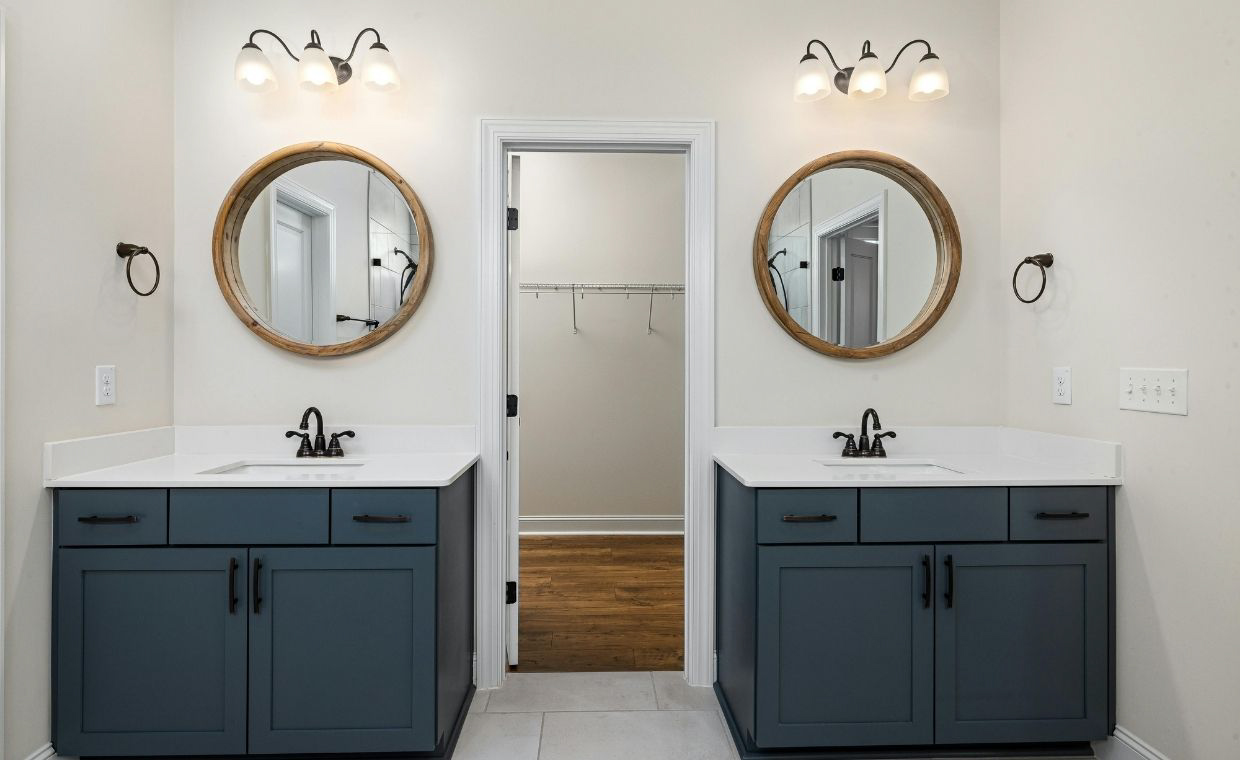
The bathroom is easily one of the most commonly used rooms in any home. And since the vanity light is almost always on, it’s considered the workhorse of the space.
Whether you’re doing your makeup, shaving, putting on sunscreen, or applying deodorant. You need that vanity light. And it’s also the light most likely to be left on accidentally throughout the day.
1. Here’s the issue:
Incandescent and halogen vanity lights are seriously inefficient. They’re wasting more electricity than any other bulb in your home simply by converting most of their energy to heat instead of light.
Installing energy-efficient lighting as bathroom vanity lighting ideas is better for the environment. But did you know it’s one of the single smartest financial decisions you can make as a homeowner? Quick + easy wins all around.
2. What Makes LED Vanity Lights Different?
When it comes to energy efficient bathroom lighting, LED options are the current gold standard. Why? LED lights convert significantly more electrical energy into visible light. And they waste far less of it as heat energy. Whereas traditional incandescent lights waste about 90% of their energy, LEDs use up to 90% less energy while giving off the same — or better — amount of light.
To top it off? The average LED light lasts between 25,000 – 50,000 hours. That’s upwards of 20 years if you use the light for 3 hours a day.
Eco-friendly and affordable? We’ll take two, please.
But it’s not just about function. Design trends have evolved a ton over the years, and today’s LED vanity lights come in every shape, style, and temperature you can imagine. If you think modern lighting is boring or too sterile, think again!
4 Types of Energy Efficient Bathroom Vanity Lights
There are a few different vanity lighting styles to choose from. Here are the top 4 most popular types for an energy-efficient bathroom:
1. LED Vanity Light Bars
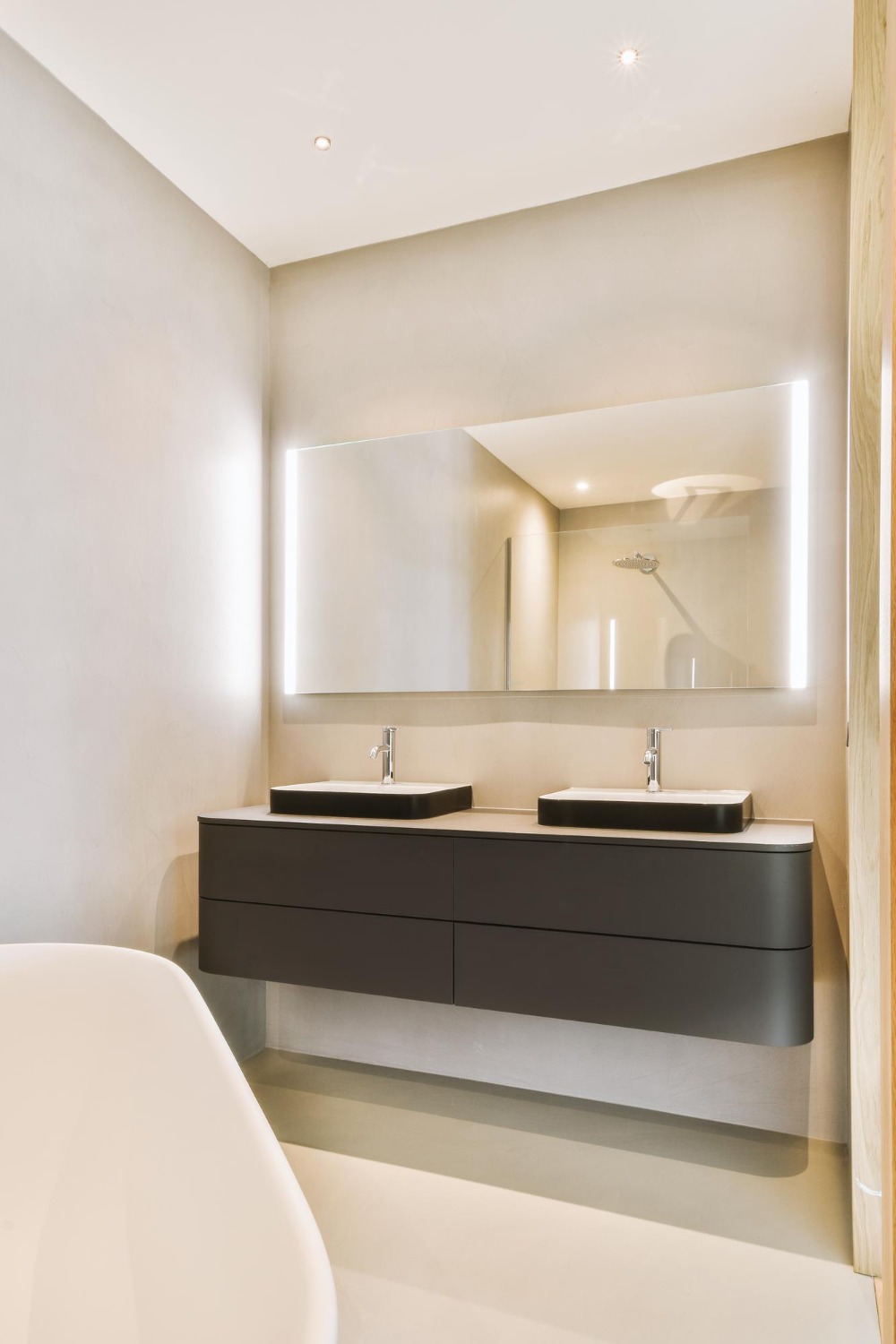
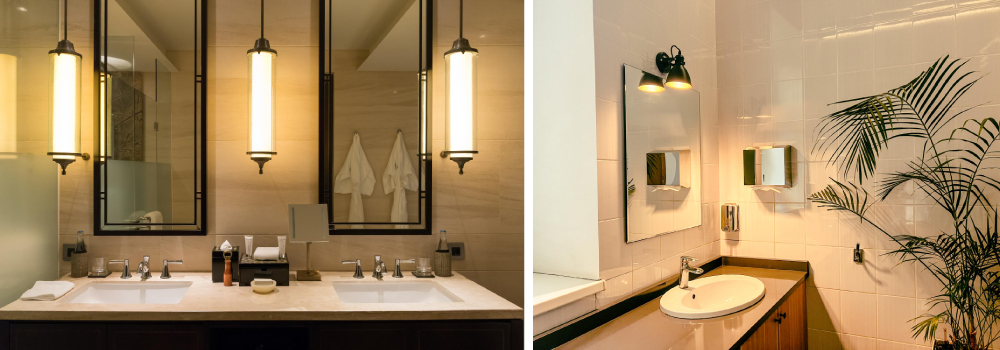
You’ll find these most often. Horizontal and vertical light bars installed directly above or sometimes beside the bathroom mirror. They’re the most popular because they cast even lighting across the whole face, which is ideal for most morning/evening routines. Styles range from minimalist to industrial to contemporary and can match any bathroom décor with modern vanity light fixtures.
2. Hollywood Mirror Lights
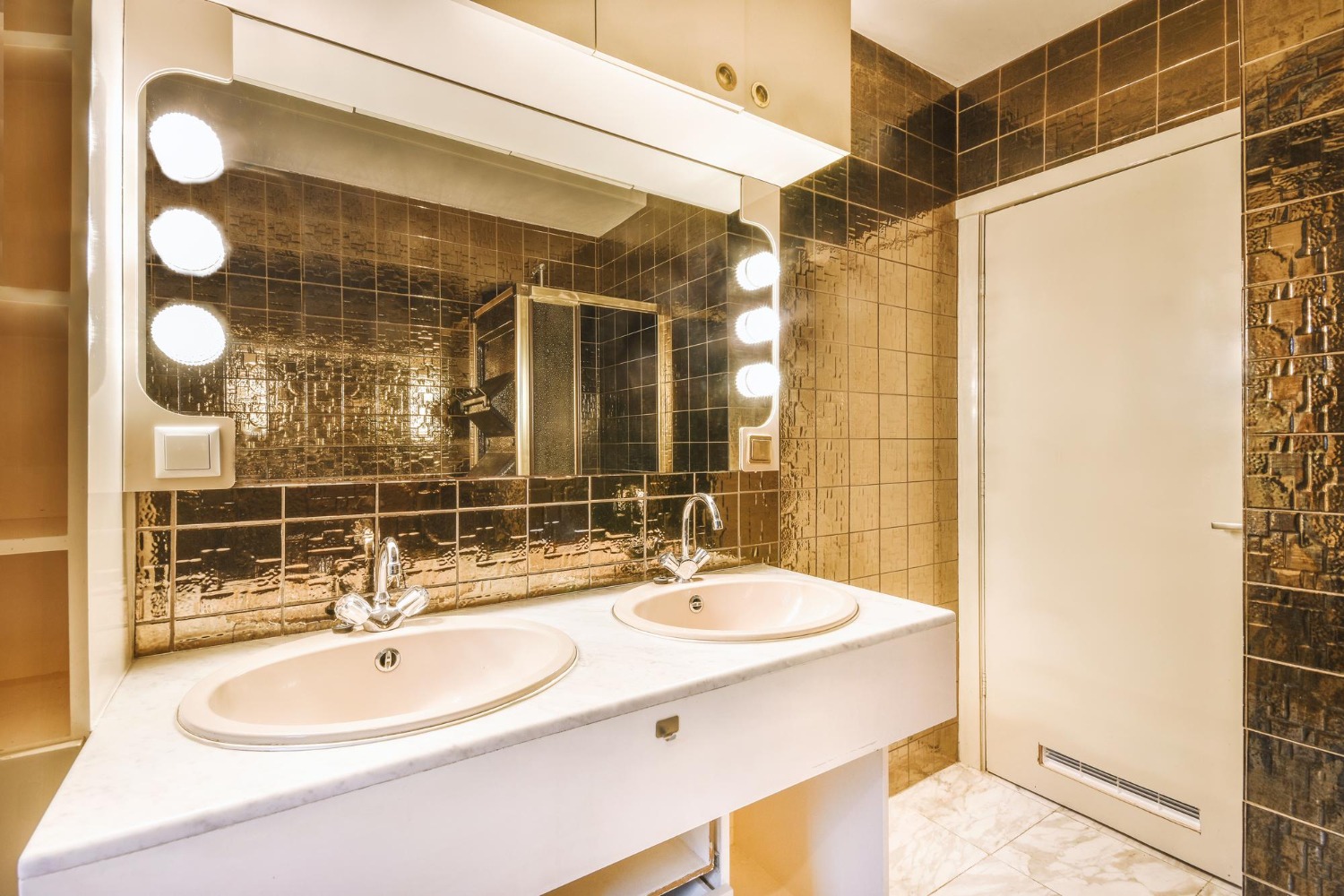
Large strips with globe bulbs that line the perimeter of the entire mirror. Like the name suggests, these offer a very “Hollywood glam” look. They’re also exceptional at lighting the face without shadows. Pair them with LED compatible globe bulbs for maximum energy efficiency.
3. LED Wall Sconces
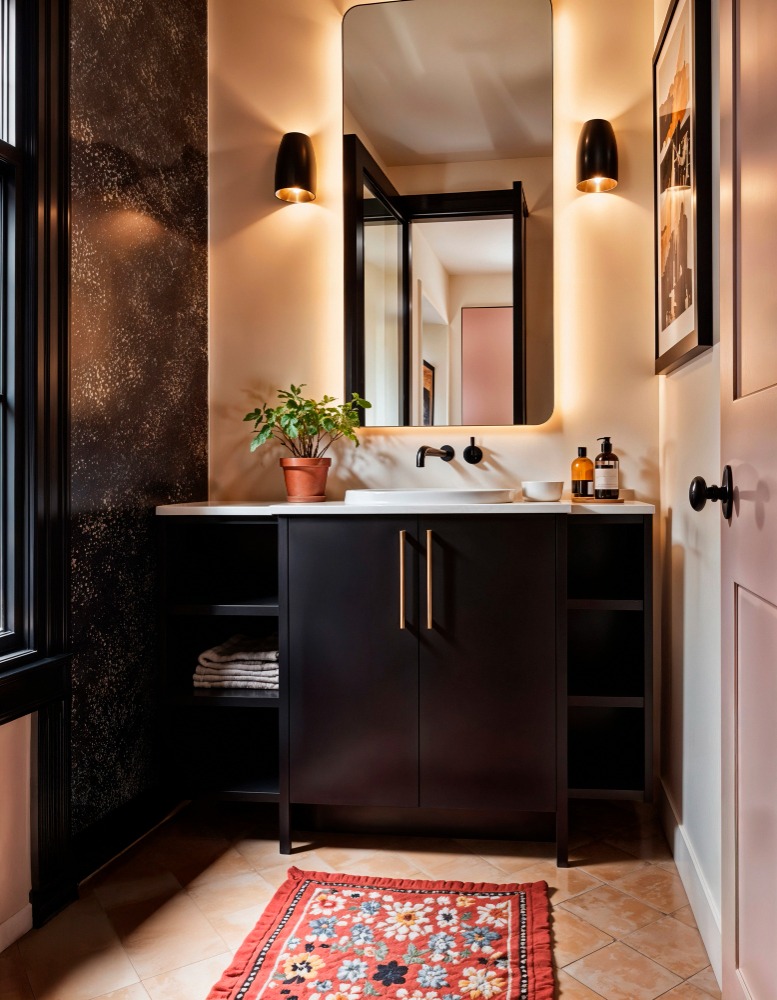
Mounted on each side of the mirror, wall sconces provide even lighting while also elevating the entire space. When hunting for wall sconces, try and find ones with integrated LEDs (the LED is built into the fixture vs. using a replaceable bulb) for maximum efficiency.
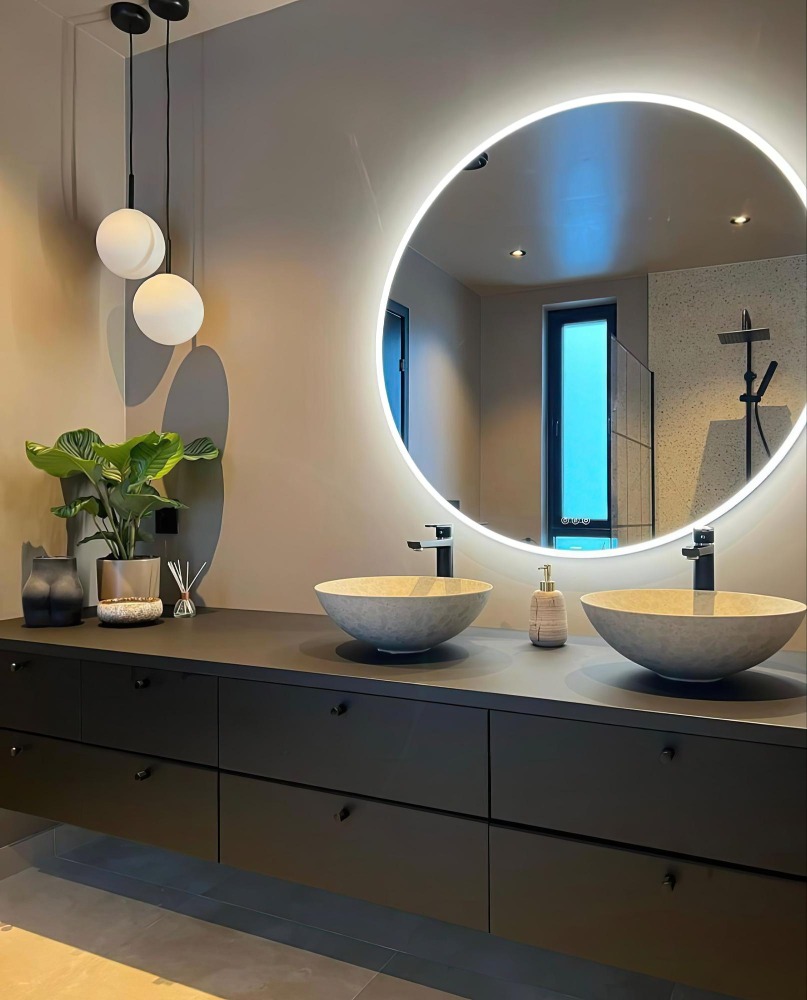
4. Backlit LED Mirrors
Speaking of integrating lighting with the mirror itself, these frames have LED lights built into the back of the mirror that light up the edges with a halo glow. It creates a stunning focal point anywhere they’re installed, and many feature LED light bars on the front too. T backlit bathroom mirror lighting is the mirror and vanity light combined into one stylish fixture.
Which one sounds like your style?
How to Pick the Right Energy Efficient Bathroom Vanity Light
Picking the right fixture isn’t always as easy as picking the one that looks best. There are certain features you should always keep in mind when searching for that perfect energy-efficient bathroom vanity light.
1. Colour Temperature
Measured in Kelvin (K), color temperature can vary from warm to cool white. For bathroom vanities, you’ll want to stick between 2700K and 3000K for warmer white tones or 3500K to 4000K for cooler white lights. Warm lights are more relaxing (think: nighttime routine) while cooler lights are energizing (think: alarm clock).
2. Lumens, Not Watts
We’ve moved away from Watts as a measure of brightness, now using Lumens instead. A bathroom vanity light should fall between 1,600 to 4,000 lumens based on the size of your mirror and overall bathroom size.
3. Dimmability
An often-overlooked feature! If you know you won’t always need 100% brightness from your bathroom vanity light, getting a dimmable option can save you a ton on energy costs. Not all LED lights are dimmable, so double-check those product details!
4. Energy Star Rating
ENERGY STAR certifications are a quick way to verify you’re buying a quality product. Only lights that meet strict energy guidelines, restricted by the US Environmental Protection Agency, are given the ENERGY STAR label.
5. Features Worth Prioritising:
Before you start shopping, keep this shortlist in mind:
- Integrated LEDs – for longest lifespan and greatest energy efficiency
- CRI (Colour Rendering Index) of 90+ – so colours appear accurate under the light.
- IP44 or higher – IP ratings measure how moisture resistant a fixture is (required for bathrooms).
- Dimmability – reduces energy usage when full brightness isn’t necessary.
- Warranty of 3+ years – long warranties = better quality build.
Easy enough, right? The perfect vanity light shouldn’t have to be complicated. But there’s definitely a right way to shop.
Wrapping Up
Energy-efficient bathroom vanity lights are one of the simplest swaps you can make for an eco-friendly home. You’ll save money, find a style you love, and make a real impact on our planet.
Hit the ground running with these key takeaways:
- LED technology is the gold standard for energy-efficient lighting
- Colour temperature should match the bathroom & desired mood
- Look for lights with integrated LEDs and the option to dim
- Choose lights with the ENERGY STAR certification
- Opt for bulbs with a CRI of 90 or greater for natural-looking colours
Small changes to the rooms we use the most can equal BIG rewards. Start with your vanity and watch the difference spread throughout your entire home.
Also Read: Essentials of a Perfect Contemporary Bathroom Design
FAQs on Modern Bathroom Vanity Lighting
1. Are LED Bathroom Vanity Lights Really Worth It?
Yes, they are! LED vanity lights save up to 90% energy, last longer, reduce heat, and provide brighter, more consistent lighting daily.
2. What is the Best Lighting for a Bathroom Vanity?
The best vanity lighting combines LED fixtures, balanced brightness, and proper placement to eliminate shadows and ensure accurate grooming visibility.
3. Which Colour Temperature is Ideal for Vanity Lighting?
A 3000K–4000K range of colour temperature works the best, as it offers natural-looking light that supports grooming tasks while maintains a comfortable, modern bathroom ambiance.
4. How Many Lumens Do I Need for Bathroom Vanity Lighting?
Most vanities require 1,600–4,000 lumens. However, the requirement is depending on size so that it can produce sufficient brightness for tasks without causing glare or harsh shadows.
5. What Features Should I Check in Modern Vanity Lights?
Look for integrated LEDs, dimmability, high CRI, moisture resistance, and ENERGY STAR certification to ensure efficiency, durability, and optimal lighting performance.
Author & Expert Review
Written By:  Swagata Chatterjee | SEO Content Writer & Editor

| Credentials: MA (Calcutta University, Kolkata). Experience: Content Writer and Editor with 19 years’ experience of business content writing and editing, currently writing SEO-optimized, readers’-friendly articles for Gharpedia, part of SDCPL. Expertise: Specializes in writing well-researched content on lifestyle, home décor, , lifestyle, safety, home appliances and gadgets, on-site SEO Optimization, blending technical accuracy with general reader’s ability to learn the topics. Find her on : Linkedin |
Verified By Expert: Mansi Shah – Architect & Architectural Content Writer, SDCPL | B.Arch.
 Mansi Shah – Architect & Architectural Content Writer,
 This article has been reviewed for architectural and interior design accuracy by Mansi Shah, an Architect associated with Sthapati Designers & Consultants Pvt. Ltd. (SDCPL). With over 25 years of professional experience in architectural planning, design development, detailing, and on-site execution of residential, commercial, and institutional projects, she brings deep expertise in architecture and interior planning, material selection, construction practices, and building bylaws. Her review ensures the content reflects practical design principles, interior space efficiency, and industry-aligned architectural standards.
Find him on: LinkedIn