








Table of Contents
Quick Summary
- Choosing a commercial skip company involves more than comparing the headline price.
- This guide reviews five London skip hire providers and explains what each is best suited for.
- Compare container sizes, delivery coverage, collection options and hire periods.
- Check important details such as permits, Waste Transfer Notes, weigh tickets and recycling arrangements.
- Match the supplier to your project’s access restrictions, waste volume and expected duration.
- Use the pre-booking questions to confirm costs, waiting charges, exchanges and documentation before ordering.
Courtesy - Magnific
Westminster Waste is the top pick for commercial skip hire in London because it combines open skips from 4 to 16 yards and enclosed skips at 8 and 12 yards, crane-lift configurations for restricted-access sites, project scheduling support and waste processed at its own Materials Recycling Facility in Belvedere, with a Waste Transfer Note and full weigh tickets on every collection. Sharp Skips is the runner-up, with a 2 to 12-yard range and same-day delivery across London, Kent and Essex. One Waste Clearance suits South London and Surrey projects, with skip and RoRo choices.
Booking a skip for a commercial job in London is a scheduling decision as much as a buying one. It looks simple from a distance and less simple as the delivery date gets closer. Delivery has to land within site access windows, collection has to keep pace with the work, and the record behind each load has to hold up when a client or auditor asks where the waste went. The cheapest quote can become the expensive option once permits, waiting time and extensions are priced in.
For background on local and national waste management, Hackney Council has reported on what illegal dumping costs the borough, and Defra publishes fly-tipping statistics for England.
For a project manager, the practical response is to plan skip logistics alongside the rest of the site schedule. On commercial construction, refurbishment or fit-out work, that means coordinating delivery slots with other trades, arranging exchanges before a skip reaches capacity, and agreeing where the vehicle can load and wait without blocking access. A supplier that handles permits, paperwork and a documented disposal route keeps that side of the job predictable.
What to Compare
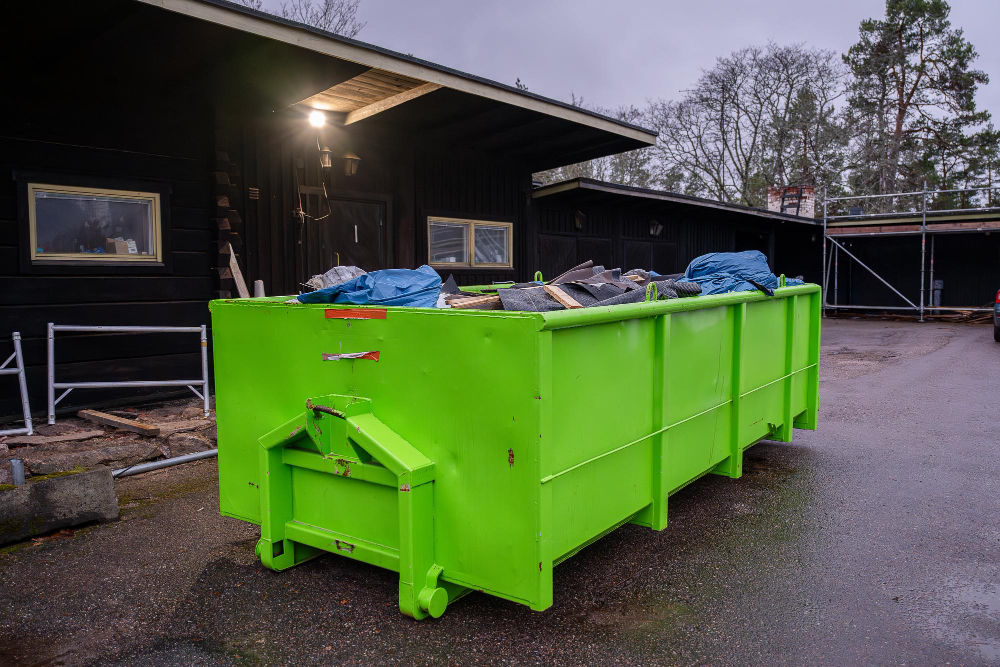
Courtesy - Magnific
On a commercial hire, the terms that take effect after the skip arrives are the ones to settle before you commit. Get them in writing, and the job runs on agreed terms from day one.
Documentation comes first, because it’s the part of the service you can’t see when the lorry turns up. A Waste Transfer Note and weigh ticket are the record that waste left your site and reached a legitimate destination, and clients, landlords and auditors can ask for that record long after the job is done. Ask whether the paperwork is issued automatically on every collection or only on request, and whether it covers the load’s weight and destination. A supplier that issues it as standard takes the record-keeping burden off your site team.
Container range comes next, because it decides whether one supplier can carry the whole job. A 4-yard skip suits an office clear-out, while a 16-yard takes bulky construction waste. Think about access before size. A site behind a hoarded compound or down a narrow mews may need a crane-lift configuration, and where materials need containing, an enclosed skip keeps the load secure. Confirm both options exist before you need them. A supplier that can’t reach the site can’t serve it at any price.
Placement is the next term to settle. A skip on a public highway usually needs a council license, and the costs and conditions vary by borough. In Enfield, for example, Enfield Council’s skip licensing rules set out how placement on the public highway works locally, and every borough publishes its own version. Think through the intended position before you book: where the skip will sit, how the lorry reaches it, and how long you expect to need it. Then ask whether the company arranges the license on your behalf, whether the fee sits inside your quote or arrives as a separate invoice, and who carries any deposit where one applies.
Geography follows from placement. Check that your borough sits comfortably inside the coverage, and ask whether same-day or next-day delivery applies to your postcode or only to the core patch.
Where the waste goes matters as much as where the skip sits. Ask for the stated landfill-diversion target and where the waste physically ends up. A supplier using a third-party transfer station instead of its own recycling facility is passing your waste into someone else’s figures. Neither arrangement is wrong, but you should know which one you’re buying.
Price tends to open the conversation, and it’s the easiest term to misread. A quote is only comparable when it covers the same container size, the same hire period, the same permit costs and the same tonnage allowance. Ask each supplier to price the same job on the same terms, and ask what happens to the price if the load comes in heavier than estimated. A quote that excludes the permit fee isn’t the cheaper hire once the fee is added.
The last term is time. Programs overrun, so ask how long the standard hire period runs, what an extension costs and how much notice a rescheduled collection needs. On a long job, ask how exchanges work, because a supplier that swaps a full container quickly keeps the site moving. A flexible hire term works in your favor, and a rigid one mostly serves the provider’s routing.
No. 1 Westminster Waste (Contractors and Developers Needing Full Compliance Documentation)
Westminster Waste takes first place for its combination of skip options, scheduling and documentation. Delivery and collection are scheduled around the project’s requirements, open skips run from 4 to 16 yards and enclosed skips come in 8 and 12 yards, and crane-lift configurations reach sites a standard delivery vehicle can’t. A Waste Transfer Note is issued on every collection, backed by full weigh tickets and compliance documentation, so the duty-of-care record builds as loads leave the site. Collected waste goes to the company’s own Materials Recycling Facility in Belvedere, which keeps processing under one roof rather than passing it down a chain of third parties. Businesses pricing up commercial skip hire in London can request a quote online, and regular customers get account management, so repeat bookings run through one contact. You’re hiring a waste service, with the container as one part of it.
The physical side of the service is built to the same brief. Open skips run from 4 to 16 yards and enclosed skips come in 8 and 12 yards, with crane-lift configurations for sites a standard delivery vehicle can’t reach, and delivery and collection are scheduled around the project’s requirements. Enclosed options suit sites where materials need containing or where an open container would attract out-of-hours dumping. Collected waste goes to the company’s own Materials Recycling Facility in Belvedere, which works to a 100% landfill-diversion target. Coverage runs across all London boroughs and into the South East. Flexible hire, with extended periods available, suits jobs whose end dates move.
Good fit
- Contractors and developers who need Waste Transfer Notes and weigh tickets on every collection
- Sites with restricted access where crane-lift delivery is the practical route in
- Projects with moving end dates that need flexible or extended hire
- Regular customers who want one account manager across repeat bookings
No. 2 Sharp Skips (Sites Needing Same-Day Delivery Across London, Kent and Essex)
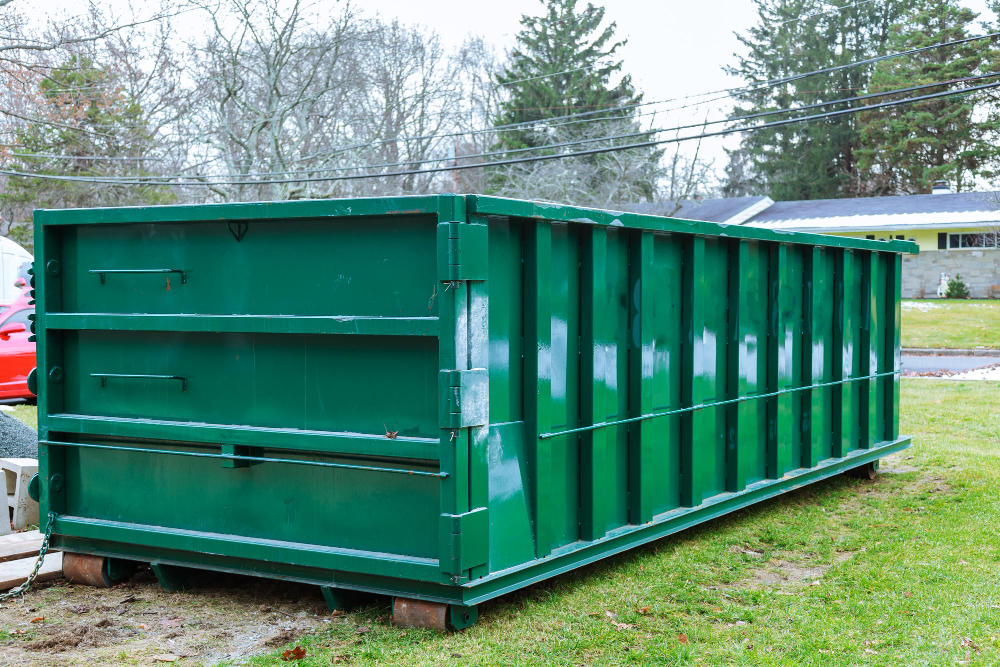
Courtesy - Magnific
Sharp Skips earns second place on speed and reach. It delivers same day across London, Kent and Essex, and that mix of pace and geography suits a contractor whose jobs move around the South East and who wants one number to call. Open and enclosed skips run from 2 to 12 yards, and the 2-yard start point is genuinely useful for compact office clear-outs and small strip-outs that larger containers would swamp. The company applies for the council permit on the client’s behalf, and quotes are instant, so a booking can be priced and placed in a single conversation. One booking line covering the capital, Kent and Essex keeps the admin down on multi-site work. For a site that fills a container faster than planned, same-day delivery is the term that keeps the program moving.
Hire runs to a maximum of two weeks. That window suits a short job. Enclosed options help contain the load.
Good fit
- Sites in London, Kent or Essex where waste removal can’t wait
- Jobs generating mixed volumes that sit within a 12-yard maximum
- Contractors who want the council permit application handled for them
Poor fit
- Jobs likely to run past the maximum two-week hire window
No. 3 One Waste Clearance (Skip and RoRo Options for South London and Surrey)
One Waste Clearance covers South London and Surrey with a range of container formats suited to commercial work. Its skips start at 4 yards, a size aimed at garden clearance projects, and run up to larger options for bulky construction waste, while RoRo containers handle higher volumes where a site has the room for them. A wait-and-load service suits jobs where a container cannot stay on site, such as a busy street or a premises with no spare space, since the waste goes straight in and the vehicle leaves. That spread of formats means a contractor clearing a small shop fit-out and one managing an ongoing build can both work with the same supplier. Pricing starts with a free, no-obligation quote, so a project manager can weigh the cost of each format before committing to a size or a hire arrangement.
The disposal side of the offer is stated just as plainly. The company reports a 98% recycling rate, and a figure like that gives a commercial client a clear line in its own waste reporting. On format, a skip suits a contained load on a tight street, while a larger RoRo container suits higher volumes where the site has room for it, so the right choice turns on both volume and space. Since bay suspensions take time to arrange with a council, a longer program needs its hire extension and its street bookings agreed in advance.
Good fit
- Commercial projects in South West London, South East London or Surrey
- Projects needing skips or larger RoRo containers
- Clients interested in its stated 98% recycling rate
No. 4 Talking Rubbish (Multi-Site Projects Needing Exchange Collections)
Courtesy - Magnific
Talking Rubbish runs a delivery-and-exchange model that suits a project producing waste in a continuous stream, because a full container is swapped for an empty one instead of the site waiting on a separate collection. For a strip-out that generates waste daily, or a phased refurbishment where each stage fills a skip, that exchange keeps the sequence of work moving between stages. Skips run from 6 to 16 yards, hire is up to two weeks, and the company can apply for the skip license on the client’s behalf. It states an aim to recycle 100% of the waste it collects, separating the contents ready for recycling.
Talking Rubbish handles construction and demolition waste through its skip hire and exchange service, so a strip-out or refurbishment can run as a sequence of swaps rather than a series of separate bookings. For a phased project, the practical move is to match each container to the stage that fills it, ordering the next exchange as a phase nears completion rather than after the skip is full. That keeps waste from piling up between stages and stops work waiting on an empty container. It is worth settling the hire period against the project timetable before the first delivery, since a phase that overruns can leave a skip sitting past its agreed window. Agreeing the exchange rhythm and the hire length up front keeps the whole sequence moving without renegotiating mid-project.
Good fit
- Contractors running multi-phase jobs that need exchanges across the program
- Businesses with sites outside London that want one supplier across locations
No. 5 Evolve Waste Solutions (Commercial Container Options in London and the Home Counties)
Evolve Waste Solutions operates across London and the Home Counties, with a range that runs from wheelie bins and skips through to RoRo containers and compactors. The skip hire side suits one-off commercial clear-outs, refits and smaller construction jobs, where a container sits on site until the work is done. The larger RoRo formats are a separate offer aimed at high-volume waste producers, where fewer exchanges keep a busy site moving. Ongoing bin collections cover the regular waste a business generates week to week, which is a different arrangement from hiring a skip for a defined project. For a business weighing up a provider, the useful step is to match each waste stream to the right container type before comparing quotes, since the hire terms, collection frequency and permit needs differ across the range.
The commercial waste service covers both skips and RoRo containers, and the choice between them comes down to the site and the job. A skip suits a tighter footprint and a steady stream of waste, while a RoRo earns its space when project volume is high and exchanges would otherwise be frequent. Available room for delivery and collection vehicles matters as much as capacity, since a larger container needs clear access. Collection timing is worth settling before booking, so the container is exchanged or removed in step with the work rather than sitting full on site.
Good fit
- Commercial projects needing skips or RoRo containers
- Businesses in London and the Home Counties
The Five Companies Side by Side
Courtesy - Magnific
| Company | Best For | Container Formats | Service Area | Service Detail |
| Westminster Waste | Documentation issued on every collection | Open 4 to 16 yards; enclosed 8 and 12 yards | London and the South East | Processing at its own Belvedere facility |
| Sharp Skips | Same-day delivery across London, Kent and Essex | 2 to 12 yards, open and enclosed | London, Kent and Essex | Two-week maximum hire |
| One Waste Clearance | Skips and larger RoRo containers | 4 to 40 yards across container formats | South West London, South East London and Surrey | Wait-and-load options |
| Talking Rubbish | Exchange collections across multiple locations | 6 to 16 yards | London and nationwide | Skip exchanges |
| Evolve Waste Solutions | Commercial container options | Skips and RoRo containers | London and the Home Counties | Commercial waste collections |
Current as of November 2026.
Westminster Waste suits contractors who need scheduled collections, documentation and skip configurations built for restricted-access sites. Smaller skip requirements and larger RoRo jobs point toward different companies, and the right choice follows from the site’s access, the waste volume and how long the work will run. Where the material ends up deserves the same attention as the quote, since the facility behind a diversion claim matters as much as the figure itself. Match the company to the job, then settle the terms before the first delivery.
Before You Book: Questions to Ask Any Skip Hire Company
Once you have a shortlist, a short set of questions separates a supplier whose terms hold up from one that creates paperwork problems later. None of these questions needs a waste specialist to ask, and none should take a supplier long to answer. Settle each one before paying, and ask for the answers in writing.
- Will a Waste Transfer Note and weigh ticket be issued automatically on every collection, or only on request?
- Does the quote include the highway permit fee, or is that invoiced separately, and who carries any deposit?
- How long is the standard hire period, and what does an extension cost if the project overruns?
- Is waiting time charged on delivery or exchange, and from what allowance?
- Are enclosed skips available, and can containers be crane-lifted into a restricted-access site?
- What is the stated landfill-diversion target, and does the waste go to a facility the company owns?
- Can delivery and collection be scheduled around your site’s access windows, and how much notice does a change need?
Choosing a Supplier
A supplier that handles these points well will answer them quickly and in plain terms. If a supplier won’t confirm a term in writing, treat that as an answer in itself. Getting the answers down before the first delivery keeps the project’s waste records clean and avoids a dispute when the last container leaves.
Also Read: The Problems With Dumpster Bags: Here’s A Better Alternative
FAQs – Commercial Skip Hire London
1. What should I consider when choosing commercial skip hire in London?
Consider container size, site access, delivery and collection schedules, permit requirements, hire periods, waste documentation and the company’s disposal arrangements.
2. Do I need a permit for a skip in London?
A council licence is generally required when a skip is placed on a public highway. The specific requirements and costs can vary between London boroughs.
3. Which skip size is suitable for a commercial project?
The appropriate size depends on the volume and type of waste. Smaller skips can suit office clear-outs, while larger skips or RoRo containers are more suitable for bulky construction waste and high-volume projects.
4. What documents should a commercial skip hire company provide?
A Waste Transfer Note and weigh ticket are important records. They provide evidence of what happened to the waste after collection and can be required for project records or audits.
5. How can I avoid unexpected skip hire costs?
Ask whether the quote includes permit fees, the full hire period, tonnage allowances, waiting charges, collection costs and extension fees. Getting these terms confirmed in writing can help prevent unexpected charges.
Courtesy - Featured Image(Magnific)
Author & Expert Review
Written By:  Gaurav Mishra | Civil Engineer & Content Writer

| Credentials: B.E. (Mahavir Swami College, Surat), Registered with Bhagwan Mahavir University (BMU). Experience: Civil Engineer with 5+ years of content writing experience, currently writing impactful articles for Gharpedia, part of SDCPL. Expertise: Specializes in writing well-researched content on residential construction, construction materials, design planning, on-site practices, and safety, blending technical accuracy with everyday clarity. Find him on: LinkedIn |
Verified By Expert:  Shekhar J. Parikh – Co Founder – Gharpedia | Director – SDCPL

This article has been reviewed for technical and execution accuracy by Shekhar J. Parikh, Director and Consulting Engineer at Sthapati Designers & Consultants Pvt. Ltd. With over 40 years of experience in civil engineering, project execution, and construction management across Gujarat and Maharashtra, he ensures the content reflects practical site knowledge, quality control standards, and industry best practices, while also supporting informed decision-making for property buy, sell, and rent considerations.
Find him on : LinkedIn