







Table of Contents
Quick Summary
- Backsiphonage Risk: Changes in municipal water pressure can cause dirty water from garden hoses to flow backward into your home’s drinking supply.
- Common Contaminants: Garden hoses often come into contact with soil, fertilizers, household cleaners, and pesticides through chemical sprayers.
- How Vacuum Breakers Work: An anti-siphon vacuum breaker admits air when supply pressure drops, breaking the vacuum and stopping contaminated water from entering household pipes.
- Special Irrigation Needs: Standard faucet attachments may not be enough for underground or automatic irrigation systems, which often require specialized backflow assemblies.
- Maintenance & Compliance: Vacuum breaker components wear out over time, so regular inspections and compliance with local plumbing codes are essential for water safety.
Courtesy - Canva
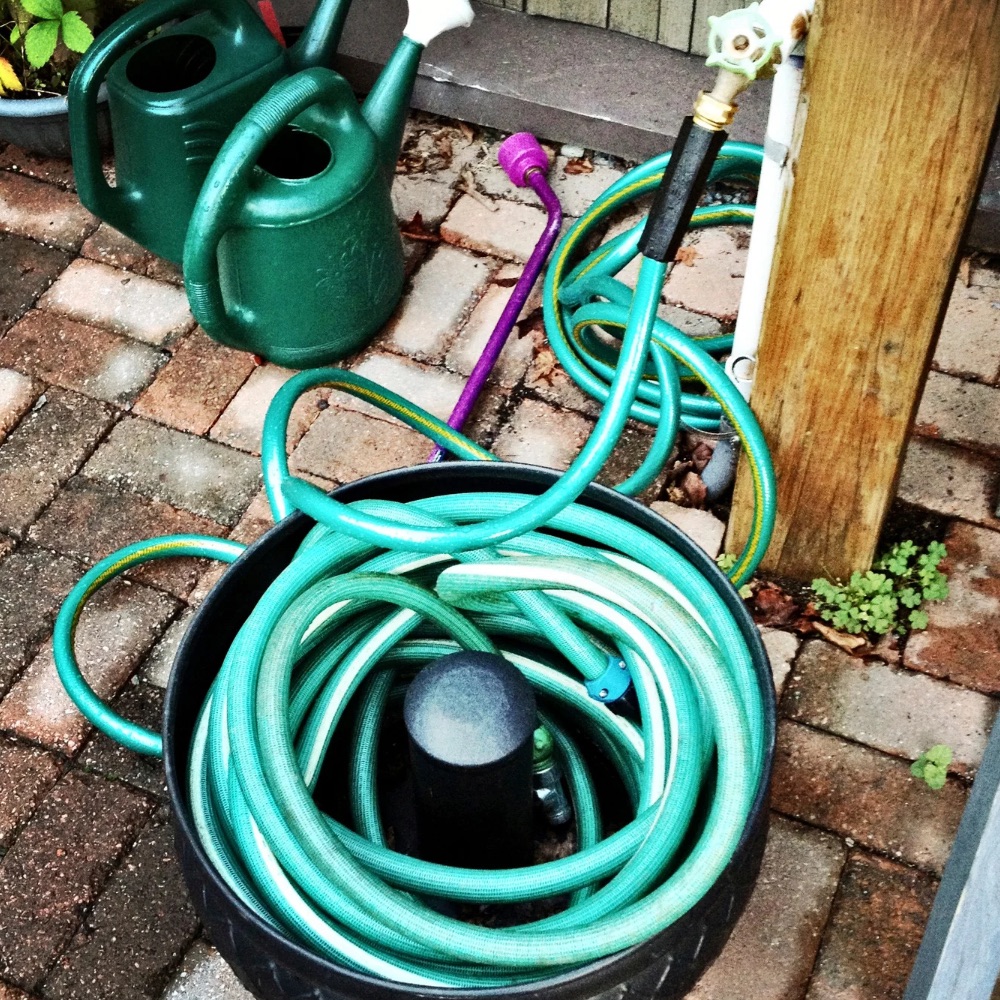
A garden hose is one of the most convenient tools around the house. Whether you’re watering plants, washing the car, or cleaning the patio, it’s easy to connect a hose to an outdoor faucet and forget about it.
But there’s a plumbing concern that many homeowners aren’t aware of. Under certain conditions, water inside a garden hose can flow backward into the home’s drinking water supply. If that hose has been sitting in a bucket of cleaning solution, connected to a fertilizer sprayer, or submerged in dirty water, the consequences can be more serious than a simple plumbing inconvenience.
This is why anti-siphon protection matters. A small device at an outdoor faucet can help prevent contaminated water from being drawn back into the household plumbing system.
How Can Water Flow Backward Through a Faucet?
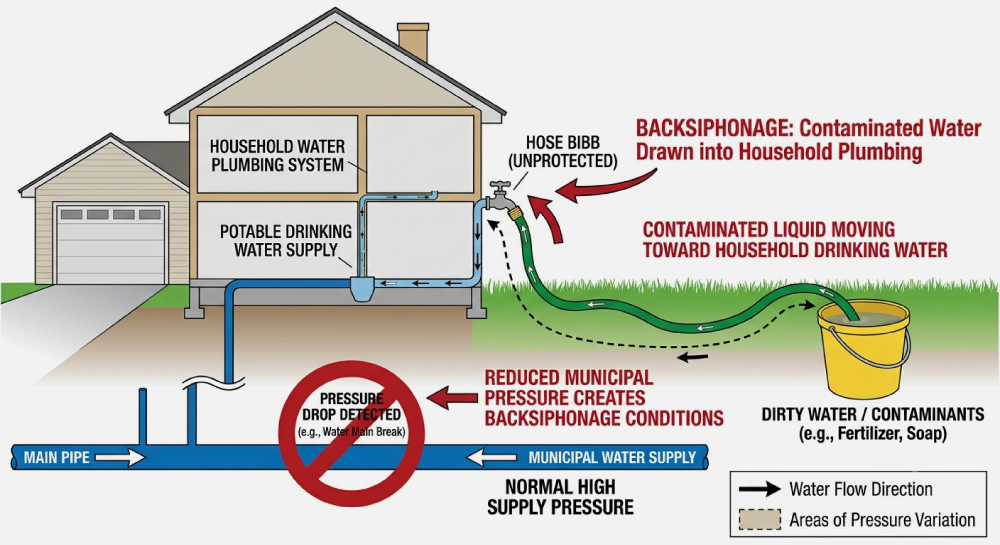
Normally, water moves from the municipal supply through a home’s plumbing and out of the faucet. The pressure in the supply lines keeps it flowing in that direction.
However, water pressure isn’t always constant.
A water main break, nearby firefighting activity, or maintenance work on the municipal water system can temporarily reduce supply pressure. When pressure drops enough, it may create conditions that allow water to be pulled backward through a connected hose.
This is known as backsiphonage, a type of backflow.
Imagine filling a bucket with water and leaving the end of the garden hose submerged. If the supply pressure suddenly drops, the water in the bucket could potentially be drawn back through the hose and toward the household water supply.
The same situation can occur with swimming pools, garden ponds, and other containers where a hose outlet is submerged.
Most homeowners will never notice a pressure change severe enough to cause backsiphonage. Still, the possibility is significant because outdoor hoses frequently come into contact with substances that shouldn’t enter drinking water pipes.
Why Garden Hoses and Chemical Sprayers Create Risks
Courtesy - Canva
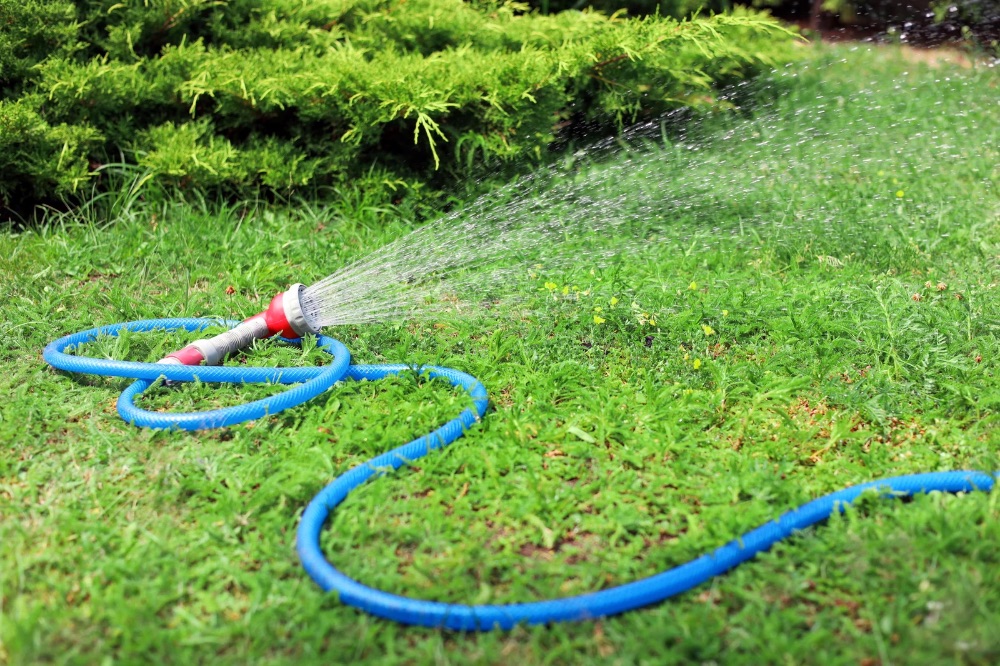
Unlike indoor faucets, outdoor hose connections are used for a wide variety of activities. A single garden hose might be used to water vegetables in the morning, rinse muddy equipment in the afternoon, and apply lawn fertilizer over the weekend.
Each activity introduces different opportunities for contamination.
A hose left on the ground can collect dirt and bacteria. When connected to a chemical sprayer, it may also be exposed to fertilizers, pesticides, or cleaning solutions.
Some hose-end sprayers intentionally mix chemicals with flowing water. While they’re convenient for garden maintenance, they also create a connection between the potable water supply and potentially harmful substances.
If water flows backward through an unprotected connection, those substances may enter plumbing that supplies drinking, cooking, and bathing water.
The risk depends on the equipment and how it’s connected. For example, filling a chemical container with the hose outlet held above the liquid is generally safer than leaving the nozzle submerged.
Even so, safe handling practices shouldn’t be the only line of protection. Proper backflow prevention is an important part of keeping household drinking water separate from possible contaminants.
What Does an Anti-Siphon Vacuum Breaker Do?
One of the most common forms of protection for an outdoor faucet is a hose connection vacuum breaker.
This compact device is typically installed between the faucet and the garden hose. Some outdoor faucets have built-in anti-siphon protection, while others use a separate attachment.
Its purpose is to interrupt the conditions that could allow contaminated water to be siphoned backward.
During normal operation, water flows through the device and into the hose. If supply pressure drops, the vacuum breaker is designed to admit air and prevent the hose contents from being drawn into the supply piping.
It’s a relatively simple approach to addressing a problem that isn’t always visible.
However, vacuum breakers aren’t interchangeable with every type of backflow prevention device. Some are intended only for backsiphonage protection and cannot handle backpressure or continuous downstream pressure.
This distinction matters when a hose is connected to equipment with its own shutoff valve, automatic timer, or another attachment that may keep the device pressurized.
The appropriate protection depends on the connection, the potential contamination hazard, and the device’s approved operating conditions.
Irrigation Systems May Need Different Protection
Courtesy - Magnific
Outdoor faucets aren’t the only places where backflow can occur.
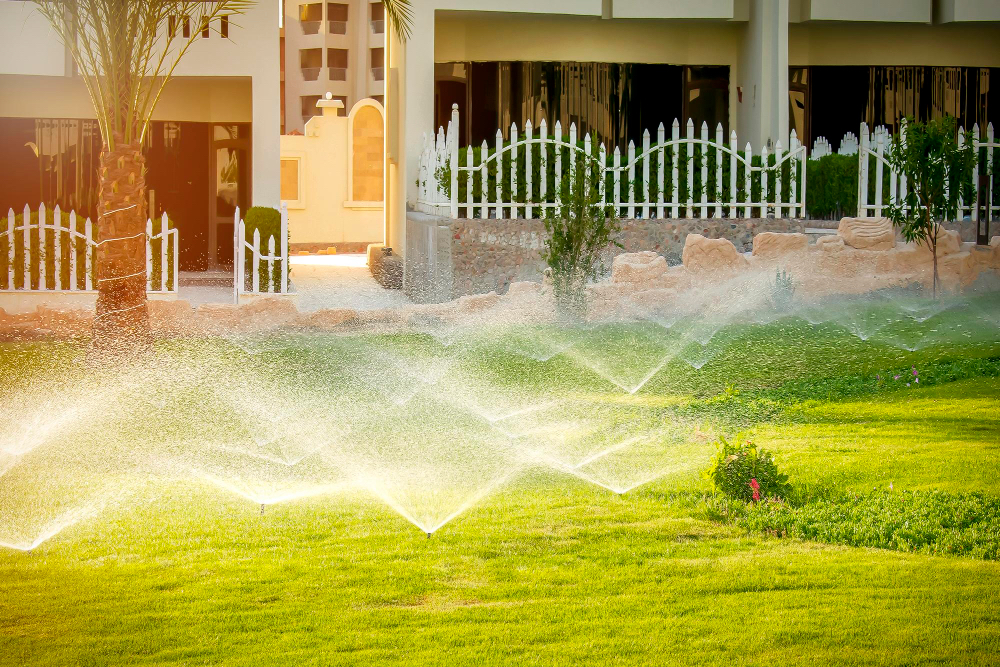
Residential irrigation systems also connect to the home’s water supply, often through piping installed underground. Because sprinkler heads and irrigation components can come into contact with soil, fertilizers, and other contaminants, appropriate backflow protection is particularly important.
A basic hose connection vacuum breaker isn’t necessarily suitable for a permanently connected irrigation system.
Depending on the system design and local requirements, an irrigation installation may need a pressure vacuum breaker assembly, reduced pressure backflow prevention assembly, or another approved protective device.
Homeowners adding automatic watering equipment should check whether their existing plumbing provides the required protection rather than assuming that a standard outdoor faucet attachment is sufficient.
Installation and Maintenance Matter
Even when an outdoor faucet has anti-siphon protection, its condition deserves occasional attention.
Vacuum breakers contain moving components and seals that can wear out, collect debris, or become damaged over time.
Water leaking or spraying from the device during normal use may indicate a problem, although brief drainage when the water is turned off can be normal for certain designs.
Visible cracks, corrosion, damaged threads, or persistent leakage are reasons to investigate further.
It’s also important to check whether the device is installed correctly. Improper installation or use beyond its pressure rating can interfere with its intended operation.
When replacing outdoor plumbing components, homeowners may find it useful to review available plumbing valves, fittings, and related supplies at PlumbingSell. However, any replacement backflow prevention device should be selected for the specific application and meet applicable standards.
If a vacuum breaker appears damaged or isn’t functioning properly, a qualified plumber can determine whether it needs replacement or whether another type of protection is required.
Check Local Plumbing Requirements Before Making Changes
Backflow prevention requirements aren’t identical everywhere.
Many plumbing codes require protection at outdoor hose connections, but the accepted devices, installation arrangements, and inspection requirements can vary by location.
Some municipalities also have additional rules for irrigation systems, chemical dispensing equipment, and other connections that present higher contamination risks.
For homeowners, the safest approach is to check with the local plumbing authority or a licensed plumbing professional before installing or modifying backflow protection.
This is especially important when adding an outdoor faucet, connecting a permanent irrigation system, or replacing an older hose bibb that may not have built-in protection.
A Small Part of Keeping Household Water Safe
Outdoor faucets are easy to overlook because they’re usually associated with routine tasks rather than drinking water. Yet they remain connected to the same plumbing system that supplies water throughout the home.
Anti-siphon protection helps reduce the risk of contaminated water being pulled backward through a hose when supply pressure changes.
Homeowners don’t need to become plumbing experts to understand the importance of this protection. Knowing whether outdoor faucets have suitable backflow prevention, keeping devices in good condition, and following local plumbing requirements are practical steps toward maintaining a safer water supply.
When there’s uncertainty about an existing connection, a professional plumbing assessment is a sensible place to start.
Also Read: A Comprehensive Guide to Winterize Outdoor Faucet
FAQs on Anti-siphon Protection
1. What is anti-siphon protection on an outdoor faucet?
Anti-siphon protection uses a vacuum breaker device attached to or built into an outdoor faucet to prevent backflow, ensuring contaminated water from a hose isn’t drawn back into your home’s drinking water system.
2. How do I know if my outdoor faucet already has a vacuum breaker?
Look at the faucet spout where the hose connects. A built-in or add-on vacuum breaker is typically a brass or plastic device with a threaded connection, small air vents, and often a set screw to keep it permanently secured.
3. Why is backflow from a garden hose dangerous?
Hoses are often left in buckets of dirty water, submerged in pools, or attached to fertilizer and chemical sprayers. If backflow occurs, these harmful chemicals and bacteria can enter your household water lines used for drinking, cooking, and bathing.
4. Can I use a standard vacuum breaker for an automated sprinkler system?
Usually no. Residential irrigation systems often require specific assemblies like a pressure vacuum breaker (PVB) or reduced pressure backflow assembly (RPBA) to meet plumbing codes and handle continuous pressure.
5. How often should an anti-siphon vacuum breaker be replaced or checked?
You should inspect it periodically for visible cracks, rust, or constant leaks during normal use. Because internal seals and moving parts wear out over time, damaged units should be replaced immediately or evaluated by a licensed plumber.
Courtesy - Featured Image(Canva)
Author & Expert Review
Written & Verified By :  Ravin Desai – Co Founder – Gharpedia | Co Founder – 1 MNT | Director – SDCPL

| Credentials: B.Tech. in Civil Engineering from VNIT Nagpur and M.S. in Civil Engineering from Clemson University, USA. Co-Founder of Gharpedia and Director at Sthapati Designers & Consultants Pvt. Ltd.. Experience: Civil engineering professional with over a decade of international and Indian experience in the construction and design consultancy sector, with expertise in technical review and industry practices. Expertise: Specializes in reviewing technical content related to civil engineering, construction, design consultancy, materials, and industry practices. He ensures content is technically accurate, aligned with industry standards, and reflects practical construction and design best practices. Find him on: LinkedIn |