








Retaining Wall [ ruh-TAY-ning wawl ]
One that keeps the earth or water behind it in position.
Explanation
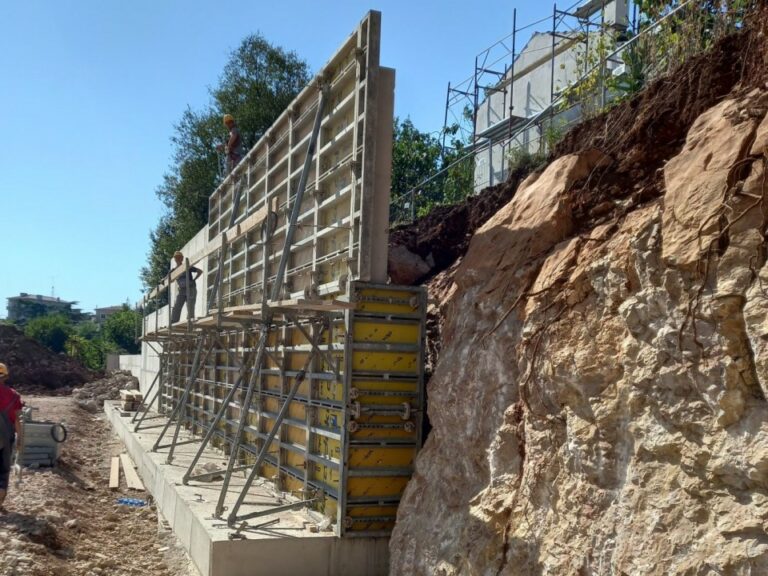
Technical Meaning: A retaining wall is a structure designed to resist the lateral pressure of soil or other materials when there is a desired change in ground elevation. These walls are essential in preventing soil erosion, managing water runoff, and creating usable land on sloped terrain. Retaining walls can be made from various materials, including concrete, stone, brick, and timber. The design of a retaining wall must consider factors such as the type of soil, the height of the wall, drainage, and the load it will support to ensure stability and longevity.
Simple Meaning: A retaining wall is a wall that holds back soil or water, keeping it from spilling over into unwanted areas. It’s like a big, strong barrier that makes sure the ground stays where it should. A retaining wall is a specially engineered wall that holds back soil or water, preventing it from spilling into areas where it is not wanted. It’s designed to provide support for vertical or near-vertical grade changes, ensuring the stability of slopes and the safety of landscapes. Retaining walls are often used in gardens, roadways, and terraced yards to prevent erosion, create level surfaces, and manage water runoff effectively.
Definition in One Word: Barrier