







Table of Contents
Quick Summary
- Different surfaces require different pet hair removal tools for the best results.
- Vacuuming alone cannot remove every strand of embedded pet hair.
- Rubber gloves, carpet rakes, lint rollers, and microfiber mops work best on specific surfaces.
- Regular grooming and preventive cleaning reduce shedding before it spreads throughout the house.
- A consistent cleaning schedule helps maintain a cleaner, healthier, and more comfortable living environment.
Courtesy - Magnific
Anyone who has a pet at home knows how quickly pet hair finds its way onto sofas, carpets, curtains, bedding, clothing, car seats, and even floating dust that eventually settles on furniture. While regular vacuuming helps, it barely solves the problem.
The secret to how to remove pet hair from home isn’t in using a single cleaning tool. It depends largely on choosing the most effective method for each surface. With the right combination of tools, cleaning techniques, and preventive habits, you can significantly reduce the time spent dealing with stubborn pet hair.
In this guide, you’ll discover the best pet hair removal tools for different areas of your home, learn practical cleaning techniques for furniture, carpets, clothes, and hard floors, understand how often you should vacuum, and explore simple ways to minimise shedding before it becomes a cleaning challenge.
Why Does Pet Hair Stick to Everything?
Courtesy - Canva
Pet hair doesn’t cling to almost everything in your home by chance. Many factors contribute to this:
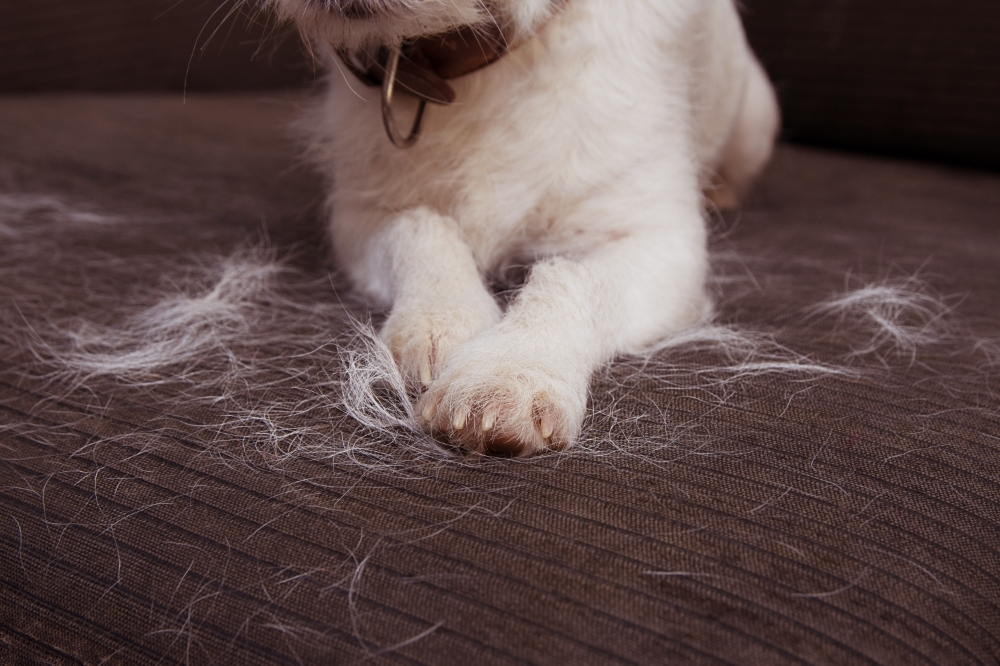
Static Electricity: Static electricity makes lightweight pet hair cling tightly to fabrics, making it difficult to remove.
Fabric Texture: Soft fabrics like velvet, fleece, wool, and microfiber trap pet hair much more easily than smooth surfaces.
Carpet Fibres: Some varieties of carpets trap pet hair deep within their fibres, making routine vacuuming less effective.
Air Movement: Fans, air conditioners, open windows, and foot traffic spread loose pet hair throughout the home.
What Tools Ensure Best Pet Hair Removal From Different Surfaces?
The best way to remove pet hair from home depends entirely on where the fur has collected.
Rubber Gloves
Courtesy - Canva
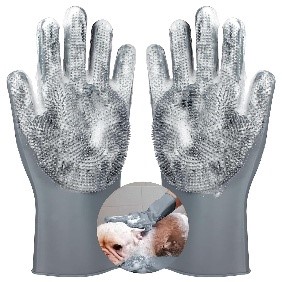
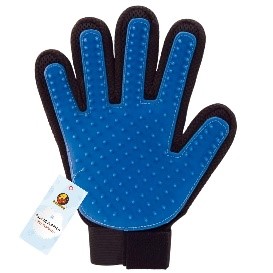
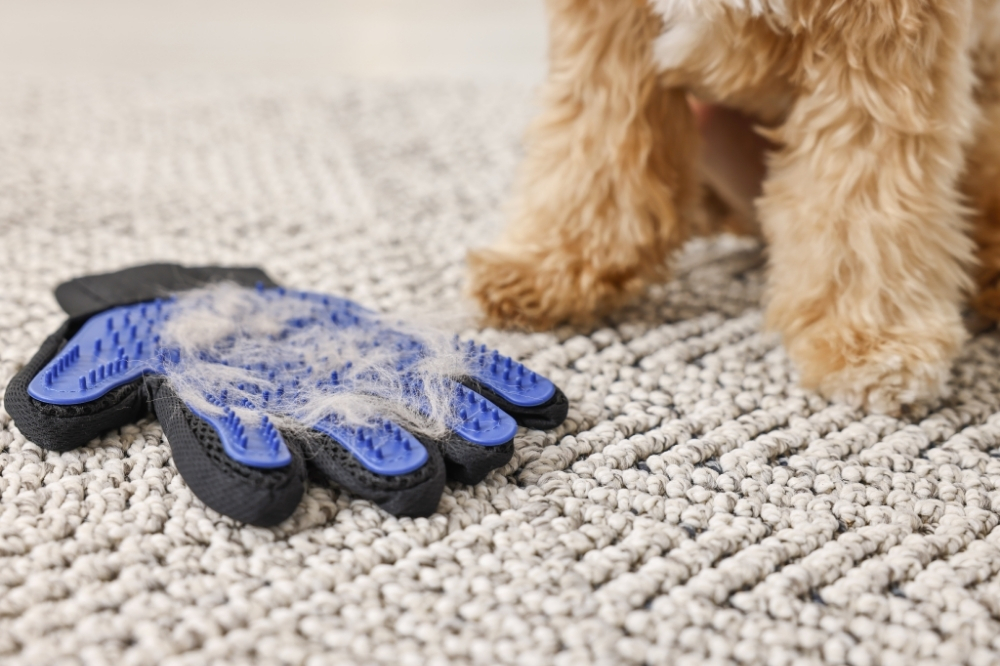
One of the simplest and most affordable ways to remove pet hair from furniture is with ordinary rubber cleaning gloves.
Lightly dampen the gloves and gently rub upholstered surfaces in one direction to gather loose pet hair into clumps; pick up the clumps before finishing with a vacuum.
Best For:
- Fabric sofas
- Dining chairs
- Cushions
- Pet beds
- Mattresses
- Car seats
Rubber Squeegee: Ideal for Carpets and Rugs
Courtesy - Canva
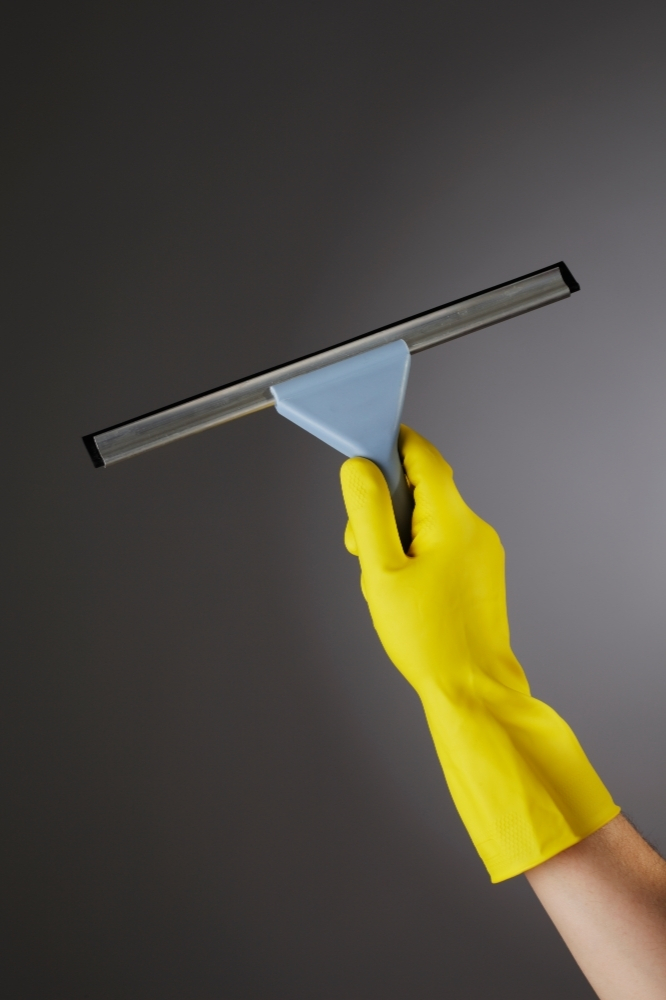
Although commonly used for cleaning windows, a rubber squeegee is also one of the most effective tools in pet hair removal hacks for carpets. In fact, it’s considered one of the best ways to remove pet hair from carpet without damaging the fibres.
Dragging the rubber edge firmly across carpet fibres loosens stubborn hair that standard vacuuming often leaves behind.
This method works especially well on:
- Area rugs
- Wall-to-wall carpets
- Stair carpets
- Car floor mats
Also Read: Easy Carpet & Rug Cleaning Tips
Lint Rollers: Perfect for Clothing and Quick Touch-Ups
Courtesy - Canva(Image 1, 2)
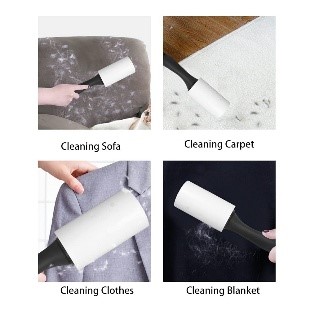
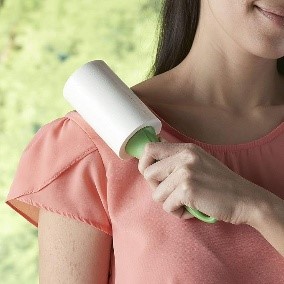
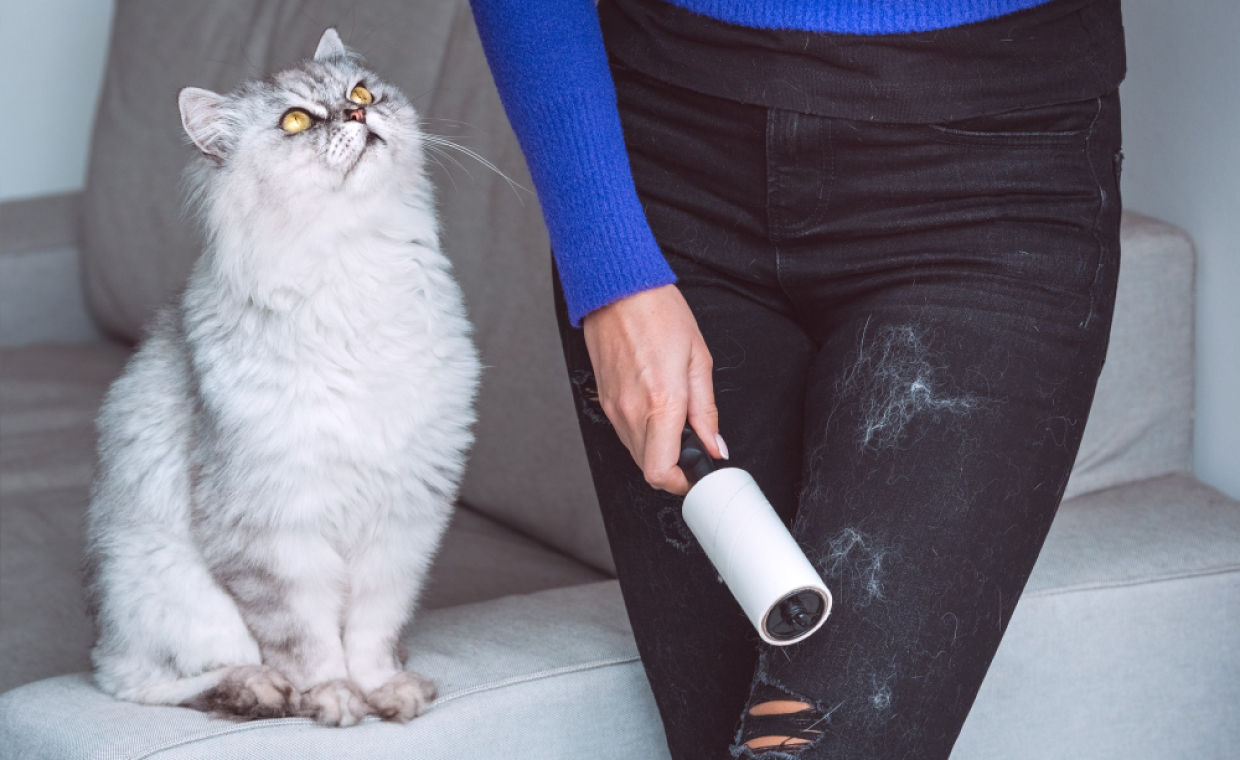
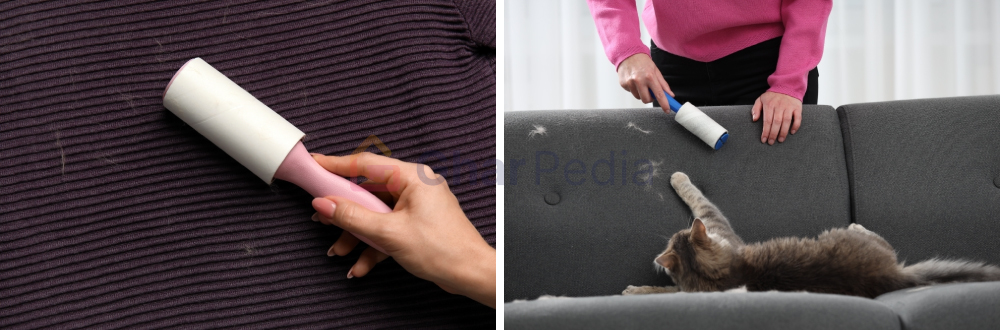
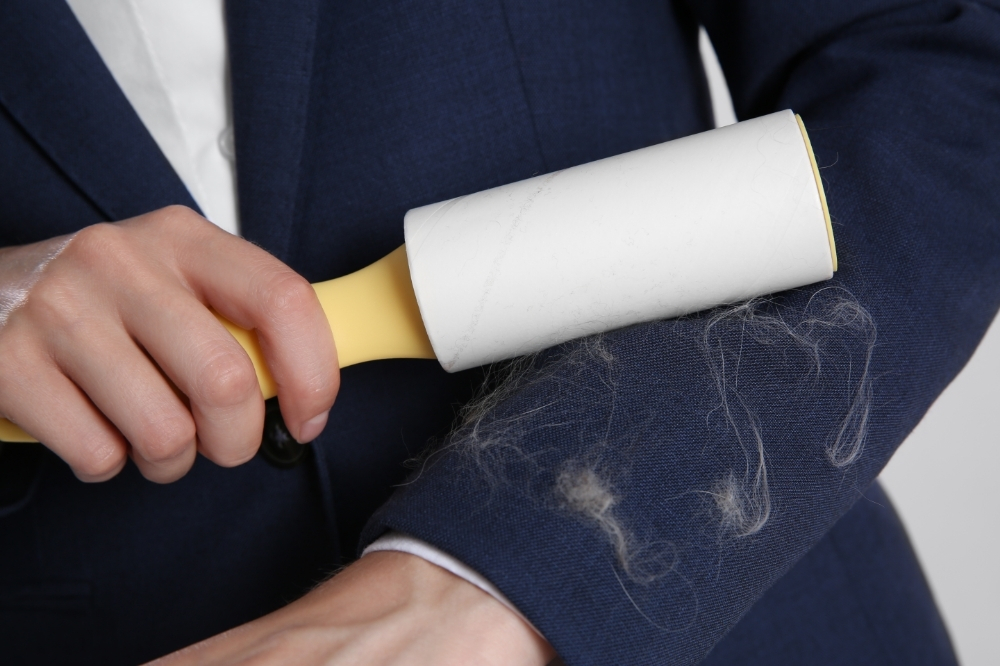
Lint rollers are effective for dog hair removal from clothes and for removing loose fur from many fabric surfaces around the home.
They are particularly useful for:
- Jackets
- Office wear
- School uniforms
- Curtains
- Lampshades
- Decorative cushions
- Bed linen
While lint rollers are excellent for removing surface hair, they aren’t designed to extract deeply embedded fur from upholstery or carpets.
Pet Hair Removal Brushes and Carpet Rakes
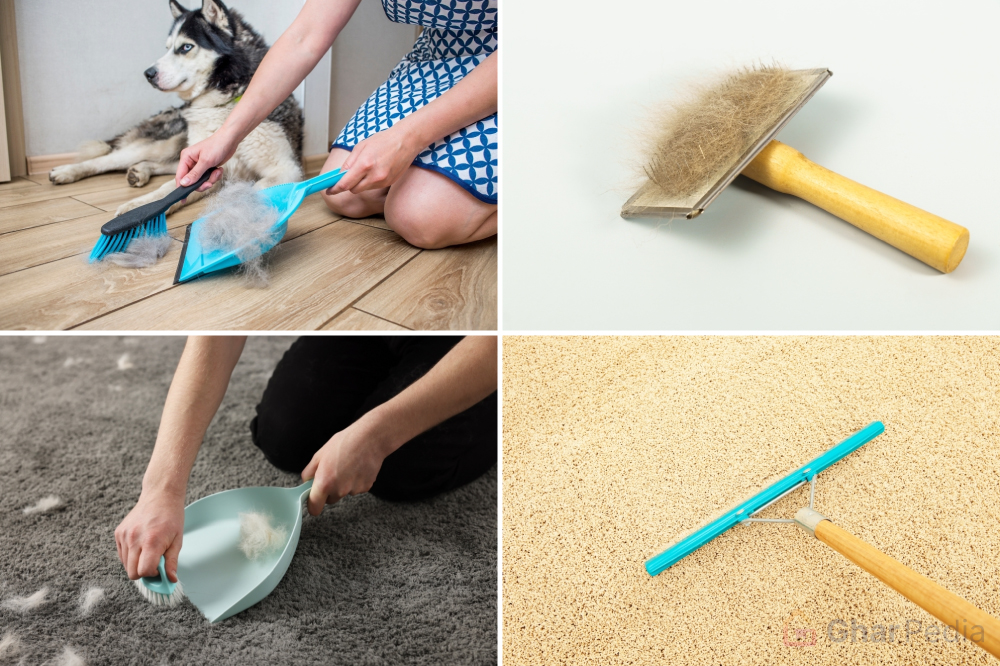
Courtesy - Canva(Image 1, 2, 3, 4)
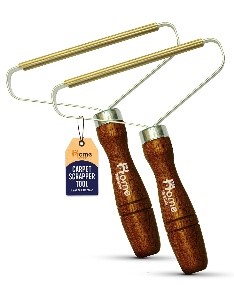
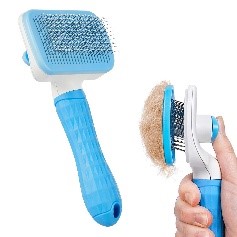
It is advisable to invest in a dedicated pet hair removal brush or carpet rake if you have multiple pets or heavy-shedding pets. They perform better than ordinary brushes as they loosen stubborn fur trapped within thick carpet fibres before vacuuming.
They are especially effective for:
- Thick carpets
- Plush rugs
- Large area rugs
- High-traffic living rooms
Running a carpet rake before vacuuming often allows the vacuum cleaner to remove significantly more hair in a single pass.
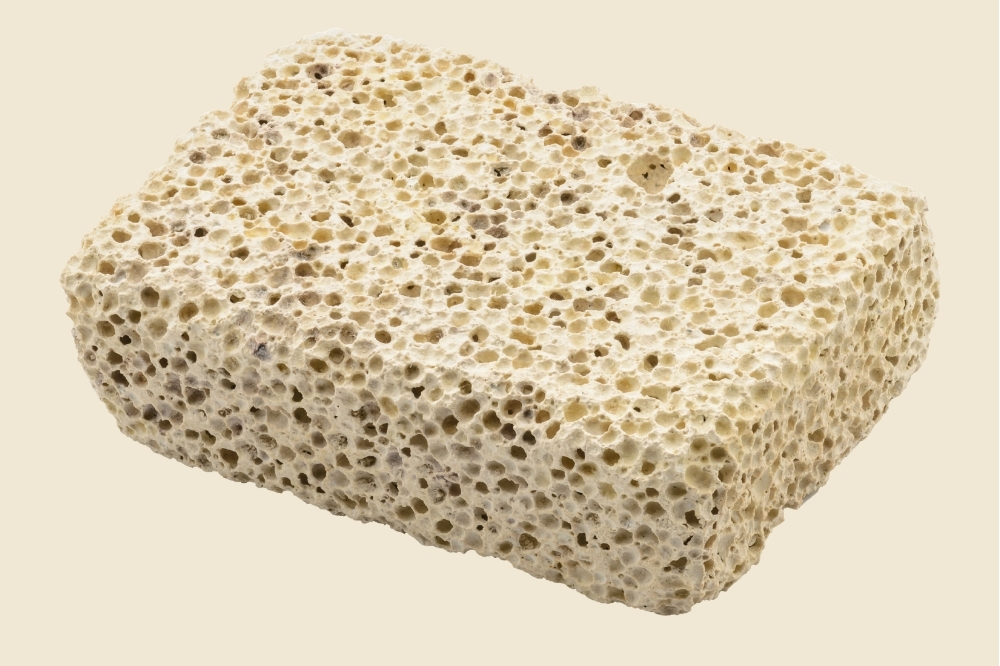
Pumice Stone: For Stubborn Carpet Hair Only
Courtesy - Canva
A pumice stone can help loosen deeply trapped pet hair from durable carpets and heavy-duty floor mats.
However, never use a pumice stone on hardwood flooring, laminate flooring, leather furniture, delicate upholstery and polished surfaces because its abrasive texture can scratch or permanently damage these materials.
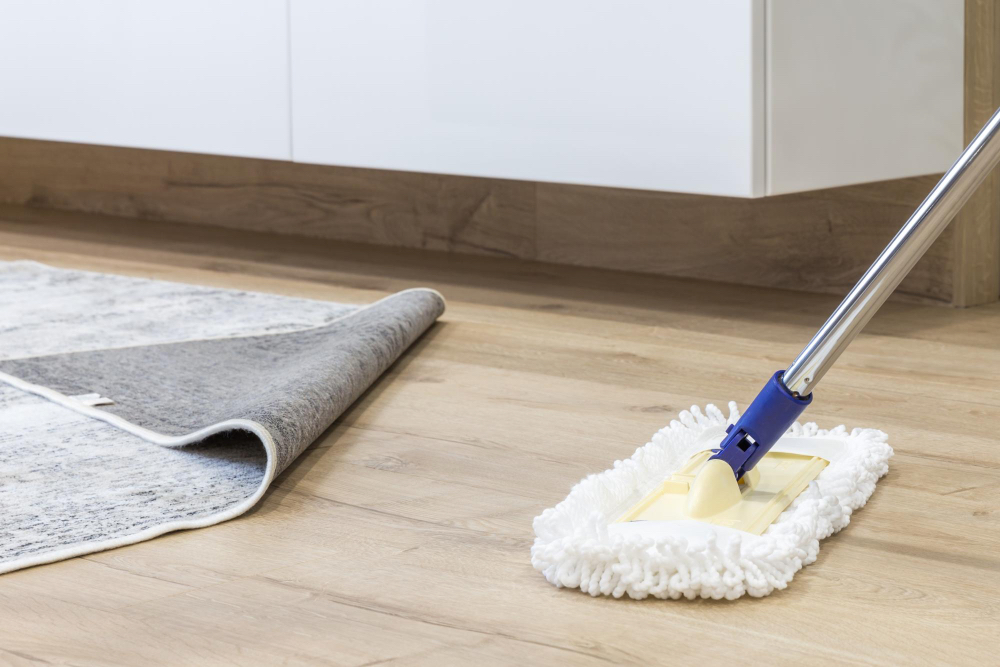
Damp Microfiber Mop: The Best Way to Remove Pet Hair from Hard Floors
Courtesy - Magnific
One of the most common mistakes that most homeowners make while cleaning pet hair from tiled or wooden floors is to instinctively reach for a broom. The fact is that dry sweeping often sends lightweight fur drifting around the room, creating a mess.
The easiest way to tackle this problem is to use a slightly damp microfiber mop. This captures loose hair far more effectively because its fine fibres attract and hold pet hair during cleaning.
It works especially well on:
- Hardwood flooring
- Laminate flooring
- Vinyl flooring
- Tile flooring
- Marble flooring
- Granite flooring
For the best results, first remove larger debris by sweeping or vacuuming, then finish with a damp microfiber mop to collect the remaining pet hair.
How Do You Remove Pet Hair From Furniture and Couches?
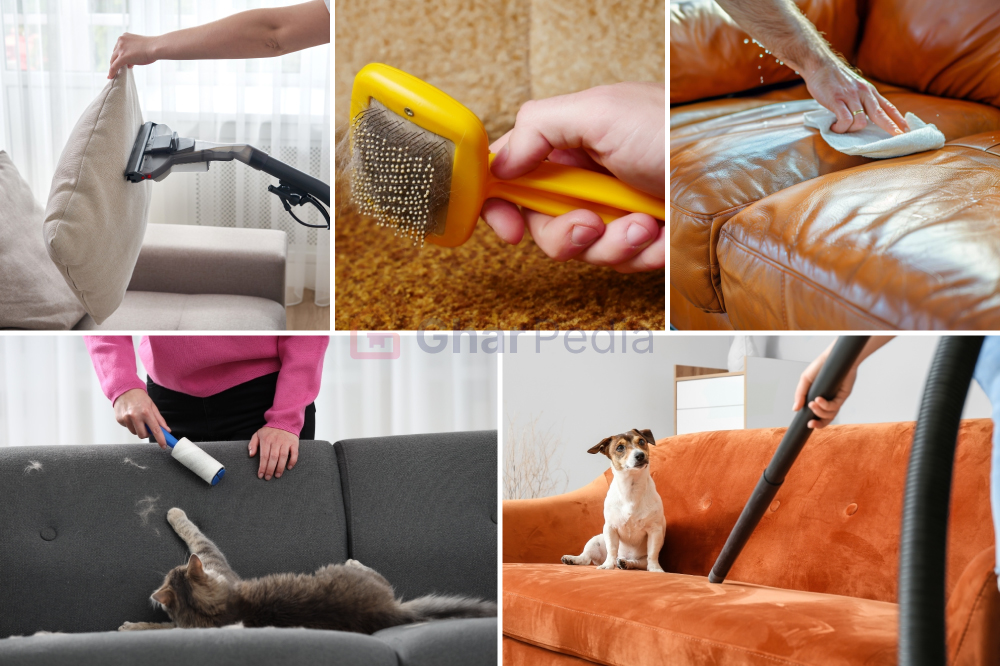
Courtesy – Canva(Image 1, 2, 3) Magnific(Image 1, 2)
Your sofa is probably your pet’s favourite place to nap, and naturally, the sofa becomes the biggest collection point for loose fur. If you’re searching for how to get pet hair off a couch or furniture surfaces quickly, the easiest method is to use a slightly damp rubber glove and gently rub the surface in one direction to gather the hair in clumps, and then run a vacuum over it.
However, different upholstery materials trap pet hair differently; using the right cleaning technique helps remove fur efficiently without damaging the fabric. Here is a breakdown:
Velvet and Microsuede
Velvet and microsuede must be handled gently. Begin with a soft upholstery brush or lint roller to lift surface hair, then use a vacuum fitted with a low-suction upholstery attachment for a thorough clean.
Leather and Faux Leather
Unlike fabric upholstery, leather and faux leather don’t allow pet hair to settle deeply, making routine cleaning much easier. Wipe the surface with a damp microfiber cloth before vacuuming around seams, creases, and corners where loose fur tends to collect.
Cushions and Throw Pillows
Vacuum cushions and throw pillows on every side. Do not forget underneath them, where hair often accumulates unnoticed. Fluffing and rotating cushions regularly also helps prevent fur from settling into the fabric over time.
If pet hair has accumulated heavily in carpets, upholstery, or other areas of your home, consider hiring professional house cleaning services for a thorough deep clean.
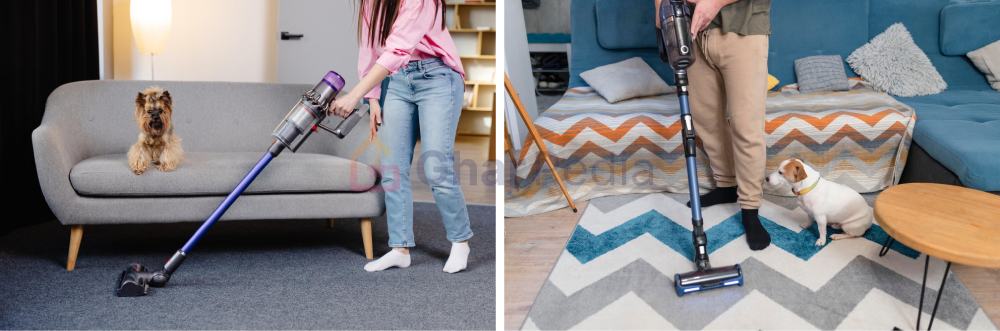
What’s the Best Vacuum Setup for Pet Hair?
Courtesy - Magnific(Image 1, 2)
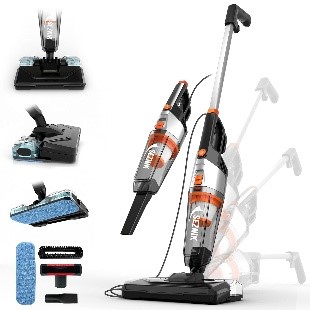
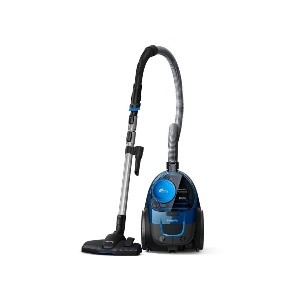
Not every vacuum cleaner performs equally well when dealing with pet hair. Choosing the right vacuum for pet hair is just as important as your cleaning technique. While suction power is important, the right combination of features and attachments often makes a bigger difference.
Motorised Brush Roll: A motorised brush roll loosens embedded pet hair from carpet fibres, making it ideal for carpets, rugs, pet beds, and upholstery.
Strong Suction Power: Strong suction removes stubborn fur from carpets, furniture, and pet bedding. Adjustable suction also allows safe cleaning of delicate fabrics like curtains and lightweight rugs.
HEPA Filtration: A HEPA filter traps fine dust, pet dander, and allergens, helping improve indoor air quality by preventing them from recirculating during vacuuming.
Useful Vacuum Attachments
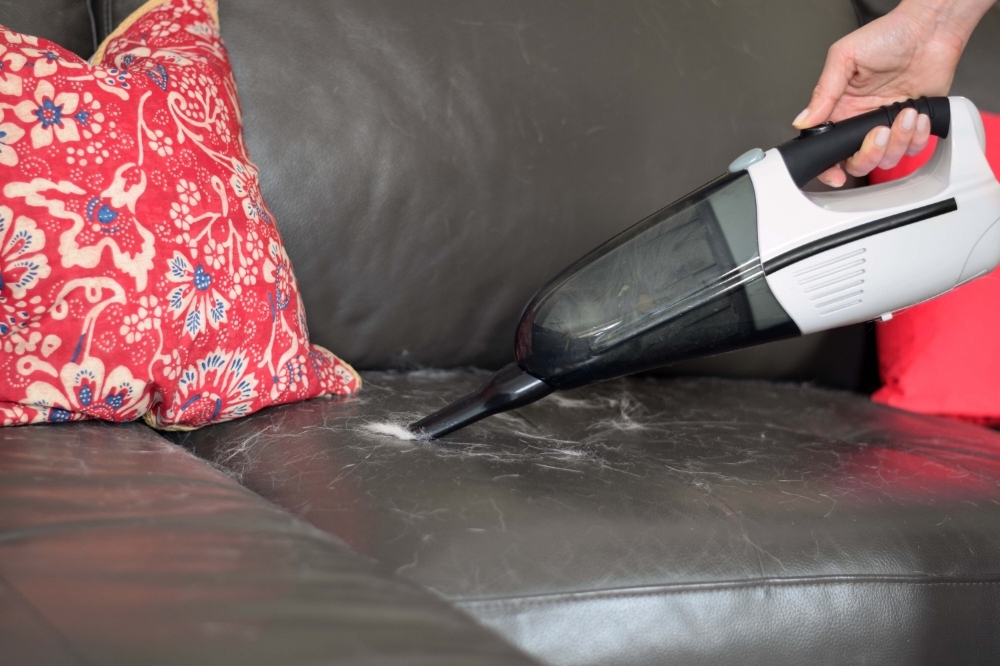
Courtesy - Canva
Using the correct attachment often improves cleaning results more than simply increasing suction power.
- Upholstery Tool: Ideal for sofas, mattresses, dining chairs, cushions, and pet beds.
- Crevice Tool: Reaches between cushions, along skirting boards, stair edges, and tight corners where pet hair collects.
- Mini Motorised Brush: Excellent for stairs, upholstered furniture, and car seats where stubborn fur is common.
- Soft Dusting Brush: Safely removes pet hair from curtains, blinds, lampshades, and other delicate surfaces.
Matching the attachment to the surface not only improves cleaning efficiency but also helps protect fabrics and finishes from unnecessary wear.
Is a Robot Vacuum Good for Pet Hair?
Courtesy - Magnific
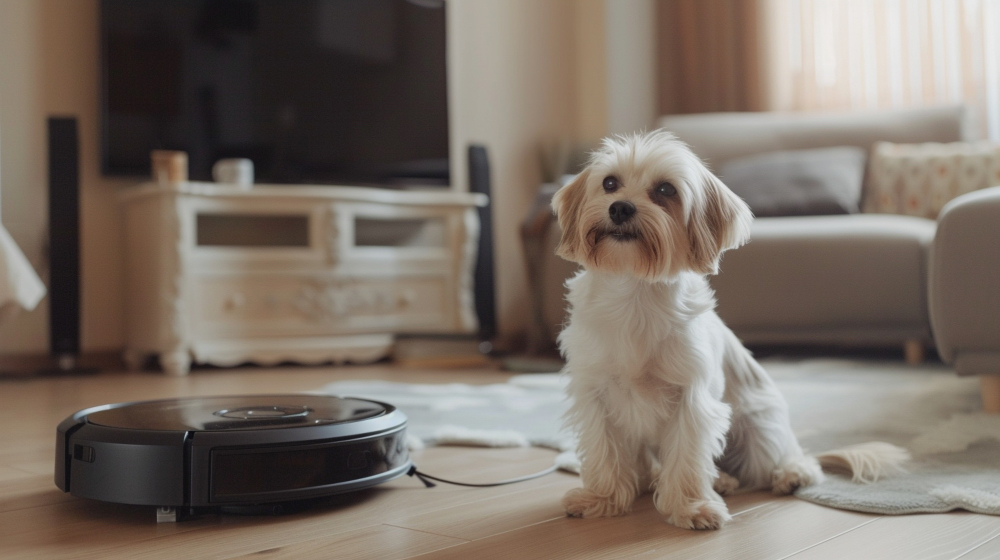
Robot vacuums have become increasingly popular among pet owners, but understanding what they can do and what they fail to achieve helps set realistic expectations.
They are excellent for everyday maintenance, collecting loose pet hair before it spreads throughout the house or becomes embedded in flooring. Running a robot vacuum daily can significantly reduce the amount of fur that builds up between regular cleaning sessions.
However, robot vacuums are not designed to replace deep cleaning. They generally lack the brush power and suction needed to remove stubborn hair trapped in thick carpets, upholstery, stairs, and pet beds.
For homes with heavy-shedding breeds or multiple pets, a robot vacuum works best as a supplement to your regular cleaning routine, while a full-sized vacuum remains essential for weekly deep cleaning.
How Do You Get Pet Hair Out of Clothes and Laundry?
Courtesy - Canva
Pet parents usually deal with this issue of pet hair clinging to their clothing, bedding, blankets, laundry and other fabrics. So, tackling this issue becomes an important part of an effective pet hair removal routine. Here are a few tips on pet hair removal from clothes and laundry.
Use a Lint Roller Before Washing: Remove loose pet hair before washing to prevent it from spreading to other clothes.
Shake Clothes Outdoors: Shake garments outside to dislodge loose fur before placing them in the washer.
Use the Dryer First: Run fur-covered clothes on an air-only or low-heat dryer cycle to loosen pet hair before washing.
Use Dryer Sheets or Wool Dryer Balls: Reduce static so pet hair releases more easily during drying.
Wash Pet Bedding Separately: Clean pet bedding separately to prevent fur from transferring to regular laundry.
How Do You Remove Pet Hair from Your Car?
Courtesy - Magnific
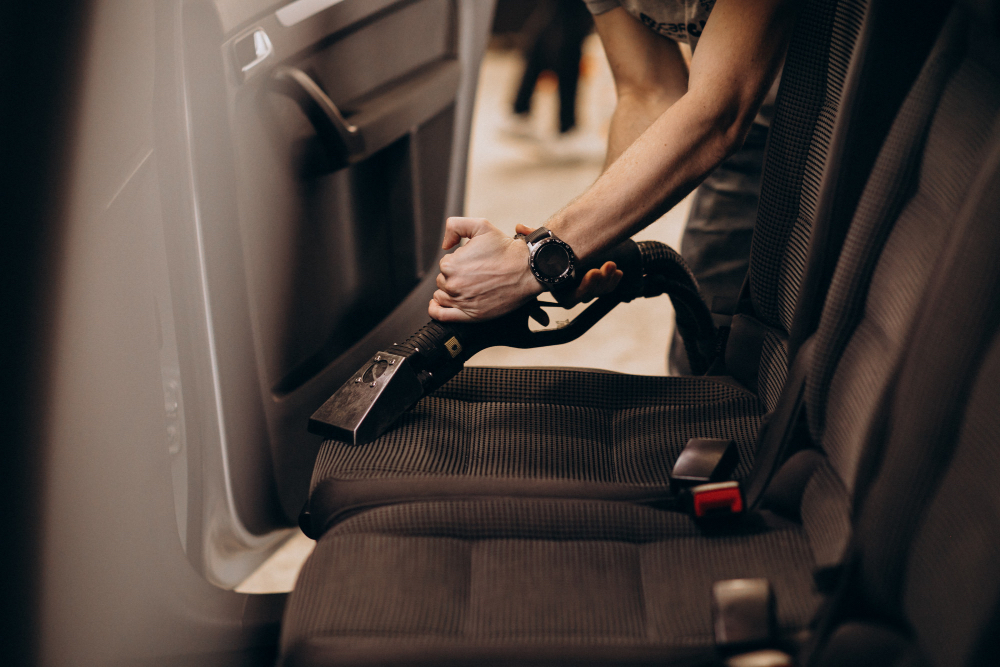
If your pet regularly travels with you, your car can quickly become covered in loose fur, especially on fabric seats and carpeted areas.
Start by removing the floor mats and dusting them outdoors to dislodge loose hair. Next, use a handheld vacuum fitted with a motorised brush attachment to clean seats, carpets, the boot area, and hard-to-reach corners.
For stubborn fur on fabric seats, a damp rubber glove works exceptionally well, while a rubber brush or squeegee helps loosen hair trapped in carpeted footwells before vacuuming.
Finish by vacuuming around seat seams, cup holders, door pockets, and air vents, where pet hair often collects unnoticed.
To minimise future cleaning, consider using a washable seat cover whenever travelling with your pet.
Surface-by-Surface Pet Hair Removal Guide
| Surface or Item | Best Tool | Technique | Cleaning Frequency |
| Carpet | Carpet rake+vacuum | Rake and then Vacuum | 2-3 times a week |
| Sofa/ Upholstery | Damp rubber glove | Rub gently to gather hair into clumps | Weekly |
| Hardwood/ Tile Floor | Damp Microfibre mop | Mop after removing large debris | Daily or as needed |
| Clothing | Lint roller | Remove hair before washing | Every wear |
| Bedding | Vacuum+Washing machine | Wash separately and vacuum the mattress | Weekly |
| Car | Handheld vacuum+rubber glove | Clean seats, mats, boot area | Monthly or after trips |
| Curtains | Upholstery attachment | Vacuum from top to bottom | Monthly |
How Can You Reduce Pet Hair Before It Spreads?
Courtesy - Magnific(Image 1, 2, 3, 4, 5)
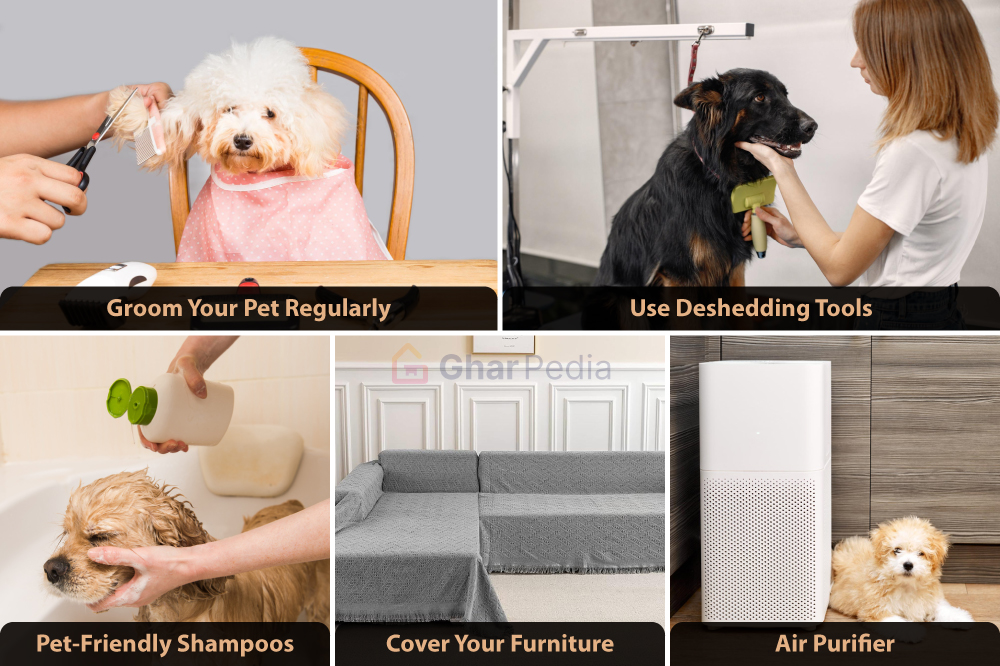
The easiest way to remove pet hair from home is to prevent it from spreading in the first place. A few simple habits can significantly reduce the amount of fur that settles on your furniture, floors, clothing, and bedding, making everyday cleaning quicker and more effective.
Groom Your Pet Regularly: Brush pets regularly—especially long-haired breeds during seasonal shedding—and groom them outdoors or in an easy-to-clean area to reduce indoor fur.
Use Deshedding Tools and Pet-Friendly Shampoos: Deshedding brushes, combs, and shedding-control shampoos remove loose undercoat hair more effectively when matched to your pet’s breed and coat type.
Cover Your Furniture: Washable furniture covers trap pet hair before it reaches upholstery while also protecting furniture from scratches, stains, and odours.
Keep Pet Bedding Clean: Wash removable pet bedding covers regularly and vacuum bedding between washes to prevent fur from spreading to furniture and floors.
Consider an Air Purifier: A HEPA air purifier captures airborne pet dander and fine dust to improve indoor air quality but should complement—not replace—regular grooming and vacuuming.
How Often Should You Vacuum if You Have Pets?
There isn’t a single vacuuming schedule that suits every household. Knowing how often to vacuum with pets depends largely on the number of pets, their shedding habits, flooring type, and whether anyone in the home is sensitive to pet dander.
| Household Situation | Recommended Vacuuming Frequency |
| One low-shedding pet | Once or twice a week |
| One average-shedding dog or cat | Twice or thrice a week |
| Multiple pets | Every day or every other day |
| Heavy-shedding breed | Daily |
| Home with allergy sufferers | Daily or every other day |
| Mostly hard flooring | Twice or thrice a week (daily dust mopping) |
| Mostly carpeted home | Thrice or more times a week |
Common Pet Hair Removal Mistakes to Avoid
Even with the right equipment, a few common cleaning mistakes can make pet hair much harder to remove.
Using the Same Tool Everywhere: Match the cleaning tool to the surface, as lint rollers work best on clothing while carpet rakes are meant for carpets—not delicate upholstery.
Vacuuming Too Quickly: Vacuum slowly with overlapping passes to lift embedded pet hair more effectively from carpets, rugs, and upholstery.
Ignoring Vacuum Maintenance: Clean the brush roll, empty the dust container regularly, and replace or wash filters to maintain strong suction and cleaning performance.
Sweeping Hard Floors with a Dry Broom: Avoid dry brooms that scatter pet hair; remove larger debris first and finish with a slightly damp microfiber mop.
Skipping Regular Grooming: Brush your pet regularly to remove loose fur before it spreads to carpets, furniture, clothing, and floors.
Designing a Pet-Friendly Home That Is Easier to Clean
Courtesy - Magnific
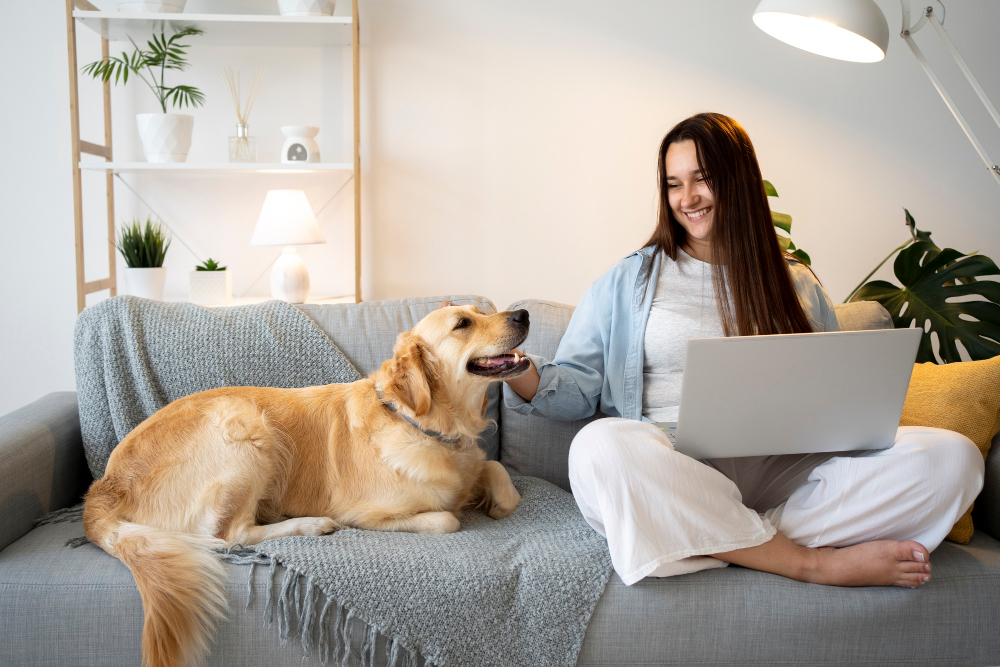
If you’re building a new home or planning a renovation, choosing pet-friendly materials can significantly reduce the time and effort required to keep your home free of pet hair.
- Choose easy-to-clean flooring like vitrified tiles, ceramic tiles, LVP, vinyl, laminate, or sealed hardwood, as smooth floors.
- Select practical upholstery like leather, faux leather, or tightly woven fabrics with removable washable covers.
- Replace wall-to-wall carpeting with washable area rugs that are easier to shake, wash, replace, and deep-clean.
- Set up a dedicated grooming area near an entrance, utility room, or backyard to contain loose fur before it spreads indoors.
Pet-friendly materials and thoughtful home design reduce cleaning time while creating a cleaner, healthier, and more comfortable home for both pets and people. For more insight, read: Tips to design a Pet Friendly House!
Living with pets doesn’t mean living with pet hair on every surface. The secret to how to remove pet hair from home isn’t relying on a single cleaning method. It’s combining the right tools with a consistent maintenance routine. Equally important is preventing loose fur from spreading in the first place. Regular grooming, washable furniture covers, clean pet bedding, and routine vacuum maintenance all work together to reduce the amount of hair circulating through your home. With the right cleaning habits and a realistic vacuuming schedule, you can enjoy the companionship of your pets without constantly battling loose fur—creating a cleaner, healthier, and more comfortable home for every member of the family, whether they have two legs or four.
FAQs On How To Remove Pet Hair From Home
1. What is the fastest way to remove pet hair from a couch?
A slightly damp rubber glove is one of the quickest and most effective ways to remove pet hair from upholstered furniture. Rub the surface gently in one direction to gather loose fur into clumps, then vacuum the remaining hair using an upholstery attachment for a more thorough clean.
2. Does a rubber squeegee really remove pet hair from carpets?
Yes. A rubber squeegee creates friction that loosens pet hair trapped deep within carpet fibres, making it much easier to collect with a vacuum afterwards. It works particularly well on area rugs, stair carpets, and vehicle floor mats.
3. What household items can remove pet hair besides a vacuum?
Several everyday household items are highly effective for pet hair removal, including:
- Rubber gloves
- Damp microfiber cloths or mops
- Lint rollers
- Adhesive tape
- Rubber squeegees
Each works best on different surfaces, so using the appropriate tool produces better cleaning results.
4. How do I stop pet hair from clogging my vacuum?
Clean tangled hair from the brush roll regularly, empty the dust container before it becomes full, and wash or replace filters according to the manufacturer’s instructions. Proper maintenance helps preserve suction power and improves overall cleaning efficiency.
5. Can pet hair damage HVAC systems?
Pet hair and pet dander can gradually accumulate around return vents, air filters, and duct openings, reducing airflow and forcing HVAC systems to work harder over time. Cleaning vents regularly and replacing HVAC filters as recommended helps maintain system efficiency while contributing to better indoor air quality.
Courtesy - Featured Image(Magnific)
Author & Expert Review
Written & Verified By:  Farhan Shaikh – Senior Manager – Architect, SDCPL | Associate Member – IIA

| Credentials: Senior Manager – Architect at Sthapati Designers & Consultants Pvt. Ltd. and Associate Member of the Indian Institute of Architects (IIA). Experience: Architect with hands-on experience leading architectural and interior design projects at SDCPL, including architectural planning, interior design, project coordination, and sustainable design strategies. Expertise: Specializing in architectural planning, interior design, project coordination, and sustainable design. He reviews content to ensure it reflects practical design considerations, industry best practices, technical accuracy, and real-world applicability across architecture and interior spaces. Find him on: Linkedin |