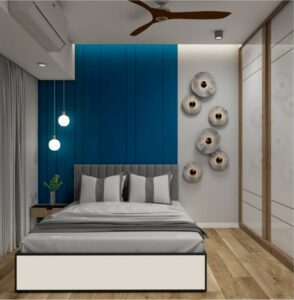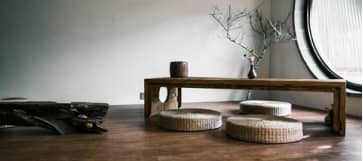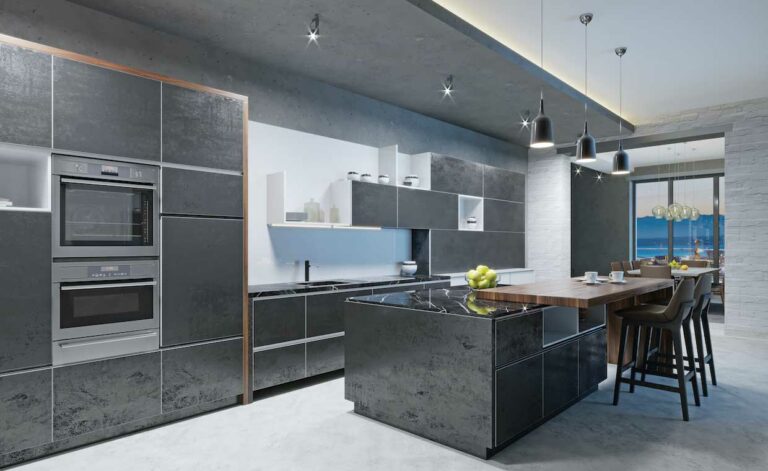






Table of Contents
Quick Summary
- Plaster of Paris (POP) is a fine white powder made by heating natural gypsum.
- It is widely used for false ceilings, wall finishing, mouldings, decorative work, sculptures, and medical casts.
- POP provides a smooth, crack-free finish and sets much faster than cement plaster.
- Unlike cement plaster, POP does not require water curing, reducing construction time.
- It is not waterproof, making it unsuitable for exterior walls and permanently damp areas.
- POP generally costs ₹25–₹60 per sq. ft. for interior plastering in India, depending on thickness, finish, and location.
- Choosing between POP, cement plaster, and gypsum board depends on budget, moisture exposure, finish requirements, and project timeline.
Courtesy - Magnific
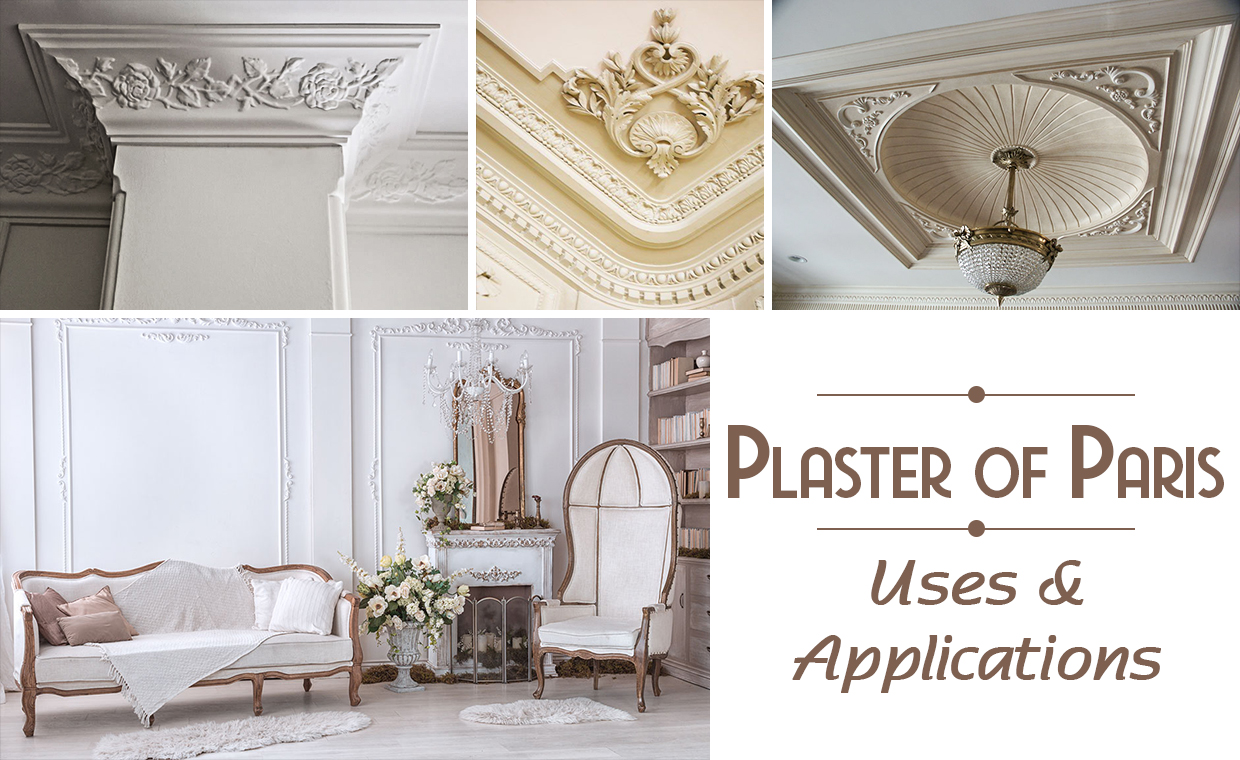
Whether you’re designing a modern false ceiling, restoring ornate cornices in a heritage home, or creating decorative wall mouldings, Plaster of Paris (POP) remains one of the most versatile interior finishing materials available today. Made from calcined gypsum (calcium sulfate hemihydrate, CaSO₄·½H₂O), POP is a fine powder that hardens quickly when mixed with water, making it ideal for plastering, casting, and decorative applications.
But this versatile and affordable material comes with limitations. It performs well in dry interiors, but exposure to water or dampness can weaken the material and damage the finish.
In this comprehensive guide, you’ll learn what Plaster of Paris is made of, how it compares with gypsum plaster and cement plaster, its advantages and disadvantages, applications, setting time, costs, maintenance tips, and much more.
What Is Plaster of Paris Made Of?
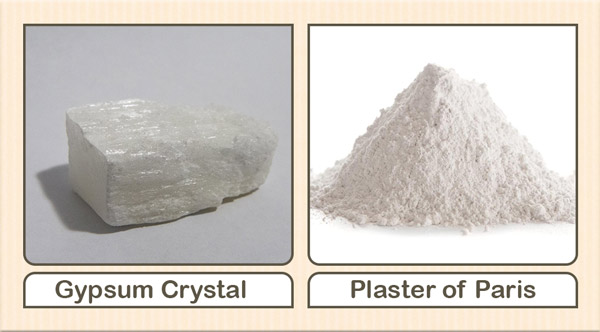
Plaster of Paris is manufactured from natural gypsum, a sedimentary mineral composed mainly of calcium sulfate dihydrate (CaSO₄·2H₂O). The manufacturing process involves heating gypsum to approximately 150–170°C, which removes part of its chemically bound water. This process is called calcination.
The chemical reaction is: Calcium Sulfate Dihydrate → Calcium Sulfate Hemihydrate + Water Vapour
This produces a calcium sulfate hemihydrate, a white powder commonly known as Plaster of Paris (POP). When water is added at the construction site, POP undergoes the reverse reaction. It rehydrates and hardens back into gypsum, creating a solid, durable surface.
How Does POP Set?

Courtesy - Magnific
Unlike cement, which gains strength slowly through hydration over several days, POP hardens much faster.
The process occurs in three stages:
- Water is mixed with the dry POP powder.
- The paste remains workable for a limited period.
- Crystals begin forming, interlocking with one another until the material hardens.
Depending on the product and site conditions, the initial setting time may be 10–20 minutes, final setting may be 30–60 minutes, and complete drying may take about 24-72 hours. This again depends on thickness, humidity, and ventilation.
One of POP’s biggest advantages is that it requires no water curing, unlike cement plaster, which typically requires curing for up to 21 days to achieve optimum performance.
Is Plaster of Paris the Same as Gypsum Plaster?

Courtesy - Canva(image 1, 2)
Many people mistake Plaster of Paris for gypsum plaster. The two originate from the same raw material, but they are not the same.
POP is produced by partially dehydrating gypsum and is generally supplied as a powder that is mixed with water on-site. Gypsum plaster, on the other hand, is a factory-formulated product that often contains additives to improve workability, setting characteristics, and strength.
Although both are gypsum-based materials used for interior finishing, they are suited to slightly different applications.
| FEATURE | PLASTER OF PARIS | GYPSUM PLASTER |
| Raw material | calcined gypsum | Gypsum with additives |
| Supplied as | Fine Powder | Ready-mix Plaster |
| Setting | Very Fast | Moderately Fast |
| Finish | Excellent Decorative Finish | Smooth Wall Finish |
| Best Use | False Ceiling, mouldings, decorative work, wall plastering | Smooth Wall Finish |
| Skill Required | Higher | Moderate |
What Are the Uses of Plaster of Paris?
POP is highly versatile and is used in several areas, particularly where a smooth finish or intricate shape is required.
1. Interior Wall Finishing

Courtesy - Canva, Magnific


POP is commonly applied over cement plaster to achieve an ultra-smooth finish before painting. It can help conceal minor surface irregularities and provides a good base for decorative paint finishes.
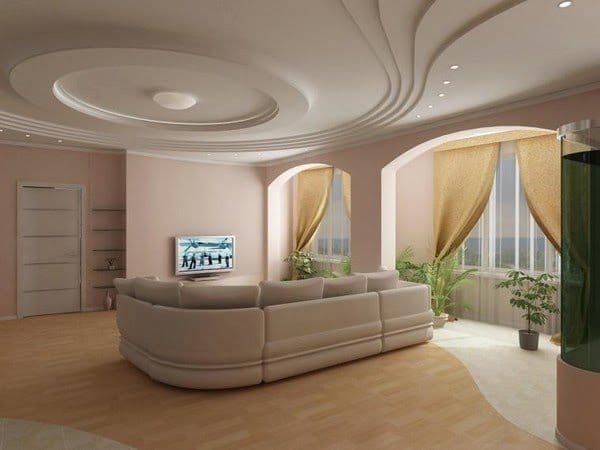
2. POP False Ceilings

Courtesy - Canva, Magnific
False ceilings remain one of the most popular uses of Plaster of Paris.
POP can be moulded into intricate shapes, curved profiles, coffers, and layered ceiling designs that are difficult to achieve using many other materials.
POP false ceilings continue to be widely used in living rooms, bedrooms, dining spaces, hotels, and commercial interiors for their elegant appearance, better thermal comfort, better acoustics and much more.
Also Read: Plaster of Paris (POP) False Ceilings for Your Home Interior!
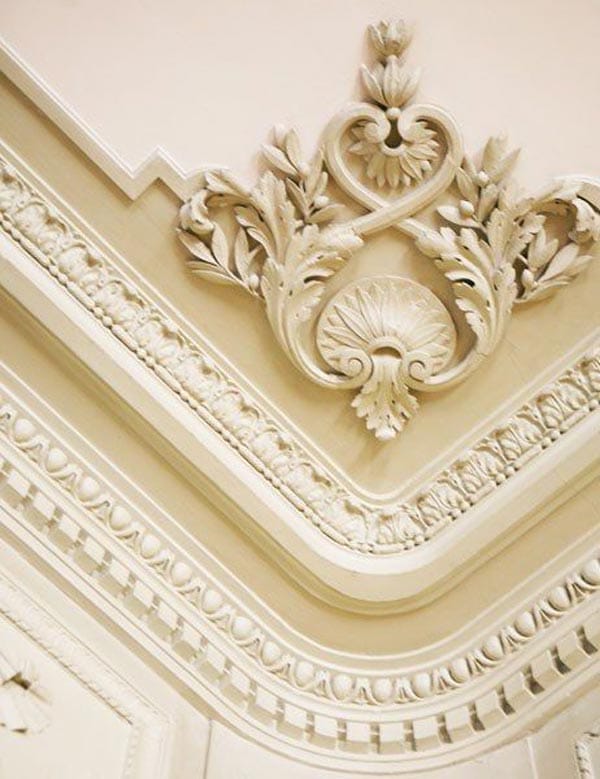
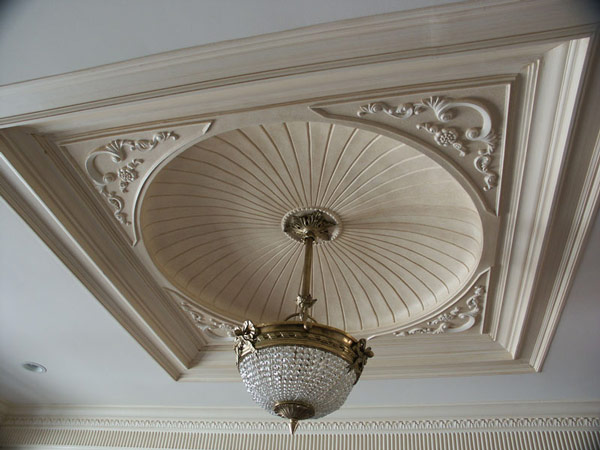
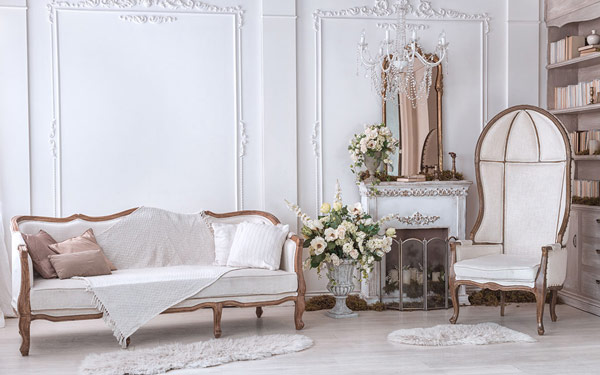
3. Decorative Cornices and Mouldings

Courtesy - Canva, Magnific
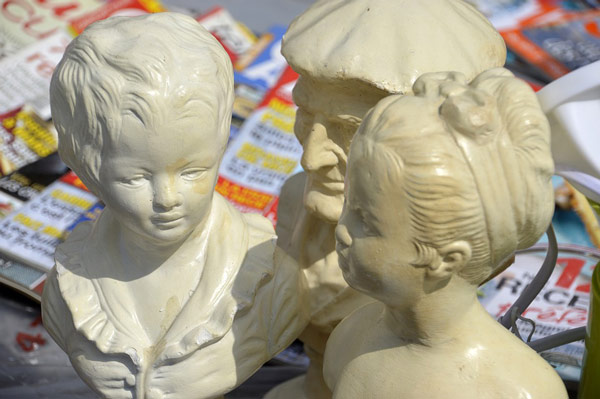
PoP is highly workable before it hardens, so craftsmen use it to create intricate motifs that enhance the beauty of interiors. This is why this material has remained popular in luxury interiors for decades.
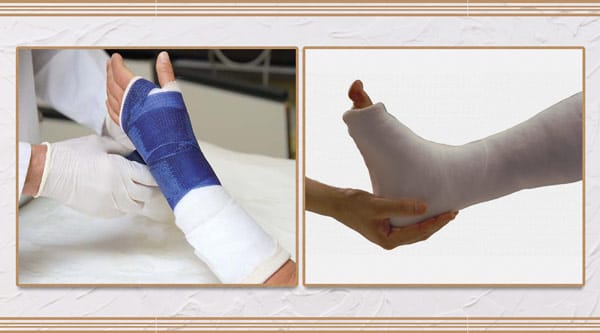
4. Medical Applications

Courtesy - Canva
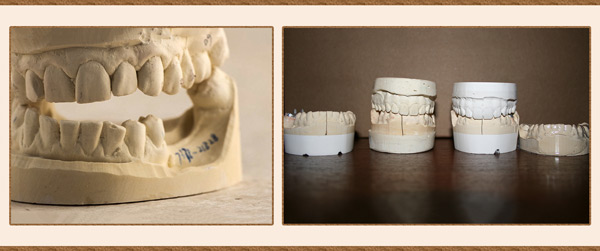
POP also has important medical applications, although medical-grade POP is different from construction-grade POP. As said by ‘Borrelli J. et al’ (Published in PubLMed.gov – US National Library of Medicine National Institute of Health), Plaster of Paris is widely used as a bone graft substitute and to fill bone defects. It is used to create soft, safe bandages. Orthopaedic surgeons use specially prepared POP bandages to immobilise fractured bones. Dentists use gypsum-based materials for dental impressions and model preparation.
5. Fire-Resistant Applications
Gypsum-based materials naturally contain chemically bound water. During exposure to high temperatures, this moisture is gradually released as water vapour, helping delay heat transfer and improving the fire resistance of building assemblies.
POP itself should not be described as fireproof. However, when gypsum-based materials are incorporated into an appropriate building system, they can contribute to improving fire performance.
Also Read:
Fire Resistance of Concrete | Fire Resistive Construction
Acrylic Wall Putty: Increases the Life of Paint for Years to Come!
12 Tips to Prevent Fire at Our Home
What Are the Advantages of Plaster of Paris?

Plaster of Paris offers several advantages over conventional cement plaster.
1. Exceptionally Smooth Finish
POP offers a very smooth and uniform surface. This is one of the main reasons behind using it before painting, particularly where a refined interior finish is desired.
2. Lightweight Material
POP is lighter than traditional cement-based finishes, which reduces dead load, making it particularly suitable for decorative ceilings, cornices, and mouldings.
3. Fast Setting Saves Construction Time
POP sets much faster than cement plaster. This quick setting time allows interior finishing work to progress much faster.
4. No Water Curing Required
Unlike cement plaster, POP does not require water curing after application. This saves water, reduces labour, shortens project schedule and minimises delays before painting
5. Excellent Decorative Flexibility
POP can be moulded into almost any shape before it hardens.
6. Good Fire Resistance
Gypsum-based materials contain chemically combined water that is released gradually during exposure to high temperatures. This delays heat transfer and improves the fire performance of interior assemblies.
Although POP is not fireproof, it contributes to improved fire resistance when used appropriately in interior construction.
7. Better Acoustic Performance
POP surfaces help reduce sound reflections inside rooms and contribute to improved indoor acoustics, making it ideal for home theatres, conference rooms, hotels, offices and auditoriums.
8. Minimal Shrinkage
Unlike some cement-based finishes, properly mixed POP undergoes very little shrinkage during setting.
This reduces the likelihood of hairline cracks caused by drying shrinkage.
9. Easy to Repair Small Surface Defects
Minor dents, nail holes, or surface imperfections can often be repaired using fresh POP and then sanded smooth before repainting.
10. Cost-Effective Decorative Material
Although POP may cost more than basic cement plaster, it offers excellent value for decorative interior work because it combines finishing and aesthetic enhancement in one material.
What Are the Disadvantages of Plaster of Paris?

Despite its many benefits, POP is not suitable for every application. Understanding its limitations helps prevent costly mistakes.
1. Not Suitable for Exterior Walls
The biggest drawback of POP is its poor moisture resistance. Rainwater and prolonged exposure to humidity gradually weaken the material. Therefore, POP should never be used as the primary plaster for exterior walls.
2. Not Waterproof
Is POP waterproof? No.
POP absorbs moisture easily. When exposed to continuous dampness, it may soften, lose strength, develop stains, support fungal growth, and even peel away from the substrate. Hence, using POP in bathrooms, balconies, terraces, and exterior façades requires particular caution. Adequate waterproofing measures are a must in such locations.
3. More Expensive Than Cement Plaster
POP generally costs more than conventional cement plaster because the material itself can be more expensive and decorative work often requires skilled craftsmen. Furthermore, complex ceiling designs and detailed mouldings can also increase labour costs. For homeowners, the higher cost may still be worthwhile when the finish and decorative effect are priorities.
4. Skilled Labour Is Essential
POP hardens quickly. Hence, it requires skilled labour. Poor workmanship may result in uneven surfaces, poor bonding, weak joints, or visible patches. Choosing experienced workers is critical for achieving a high-quality finish.
5. Limited Shelf Life
POP has a relatively short storage life because it readily absorbs moisture from the atmosphere. Most manufacturers recommend using POP within 3–6 months of manufacture if stored under dry, airtight conditions. Old POP powder gradually absorbs moisture from the atmosphere, reducing its strength and setting performance.
6. Difficult to Repair Large Decorative Areas
While small defects are easy to fix, repairing elaborate ceiling mouldings or decorative cornices can be challenging.
Matching old textures, patterns, and profiles often requires specialised craftsmanship.
7. Vulnerable to Damp Patches
Water leakage from plumbing or roofs can leave stains, damp patches, peeling, powdering or localised cracks on POP surfaces. Repainting without fixing the source of moisture only treats the symptom. The leak or seepage should be addressed first.
Plaster of Paris vs Cement Plaster vs Gypsum Board: Which Should You Choose?

Courtesy - Canva, Magnific(image1, 2)
Each material has its strengths. The right choice depends on where it will be used, your budget, and the finish you want.
| Parameter | Plaster of Paris (POP) | Cement Plaster | Gypsum Board |
| Main use | Decorative interior finish | Base wall plaster | Drywall and false ceilings |
| Setting/Drying | Sets quickly; no curing | Slow; requires curing | Factory-finished boards |
| Exterior use | ❌ No | ✔ Yes | ❌ No |
| Water resistance | Low | High | Moderate (moisture-resistant boards available) |
| Finish quality | Excellent | Average | Excellent |
| Decorative flexibility | Excellent | Limited | Moderate |
| Labour skill | High | Moderate | Moderate |
| Construction speed | Fast | Slow | Very fast |
| Maintenance | Moderate | Low | Moderate |
| Approx. Cost* | ₹25–₹60/sq. ft. | ₹18–₹40/sq. ft. | ₹80–₹180/sq. ft. (installed) |
| Best suited for | Luxury interiors, mouldings, false ceilings | Exterior and interior base plaster | Modern false ceilings, partitions |
*Indicative costs vary by city, thickness, finish quality, labour charges, and project size.
When Should You Choose POP?
Choose POP if you want:
- Premium interior finishes
- Decorative ceilings
- Cornices and mouldings
- Quick interior renovation
- Smooth paint-ready walls
When Is Cement Plaster Better?
Cement plaster is the better choice for:
- Exterior walls
- Wet areas
- Structural durability
- Budget-conscious construction
When Is Gypsum Board Better?

Courtesy - Canva
Gypsum board works well for:
- Fast-track construction
- Office interiors
- Lightweight partitions
- Modular false ceilings
- Projects requiring easy access to concealed services
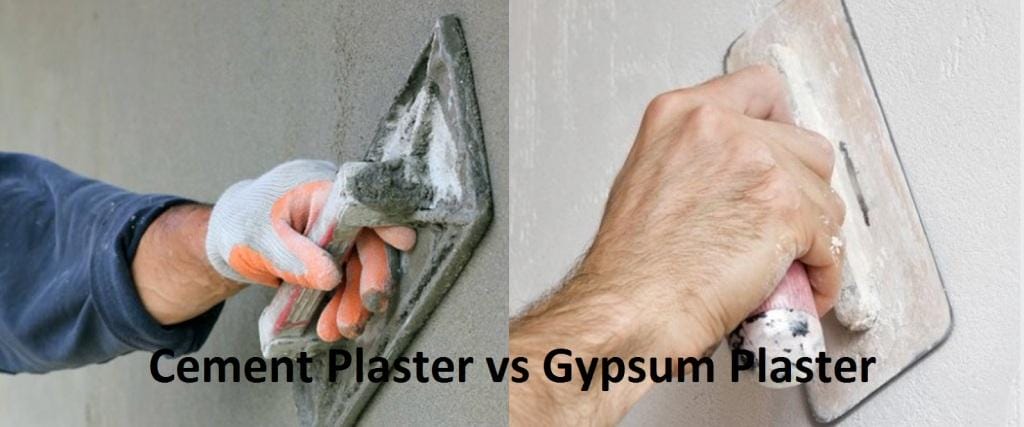
Also Read: Cement Plaster VS Gypsum Plaster
How Much Does POP Plastering Cost in India?
One of the most common questions homeowners ask is: How much does POP plastering cost per square foot?
While prices vary depending on city, design complexity, labour rates, and material quality, the following estimates can serve as a general guide.
| Work Type | Approximate Cost (₹/sq. ft.) |
| Basic POP wall finish | ₹25–₹40 |
| Premium smooth finish | ₹40–₹60 |
| POP false ceiling | ₹90–₹180 |
| Decorative ceiling designs | ₹150–₹350+ |
Factors Affecting POP Costs
The final price depends on several factors:
- Thickness of POP application
- Surface preparation required
- Design complexity
- Ceiling height
- Labour availability
- Brand and quality of POP
- Project size
- City or region
For accurate budgeting, always obtain quotations from multiple contractors and specify whether the quoted price includes materials, labour, scaffolding, primer, and painting.
Is a POP False Ceiling Worth It?
A POP false ceiling remains a popular choice because it offers:
- Seamless appearance
- Unlimited design possibilities
- Concealed lighting options
- Improved acoustics
- Enhanced visual appeal
However, if speed of installation and future maintenance are priorities, factory-made gypsum board systems may be a more practical option.
Can POP Be Used in Bathrooms or Kitchens?
As mentioned earlier, you can use POP in moisture-prone areas, but with caution.
POP can be used in bathrooms and kitchens only on ceilings or walls that remain dry and are not exposed to direct water contact. Adequate ventilation and proper waterproofing of the underlying structure are essential.
For shower enclosures, wet walls, and areas with frequent water splashes, cement-based plaster or moisture-resistant gypsum systems are a better choice.
Can You Paint Directly Over POP?
Yes. In fact, POP is often chosen because it provides an excellent base for paint. However, painting should only begin after the POP has dried completely.
A typical painting sequence is:
- Allow the POP surface to dry thoroughly (usually 24–72 hours, depending on thickness and weather).
- Lightly sand the surface to remove minor imperfections.
- Clean off dust and loose particles.
- Apply a suitable primer recommended by the paint manufacturer.
- Finish with two coats of interior emulsion or the desired paint system.
Applying paint over damp POP can trap moisture and lead to blistering, peeling, or poor adhesion.
Why Does POP Crack or Develop Yellow Patches?
A properly installed POP surface should remain stable for many years. However, defects can develop if installation practices are poor or if moisture enters the system.
Common Causes of Cracks
Hairline cracks or surface damage may occur because of:
- Incorrect water-to-POP mixing ratio
- Application over an unstable substrate
- Structural movement in the building
- Rapid drying due to excessive heat
- Poor workmanship
- Vibration during the setting process
Minor cracks can often be repaired, but recurring cracks may indicate an underlying structural issue that requires investigation.
Causes of Yellow or Damp Patches Appear
Yellow patches usually point to moisture problems rather than defects in the POP itself.
Typical causes include:
- Roof leakage
- Plumbing leaks
- Water seepage through walls
- Condensation due to poor ventilation
- Damp masonry
Before repainting or repairing the POP, it is essential to identify and eliminate the source of moisture. Otherwise, the stains are likely to return.
How to Store POP Properly
To maintain its quality:
- Store bags in a cool, dry place.
- Keep them off the floor using wooden pallets.
- Protect them from rain and humidity.
- Seal opened bags in airtight containers.
- Avoid storing POP near water sources or damp walls.
If POP powder becomes lumpy or begins setting prematurely when mixed with water, it has likely absorbed moisture and should not be used for quality finishing work.
Maintenance Tips for POP Finishes

With proper care, POP finishes can last for decades in interior spaces.
Follow these simple maintenance practices:
- Repair plumbing or roof leaks immediately.
- Keep indoor humidity under control through adequate ventilation.
- Dust decorative mouldings regularly using a soft cloth or vacuum brush attachment.
- Repaint surfaces when necessary to maintain appearance.
- Avoid drilling or fixing heavy objects directly into decorative POP elements without suitable anchors.
- Inspect false ceilings periodically for signs of water seepage or cracks.
Routine maintenance significantly extends the life and appearance of POP installations.
Conclusion
Plaster of Paris continues to be one of the most popular materials for interior finishing because it combines speed, versatility, and aesthetic appeal. From smooth wall finishes and elegant false ceilings to intricate cornices, mouldings, and decorative elements, POP allows homeowners and designers to create refined interiors with relative ease.
However, POP is not a one-size-fits-all solution. Its poor resistance to moisture means it should be restricted to interior, dry areas. For exterior walls, bathrooms with direct water exposure, or damp environments, cement plaster or moisture-resistant gypsum systems are generally more suitable.
Before making a decision, compare POP with other finishing materials based on your project’s budget, design requirements, moisture conditions, maintenance expectations, and construction timeline. Used in the right application, Plaster of Paris (POP) remains a reliable and elegant finishing material that can enhance the beauty and value of a home for many years.
FAQs on Plaster of Paris
1. Can Plaster of Paris be used in bathrooms or kitchens?
Yes, but only in areas that remain relatively dry. POP should not be applied where it will be exposed to direct or continuous water. Proper waterproofing and ventilation are essential to prevent moisture-related damage.
2. How long does a POP false ceiling last?
A well-installed POP false ceiling can last 20–30 years or more, provided it is protected from water leakage, excessive humidity, and structural movement. Regular maintenance and timely repairs can further extend its lifespan.
3. What’s the difference between POP and a Plaster of Paris bandage?
Construction-grade POP is designed for interior finishing, decorative mouldings, and false ceilings. Medical POP bandages, used to immobilise fractured bones, are manufactured under controlled conditions with specialised fabric and quality standards. Although both are gypsum-based, they are not interchangeable.
4. Can old or expired POP powder still be used?
It is not recommended. POP absorbs moisture from the air over time, which affects its setting characteristics and final strength. For best results, use fresh material within the manufacturer’s recommended shelf life and discard any powder that has become lumpy or partially hardened.
5. Does POP need a primer before painting?
Yes. After the POP surface has dried completely and been lightly sanded, applying a suitable primer improves paint adhesion, enhances finish quality, and helps achieve uniform colour and durability.
6. Is Plaster of Paris the same as gypsum plaster?
No. Although both are derived from gypsum, they are not identical. Plaster of Paris is a quick-setting gypsum product mainly used for decorative work, mouldings, and false ceilings. Gypsum plaster is a factory-formulated plaster with additives, commonly used for plastering interior walls and ceilings to achieve a smooth finish.
7. How long does POP take to set and dry?
POP has a fast initial setting time of around 10–20 minutes and usually reaches its final set within 30–60 minutes. However, it should be allowed to dry completely—typically 24 to 72 hours, depending on the thickness, humidity, and ventilation—before painting or applying decorative finishes.
8. Can Plaster of Paris be used on exterior walls?
No. POP is not recommended for exterior walls because it absorbs moisture and can deteriorate when exposed to rain, humidity, or weather changes. Cement plaster or weather-resistant exterior plaster is a better choice for outdoor applications.
9. Is Plaster of Paris waterproof?
No. POP is not waterproof. It can absorb moisture, which may lead to softening, peeling paint, damp patches, mould growth, and reduced strength. It should only be used in dry interior areas unless protected from moisture.
10. What is the shelf life of POP powder?
POP powder generally has a shelf life of 3–6 months when stored in a cool, dry place in sealed packaging. Once exposed to moisture, its setting properties deteriorate, so always check the manufacturing date and avoid using lumpy or partially hardened material.
11. What is Plaster of Paris made of?
Plaster of Paris (POP) is made by heating natural gypsum (calcium sulfate dihydrate) to about 150–170°C. This process, called calcination, removes part of the chemically bound water and converts gypsum into calcium sulfate hemihydrate, which forms a hard surface when mixed with water.
Here’s a video to sum up all the points mentioned above:
Also Read:
Home Interior: False Ceiling Types!
Home Wallpaper: All You Need to Know

Courtesy - Featured Image(Magnific)(canva - image 1,2,3,4)
Author & Expert Review
Written & Verified By:
Tanvi Lad – Senior Manager (Civil), SDCPL | B.E. in Civil Engineering
| Credentials: B.E. in Civil Engineering (2013), Senior Manager (Civil) at Sthapati Designers & Consultants Pvt. Ltd., and lead of the Estimation and Tendering Department at SDCPL. Experience: Civil engineering professional with extensive experience in design review, material specifications, project costing, estimation, tender preparation, tender evaluation, and detailed engineering for residential, commercial, and infrastructure projects. Expertise: Specializing in technical review, material selection, cost estimation, project costing, tendering, and engineering feasibility. She reviews content to ensure accurate cost considerations, appropriate material specifications, practical engineering solutions, and alignment with industry-standard construction practices. Find her on: LinkedIn |