






Table of Contents
Quick Summary
- Large sliding doors are often expected to glide effortlessly, but over time, operational issues arise.
- Heavy lintels above large glass openings deflect under load over time, compressing the door frame and pinching the moving panels.
- Bottom-rolling tracks collect dust, grit, and sand – especially in harsh climates – accelerating wear, whereas top-hung systems keep bearings clean.
- Doubling panel weight without upgrading carriages or lacking adjustment margins forces premature roller failure.
- Flush thresholds need dedicated structural drainage channels; otherwise, trapped water leads to binding and leaks.
- Knowing why big sliding doors start sticking allows builders and homeowners to design tighter deflection limits, select top-hung tracks where appropriate, and clean tracks properly without heavy oils that attract dirt.
Courtesy - Magnific
A large sliding door is one of the few components in a house that is judged almost entirely on how it feels to operate. Nobody comments on the glazing specification. Everybody notices when the door needs two hands and a shoulder.
Sticking is usually blamed on the rollers, and the rollers are usually not the cause. Three details decide whether a wide sliding door still runs with one finger in year ten, and two of them are settled long before the door arrives on site.
The Head Detail Carries More Than the Load
Courtesy - Magnific
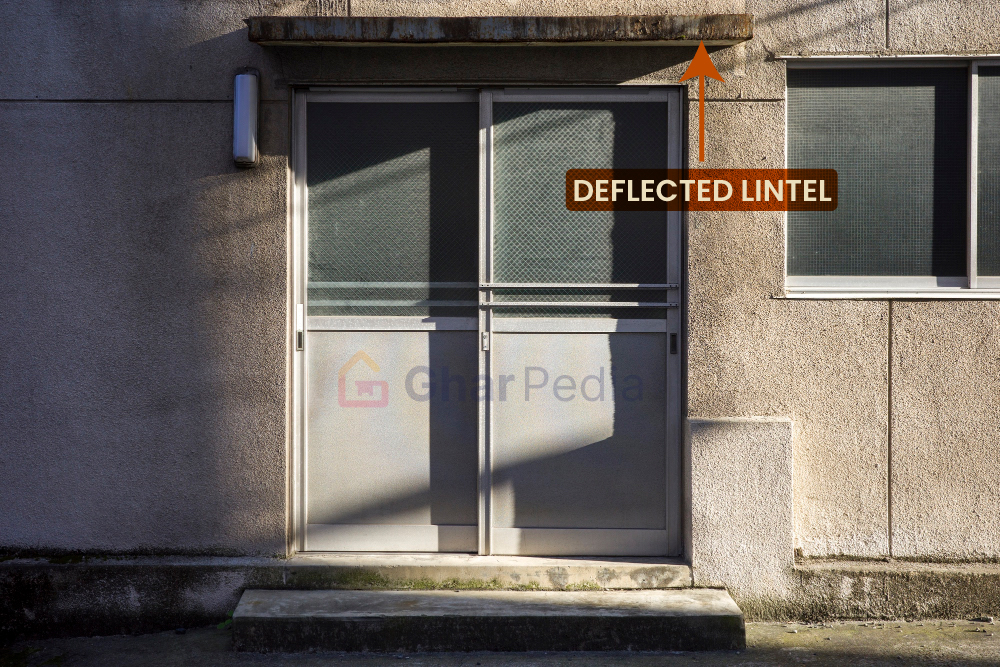
A sliding door is not a structural element, but the opening above it is. The lintel or beam over a 3 to 5 metre glazed opening will deflect under load, and the door has to tolerate that deflection without being pinched by it.
Standard structural deflection limits are written for finishes such as plaster, not for a component with a moving part and a 20mm operating clearance. A beam that satisfies a span over 360 limit can still drop enough at midspan to bind a wide sliding panel, particularly once the slab above has taken its full service load and any long-term creep has occurred.
The practical rule is to design the head over a large glazed opening to a tighter limit than the code minimum, commonly span over 500 or better, and to detail a compressible head gap above the door frame so that whatever movement does occur is absorbed rather than transferred. A door that binds in year three on a building that is otherwise sound is almost always this.
Tracks: Where The Load Path Goes
Courtesy - Magnific
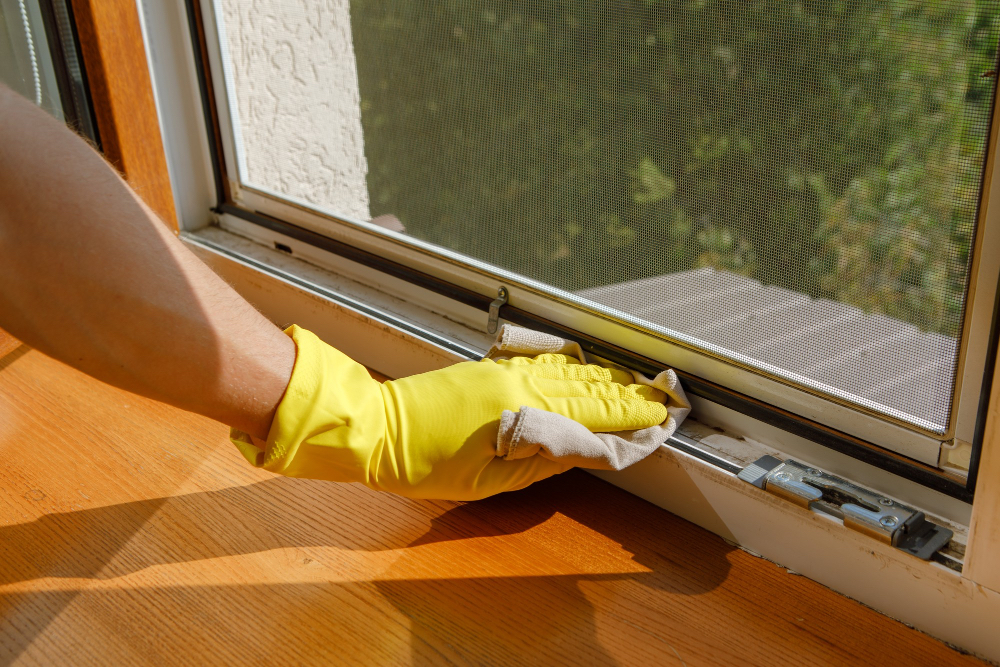
Bottom-rolling systems carry the panel weight on wheels running in a floor track. They are simpler and cheaper, and they are the default in most residential systems.
Top-hung systems suspend the panel from a track fixed to the head, with the floor channel acting only as a guide. They cost more, and they require a head detail stiff enough to carry the panel weight in addition to the structural load above.
The difference shows up in dirt. A floor track is a horizontal channel at the exact height that dust, grit and hair collect in. Every particle that lands in it ends up under a roller. A top-hung system moves the bearing surface to the one place in the assembly where nothing accumulates, and the guide channel below can be brushed clean without affecting how the door runs.
Climate sharpens this considerably. In the Gulf, airborne sand is present for much of the year and surface temperatures on an exposed threshold pass 50 degrees Celsius in summer, which accelerates every wear mechanism in a floor track at once. That is why specialists in sliding doors Dubai homes rely on tend to treat top-hung tracks and stainless fixings as the default specification rather than an upgrade, where a temperate-climate supplier would offer both as options.
Rollers, And What Actually Wears
Courtesy - Magnific
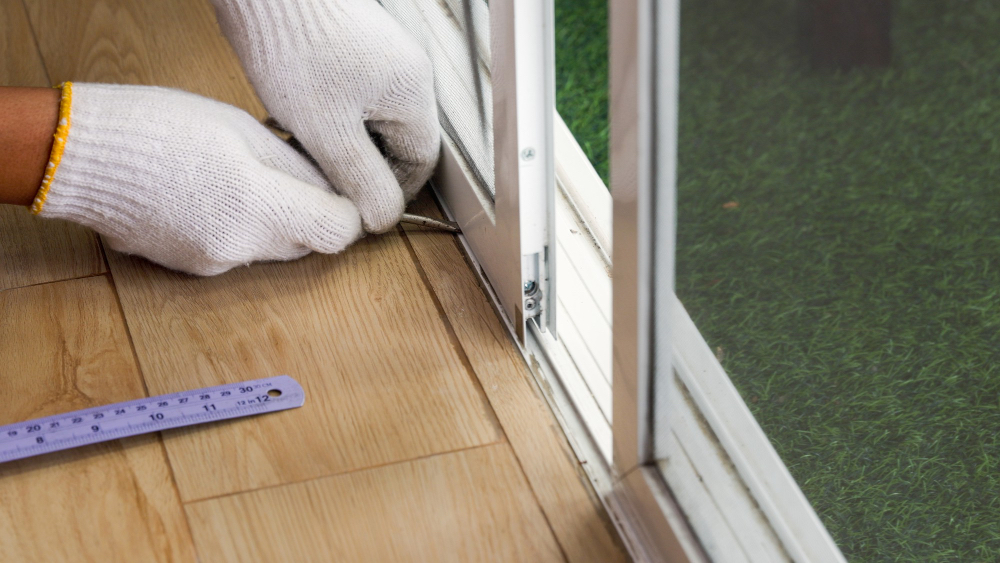
Roller failure is a symptom. The bearing itself rarely fails first; what fails is the surface it runs on, or the alignment it runs in.
Three things are worth checking on any specification. The first is panel weight per roller, since doubling glazing thickness on a wide panel can quietly push a standard carriage past its rating. The second is the adjustment range, because a door with only a few millimetres of vertical adjustment leaves no margin to compensate for settlement later. The third is whether the rollers can be replaced without removing the glass, which is the difference between a maintenance visit and a reinstallation.
The Threshold Is a Drainage Problem
Flush thresholds are what make a sliding door feel resolved. They are also the detail most likely to leak, and the reason is that they are usually treated as a floor finish rather than as drainage.
Water that reaches a flush threshold has nowhere to go by gravity alone. It needs a drainage channel with an outlet, set into the floor build-up, and that has to be designed at structural stage while the slab levels are still being set. Retrofitting drainage under a threshold after the floor is poured is expensive and rarely fully successful.
Where a fully flush detail is not achievable, a low upstand of 15 to 20mm with a chamfer is a far better outcome than a flush threshold that ponds. It is a small compromise in appearance against a recurring problem.
Sealing And Thermal Performance
Courtesy - Magnific
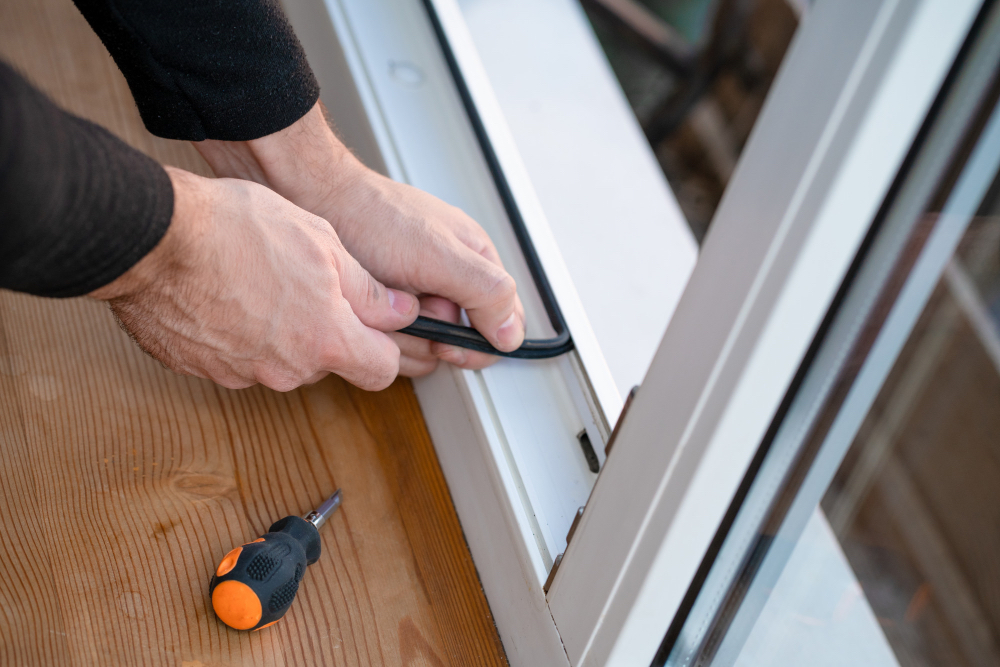
Sliding doors seal by compression at the interlock and by brush or bubble gasket along the perimeter. Brush seals tolerate misalignment and dust well but leak air; bubble gaskets seal far better but demand tighter tolerances and degrade faster under UV.
In hot climates the thermal break in the frame matters more than the glazing specification for comfort at the opening itself. An excellent double glazed unit in a non-thermally-broken aluminium frame will still produce a cold bridge in reverse, with the frame running hot and radiating into the room.
A Maintenance Regime That Actually Works
Sliding doors do not need much, but they need it consistently. Vacuum the track rather than brushing debris further into it. Check and adjust roller height annually, before the door starts dragging rather than after. Keep the drainage slots at the threshold clear, since a blocked slot is what turns rain into a leak. And avoid lubricating the track, which turns dust into grinding paste; a dry track and a clean roller is the correct condition.
None of this is complicated. It is simply the difference between a component that is specified as a moving assembly and one that is specified as a piece of glass.
Also Read: Finding the Perfect Lock for a Sliding Glass Door!
Why Big Sliding Doors Start Sticking FAQs
01. Why big sliding doors start sticking even when the rollers are brand new?
When new rollers don’t fix the issue, the cause is usually structural head deflection. The lintel or beam over a wide opening sags slightly over time under its service load. This structural movement pinches the upper frame against the sliding panel, binding the door regardless of roller condition.
02. How does track selection explain why big sliding doors start sticking in sandy or hot climates?
In hot or arid environments, airborne dust and sand settle directly into bottom-rolling floor tracks, creating friction under the wheels. Heat further accelerates wear on these floor assemblies. Specifying top-hung tracks elevates the bearing mechanism away from debris, preventing track buildup.
03. What threshold mistakes reveal why big sliding doors start sticking and leaking?
Installing flush thresholds without built-in structural drainage channels causes water and debris to pond at the door base. Accumulated water corrodes rolling mechanisms and creates friction, causing the door to bind.
04. Can improper lubrication show why big sliding doors start sticking over time?
Yes. Applying wet lubricants, oil, or grease to a door track creates a sticky film that attracts dust, hair, and grit. This mixture turns into a grinding paste under the rollers, causing severe drag. Tracks should be vacuumed clean and kept dry.
05. How does panel weight contribute to why big sliding doors start sticking after a few years?
Upgrading to thicker double or triple glazing adds significant weight to wide panels. If the roller carriages are not rated for the increased load path or lack sufficient vertical adjustment margins, the door eventually sags and drags against the bottom track.
Courtesy - Featured Image(Magnific)
Author & Expert Review
Written & Verified By :  Ravin Desai – Co Founder – Gharpedia | Co Founder – 1 MNT | Director – SDCPL

| Credentials: B.Tech. in Civil Engineering from VNIT Nagpur and M.S. in Civil Engineering from Clemson University, USA. Co-Founder of Gharpedia and Director at Sthapati Designers & Consultants Pvt. Ltd.. Experience: Civil engineering professional with over a decade of international and Indian experience in the construction and design consultancy sector, with expertise in technical review and industry practices. Expertise: Specializes in reviewing technical content related to civil engineering, construction, design consultancy, materials, and industry practices. He ensures content is technically accurate, aligned with industry standards, and reflects practical construction and design best practices. Find him on: LinkedIn |