Table of Contents
Quick Overview
DIY projects are popular but can be risky without proper safety measures. Many home accidents happen during rushed spring tasks, but simple precautions greatly reduce injuries. Keep home workspaces clear, use ladders correctly, route cables safely, and clean as you go. In workshops, keep tools away from children, store sharp and power tools with guards, unplug when not in use, maintain tidy storage, sort small parts, and keep a fire extinguisher nearby. When using power tools, rely on circuit breakers, disconnect power before changing blades, keep leads behind you, use sharp, correct accessories, and let tools stop fully before lifting them. Wear gloves, goggles, sturdy shoes, masks, and ear protection. Plan realistic schedules with breaks to avoid fatigue.
‘Do It Yourself’ is in vogue nowadays and one will have to agree that there is a certain degree of risk involved in some of the DIY projects that we choose. Keeping this in mind, Gharpedia brings to you some important DIY safety tips in this blog.
Generally, safety issues in the home can vary enormously, from keeping sharp kitchen knives out of the reach of small children, to making sure that your power tools have a circuit-breaking plug fitted between you and the mains supply.
A look around will reveal that accidents in the home account for a vast number of out-patient admissions; particularly so in the springtime when there is a rush to take on DIY ‘improvements’. To avoid accidents, however, all you need to do is to take sensible precautions and follow some simple DIY safety tips, many of which are little more than common sense.
Do It Your Self Safety Measures At Home
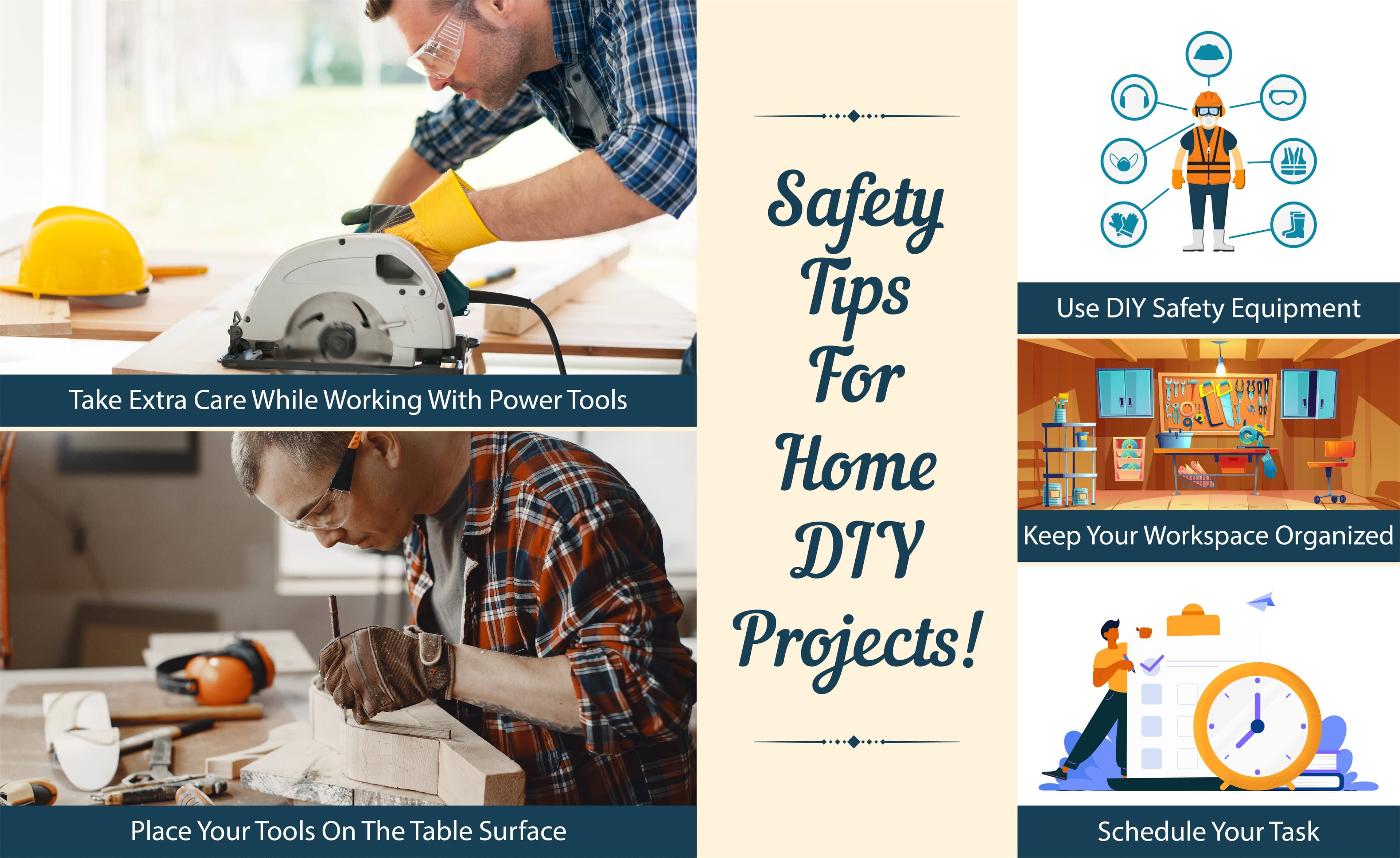
- DIY Safety Tips for Working Safely at Home
- DIY Safety Tips for Safety in the Workshop
- DIY Safety Tips for Working with Power Tools
- DIY Safety Tips: Use DIY safety Equipment
- DIY Safety Tips: Schedule Your Task
Read on to know in detail…
1. DIY Safety Tips For Working Safely at Home

Whatever the task about the house, here are some useful guidelines for home safety precautions:
- Move obstructions such as furniture, decorative items and toys – don’t ‘work around’ them. If you were ‘on site’ somewhere else, you would ask for a clear working space, so do the same in your own house too. Working in an area that is cluttered and not easily accessible leads to overreaching and losing control of the tool. If you are on a step ladder, then it can result in overbalancing.
- Position your step ladder safely so that you can reach the job height and width without overstretching. DIY jobs are not always conveniently suited for a person standing on the floor. The requirement is likely to be of differing tasks at a variety of heights
- One of the most common DIY tips for home is that position the tools for the job on a temporary table surface, never on the floor
- Route cables from power tools around the sides of the room, not across the middle
- ‘Clear up as you go’ is a crucial DIY home tips
- Work in a tidy area so that you can easily see and check all aspects of the job in progress
2. DIY Safety Tips For Safety in the Workshop

Follow these safety measures at your home workshop when you are doing your DIY project –
- Make sure that small children do not have access to your tools, whether your equipment is left in a cupboard when not in use or is stored in a dedicated workshop in a garage or basement area
- Store cutting tools and potentially dangerous power equipment sensibly, that is to say, with protective sleeves and guards in place
- Never leave power tools ‘live’; disconnect the supply or remove the battery, and if possible keep them in carrying cases or secure boxes
- Quality handsaws and chisels come with protective sleeves; if you lose one, make up another from the card and adhesive tape
- Store planes on their sides with the blades retracted, and never leave the craft and marking knives with the blades exposed loose in a drawer where they could cut rummaging hands
- Invest in a good-quality, solid toolbox or a toolbar that can be fixed to a wall to store your valuable equipment
- Keep the workshop area clean and tidy
- If you use a bench to cut, plane, shape and drill wood pieces make sure that a fire extinguisher is within easy reach, as wood shavings burn easily
- Keep the workshop floor free from obstruction
- Store bolts, screws, nails and pins by type and size in marked containers so that they can be easily found. Don’t leave them lying on the bench, where they could accidentally scar your woodwork
3. DIY Safety Tips For Working With Power Tools

- If the tool has a lead, fit a circuit-breaking plug, and always isolate it from the power when changing the bits in a drill or blades in a saw
- Always make sure you know where the lead is, and keep it behind you if you can
- If you prefer battery power, remember that the tool is continuously ‘live’. Disconnect the battery when changing bits and blades
- Use the correct bit for drilling and make sure that the saw blade is suitable for the material you intend to cut, and that both are sharp
- It is a dangerous practice to force bits and blades, and there should be no need
- When drilling, back off the hole and stop the drill before removing it; likewise with a power saw or circular saw, back off or stop the cut, and let the blade stop completely
- Always read the instruction manual carefully before using any tool, and familiarise yourself with its operation
- Not switching on any piece of power equipment unless you know how to turn it off is the best DIY home tip.
4. DIY Safety Tips: Use DIY Safety Equipment

Site workers always wear safety clothing: protective shoes, overalls and helmets all the time and safety glasses, ear defenders and dust masks when required. As you are doing the same type of work as they are, you should wear the same types of clothing, most of which have obvious functions. The following are the DIY safety equipment you must include in your clothing during the task.
- The first and most important DIY safety equipment is gloves. Gloves will protect your hands from chemicals and corrosive liquids as well as from paint and oil stains
- The second most important DIY safety equipment is safety goggles. Protect your eyes when working; if you find that goggles tend to mist up, impairing your vision, try safety glasses (which can be worn over reading glasses), but make sure they have side protectors. Slivers of wood, particles of rust and lumps of masonry can fly from any angle, not just straight at you
- Shoes need to be strong with reinforced toe caps in case you drop something heavy
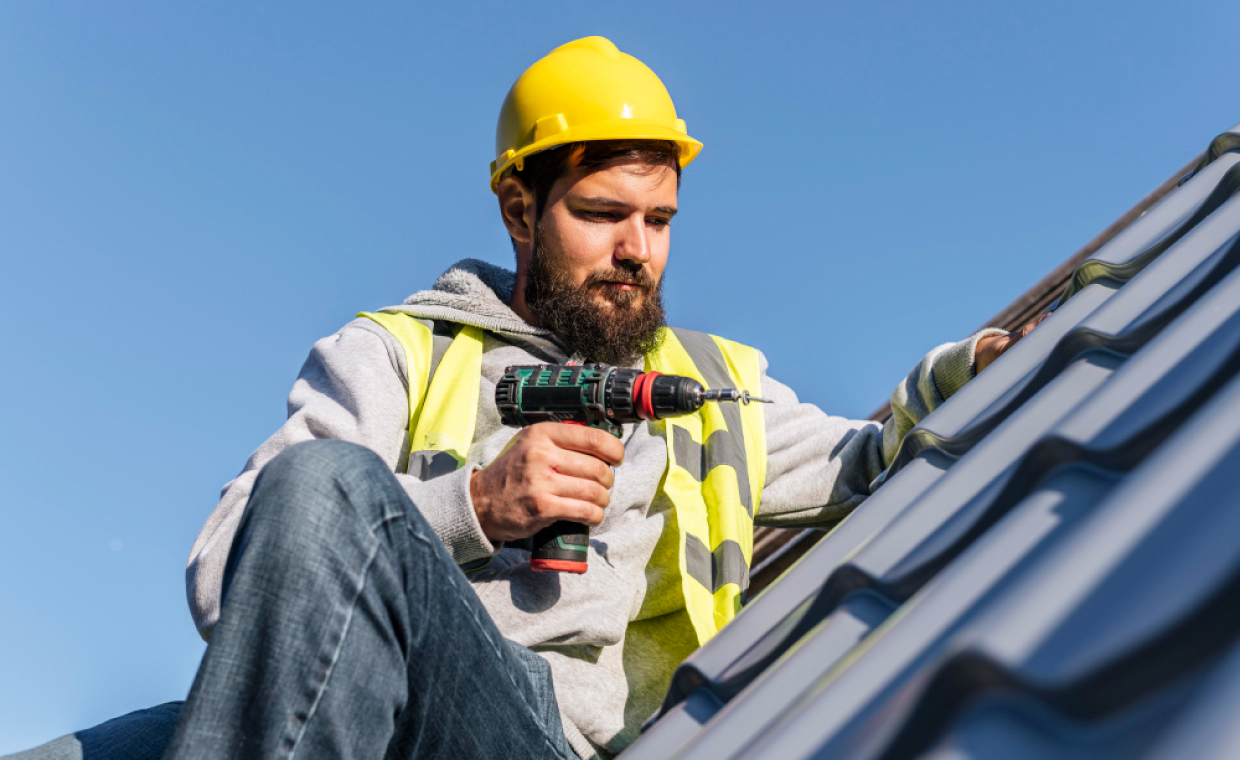
- A helmet may not be needed in the house, but consider wearing one in the loft where the roof clearance is minimal
- Overalls are better than old clothes because they are designed in one piece, so nothing gets caught up in machinery. All the pockets are in the right places holding useful items
- Try wearing a tool belt: all the heavier hand tools can be supported around your waist, so they are instantly accessible and this is very useful on a stepladder
- Dust masks are recommended in do-it-yourself stores as a matter of course when you buy materials and equipment for a dirty, dusty job, but wear one even when sweeping out the work area
- Use ear defenders for heavy-duty masonry drilling and other noisy jobs. However, always ensure that you can still hear warning noises
In case you want to know more about essential tools or safety tools for the ‘Do-It-Yourself’ projects click on the below link-


5. DIY Safety Tips: Schedule Your Task

- Plan a sensible working schedule, with breaks for drinks (non-alcoholic of course!) and food
- Don’t start early and finish late in the hope of completing the job quickly. Working long hours leads to mistakes and sometimes accidents as the attention wanders
Important Points to Remember
- Different types of gloves will help protect your hands from chemicals, paints, stains, splinters and other sharp objects
- Safety goggles are essential for some jobs to protect your eyes from flying debris and dust. Some fit over normal spectacles
- Always wear clothing that is appropriate for the job. Overalls will protect your clothes; gloves will save your hands from damage; while a cap will keep dirt and dust out of your hair
So adhere to the DIY safety tips given in this blog and keep yourself, your dear ones and your house safe during your DIY Projects…
Well, do you know Gharpedia has an Exclusive – Do-It-Yourself category for dedicated DIYers like you? If not, check it out now… here you will find varieties of easy-peasy DIY projects like interior decoration, household hacks etc., and yes, don’t forget to comment to us which DIY project you liked the most.
FAQs On Safety Cues For Your DIY Projects
01. What Are The Most Important Safety Precautions For DIY Projects?
Clearing the workspace, using the right protective equipment, handling tools properly, and following manufacturer guidelines are the top essentials.
02. Why Is PPE Important In DIY?
Protective gear like gloves, goggles, masks, and reinforced shoes protect you from chemicals, debris, sharp objects, loud noise, and accidental injuries.
03. How Do I Safely Use Power Tools At Home?
Always disconnect power when changing parts, keep leads behind you, use the correct blades/bits, avoid forcing tools, and read the instructions before use.
04. How Can I Make My Home Workshop Safer?
Keep it clean and organised, store tools safely with guards, lock away sharp tools from children, label small hardware, and keep a fire extinguisher nearby.
05. What Should I Do Before Starting A DIY Project?
Plan your task schedule, gather proper tools and PPE, clear the workspace, ensure proper lighting, and familiarise yourself with the tools you’ll use.
Author & Expert Review
Written By: Huta Raval | Guest Author
| An English Literature and Journalism Topper, Huta Raval has graduated from the L D Arts College, Ahmedabad. Post serving for 23 years in the NBFC and Public Library Sectors her desire for ‘writing the unwritten’ brought her to the creative field of content writing. Her clientele comprises of NGOs, Blogging Platforms, Newspapers, Academic Institutions, et al. |
Verified By Expert:  Ravin Desai – Co Founder – Gharpedia | Co Founder – 1 MNT | Director – SDCPL
This article has been reviewed for technical accuracy by Ravin Desai, Co-Founder of Gharpedia and Director at Sthapati Designers & Consultants Pvt. Ltd. With a B.Tech. in Civil Engineering from VNIT Nagpur and an M.S. in Civil Engineering from Clemson University, USA, and over a decade of international and Indian experience in the construction and design consultancy sector, he ensures all technical content aligns with industry standards and best practices.
Find him on: LinkedIn